Source Waterproof Insulated Jute Lunch Bag for Food, Shopping, and Travel
Explore 30 listings for the Waterproof Insulated Jute Lunch Bag, featuring varied models like F45 and MC-458 with options for custom printing and logos. Buyers can compare bearing capacities, cold retention times, and material compositions to find the right solution for food, shopping, or travel needs.
Key considerations
Products List


Multiple School Office Kids Jute Lunch Box Tote Insulated Cooler Lunch Bag
$3.00 - $3.60
MOQ: 500 Pieces


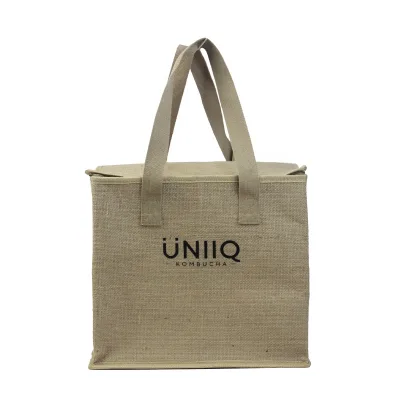
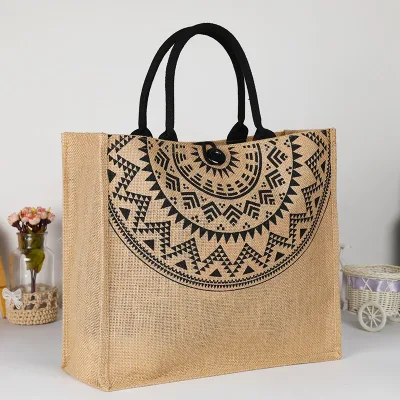
Waterproof Insulated Grocery Jute Burlap Shopping Thermal Cooler Tote Bag
$1.50 - $2.00
MOQ: 500 Pieces






Comprehensive Sourcing Guide
Strategic Sourcing Guide for Waterproof Insulated Jute Lunch Bags
The global shift toward sustainable packaging and eco-friendly food storage solutions has elevated the demand for specialized lunch bags that combine natural aesthetics with functional performance. Buyers searching for a "Waterproof Insulated Jute Lunch Bag" are navigating a complex market where material authenticity, thermal efficiency, and structural durability must align. While jute offers a rustic, biodegradable appeal, the functional requirement for waterproofing and insulation introduces specific technical challenges that procurement teams must address. This guide provides a disciplined framework for evaluating suppliers, verifying product attributes, and managing the procurement lifecycle for these specialized containers.
Material Composition and Functional Architecture
The core of any successful lunch bag lies in its material architecture. The term "jute" implies the use of natural fibers, which are prized for their strength and biodegradability. However, pure jute is porous and absorbs moisture, making it unsuitable for holding liquids or maintaining temperature without treatment. In the context of the observed product data, the market offers a variety of material compositions, including "Non-Woven" and "Polyester," which often serve as the primary structural layer or the outer shell in hybrid designs.
For a product to be truly "waterproof," the jute component must be treated or laminated. The supplied facts indicate that "Laminating" is a recognized printing and processing technique in this category. This process is critical; it involves applying a protective film or coating to the fabric to create a moisture barrier. Without this layer, the bag would fail the "waterproof" criteria. Furthermore, the "Insulated" aspect requires an internal lining, typically made of materials like PEVA or aluminum foil, which is not explicitly detailed in the raw data but is a standard industry requirement for thermal retention.
Buyers must verify the specific material blend. The data shows products with "Polyester" material and "Non-Woven" material. A high-quality insulated jute bag often features a jute outer shell for aesthetics, a laminated layer for water resistance, and an insulated inner lining. The "Hardness" attribute observed as "Medium Soft" suggests a flexible structure that can be folded or compressed, which is desirable for storage but must not compromise the insulation integrity. The "Bearing Capacity" ranges observed, such as "3-10 kg" or "2-3 kg," indicate that the bag's structural integrity varies significantly by model. Procurement teams should request physical samples to confirm that the jute weave, when combined with the waterproofing treatment, can support the intended load without tearing or deforming.
Technical Specifications and Performance Metrics
Defining the technical specifications is essential for ensuring the product meets operational needs. The supplied data highlights several key performance indicators that buyers should use as a baseline for comparison. Size and capacity are paramount; observed standards include dimensions like "352814cm" and capacity ranges such as "6-12 Cans" or "<6 Cans." These metrics directly correlate to the bag's utility for different user profiles, from individual commuters to family meal prep.
Thermal performance is another critical specification. The data lists "Cold Time" attributes of "4-6H" and ">6H." This distinction is vital for buyers targeting different market segments. A bag with a cold time of over six hours is suitable for full-day school or work use, whereas a 4-6 hour bag may only suffice for short commutes. Buyers must verify how this cold time is achieved, as it depends on the thickness and type of the insulation layer, which is not explicitly quantified in the provided facts but is a standard engineering variable.
The "Sealing & Handle" attribute of "Directly" suggests a specific construction method where handles are attached directly to the body, potentially affecting the bag's load distribution. Additionally, the "Closure Type" is noted as "Zipper," which is the standard for maintaining the internal environment and preventing spillage. The "Weight Limit" of ">10 kg" in some listings contrasts with the "Gross Weight" of "<0.1 kg" or "<0.5 kg," indicating a significant disparity between the bag's own weight and its maximum load capacity. This high load-to-weight ratio is a positive indicator of material efficiency, but buyers must ensure the zipper and handle attachments can withstand the maximum load without failure.
Compliance, Certification, and Safety Standards
In the B2B sector, compliance is non-negotiable. The supplied facts mention "CE" as a product standard for specific models. This certification is a mandatory requirement for products sold in the European Economic Area, indicating conformity with health, safety, and environmental protection standards. Buyers must verify that the "CE" mark applies to the specific model they intend to purchase, as certifications are often model-specific.
Beyond CE, the "Feature: Recyclable" attribute aligns with global sustainability mandates. However, the term "Recyclable" is a claim that requires verification. Buyers should request documentation proving the recyclability of the jute, the lamination, and the insulation layers. The "Disposable: Non-Disposable" attribute confirms that these are durable goods intended for repeated use, which impacts the expected lifecycle and waste management strategy for the end-user.
Safety regarding food contact is another critical area. While the "Usage" includes "Food" and "Health Care Products," the specific food-grade certifications (such as FDA or LFGB) are not explicitly listed in the provided facts. Buyers must explicitly ask suppliers for food-contact safety test results, especially for the inner lining and the waterproof coating, to ensure no harmful chemicals leach into the food. The "Standard" attribute also lists "50cm40cm8cm, customized," which implies that dimensional standards can be negotiated, but any deviation from standard sizes must be validated for structural integrity.
Cost Drivers and Pricing Dynamics
Understanding the cost structure of waterproof insulated jute lunch bags is crucial for budgeting and margin analysis. The observed price range of "0.03-8.8 USD" indicates a vast spectrum of product quality and complexity. The lower end of this range likely corresponds to basic non-woven or simple polyester bags with minimal insulation, while the higher end reflects premium jute blends with advanced lamination, superior insulation, and custom branding.
Several factors drive these costs. First, the "Customization" attribute is a major cost variable. The data confirms that "Customized" printing, "Logo Printing," and "Design: as Your Request" are available. Customization involves setup costs for molds, printing plates (specifically "Gravure" printing is noted), and labor. The "MOQ range" of "20-3000" further influences unit pricing; higher volumes generally reduce the per-unit cost, but the minimum order quantities can be a barrier for smaller buyers.
Material costs also play a significant role. Jute is a natural fiber, and its price fluctuates based on harvest yields and processing costs. The addition of waterproof laminates and insulation materials adds to the base cost. The "prod_packing" methods, such as "Carton" or "Bulk Packing, 100PCS/CTN," affect logistics costs. Bulk packing reduces packaging material costs but may increase the risk of damage during transit if not handled correctly. Buyers should request a detailed cost breakdown that separates material, labor, customization, and logistics to understand where the value is added.
Supplier Evaluation and Quality Assurance
Selecting the right supplier requires a rigorous evaluation process. The data indicates that the "prod_origin" is primarily "China," with specific mentions of "Xiamen, China." Xiamen is a known hub for textile and bag manufacturing, but buyers should not assume all suppliers in the region offer the same quality. The "Style" attributes, ranging from "Fashionable" to "Leisure" and "Tote Bags," suggest a diverse product portfolio, but buyers must ensure the supplier specializes in the specific niche of insulated, waterproof bags.
Quality control should focus on the critical failure points: the seal integrity, the handle attachment, and the insulation performance. The "Gross Weight" and "Bearing Capacity" data suggest that some bags are lightweight yet strong, but this must be verified through physical testing. Buyers should request a pre-shipment inspection plan that includes drop tests, water resistance tests, and thermal retention tests. The "Printing Process: Laminating" should be inspected for uniformity and adhesion, as peeling lamination is a common defect that compromises waterproofing.
The "prod_model" variations (e.g., F45, D123, MC-458) indicate that suppliers often have multiple SKUs. Buyers must ensure that the specific model selected matches the required specifications exactly. The "Color" options listed (Red, Pink, Grey, Green, Blue, Black) provide variety, but color consistency across batches is a common quality issue. Buyers should request color swatches and a color tolerance standard before placing a large order.
Application Scenarios and Market Fit
The versatility of these bags is highlighted by the diverse "Usage" categories, including "Health Care Products," "Garment & Shoes," "Toy," "Digital Products," "Food," "Cosmetic," "Gift," and "Arts and Craft." This broad applicability means that a single product line can serve multiple market segments. For the "Food" application, the waterproof and insulated features are essential for maintaining food safety and temperature. For "Gift" and "Arts and Craft," the "Fashionable" style and "Customized" printing are the primary value drivers.
The "Type: Handled" and "Style: Tote Bags" attributes suggest that these products are designed for portability and ease of carrying. The "Capacity" of "6-12 Cans" makes them suitable for office lunches, school meals, or outdoor picnics. The "Cold Time" of ">6H" is particularly relevant for professionals who need to keep food fresh throughout the workday. Buyers should align the product specifications with their target customer's specific needs. For example, a corporate gift program might prioritize the "Logo Printing" and "Design" aspects, while a school supply vendor might focus on the "Bearing Capacity" and "Durability."
Long-Term Procurement and Sustainability Strategy
Long-term procurement success depends on building a sustainable supply chain. The "Feature: Recyclable" attribute is a strong selling point, but it requires ongoing verification. Buyers should establish a partnership with suppliers who are transparent about their material sourcing and end-of-life disposal options. The "Customization" capability allows for brand evolution, but buyers must manage the complexity of maintaining consistent quality across different design iterations.
The "Standard" of "Customized" implies flexibility, but buyers should establish clear specifications to avoid scope creep. The "prod_packing" of "Cartons" or "Bulk Packing" should be optimized for logistics efficiency to reduce carbon footprint and shipping costs. As the market for eco-friendly products grows, buyers should anticipate increasing demand for certified sustainable materials and transparent supply chains. Regular audits and performance reviews of suppliers will ensure that the product continues to meet the evolving standards of the market.
In conclusion, sourcing waterproof insulated jute lunch bags requires a balanced approach that considers material science, technical performance, compliance, and cost dynamics. By rigorously evaluating the factors outlined in this guide, buyers can secure high-quality products that meet their operational requirements and align with their sustainability goals. The observed data provides a solid foundation for decision-making, but physical verification and detailed supplier engagement remain essential steps in the procurement process.
FAQs
What materials are used for waterproof insulated jute lunch bags?
Products often use Non-Woven or Polyester materials with laminating processes to ensure waterproofing. While jute offers a natural look, the data shows these synthetic layers are standard for creating moisture barriers and thermal retention in the observed models.
Can these bags maintain cold temperatures for a full workday?
Yes, some models offer a cold time of over six hours, suitable for full-day use. Other options provide a cold time of 4-6 hours, which is sufficient for shorter commutes or brief outings depending on the specific insulation layer used.
Which certifications are available for these lunch bag products?
Some specific models carry the CE standard, indicating conformity with European safety and environmental protection requirements. Buyers should verify that this certification applies to the exact model they intend to purchase before placing a bulk order.
How much weight can these bags typically carry?
Bearing capacity varies by model, with observed ranges from 2-3 kg up to 3-10 kg. Some listings indicate a weight limit greater than 10 kg, though the gross weight of the bag itself remains under 0.5 kg.
Is customization available for logos and designs on these bags?
Customization is available for logos, printing, and design requests. The data confirms options for customized printing using gravure processes, allowing buyers to tailor the product appearance to their specific brand or gift requirements.
What are the standard dimensions and capacity for these bags?
Standard sizes include dimensions like 35*28*14cm with capacities holding 6-12 cans. Other models may hold fewer than 6 cans, and dimensions can be customized to meet specific user needs or storage requirements.