Source Waterproof Insulated Lunch Bag for Food Storage, Travel, and Work
Compare 30 Waterproof Insulated Lunch Bag options from verified Chinese manufacturers. Buyers can evaluate features like thermal insulation, custom logos, and multiple compartments for food storage and daily use.
Key considerations
Products List


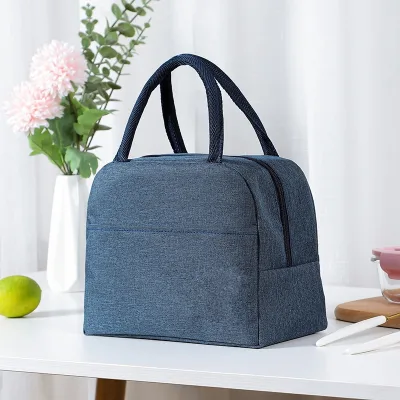


Portable Lunch Bag Waterproof Insulated Thermal Food Picnic Bag for Kids
$0.55 - $0.63
MOQ: 500 pieces


Leak-Proof Insulated Lunch Bag for Work School Outdoor Picnic Daily Use Lunch Bag
$1.80 - $2.16
MOQ: 20 Pieces

Portable Insulated Lunch Bag with Comfort Handle for Work and School Use Lunch Bag
$1.08 - $1.29
MOQ: 500 Pieces

Travel-Friendly Insulated Lunch Bag with Soft Handle for Work School Needs
$1.24 - $1.49
MOQ: 20 Pieces

Durable Large-Capacity Lunch Bag with Multi-Color, Waterproof and Stainproof
$2.30 - $2.40
MOQ: 500 Pieces

Lightweight Insulated Lunch Bag with Multiple Colors for Daily Meal Carrying Lunch Bag
$1.08 - $1.29
MOQ: 500 Pieces


Comprehensive Sourcing Guide
Strategic Sourcing Guide for Waterproof Insulated Lunch Bags
Understanding Product Variability and Core Definitions
The procurement landscape for insulated lunch bags is defined by significant variability in material composition, insulation technology, and waterproofing claims. When sourcing a "Waterproof Insulated Lunch Bag," buyers must first distinguish between products that offer true liquid resistance and those that merely claim thermal retention. The supplied market data reveals a fragmented product range where some items are explicitly described as "Non-Waterproof" despite possessing thermal insulation features, while others utilize specific linings like PEVA to enhance moisture resistance. This distinction is critical because the term "waterproof" in B2B contexts often implies a specific rating or construction standard that is not universally applied across all listed inventory.
Buyers must recognize that product attributes such as "Water Proof: Non-Waterproof" appear alongside features like "Insulation: PEVA Lining" and "Function: Thermal Insulate." This suggests that a single product listing may prioritize thermal performance over liquid barrier properties. Consequently, the definition of a "waterproof" bag in this category is not absolute but relative to the specific model's construction. A bag with a PEVA lining may resist light condensation or spills, but it may not withstand submersion or heavy rain without a dedicated waterproof membrane or welded seam construction. Therefore, the initial sourcing strategy must involve a rigorous clarification of the intended use case: is the bag required to carry wet items, survive a rainstorm, or simply maintain temperature for dry food? The answer dictates whether a buyer should prioritize models with specific waterproof certifications or accept standard insulated bags with basic lining protection.
Technical Specifications and Material Composition
The technical architecture of an insulated lunch bag is primarily determined by its material selection and internal lining. The observed market data indicates a divergence in material choices, with some products utilizing "PP Woven or Non Woven" fabrics, while others specify "Polyester" as the primary material. These base materials influence the bag's durability, weight, and ability to hold shape. For instance, "PP Woven" materials often offer high tensile strength and are suitable for heavy-duty applications, whereas "Polyester" provides a smoother surface for printing and potentially better flexibility.
The insulation mechanism is equally critical. The data explicitly mentions "PEVA Lining" as a key attribute for insulation. PEVA (Polyethylene Vinyl Acetate) is a common material used in food-grade insulation due to its ability to retain temperature and its resistance to moisture absorption. However, the presence of a PEVA lining does not automatically equate to a waterproof exterior. The outer shell's resistance to water depends on the fabric treatment and the seam construction. Some listings note "Surface Handling: Hot Stamping" and "Logo Printing: With Logo Printing," which can affect the integrity of the outer layer if the heat or pressure compromises the water-resistant coating.
Furthermore, the structural design plays a vital role in performance. Attributes such as "Multiple Compartments," "Adjustable Strap," and "Top Handle" indicate functional versatility. The "Cold Time: >6h" specification provides a benchmark for thermal retention, suggesting that a well-constructed bag should maintain low temperatures for at least six hours under standard conditions. However, buyers must verify if this performance metric was tested under specific ambient temperatures or with specific load configurations. The "Size: Middle" or "Medium" designation, along with "Custom Size Accepted," highlights the importance of dimensional accuracy for specific product fits. A bag that is too large may not insulate efficiently due to air volume, while one that is too small may not accommodate the intended food items.
Compliance, Certification, and Safety Standards
Navigating the compliance landscape for food-contact products requires careful attention to certifications and safety factors. The supplied data includes a reference to "BSCI" (Business Social Compliance Initiative) certification, which addresses social responsibility and ethical labor practices rather than product safety or material composition. While BSCI is a valuable indicator of a supplier's commitment to ethical manufacturing, it does not substitute for food safety certifications such as FDA, LFGB, or SGS testing for food contact materials.
Buyers must explicitly verify that the materials used, particularly the "PEVA Lining" and any adhesives or inks used for "Silk-Screen, Heat Transfer, Embroidery, Offset Pri" logos, are compliant with local food safety regulations. The attribute "Safety Factor: Safety" is a generic observation and does not constitute a verified standard. In the context of food storage, the absence of a specific food-grade certification in the provided data necessitates a proactive verification step. Procurement teams should request third-party test reports confirming that the bag's interior lining does not leach harmful chemicals into food, especially when storing acidic or fatty items.
Additionally, the "Standard: customized" and "Standard: polyester" entries suggest that many products are made to order without adherence to a universal industry standard. This variability increases the risk of non-compliance if the buyer does not specify their own technical requirements. For markets with strict regulations, such as the European Union or North America, buyers should insist on documentation proving that the "Eco-friendly" and "Durable" claims are backed by recognized environmental or material safety standards, rather than relying on marketing terminology.
Cost Drivers and Pricing Dynamics
The pricing structure for insulated lunch bags is influenced by a complex interplay of material costs, customization levels, and order volume. The observed price range of 0-10 USD indicates a highly competitive market with significant variance based on specifications. Several factors drive these costs. First, the material choice is a primary cost driver; bags made from "PP Woven" or high-grade "Polyester" with specialized "PEVA Lining" will generally command a higher price than those with basic non-woven constructions.
Second, the level of customization significantly impacts the unit cost. The data confirms that "Customization: Available" and "Customized: Customized" are standard offerings. This includes custom logos via "Silk-Screen, Heat Transfer, Embroidery, Offset Pri," custom colors, and custom sizes. Each of these processes adds to the production time and cost. For example, "Hot Stamping" and multiple printing techniques require additional setup and quality control steps. The "MOQ: 500PCS/Item/Color" observed in the data suggests that lower order volumes may result in higher per-unit costs or may not be feasible for certain customization levels.
Third, the packaging and logistics contribute to the final landed cost. Attributes like "prod_packing: CTN," "Polybag," and "Polybag+Carton" indicate different packaging standards. Bulk packaging in cartons (CTN) is generally more cost-effective for shipping but requires more handling. The "Delivery Time: Usually 30 days" or "30-35 days" lead time also affects cost, as expedited shipping or rush orders often incur premium charges. Buyers should analyze the total cost of ownership, including the potential for higher unit prices at lower MOQs and the logistical costs associated with longer lead times.
Supplier Evaluation and Operational Capabilities
Evaluating suppliers for insulated lunch bags requires a focus on their manufacturing capabilities, geographic location, and ability to meet specific technical requirements. The data lists origins in "Wenzhou, China," "Quanzhou," and "Fujian, China," which are known hubs for textile and bag manufacturing. These regions offer a mature supply chain but also present the need for due diligence regarding factory audits and quality control systems.
A critical aspect of supplier evaluation is their ability to handle the "OEM/ODM" services explicitly mentioned in the data. This capability ensures that the supplier can adapt their production lines to create unique designs, including specific "Custom Size Accepted" options and tailored "Logo" placements. Buyers should assess the supplier's experience with "Sewing" technology, as the durability of the bag often depends on the quality of the stitching, especially for handles and compartments.
Furthermore, the "Service: OEM/ODM" attribute implies a level of flexibility, but buyers must verify the supplier's capacity to manage complex orders. The "MOQ: 500PCS/Item/Color" constraint suggests that suppliers may have minimum production run requirements that could impact small buyers. It is essential to confirm if the supplier can accommodate mixed orders or if they strictly adhere to the 500-piece minimum per color. Additionally, the "Delivery Time" of 30-35 days should be cross-referenced with the supplier's historical performance to ensure reliability. A supplier with a consistent track record of meeting lead times is preferable to one with variable delivery schedules, as delays can disrupt inventory planning.
Quality Control and Long-Term Procurement Strategy
Implementing a robust quality control (QC) strategy is essential for mitigating risks associated with the variability in product attributes. Given the observed "Non-Waterproof" status of some items, buyers must establish clear acceptance criteria for water resistance. This may involve conducting in-house or third-party water spray tests to verify that the bag meets the intended "Water Proof" requirements. The "Eco-friendly" and "Durable" claims should also be validated through physical testing, such as drop tests for handle strength and abrasion tests for the outer fabric.
For long-term procurement, buyers should focus on building a relationship with suppliers who can provide consistent quality and transparency. The "prod_standard: customized" nature of the products means that each order may have unique specifications, requiring a detailed and agreed-upon technical specification sheet for every purchase. This document should clearly define the material composition, lining type, insulation performance, and waterproofing standards.
Additionally, buyers should consider the environmental impact of their procurement choices. The "Eco-friendly" attribute suggests a growing market demand for sustainable products. Sourcing bags made from recycled materials or those with biodegradable linings can align with corporate sustainability goals. However, these claims must be substantiated with evidence, such as material certificates or lifecycle assessments. Finally, maintaining a buffer stock or a flexible supply chain can help mitigate the risks associated with the "30-35 days" lead time, ensuring that inventory levels remain stable despite potential supply chain disruptions.
Comparative Analysis of Product Attributes
To facilitate decision-making, the following table summarizes the key attributes observed in the market data, highlighting the variations that buyers must navigate.
| Attribute Category | Observed Variations | Procurement Implication |
|---|---|---|
| Material | PP Woven, Non Woven, Polyester | Verify durability and weight requirements; PP offers strength, Polyester offers print quality. |
| Insulation | PEVA Lining | Confirm food-grade safety and thermal retention claims (>6h). |
| Waterproofing | Explicitly "Non-Waterproof" vs. Implied Resistance | Do not assume waterproofing; request specific test data for liquid resistance. |
| Customization | Logo (Silk-Screen, Heat Transfer, etc.), Size, Color | High customization increases cost and lead time; define specs early. |
| MOQ | 500 PCS/Item/Color (Observed) | Plan order volumes to meet minimums or negotiate for smaller runs. |
| Lead Time | 30 to 35 Days | Factor into inventory planning; avoid just-in-time strategies without buffer. |
| Certification | BSCI (Social Compliance) | Verify food safety certifications separately; BSCI does not cover material safety. |
| Origin | Wenzhou, Quanzhou, Fujian, China | Assess regional supply chain maturity and logistics costs. |
This comparative analysis underscores the necessity of a detailed, specification-driven approach to sourcing. By understanding the nuances of these attributes, buyers can effectively navigate the market to secure high-quality, compliant, and cost-effective insulated lunch bags that meet their specific operational needs.
FAQs
Can I get a Waterproof Insulated Lunch Bag with PEVA lining?
Yes, you can find bags with PEVA lining for thermal insulation, but some listed models are explicitly non-waterproof. Buyers must verify specific water resistance claims before purchase as the lining may only resist light condensation rather than heavy rain or submersion.
What customization options are available for logo printing on these bags?
Customization is available with multiple printing methods including silk-screen, heat transfer, embroidery, and offset printing. Suppliers in Wenzhou and Quanzhou offer these services, though each method may require a minimum order quantity of 500 pieces per item and color.
Which materials are commonly used for the outer shell of these bags?
Common materials include PP woven, non-woven fabrics, and polyester. These base materials influence durability and shape retention, with polyester often providing a smoother surface for high-quality printing and PP woven offering higher tensile strength for heavy-duty applications.
How long does delivery usually take for custom orders of these bags?
Delivery time is usually 30 days, with some specific models requiring 30 to 35 days. This lead time applies to orders meeting the standard MOQ of 500 pieces per item and color, and may vary based on the complexity of customization and packaging requirements.
Can I find suppliers with BSCI certification for ethical manufacturing?
Yes, some suppliers in the provided data list BSCI certification, which indicates compliance with social responsibility standards. However, this certification addresses labor practices rather than food safety, so buyers should also request specific food-grade material test reports for the PEVA lining.
What is the typical cold retention time for these insulated lunch bags?
The typical cold retention time is greater than six hours under standard conditions. This performance depends on the insulation quality, such as the PEVA lining, and the ambient temperature, so buyers should verify test conditions if long-term retention is critical for their use case.