Source Waterproof Large Capacity Sling Bag for Gym, Work, Travel
Explore 30 verified listings for a Waterproof Large Capacity Sling Bag suitable for gym, work, and outdoor travel. Buyers can compare materials like polyester and nylon, dimensions, and customization options across multiple suppliers.
Key considerations
Products List

Large Capacity Lightweight Shoulder Crossbody Sling Backpack Waterproof Mobile Sling Bag
$3.59 - $6.59
MOQ: 500 Pieces

Large Capacity Travel Antitheft Waterproof Multifunction Sling Crossbody Bag
$7.99 - $10.99
MOQ: 500 Pieces

Large Storage Wholesale Travel Sling Bag Multi-Functional Crossbody Bag Men
$4.99 - $6.99
MOQ: 500 Pieces

Customtravel Hiking Outdoor Multipurpose Waterproof Crossbody Sling Backpack
$4.33 - $6.24
MOQ: 500 Pieces


Waterproof Premium Large Capacity Double Side Sling Chest Bags for Ladies
$4.90 - $5.70
MOQ: 300 Pieces


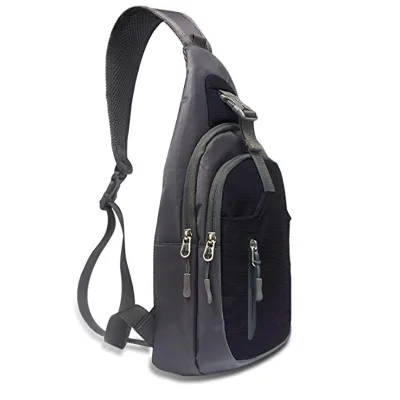


Outdoor Water-Proof Sling Bags for Men Women Chest Bags Crossbody Sling Bag
$3.80 - $4.60
MOQ: 1000 Pieces


Sling Backpack Multipurpose Crossbody Shoulder Bag Travel Hiking Daypack
$5.00 - $8.50
MOQ: 500 Pieces

Comprehensive Sourcing Guide
Strategic Sourcing Guide for Waterproof Large Capacity Sling Bags
The global demand for functional, compact, and weather-resistant carry solutions has driven significant innovation in the sling bag sector. For B2B procurement professionals, the specific keyword "Waterproof Large Capacity Sling Bag" represents a complex intersection of material science, logistical efficiency, and design versatility. Sourcing this category requires a disciplined approach that moves beyond superficial marketing claims to verify actual product attributes against rigorous operational standards. The following guide outlines the critical technical, compliance, and commercial factors that define a successful procurement strategy for this specific product category.
Technical Specifications and Material Composition
When evaluating sling bags for large capacity and waterproof performance, the primary technical differentiator lies in the material composition. The supply chain for this category predominantly features two distinct material profiles: Polyester and Nylon. Both materials offer inherent water resistance, but their performance characteristics vary based on weave density and coating treatments. Polyester is frequently cited as a primary material for these units, offering a balance of durability and cost-effectiveness. Nylon, conversely, is often selected for applications requiring higher tensile strength and a lighter weight profile, as evidenced by specific model weights ranging from 0.36kg to 1kg depending on the design.
The physical dimensions of the bag are equally critical for defining "large capacity." Procurement specifications must account for the internal volume relative to the external footprint. Observed standard dimensions in the market include configurations such as 451028cm and 35187cm, which suggest a focus on maximizing storage while maintaining a streamlined silhouette suitable for cross-body wear. The "Dumpling Type" shape is a notable design observation, indicating a soft, pliable structure that can expand to accommodate varying loads without compromising the waterproof seal.
Closure mechanisms are the second pillar of technical specification. The "Zipper" is the standard closed way for this category, serving as the primary barrier against moisture ingress. A high-quality zipper is essential; a failure in this component renders the waterproof claim moot. Additionally, the hardness of the product is generally categorized as "Soft," which facilitates packing efficiency and comfort during extended wear. The "Single Shoulder" type designation confirms the ergonomic distribution of weight, a crucial factor for users engaging in gym, work, outdoor, or travel activities.
Compliance and Certification Verification
In the B2B sector, compliance is not merely a regulatory hurdle but a fundamental component of product quality assurance. Buyers must verify that the manufacturing process adheres to specific environmental and safety standards. The supply data indicates that compliant products in this category often meet "RoHS" (Restriction of Hazardous Substances) standards and are explicitly "PVC & Pfc-Free." These certifications are vital for markets with strict environmental regulations, such as the European Union and North America, where the use of per- and polyfluoroalkyl substances (PFCs) and polyvinyl chloride (PVC) is heavily scrutinized.
The "Quality" attribute in the product data explicitly references these standards, suggesting that reputable suppliers integrate these checks into their production lines. However, buyers should not assume that every listed product automatically satisfies these criteria without documentation. Verification should include requesting test reports that confirm the absence of restricted substances. Furthermore, the "Water Resistant" and "Waterproof" functional claims must be backed by tangible evidence. While the product attributes list "Waterproof" and "Water Resistant Crossbody Bag" as features, the distinction between these terms is significant. A waterproof bag implies a complete seal against water penetration, whereas water-resistant implies protection against light rain or splashes. Procurement teams must clarify the specific IP rating or testing methodology used to validate these claims.
Cost Drivers and Pricing Dynamics
Understanding the cost structure of waterproof sling bags is essential for negotiating favorable terms. The observed price range in the market spans from $3.23 to $15.00 USD. This wide variance is driven by several key factors, including the quality of the waterproof coating, the complexity of the zipper hardware, and the volume of the order. The "Hot Sale High Quality" designation often correlates with the upper end of this price spectrum, reflecting investments in superior materials like high-denier nylon or reinforced stitching.
The Minimum Order Quantity (MOQ) is another significant cost driver. The data indicates an MOQ range of 3 to 3000 units, with a specific benchmark of 500 pieces for standard sling bag models. Ordering at the 500-piece threshold typically unlocks better unit pricing compared to smaller sample runs. However, buyers must balance the MOQ against their inventory turnover rates to avoid overstocking. The "Sample Time" of 5-7 days is a critical logistical variable; faster sample turnaround allows for quicker validation of quality, reducing the overall time-to-market.
Packaging standards also influence the final landed cost. The standard packing method involves placing one unit in a poly bag, with several units consolidated into a single carton. Variations such as "1 PP 1 Bag" suggest alternative packaging solutions that may affect shipping volume and protection levels. Buyers should evaluate whether the standard packaging meets their destination requirements or if custom branding and reinforced cartons are necessary, as these add-ons will impact the total cost.
Typical Applications and Market Segmentation
The versatility of the Waterproof Large Capacity Sling Bag makes it suitable for a diverse range of applications. The "Suitable for" attribute explicitly lists gym, work, outdoor, and travel as primary use cases. This broad applicability stems from the bag's "Unisex" gender designation and "Fashion" style, which allows it to transition seamlessly from athletic environments to urban commuting.
For the outdoor and travel sectors, the "Waterproof" and "Water Resistant" features are paramount. Users in these segments require gear that can withstand unpredictable weather conditions while carrying essential items like electronics, documents, and personal effects. The "Big Capacity" specification ensures that the bag can hold larger items without becoming cumbersome. In the gym and work contexts, the "Soft" hardness and ergonomic "Single Shoulder" design provide comfort during movement, while the "Zipper" closure offers security against theft and accidental spills.
The "Crossbody Bag" and "Sling Backpack" designations highlight the dual nature of the product. It serves as a hands-free solution for active users, distributing weight evenly across the torso. This makes it particularly attractive for logistics personnel, delivery drivers, and tourists who need to carry items securely while maintaining mobility. The "Sport Sling Bag" variant further emphasizes its utility in active lifestyles, where sweat resistance and quick access to contents are valued.
Supplier Evaluation and Production Capabilities
Selecting the right supplier requires a deep dive into their production capabilities and geographic location. The data points to "Quanzhou, China" as a significant origin point for these products. Quanzhou is a well-established manufacturing hub for textiles and bags, known for its supply chain efficiency. However, buyers must verify the specific factory's capacity to handle their order volume. The "MOQ: 500 Pieces" suggests that the supplier is geared towards medium-to-large volume production, which may not be suitable for small startups seeking low-risk entry.
Lead times and sample availability are critical indicators of supplier reliability. A "Sample Time" of 5-7 days is standard, but buyers should confirm if this timeline includes shipping or if it refers solely to production. Additionally, the "prod_packing" details, such as "One in Poly Bag Several in One Carton," indicate a standardized approach to logistics. Suppliers who can offer flexible packing options or custom branding on the poly bags add significant value.
When evaluating suppliers, buyers should also assess their quality control processes. The mention of "Reach / RoHS" and "PVC & Pfc-Free" standards implies a commitment to compliance, but this must be verified through third-party audits or on-site inspections. Suppliers with a track record of meeting these standards are less likely to face customs delays or product recalls. The "Feature: Hot Sale High Quality" claim should be treated as a marketing statement rather than a guarantee; actual quality must be validated through physical sample testing.
Quality Control and Long-Term Procurement Considerations
Long-term success in sourcing waterproof sling bags depends on rigorous quality control (QC) protocols. Buyers should implement a multi-stage QC process that includes material inspection, in-line production checks, and pre-shipment inspections. The "Weight" of the product, ranging from 0.36kg to 1kg, serves as a basic quality metric; significant deviations from the specified weight may indicate material inconsistencies or manufacturing defects.
The "Gross Weight" of 0.5-1 kg provides a baseline for shipping calculations, but buyers must ensure that the net weight aligns with the product specifications to avoid discrepancies in inventory management. Testing for waterproofing should be a mandatory step before mass production. This can involve water spray tests or submersion tests to verify the integrity of the zipper and seams.
For long-term procurement, establishing a consistent supply chain is vital. Buyers should aim to lock in pricing and lead times through long-term agreements, especially given the volatility of raw material costs like polyester and nylon. The "All" season attribute suggests that these products have year-round demand, making them a stable category for inventory planning. However, buyers must remain vigilant about potential changes in material availability or regulatory standards that could impact production.
Comparative Analysis of Product Models
To facilitate decision-making, the following table compares key attributes of observed product models based on the supplied data. This comparison highlights the variations in size, weight, and material that buyers should consider when selecting a specific model for their needs.
| Product Model | Material | Dimensions (Approx.) | Weight | Key Function |
|---|---|---|---|---|
| EEUSLB-08 | Polyester | 7.28x3.14x11.81 inches | 0.7kg | Water Resistant Crossbody Bag |
| VLB009 | N/A | 401530 cm | N/A | Water Resistant Crossbody Bag Men |
| VSLB019 | Nylon | 7.5*7.5 inches | 0.36kg | Waterproof Sling Backpack |
| ZSLING-005 | N/A | 451028cm | 1kg | Sport Sling Bag |
| ZSLING-002 | N/A | 5*18 *7cm | N/A | Single Shoulder Bag |
| ZSLING-001 | N/A | 35*18 *7cm | N/A | Single Shoulder Bag |
This table illustrates the diversity in the market. While some models focus on specific demographics like "Crossbody Bag Men," others emphasize specific functions like "Sport Sling Bag." Buyers must align these attributes with their target customer base. The variation in dimensions, from compact 5187cm models to larger 451028cm units, underscores the importance of defining "large capacity" clearly in the procurement brief.
In conclusion, sourcing waterproof large capacity sling bags requires a meticulous approach that balances technical specifications, compliance requirements, and cost efficiency. By focusing on verified material properties, robust quality control, and clear application scenarios, buyers can secure a supply chain that delivers high-quality products capable of meeting the diverse needs of the global market. The data provided offers a solid foundation for making informed decisions, but continuous verification and supplier engagement remain essential for long-term success.
FAQs
Can I get customization for these sling bags?
Yes, customization is available for these waterproof sling bags. Buyers should note that sample production typically takes 5 to 7 days before mass manufacturing begins for orders.
What is the minimum order quantity for these bags?
The minimum order quantity is generally 500 pieces for standard sling bag models. However, some suppliers may accept lower quantities starting from 3 units for specific sample requests.
Which materials are used for waterproof sling bags?
These bags are primarily constructed from Polyester or Nylon to ensure durability and water resistance. The material choice affects the weight, which ranges from 0.36kg to 1kg depending on the model.
How much do waterproof sling bags cost per unit?
The observed price range for these bags is between 3.23 and 15 USD per unit. The final cost depends on the specific model, material quality, and the volume of the order placed.
What certifications do these bags meet?
Compliant products often meet RoHS standards and are explicitly PVC and Pfc-Free. Buyers must verify that specific batches adhere to these quality standards before finalizing large orders.
Where are these sling bags manufactured?
The primary origin for these products is Quanzhou, China. This location is a known hub for textile and bag manufacturing, offering efficient supply chain capabilities for bulk orders.
What is the standard packaging for these bags?
Standard packaging involves placing one bag in a poly bag with several units consolidated into a single carton. Some variations may use one polypropylene bag per unit for specific shipping needs.