Source Waterproof PU Crossbody Bag for Household Camping Travel
Compare 30 verified listings for a Waterproof PU Crossbody Bag suitable for household, professional, and camping use. Buyers can evaluate customization options, material details, and lead times from multiple Chinese manufacturers offering OEM services.
Key considerations
Products List


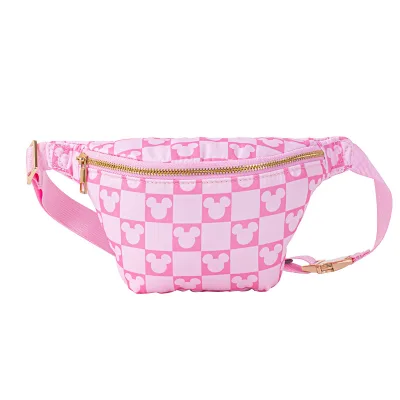
Sling Bags Water Resistant Chest Bag Crossbody Single Shoulder Cross-Body Bag
$2.80 - $3.10
MOQ: 500 Pieces




Comprehensive Sourcing Guide
Strategic Sourcing Guide for Waterproof PU Crossbody Bags
Understanding Product Specifications and Material Composition
When sourcing waterproof PU crossbody bags, buyers must first establish a clear understanding of the core material properties and structural specifications that define the product category. The primary material identified in the current market data is Polyurethane (PU), a synthetic leather alternative known for its durability and resistance to moisture. This material choice is critical for applications requiring protection against the elements, as PU offers a water-resistant barrier that is often more flexible and cost-effective than genuine leather or heavy-duty canvas. The internal lining of these bags frequently utilizes a combination of Polyester, Cotton, and Nylon, which influences the bag's overall weight, texture, and capacity to hold items without snagging.
The physical dimensions of the bags vary significantly across different models, ranging from compact sizes like 10217 cm to larger formats such as 31256 cm. Specific models observed in the market include the FLY-HB210221, ZXS0125, ZXK3321, LY0222, ZXT207092, and TS-11271. These variations indicate that a single supplier may offer a portfolio of sizes, but buyers must verify the exact dimensions required for their specific use case. The shape is predominantly described as "Vertical Square," a design that maximizes vertical storage space while maintaining a streamlined profile suitable for crossbody wear. The hardness of the product is noted as "Partial Hard," suggesting a balance between structural rigidity to maintain shape and flexibility for comfort during movement.
A key functional attribute is the "Double Open" feature, which likely refers to a dual-zipper or dual-compartment design allowing for easier access to contents. The gender specification is listed as "Female," indicating that the styling, sizing, and aesthetic details are tailored toward women's fashion and utility needs. However, the usage categories extend beyond personal fashion to include "Household," "Professional," and "Camping & Traveling" scenarios. This versatility suggests that the bags are engineered to withstand diverse environments, from daily office commutes to outdoor adventures where waterproofing is essential.
Compliance Standards and Certification Verification
In the B2B procurement of waterproof bags, verifying compliance with industry standards is a non-negotiable step to ensure product safety and market acceptability. The supplied data indicates that specific models adhere to standards such as CE and SGS. The CE marking is a mandatory conformity mark for products sold within the European Economic Area, signifying that the product meets EU safety, health, and environmental requirements. The presence of SGS certification implies that the product has undergone testing by a recognized inspection, verification, testing, and certification company, often focusing on quality assurance and material safety.
Buyers should be aware that while some listings mention ISO 9001, this is currently categorized as low-confidence background information. Therefore, procurement teams should not assume that all suppliers in this category hold ISO 9001 certification unless explicitly confirmed in the contract or through direct audit. Instead, the focus should remain on the specific product standards listed, such as the CE mark for European markets and SGS for general quality verification. It is also important to note that the origin of these products is primarily "Made in China," with specific manufacturing hubs identified in Guangzhou. This geographic concentration can be advantageous for supply chain efficiency but requires rigorous vetting of the specific factory's compliance history.
When evaluating a supplier, buyers must request valid certificates for the specific models they intend to purchase. The standard "31x 25x 6cm" or "21714 cm" dimensions listed are product standards rather than regulatory certifications. Regulatory compliance should be treated as a separate verification step. For instance, if the bag is intended for export to the US or EU, additional chemical compliance tests (such as REACH or CPSIA) may be required, which are not explicitly listed in the provided data. Consequently, the buyer's responsibility is to define the target market's regulatory requirements and demand proof of compliance from the supplier before placing a bulk order.
Cost Drivers and Pricing Structure Analysis
The pricing structure for waterproof PU crossbody bags is influenced by several dynamic factors, including material costs, customization levels, order volume, and logistical requirements. The observed price range in the market spans from $0.19 to $50 USD per unit. This wide variance reflects the spectrum from basic, unbranded utility bags to high-end, fashion-forward designs with complex features. The lower end of the price range typically corresponds to standard models with minimal customization, while the higher end includes bags with premium linings, custom branding, or specialized waterproofing technologies.
Minimum Order Quantity (MOQ) is a significant cost driver in this category. The data indicates a consistent MOQ of 300 pieces per style and color across multiple models. This threshold is relatively high for small businesses but standard for B2B manufacturing. Buyers must factor the MOQ into their total cost of goods sold (COGS). Ordering exactly at the MOQ minimizes the per-unit cost but increases inventory risk. Conversely, ordering above the MOQ may yield volume discounts, but the supplier's pricing policy on incremental units must be clarified. The sample fee is listed as $50 USD, which is a standard practice to cover the cost of prototyping and shipping. This fee is often deductible from the final bulk order invoice, a detail that should be negotiated during the initial inquiry.
Payment terms also impact the financial planning of the procurement process. The standard terms observed are T/T (Telegraphic Transfer) and L/C (Letter of Credit). T/T is common for established relationships and smaller orders, requiring a deposit before production and a balance before shipment. L/C is preferred for larger transactions to mitigate risk for both parties. Buyers should also consider the "Delivery Lead Time," which ranges from 25 to 40 business days depending on the specific model and production schedule. Longer lead times can tie up capital and require more accurate demand forecasting. Additionally, the packaging method, such as "1 polyester Bag, 20PCS/Carton" or "12-16PCS Per Carton," affects shipping costs. Denser packing reduces freight expenses, but the fragility of the PU material must be balanced against the need for protective packaging to prevent damage during transit.
Typical Applications and Usage Scenarios
The versatility of waterproof PU crossbody bags makes them suitable for a wide array of applications, ranging from everyday consumer use to specialized professional and outdoor activities. The primary usage category is "Fashion," where the bags serve as style accessories. The "Vertical Square" shape and "Double Open" design cater to modern aesthetic preferences while offering practical functionality. In this context, the bags are often used by women for daily commuting, shopping, or social events, where the waterproof feature provides peace of mind against unexpected rain.
Beyond fashion, the "Household" and "Professional" usage categories highlight the bag's utility in organizational and work-related settings. For professionals, the bag may serve as a compact carrier for documents, tablets, or personal items, with the waterproof lining protecting sensitive electronics from moisture. The "Camping & Traveling" application is particularly relevant given the waterproof and durable nature of the PU material. In outdoor scenarios, these bags can protect essential gear such as maps, phones, and first-aid kits from rain, humidity, and rough handling. The "Nylon" and "Polyester" linings mentioned in the data further enhance the bag's ability to withstand the rigors of travel.
The gender specification of "Female" suggests that the design language, including color palettes and hardware finishes, is tailored to appeal to a female demographic. However, the functional attributes like waterproofing and durability are universal. Buyers should consider how the specific model dimensions align with the intended use. For example, the smaller 10217 cm model might be ideal for a travel passport holder or a compact wallet, while the larger 31256 cm model could serve as a primary day bag for camping. Understanding these distinct use cases allows buyers to curate a product line that meets diverse customer needs, rather than offering a one-size-fits-all solution.
Supplier Evaluation and Operational Capabilities
Evaluating suppliers for waterproof PU crossbody bags requires a focus on their production capacity, customization capabilities, and logistical reliability. The data confirms that "Customization" and "OEM" (Original Equipment Manufacturer) services are welcomed by suppliers. This indicates that manufacturers are flexible enough to accommodate private labeling, custom colors, and specific design modifications. However, the "Partial Hard" attribute and specific shape requirements suggest that customization may be limited by the mold and tooling constraints of the factory. Buyers should inquire about the extent of customization available, such as the ability to alter the lining material or adjust the zipper configuration.
The origin of the products is consistently "Made in China," with Guangzhou identified as a key manufacturing hub. This region is known for its mature textile and leather goods supply chains, offering access to high-quality materials and skilled labor. However, the concentration of suppliers in this area also means that competition is fierce, and buyers must differentiate themselves through clear communication of quality expectations. The "Delivery Lead Time" of 25 to 40 business days is a critical operational metric. Buyers must assess whether the supplier can meet these timelines consistently, especially during peak seasons. The "Sample Lead Time" of 7 to 15 business days is also important for the prototyping phase, as delays here can cascade into the production schedule.
Logistical capabilities are another area of focus. The "Delivey Ways" listed include Courier, Sea, and Air, providing flexibility in shipping methods based on urgency and budget. The packaging standards, such as "OPP+CTN" or "Carton" with specific piece counts per carton, indicate that the supplier has established packing protocols. Buyers should verify that the packaging is robust enough to protect the PU material from scratches and moisture during transit. Additionally, the "Payment" terms of T/T and L/C suggest that the suppliers are established enough to handle international trade finance, but buyers should ensure that the payment milestones align with production progress to mitigate financial risk.
Quality Control and Long-Term Procurement Strategy
Implementing a robust quality control (QC) strategy is essential for maintaining the integrity of waterproof PU crossbody bags. Given the "Waterproof" attribute, buyers must verify that the sealing and stitching processes are effective in preventing water ingress. The "Double Open" feature, which likely involves zippers, should be tested for smooth operation and durability under repeated use. The "Partial Hard" nature of the bag requires that the structure maintains its shape without cracking or deforming over time. Buyers should request pre-shipment inspections that specifically test the waterproof rating, zipper strength, and lining adhesion.
Long-term procurement considerations involve building a sustainable relationship with suppliers who can consistently deliver high-quality products. The "MOQ" of 300 pieces per style and color suggests that buyers should plan for a steady demand to justify the order volume. If demand fluctuates, buyers may need to negotiate flexible MOQ terms or explore suppliers with lower thresholds. The "Sample Fee" of $50 USD is a small investment that can prevent costly mistakes in bulk production. Buyers should treat samples as the gold standard for quality and ensure that the bulk production matches the sample's specifications exactly.
Furthermore, the "Customized" nature of the product means that intellectual property and design rights must be protected. Clear contracts should be established regarding the ownership of molds and designs. The "Standard" of 31x 25x 6cm or custom dimensions should be documented precisely to avoid production errors. Finally, buyers should monitor the "Delivery Lead Time" and "Sample Lead Time" closely, as any deviations can impact the overall supply chain efficiency. By maintaining a proactive approach to quality control and supplier management, buyers can ensure a reliable supply of high-quality waterproof PU crossbody bags that meet market demands.
Comparative Analysis of Key Product Attributes
To facilitate informed decision-making, the following table summarizes the key attributes observed across the different models in the market. This comparison highlights the variations in specifications, standards, and packaging that buyers should consider when selecting a supplier.
| Attribute | Model FLY-HB210221 | Model ZXS0125 | Model ZXK3321 | Model LY0222 | Model ZXT207092 | Model TS-11271 |
|---|---|---|---|---|---|---|
| Material | PU | PU | PU | PU | Nylon | PU |
| Size | 31x 25x 6cm | Miduim | 21714 cm | Small | 24147cm | 10217 cm |
| Standard | Custom | SGS | 21714 cm | N/A | 10217 cm | CE |
| Origin | China | Guangzhou, China | China | China | China | China |
| MOQ | 300PCS/Style/Color | 300PCS/Color/Style | 300PCS Per Style Per Color | N/A | N/A | N/A |
| Packaging | OPP+CTN | 1 Polyester Bag, 20PCS/Carton | 12-16PCS Per Carton | Cartoon | N/A | Cartons |
| Lead Time | 25-30 Days | N/A | 30-40 Days | N/A | N/A | N/A |
This table illustrates that while the core material (PU) and origin (China) are consistent, the specific dimensions, standards, and packaging vary significantly. Buyers must align these attributes with their specific product requirements and market expectations. For instance, if a buyer requires a CE-certified product, the TS-11271 model is a relevant candidate. If a specific size is critical, the detailed dimensions in the table provide a clear reference point. By carefully analyzing these attributes, buyers can make data-driven decisions that optimize their procurement strategy.
FAQs
What materials are used for waterproof pu crossbody bags?
The primary material is Polyurethane (PU) with linings of Polyester, Cotton, or Nylon. These combinations ensure water resistance and durability for various uses like camping and professional settings.
Which customization options are available for these bags?
Customization is available including OEM services and specific design modifications. Buyers can request custom sizes like 31x 25x 6cm or adjust features such as the double open zipper mechanism.
How long is the delivery lead time for bulk orders?
The delivery lead time typically ranges from 25 to 40 business days depending on the specific model. Some models like TS-11271 require up to 40 days while others may be ready in 25 days.
What is the minimum order quantity for these products?
The standard minimum order quantity is 300 pieces per style and color. This applies across multiple models including FLY-HB210221 and ZXS0125 to ensure cost-effective production runs.
Can I get samples before placing a large order?
Yes, samples are available with a fee of 50 USD. The sample lead time is 7 to 15 business days, allowing buyers to verify quality and specifications before committing to bulk purchases.
What certifications do these waterproof bags meet?
Specific models meet standards such as CE and SGS. These certifications indicate compliance with safety and quality requirements, though ISO 9001 is not explicitly confirmed for all listed products.
How are the bags packaged for shipping?
Bags are typically packed in one polyester bag per unit with 12 to 20 pieces per carton. Packaging options include OPP+CTN or standard cartons to protect the PU material during transit.