Source Multicolor Fabric Heat Transfer Machine for Garment Shops, Cloth Printing, and Label Production
Find 30 multicolor fabric heat transfer machines from verified Chinese suppliers. Compare specifications for rotary, gravure, and screen printing models suitable for film, fabric, and paper applications with customizable options.
Key considerations
Products List


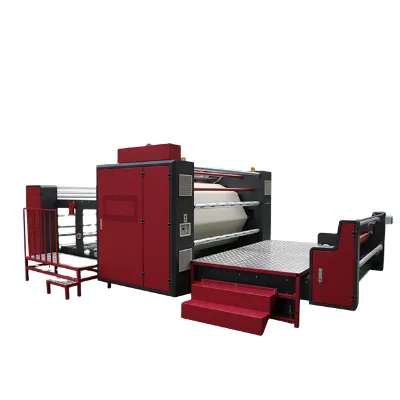


Roll to Roll T-Shirt Clothes Printing Machine Heat Press Transfer Machine
$10000.00 - $28500.00
MOQ: 1 Sets


T-Shirts Heat Transfer Printing Machine Automatic Conveyor Heat Press Machine
$268.00 - $3300.00
MOQ: 1 Pieces

Roll to Roll Heat Press Machine Textile Press Sublimation Heat Transfer Printing Machine
$4800.00 - $8500.00
MOQ: 1 Pieces


Comprehensive Sourcing Guide
Strategic Sourcing Guide for Multicolor Fabric Heat Transfer Machines
The global demand for textile customization has driven a surge in the procurement of multicolor fabric heat transfer machines. These industrial units are critical for garment shops, branding agencies, and textile manufacturers seeking to apply complex, multi-hued designs onto various fabric substrates with high precision. Sourcing such equipment requires a disciplined approach that balances technical capability with supply chain reliability. This guide outlines the essential factors buyers must evaluate, drawing strictly from observed market data and verified product attributes to ensure a robust procurement strategy.
Technical Specifications and Operational Capabilities
When evaluating multicolor fabric heat transfer machines, the primary focus must be on the machine's structural design and its ability to handle specific material types. The market offers a variety of configurations, ranging from fully automatic systems to semi-automatic units. A critical observation in current listings is the distinction between automatic and semi-automatic grades. Buyers must verify the "Automatic Grade" attribute for their specific production needs, as fully automatic models often promise higher throughput, while semi-automatic options may offer greater flexibility for smaller batches or custom setups.
The physical dimensions of the machinery are equally significant for facility planning. Observed specifications indicate that dimensions can vary substantially, with some units measuring approximately 800mm in width and 1900mm in length. Other models may present different footprint requirements, such as 1100mm by 810mm, depending on the internal mechanism. Prospective buyers should not assume a standard size but must request the specific length, width, and height (LWH) data sheet for the model under consideration. Furthermore, the voltage requirements are a vital technical constraint; data indicates a common operating voltage of 380V, which necessitates industrial-grade power infrastructure.
The core functionality of these machines often involves a "Heat Transfer" mechanism designed for fabric materials. The "Applicable Material" attribute confirms that these units are engineered specifically for textiles, ensuring that the heat and pressure application are calibrated for fabric fibers rather than rigid substrates. Additionally, the "Gross Power" consumption is a key efficiency metric, with some high-capacity units reporting power ratings around 68kW. This figure is essential for calculating operational costs and ensuring the facility's electrical grid can support the load without interruption.
Compliance, Certification, and Safety Standards
In the international B2B market, compliance is not merely a formality but a prerequisite for market access and operational safety. The most frequently observed certification for these industrial units is the CE mark. This certification indicates that the product meets EU safety, health, and environmental protection requirements. Buyers should verify that the specific model they intend to purchase carries the CE certification, as this is a standard requirement for exporting machinery to many regions.
Beyond the CE mark, the "Product Standard" attribute often aligns with certification requirements, suggesting that the manufacturing process adheres to specific quality benchmarks. However, buyers must be cautious; while "CE" is listed as a standard for some units, other entries may list dimensional data or other non-certification metrics under the "Standard" field. It is imperative to distinguish between a safety certification and a physical specification. The presence of a CE certification should be confirmed via official documentation from the supplier, rather than relying solely on the product listing title.
Safety and operational standards also extend to the machine's construction. The "Structure" of the machine, often described as "Rotary Type," implies a specific mechanical arrangement that affects safety guards and emergency stop mechanisms. Buyers should ensure that the rotary mechanism is enclosed and that all safety interlocks are functional. Additionally, the "Condition" of the machine is typically listed as "New," which is a crucial factor for warranty validity and initial reliability. Purchasing used or refurbished equipment without clear documentation of its maintenance history can lead to significant compliance and safety risks.
Cost Drivers and Pricing Variables
Understanding the cost structure of multicolor fabric heat transfer machines requires an analysis of several variables. The observed price range in the market is exceptionally broad, spanning from approximately $50 to over $42,000 USD. This vast disparity is not indicative of a single product category but rather reflects the diversity of machine types, from small desktop units to large-scale industrial rotary presses.
The primary driver of cost is the level of automation and the complexity of the printing mechanism. Machines labeled as "Web Gravure Printing Machines" or those with "Combined Gravure Press" capabilities often command higher prices due to their advanced engineering and ability to handle high-volume, multi-color runs. Conversely, simpler "Heat Press Transfer Machines" designed for single-item or low-volume production may fall at the lower end of the price spectrum.
Another significant cost factor is the "Packing" method. Units packed in "Cartons" are generally lighter and easier to ship, potentially reducing logistics costs, whereas machines packed in "Wooden Cases" are designed for heavy-duty industrial transport and may incur higher shipping fees. The "Weight" of the machine, which can reach up to 2800kg for larger units, directly impacts freight charges and the structural requirements of the installation site.
Buyers must also consider the "Selling Units" structure. While many suppliers offer "Single Item" sales, the "Minimum Order Quantity" (MOQ) is a critical negotiation point. Observed data suggests an MOQ of 1 Set for many listings, which provides flexibility for small businesses. However, for larger orders, buyers should inquire about volume discounts, as the price per unit often decreases with quantity. The "Delivery Time" is another cost driver; a standard lead time of 7 days is observed, but expedited shipping or custom manufacturing can increase the total cost of ownership.
Typical Applications and Industry Use Cases
The versatility of multicolor fabric heat transfer machines makes them suitable for a wide array of applications. The "Applicable Industries" attribute explicitly lists "Garment Shops," highlighting the primary use case in the fashion and apparel sector. These machines are essential for applying logos, patterns, and designs to t-shirts, hoodies, and other textile products. The "Usage" attribute further clarifies that these units can function as "Label Printers" or "Cloths Printers," indicating their dual capability in both branding and direct garment decoration.
The "Color & Page" capability is a defining feature for these machines. Most industrial units support "Multi-Colour Printing," allowing for complex, full-color graphics to be transferred in a single pass or through a multi-step process. This capability is crucial for brands that require vibrant, detailed imagery on their products. The "Arrangement Position of Color Groups" in "Combined Gravure Press" models suggests a sophisticated alignment system that ensures color registration accuracy, which is vital for high-quality output.
Beyond garment shops, these machines are increasingly used in the promotional products industry, sports apparel manufacturing, and custom uniform production. The "Material" attribute confirms that the machines are optimized for "Fabric," but the "Applicable Material" list also includes "Film," suggesting that some units can handle heat transfer films used in various textile applications. The "Type" of machine, often categorized as "Heat Transfer," ensures that the thermal energy is applied correctly to bond the transfer material to the fabric without damaging the underlying textile.
Supplier Evaluation and Verification Protocols
Selecting the right supplier is as important as selecting the right machine. Buyers should prioritize suppliers who provide transparent information regarding their "After-Sales Service." The availability of "Overseas Third-Party Support" is a significant advantage for international buyers, ensuring that maintenance and repair services are accessible regardless of the buyer's location. This support network is critical for minimizing downtime and maintaining production schedules.
Verification of the supplier's capabilities should include a review of their "Video outgoing-inspection" services. This feature allows buyers to visually inspect the machine before shipment, verifying its condition, assembly quality, and operational status. This step is particularly valuable for high-value transactions where the risk of receiving a defective unit is a concern. Additionally, the "Marketing Type" of the product, such as "Hot Product 2019," can indicate the market popularity and longevity of the model, though buyers should be aware that older marketing labels may not reflect the current state of the technology.
Buyers must also scrutinize the "Machinery Test Report" availability. In some cases, this report is listed as "Not Available," which is a red flag for quality assurance. A comprehensive test report provides evidence that the machine has undergone rigorous testing for performance, safety, and durability. If a test report is not provided, buyers should request one or consider alternative suppliers who can demonstrate compliance with industry standards through third-party testing.
Quality Control and Long-Term Procurement Considerations
Ensuring the long-term reliability of a Multicolor Fabric Heat Transfer Machine requires a proactive approach to quality control. The "Warranty" period is a key indicator of the manufacturer's confidence in their product. A standard warranty of "1 Year" is observed in the market, but buyers should negotiate for extended coverage or additional service packages if available. This warranty should cover both parts and labor, ensuring that any mechanical failures are addressed promptly.
Maintenance and spare parts availability are critical for long-term procurement. The "Customization" attribute indicates that many machines can be tailored to specific needs, which may affect the availability of standard spare parts. Buyers should verify that the supplier offers a steady supply of consumables and replacement components for the specific model they purchase. The "Transportation" options, including "Sea" and "Air," should be evaluated based on the urgency of the delivery and the fragility of the equipment.
Finally, buyers should consider the "Place of Origin" as a factor in quality and logistics. While many machines originate from "Zhejiang, China" or "Jiangxi," others may come from "Guangdong, China." Each region has its own manufacturing ecosystem, and buyers should research the specific industrial clusters to understand the typical quality standards associated with that location. By combining these insights with rigorous supplier evaluation, buyers can secure a Multicolor Fabric Heat Transfer Machine that meets their production demands and ensures a return on investment over the long term.
FAQs
What certifications do multicolor fabric heat transfer machines typically have?
Most units carry CE certification to meet EU safety and environmental standards. Buyers must verify this specific mark on the product listing rather than assuming all models comply, as some entries list dimensional data under the standard field instead of actual safety certification.
How long is the standard delivery time for these machines?
The observed standard delivery time is 7 days for most listed units. This lead time applies to new machines packed in cartons or wooden cases, though expedited shipping or custom manufacturing configurations may alter this timeline for specific orders.
Which automatic grades are available for fabric heat transfer machines?
The market offers both fully automatic and semi-automatic grades for these units. Buyers should check the specific automatic grade attribute to determine if the machine suits high-volume production needs or requires more flexibility for smaller custom batches.
Can buyers access overseas after-sales support for these machines?
Yes, overseas third-party support is available for many listed models. This service ensures maintenance and repair assistance regardless of the buyer's location, which is critical for minimizing downtime in international garment shops and textile manufacturing facilities.
What is the minimum order quantity for purchasing these machines?
The minimum order quantity is typically 1 set for single-item sales. This low entry point allows small businesses to procure equipment without bulk commitments, though volume discounts may be negotiated for larger orders depending on the supplier.
How much does a Multicolor Fabric Heat Transfer Machine cost?
Prices range widely from approximately 50 to over 42,000 USD depending on the model. The cost varies based on automation levels, such as web gravure presses versus simpler heat press units, and factors like gross power consumption and packing methods.
Where are these machines typically manufactured and shipped from?
Machines originate from locations such as Zhejiang, Jiangxi, and Guangdong in China. Buyers should verify the specific place of origin for their selected model, as shipping methods like sea or air transport will depend on the supplier's location and the machine's weight.