Source waterproof quick-dry water shoes for beach, pool, and outdoor activities
Find 30 listings for waterproof quick-dry water shoes suitable for summer and spring seasons. Buyers can compare features like breathability, rubber insoles, and various models from Chinese suppliers with flexible order options.
Key considerations
Products List




Comprehensive Sourcing Guide
Strategic Sourcing Guide for Waterproof Quick-Dry Water Shoes
The global market for aquatic footwear has expanded significantly as outdoor recreation and water-based training activities have become mainstream. For B2B procurement professionals, sourcing waterproof quick-dry water shoes requires a nuanced understanding of material science, supply chain logistics, and specific product attributes that distinguish functional aquatic gear from standard casual footwear. This guide provides a disciplined framework for evaluating suppliers and products, grounded in verified technical specifications and industry standards. Buyers must navigate a landscape where "waterproof" claims vary in validity, and "quick-dry" performance depends heavily on the specific construction of the upper and sole materials.
Technical Specifications and Material Composition
The foundation of a successful procurement strategy lies in verifying the technical specifications of the product. In the context of water shoes, the distinction between waterproof and water-resistant is critical. While some products in the market are explicitly labeled as waterproof, others are designed for wading and quick-drying without full waterproofing. A comprehensive analysis of the supply data reveals that specific models, such as those with the product model number JF-4015, are categorized under the "Waterproof" attribute. However, other listings indicate a "Not Waterproof" status, suggesting that buyers must carefully scrutinize the product description for each SKU.
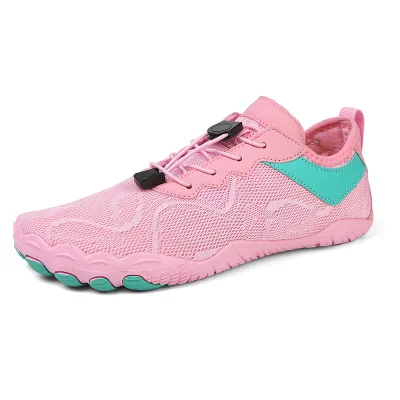
Material selection is the primary driver of performance. The insole material is frequently identified as rubber, which offers durability and grip in wet conditions. The upper materials vary significantly across suppliers, with common options including Nylon, Stretch fabric, and general Fabric. Nylon and stretch fabrics are often preferred for their ability to dry quickly and conform to the foot, whereas standard fabric may offer less breathability. The sole craftsmanship is another vital specification; "Cemented Shoe" construction is a noted method, which involves bonding the upper to the sole using adhesive. This method is common in water shoes but requires quality control to ensure the bond does not fail under repeated wet-dry cycles.
Furthermore, the sole material itself plays a role in traction and durability. Specifications indicate the use of TRR (Thermoplastic Rubber) for the sole in certain models, a material known for its flexibility and resistance to abrasion on wet surfaces. The thickness of the sole is typically listed as "Single," which balances protection with the need for a barefoot feel often desired in water activities. Buyers should verify if the specific model they are sourcing includes features like cushioning and light weight, which are listed as key attributes for enhancing comfort during extended wear.
Compliance, Certification, and Standard Verification
When sourcing footwear, compliance with safety and quality standards is non-negotiable, yet the provided data does not list specific third-party certifications such as ISO or ASTM for the water shoes. Instead, the focus must be on product standards related to sizing and construction. The observed product standards indicate a wide range of size availability, with specific models adhering to ranges such as 36-46, 34-49, 39-46, 35-46, and 39-50. This variation suggests that buyers must confirm the size standard applicable to their target market, as a model designed for a 36-46 range may not be suitable for markets requiring larger sizes up to 50.
The origin of the products is a critical compliance factor. The supply data confirms that the products originate from China, with specific mentions of Tianjin as a place of import or origin. This geographical concentration can influence logistics costs and lead times. Buyers should verify that the supplier can provide documentation regarding the manufacturing location to ensure transparency. Additionally, the "Small Orders: Accepted" attribute indicates flexibility in procurement, but it does not replace the need for verifying that the production facility meets the buyer's ethical and labor compliance requirements.
Since no specific certification status is provided in the source data, buyers must actively request test reports for the materials used, particularly regarding the waterproofing capabilities and the durability of the cemented sole. The absence of a listed certification does not imply non-compliance but rather necessitates a proactive verification process. Buyers should ask suppliers to demonstrate how the "Waterproof" attribute is tested, whether through hydrostatic pressure tests or immersion trials, and ensure that the "Breathable" claim is backed by air permeability data.
Cost Drivers and Pricing Dynamics
The pricing landscape for waterproof quick-dry water shoes is influenced by several factors, including material costs, customization options, and order volume. The observed price range in the market spans from $1.25 to $30 USD. This wide disparity indicates that price is not solely a function of the product type but is heavily dependent on the specific features, brand positioning, and order quantity. The lower end of the price spectrum likely corresponds to basic fabric models with standard rubber insoles, while the higher end may reflect advanced features such as enhanced cushioning, fashion-oriented designs, or specialized waterproofing technologies.
Customization is a significant cost driver. The supply data confirms that "Customization: Available" is a standard attribute. This allows buyers to tailor the product to their brand identity, potentially affecting the unit cost. Customization can involve changes to the upper material, sole color, or packaging. The "Cooperation Mode" includes ODM (Original Design Manufacturing), OEM (Original Equipment Manufacturing), and OBM (Original Brand Manufacturing), offering flexibility for buyers who wish to develop unique products or simply rebrand existing designs.
The Minimum Order Quantity (MOQ) is another critical factor in cost management. The observed MOQ range is between 1 and 1500 units. This flexibility allows buyers to test the market with small orders or commit to larger volumes for better economies of scale. However, buyers must balance the desire for low MOQs with the need to secure competitive pricing. The "Inventory Type: Full Order" suggests that some suppliers may hold stock, which can reduce lead times but might limit customization options. Conversely, "Supply Type: in-Stock" indicates immediate availability for certain models, which can be advantageous for urgent procurement needs.
Typical Applications and Market Segmentation
Understanding the intended application of the water shoes is essential for matching the right product to the right market segment. The supply data highlights several specific use cases, including "Outdoor Wading Activities Training Shoes" and suitability for surfaces such as plastic, floor, outdoor, snowfield, and hard ground. This versatility suggests that these shoes are designed for multi-environment use, making them suitable for a broad range of consumers, from recreational swimmers to professional athletes.
The "Applicable Age Group" is listed as "Children and Adults," and the "Applicable Gender" is "Unisex (Suitable for Men & Women)." This broad demographic appeal allows buyers to target diverse market segments, including families, sports clubs, and outdoor retailers. The "Style" attributes, which include "Casual shoes," "Sneakers," and "Sports shoes," indicate that the product can fit into various fashion and functional categories. The "Season" attribute, covering "Summer," "Spring/Autumn," and "Suitable Seasons: Summer, Spring, Autumn," confirms that these shoes are primarily designed for warmer weather but may have extended utility in transitional seasons.
The "Feature" list, which includes "Breathable," "Cushioning," "Fashion," and "Light weight," further defines the product's value proposition. Breathability is crucial for water shoes to prevent blistering and discomfort during prolonged wet wear. Cushioning and light weight enhance the user experience, making the shoes suitable for active use. The "Close Pattern" of "Magic Tape" and "Toe Style" of "Round" are specific design elements that cater to ease of use and comfort, particularly for children and those with wider feet.
Supplier Evaluation and Capacity Assessment
Evaluating suppliers requires a focus on their production capacity, delivery capabilities, and cooperation models. The supply data indicates an "Annual Output" of 800,000 pieces per year, which is a significant capacity that suggests the supplier can handle large-volume orders. However, buyers should verify if this capacity is distributed across multiple facilities or concentrated in a single location, as this can impact risk management.
The "Fastest Delivery Time" is listed as 3-15 days, which is a competitive lead time for manufacturing and shipping. This range allows buyers to plan their inventory replenishment effectively. However, the actual delivery time may vary based on the order size, customization requirements, and shipping method. The "Place of Import: Tianjin, China" and "prod_origin: China" confirm the logistical hub, which buyers should consider when calculating total landed costs, including freight and duties.
The "Cooperation Mode" of ODM, OEM, and OBM indicates that suppliers are willing to work with buyers in various capacities. For buyers seeking unique products, an ODM partner may be ideal, while those looking to rebrand existing products may prefer an OEM arrangement. The "Small Orders: Accepted" attribute is a positive indicator of supplier flexibility, but buyers should ensure that the supplier can maintain quality standards even for smaller batches.
Quality Control and Long-Term Procurement Considerations
Quality control is paramount when sourcing waterproof footwear. Given the variation in "Waterproof" claims, buyers must implement rigorous testing protocols. This includes verifying the integrity of the cemented sole construction and the effectiveness of the waterproofing treatment on the upper materials. The "Standard" size ranges (e.g., 36-46, 34-49) must be strictly adhered to, and buyers should request samples to verify fit and comfort across the entire size spectrum.
Long-term procurement considerations involve building a sustainable relationship with suppliers who can consistently deliver high-quality products. The "Inventory Type: Full Order" and "Supply Type: in-Stock" attributes suggest that some suppliers can provide immediate fulfillment, which is beneficial for maintaining steady inventory levels. However, for customized orders, buyers should plan for lead times that may exceed the standard 3-15 days.
The "prod_packing" options, which include "PP Bag" and "Shoes Box," as well as "Shipping Carton," offer flexibility in how products are presented to the end consumer. Buyers should evaluate the packaging to ensure it meets their branding and sustainability requirements. The "Brand Name" options, such as "WALTZ" and "FARWORD," indicate that some suppliers may offer white-labeling or co-branding opportunities, which can be valuable for buyers looking to establish a distinct market presence.
In conclusion, sourcing waterproof quick-dry water shoes requires a meticulous approach to verifying technical specifications, understanding cost drivers, and evaluating supplier capabilities. By focusing on the specific attributes of material, construction, and application, buyers can make informed decisions that align with their business goals. The wide range of available models, from basic fabric shoes to advanced waterproof designs, offers ample opportunity for strategic procurement. However, the absence of specific certification data necessitates a proactive verification process to ensure that all products meet the required standards for safety, durability, and performance.
FAQs
Can these water shoes be customized for my brand?
Yes, customization is available for these water shoes. Buyers can work with suppliers offering ODM, OEM, and OBM cooperation modes to tailor materials, colors, and packaging to their specific brand requirements.
What is the typical lead time for delivery?
The fastest delivery time listed is between 3 and 15 days. This timeline applies to standard orders, though customized requests or large volumes may require additional processing time depending on the supplier's current capacity.
Which materials are used for the insoles and uppers?
The insoles are frequently made of rubber for durability and grip. Upper materials vary across listings, commonly including nylon, stretch fabric, or general fabric to ensure breathability and quick-drying performance during water activities.
Are these shoes suitable for both children and adults?
Yes, the applicable age group includes both children and adults. The products are designed as unisex footwear suitable for men and women, with size standards ranging from 24 up to 50 depending on the specific model.
What is the price range for these water shoes?
The observed price range in the market spans from 1.25 to 30 USD. This variation depends on factors such as material quality, specific features like cushioning, order volume, and whether the product includes custom branding.
Do all listed models feature waterproof construction?
No, not all models are waterproof as some are explicitly marked as not waterproof. Buyers must verify the specific product attributes, as some listings indicate waterproof status while others are designed for wading and quick-drying without full protection.
What is the minimum order quantity for these shoes?
The minimum order quantity ranges from 1 to 1500 units. This flexibility allows buyers to place small trial orders or commit to larger volumes, with some suppliers accepting small orders and others requiring higher thresholds for customization.