Source Weather Resistant Ambulance for Patient Transport, Rescue, and ICU Care
Find 30 Weather Resistant Ambulance units with varying engine power, chassis brands, and medical configurations. Buyers can compare specifications for patient transit and rescue operations across multiple models.
Key considerations
Products List
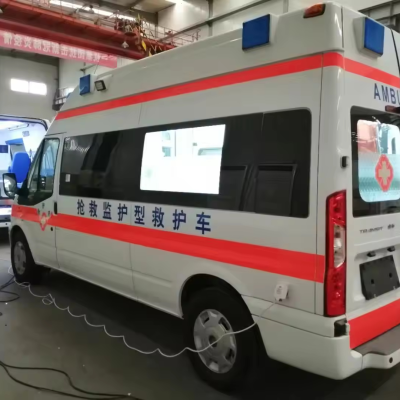


Infectious Disease Medical Equipment Ambulance Transport Ambulance
$11009.00 - $12385.00
MOQ: 1 Pieces

Medical Ambulance Transport Emergency Car Transport Rescue Ambulance
$11000.00 - $39000.00
MOQ: 1 Pieces

Medical Emergency Ambulance New or Used Ambulance Mobile Medical Manufacturer
$15000.00 - $69100.00
MOQ: 1 Pieces

Safe Rust and Corrosion Resistant Ambulance for Patient Transportation
$30000.00 - $50000.00
MOQ: 1 Piece

Comfortable and Efficient Easy to Clean Ambulance for City Emergencies
$30000.00 - $50000.00
MOQ: 1 Pieces


Rapid Response Ambulances Exported to Africa for Rural Medical Assistance
$15000.00 - $18000.00
MOQ: 1 Pieces

New Energy Medical Vehicle: Ambulance Designed for Rescue Operations
$440000.00 - $1100000.00
MOQ: 1 Pieces

Innovative Medical Vehicle: New Energy Ambulance for Rapid Rescue
$440000.00 - $1100000.00
MOQ: 1 Pieces

Reliable Rescue Vehicle: New Energy Ambulance with Medical Cabin Protection
$440000.00 - $1100000.00
MOQ: 1 Pieces

New Energy Rescue Vehicle: Medical Ambulance with Enhanced Safety Features
$440000.00 - $1100000.00
MOQ: 1 Pieces

High-Speed Medical Vehicle: New Energy Ambulance for Emergency Response
$440000.00 - $1100000.00
MOQ: 1 Pieces

New Energy Medical Vehicle: High-Speed Ambulance for Critical Care
$440000.00 - $1100000.00
MOQ: 1 Pieces
Comprehensive Sourcing Guide
Strategic Sourcing Guide for Weather Resistant Ambulance Procurement
Procuring a weather-resistant ambulance requires a rigorous evaluation of vehicle chassis, body integrity, and medical integration capabilities. The market offers a diverse range of platforms, from compact vans to heavy-duty chassis, each presenting unique challenges regarding environmental durability and operational readiness. Buyers must navigate a complex landscape of specifications, certifications, and customization options to ensure the selected unit can withstand harsh climatic conditions while maintaining patient safety. This guide outlines the critical factors for sourcing these specialized vehicles, focusing on verified technical attributes and compliance requirements found in current market listings.
Technical Specifications and Chassis Durability
The foundation of a weather-resistant ambulance lies in its chassis and engine configuration. Current market data indicates a variety of engine displacements and horsepower ratings, ranging from 140HP to 260HP, with specific models offering outputs between 155 Kw and 210-260hp. When evaluating weather resistance, the powertrain must be robust enough to handle increased aerodynamic drag from specialized bodies and maintain performance in extreme temperatures. Listings show engines ranging from 2.998L displacement to various configurations, with fuel types including both Diesel and Gasoline. Diesel engines are frequently cited for their torque and reliability in demanding conditions, while gasoline options are also available.
Transmission systems vary between Automatic and Manual types, a critical decision point for operators in regions with heavy traffic or difficult terrain. Automatic transmissions often provide smoother operation in stop-and-go emergency scenarios, whereas manual units may offer greater control in rugged, low-traction environments. The wheelbase is another pivotal specification, with observed ranges spanning from 3300mm to 3750mm. A longer wheelbase generally contributes to a more stable ride, which is essential for patient comfort during transit over uneven roads often encountered during adverse weather.
Tire specifications are equally important for weather resistance. Listings indicate tire sizes such as 215/75r16lt and 195/75r16c. Buyers should verify that the tire compound and tread pattern are suitable for the specific climate, ensuring adequate grip on wet, icy, or muddy surfaces. The axle configuration is typically single, which simplifies maintenance but requires careful load distribution management. Furthermore, the physical dimensions of the vehicle, with lengths ranging from 3 to 8 meters and specific standard dimensions like 5370 x 1928 x 2330 mm or 6703 x 2164 x 2775 mm, dictate the internal volume available for medical equipment and patient accommodation.
Compliance and Certification Verification
Ensuring that an ambulance meets international and local safety standards is paramount. The supply chain includes vehicles with certifications such as ISO, CCC, EPA, EEC, and CE. These certifications indicate that the manufacturer adheres to specific quality management systems and environmental regulations. For instance, the presence of ISO and CCC suggests compliance with Chinese manufacturing standards, while EPA and EEC point to adherence to emission and safety regulations in other major markets. Buyers must explicitly verify that the certification documents provided match the specific vehicle model and that the emission standards, such as Euro 4, align with local regulatory requirements for operation.
A critical distinction in the market is the certification status regarding the vehicle's condition and medical integration. Some listings specify "ISOCondition:New," confirming the vehicle is brand new, while others may list "Without Medical Equipment," indicating a bare chassis or body shell. Conversely, other units are listed as "With Medical Equipment" and include features like automatic loading stretchers. Buyers must carefully review the certification scope to understand whether the provided documentation covers the entire vehicle assembly or just the chassis. The absence of specific medical equipment certifications in some listings necessitates a separate verification process for the installed medical modules to ensure they meet health authority standards.
Cost Drivers and Pricing Structures
The pricing for weather-resistant ambulances varies significantly based on the level of integration, brand, and customization. Observed price ranges in the market span from 11,000 USD to 1,100,000 USD. This wide disparity reflects the difference between basic chassis units and fully equipped ICU rescue ambulances. The higher price points typically correspond to vehicles with advanced medical configurations, such as the ICU Rescue Ambulance, which includes customizable interior configurations and specialized life-support equipment. Lower price points may reflect bare chassis or units without medical equipment, requiring the buyer to source and install medical modules separately.
Minimum Order Quantities (MOQ) are generally low, with observed ranges of 1 to 2 units, making these vehicles accessible for individual procurement rather than requiring bulk institutional purchases. However, the "Selling Units" are often listed as "Single item," suggesting that each unit is treated as a distinct transaction. Buyers should be aware that customization is available, which can significantly impact the final cost. Customization options allow for specific interior configurations, but they also introduce variables in pricing that depend on the complexity of the requested modifications. The packing method, whether "Standard Export Package" or "Bulk Ship, Container," also influences logistics costs and should be factored into the total cost of ownership.
Typical Applications and Operational Scenarios
Ambulances in this category serve diverse functions, primarily focused on patient transit and rescue. The "Vito Ambulance" and "Ford Transit T8" models are designed for versatile use cases, ranging from basic patient transport to advanced ICU rescue operations. The "ICU Rescue Ambulance" specifically targets scenarios requiring intensive care capabilities during transit, making it suitable for critical care transfers and disaster response. The inclusion of an automatic loading stretcher in some models highlights a focus on efficiency and safety during patient loading, particularly in adverse weather conditions where manual handling might be hazardous.
The usage profile also dictates the required weather resistance. Vehicles intended for rural or remote areas must withstand exposure to dust, rain, and temperature extremes. The "Chassis Brand" options, including Ford, JMC, Foton, Benz, and others, offer different levels of durability and parts availability. Buyers should align the vehicle type with the expected operational environment. For instance, a vehicle with a longer wheelbase and higher horsepower may be preferable for mountainous regions, while a more compact model might be better suited for urban environments with narrow streets. The "First Aid" features, such as the automatic loading stretcher, are critical for rapid deployment in emergency situations where time is of the essence.
Supplier Evaluation and Product Verification
Evaluating suppliers requires a focus on the consistency of product attributes and the transparency of their listings. The "Brand Name" BEIBEN is a specific observation in the market, but the "Chassis Brand" field lists multiple manufacturers, indicating a marketplace that aggregates various platforms. Buyers should verify the origin of the vehicle, with "Place of Origin" consistently listed as China. This information is crucial for understanding the supply chain dynamics and potential logistics challenges.
When assessing a supplier, buyers must scrutinize the "Condition" of the vehicle, which is listed as "New" in verified attributes. However, the presence of "Without Medical Equipment" in some listings suggests that the supplier may be offering a vehicle that requires further outfitting. Buyers should request detailed documentation on the manufacturing process and the quality control measures employed to ensure the vehicle meets the "New" condition standard. The "Customization" attribute being "Available" is a positive indicator of flexibility, but it also requires clear communication regarding the scope of work and the timeline for completion.
Quality Control and Long-Term Procurement Considerations
Quality control is essential to ensure the longevity and reliability of weather-resistant ambulances. Buyers should verify that the vehicle construction meets the specified standards, such as the dimensions and structural integrity required for medical equipment installation. The "prod_standard" and "prod_model" fields provide specific identifiers, such as "VITO," "Ford V348," "Ford V362," and "T8," which help in tracking the specific model year and configuration. Ensuring that the vehicle's dimensions, such as the 5820 x 1974 x 2590 mm standard for the Ford V348, match the intended use case is vital for garage fitment and operational efficiency.
Long-term procurement considerations include the availability of spare parts and the ease of maintenance. The "Fuel Type" and "Engine" specifications directly impact the operating costs and maintenance schedule. Diesel engines, for example, may require different maintenance protocols compared to gasoline engines. Buyers should also consider the "Emission Standard," such as Euro 4, as regulations may evolve, potentially affecting the vehicle's operability in certain regions in the future. The "Output Power" of 155 Kw and the "Horsepower" ratings of 160-210hp or 210-260hp indicate the vehicle's capability to handle heavy loads and demanding driving conditions over an extended period.
Comparative Analysis of Ambulance Configurations
To assist in decision-making, the following table summarizes key specifications observed in the market for different ambulance configurations. This comparison highlights the variations in dimensions, power, and intended use, aiding buyers in selecting the most suitable option for their specific needs.
| Specification | Vito Ambulance | Ford V348 | Ford V362 | Ford Transit T8 | ICU Rescue Ambulance |
|---|---|---|---|---|---|
| Prod Model | VITO | Ford V348 | Ford V362 | Ford Transit T8 | Custom |
| Dimensions (L x W x H) | 5370 x 1928 x 2330 | 5820 x 1974 x 2590 | 5511 x 2032 x 2607 | 6703 x 2164 x 2775 | Variable |
| Engine Power | 231HP | 202HP | 174HP | 140HP | 210-260hp |
| Horsepower Range | 210-260hp | 160-210hp | 100-160hp | 160-210hp | 210-260hp |
| Transmission | Automatic | Manual | Manual | Automatic | Customizable |
| Fuel Type | Gasoline | Diesel | Diesel | Diesel | Diesel/Gasoline |
| Medical Equipment | With Medical Equipment | With Medical Equipment | With Medical Equipment | With Medical Equipment | With Medical Equipment |
| Key Feature | Automatic Loading Stretcher | Standard Configuration | Standard Configuration | ICU Rescue | Customizable Interior |
This comparative overview underscores the diversity of options available. Buyers must weigh the trade-offs between size, power, and specific medical features to determine the optimal configuration. The "ICU Rescue Ambulance" stands out for its high horsepower and customizable interior, making it ideal for critical care scenarios. In contrast, the "Vito Ambulance" offers a compact solution with advanced loading features, suitable for urban environments. By carefully analyzing these specifications, procurement teams can make informed decisions that align with their operational requirements and budget constraints.
Final Procurement Recommendations
The procurement of a weather-resistant ambulance is a multifaceted process that demands attention to technical details, regulatory compliance, and supplier reliability. Buyers should prioritize vehicles with verified certifications and clear documentation regarding their condition and medical integration. The wide range of prices and configurations necessitates a thorough needs assessment to avoid over-specifying or under-specifying the vehicle. By leveraging the available data on dimensions, engine power, and transmission types, buyers can select a unit that offers the best balance of performance, durability, and cost-effectiveness. Ultimately, the goal is to acquire a vehicle that ensures patient safety and operational efficiency in all weather conditions, supported by a reliable supply chain and robust quality control measures.
FAQs
What certifications do weather resistant ambulances have?
These vehicles hold ISO, CCC, EPA, EEC, and CE certifications. Buyers must verify that these documents match the specific model and that emission standards like Euro 4 align with local regulations for safe operation.
Which engine options are available for these units?
Engine power ranges from 140HP to 260HP with displacements up to 2.998L. Both diesel and gasoline fuel types are available, offering flexibility for different operational environments and torque requirements.
Can buyers customize the interior configuration of the ambulance?
Yes, customization is available for interior layouts and medical equipment integration. Buyers should clarify the scope of work to ensure the final configuration meets specific patient transit or ICU rescue needs.
How does the wheelbase affect vehicle stability?
Wheelbases range from 3300mm to 3750mm to ensure stable rides. A longer wheelbase contributes to better patient comfort during transit over uneven roads often encountered during adverse weather conditions.
What is the typical price range for these ambulances?
Prices range from 11,000 USD to 1,100,000 USD depending on integration. Higher costs reflect fully equipped ICU rescue units, while lower prices may indicate bare chassis requiring separate medical module installation.
Are these vehicles new or used condition?
The verified product condition is listed as new. Buyers should request detailed documentation on manufacturing processes to confirm the vehicle meets new condition standards before finalizing procurement.