Source Spain Alfalfa Hay Balers for Wood Shavings, Rice Husk, and Silage
Find 30 available machines for processing Spain Alfalfa Hay and similar materials like wood shavings and rice husk. Buyers can compare models with varying press forces, motor powers, and bale weights to select the right automatic baler for their needs.
Key considerations
Products List


Hydraulic Alfalfa Hay Press Baler Machine Hay and Straw Baler Machine
$2000.00 - $14000.00
MOQ: 1 Pieces


Silage Hay Straw Round Baling Machine Alfalfa Baler for Animal Feed
$2000.00 - $14000.00
MOQ: 1 Pieces

$2000.00 - $14000.00
MOQ: 1 Pieces

$2000.00 - $14000.00
MOQ: 1 Pieces

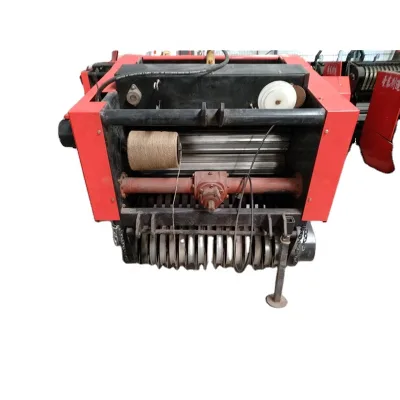


Hydraulic Alfalfa Hay Straw Rice Husk Grass Round Hay Straw Bailer Hay Baler
$2225.00 - $2343.00
MOQ: 1 Pieces


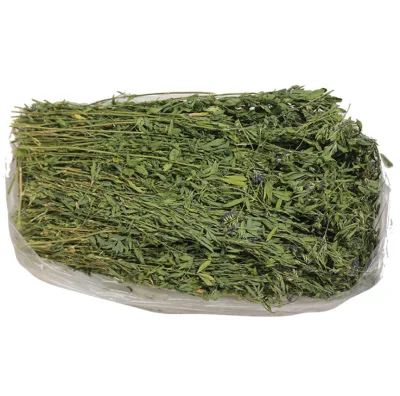


Square Hay Balers Grass Straw Silage Alfalfa Available Compress Press Baler
$4100.00 - $4680.00
MOQ: 1 Pieces

Comprehensive Sourcing Guide
Strategic Sourcing Guide for Alfalfa Hay Baling Equipment
Technical Specifications and Machine Classification
When sourcing equipment for processing alfalfa hay, particularly within the context of the keyword "Spain Alfalfa Hay," buyers must first distinguish between the raw material requirements and the machinery capabilities. While the core keyword suggests a specific agricultural origin, the available supply chain data indicates that the machinery itself is predominantly manufactured in China, with specific origins noted in Guangdong and general mainland regions. The technical landscape for alfalfa baling is defined by a variety of machine types, including round balers, hay balers, and straw balers, each serving different operational scales.
The classification of these machines often hinges on their forming function and species. For instance, specific models such as the HBA Series and HBA-B Series are designed for bag moulding and general forming functions, utilizing metal packaging materials. In contrast, dedicated agricultural balers like the 9YDB-50 Silage Baler or the 9YDB-0.5 model are engineered for compressing hay and straw. The 9YDB-50, for example, features a specific model name and dimensions of 320017001600mm, with a machine weight of 650kg. Another variant, the 9YDB-0.5, operates with a weight of 580kg and dimensions of 350015001500mm. These dimensional differences are critical for buyers assessing facility space requirements.
Power requirements vary significantly across the observed product range. The motor specifications span from 5.5kw to 90kw, with specific models like the 9YDB-50 utilizing a supporting motor power of 5.5kw, while other heavy-duty units may require motors up to 90kw. The power supply options are typically three-phase electricity, with some models explicitly listing a "Three-Phase Six-Stage" configuration. The rated speed for certain units is observed at 280r/Min, and the production efficiency can reach up to 85pkts/H for specific bag moulding applications. For traditional baling, the bale weight ranges from 50-80kg for smaller units to 60-100kg for others, with bale sizes standardized at dimensions like 550*520mm.
Compliance and Certification Verification
In the international procurement of agricultural machinery, verifying compliance and certification is a non-negotiable step to ensure safety and marketability. The supplied data confirms that a significant portion of the available machinery carries CE certification, which is a mandatory requirement for selling products within the European Union, including Spain. This certification indicates that the equipment meets EU safety, health, and environmental protection requirements. Additionally, ISO certification is present in the product attributes, suggesting adherence to international quality management standards.
Buyers must understand that while these certifications are listed as high-confidence facts for the supply pool, they are attributes of specific models rather than universal guarantees for every unit. The "Different models" standard is noted in the specifications, implying that certification status may vary by configuration. When evaluating a potential supplier for alfalfa processing equipment, the buyer should explicitly request the CE and ISO certificates corresponding to the specific model number (e.g., 9YDB-50 or HBA Series) being purchased. It is essential to verify that the certification covers the specific motor power and hydraulic pressure ratings of the unit, as these are critical safety parameters.
The production origin is listed as China, with specific mentions of Guangdong. While this is a major manufacturing hub, buyers should not assume that all units from this region automatically possess these certifications without documentation. The presence of OEM or ODM order acceptance indicates that suppliers are capable of customizing products, which may involve adjustments to the certification scope. Therefore, the procurement strategy must include a clause requiring the supplier to provide valid, up-to-date certification documents before the finalization of the order.
Cost Drivers and Pricing Structure
The financial landscape for sourcing alfalfa hay balers is characterized by a wide variance in pricing, reflecting the diversity in machine capacity, automation levels, and customization options. The observed listed price range in USD spans from 10.2 to 370,000. This extreme range suggests that the market includes both small-scale, manual or semi-automatic units and large-scale, fully automated industrial systems. The lower end of the spectrum likely corresponds to basic straw or hay balers with lower motor power (e.g., 5.5kw) and simpler forming functions, while the upper end likely encompasses high-tonnage hydraulic presses with advanced automation and higher motor outputs (up to 90kw).
Several key factors drive these costs. First, the press force is a primary cost determinant, with observed ranges from 10t to 200t. A machine capable of 150t or 200t of press force will inherently cost more than a 10t unit due to the heavier steel construction and more powerful hydraulic systems required. Second, the motor power directly influences the price; units with 90kw motors are significantly more expensive than those with 5.5kw motors. Third, the level of customization available affects the final price. Since customization is listed as an available attribute, buyers requesting specific dimensions, bale sizes, or specialized packaging materials (such as plastic film, steel frames, or wooden boxes) will incur additional costs compared to standard configurations.
The minimum order quantity (MOQ) is observed to be 1 unit across the board, which provides flexibility for buyers who may only need a single machine for pilot testing or small-scale operations. However, the warranty period is consistently listed as 1 Year, which is a standard industry baseline. Buyers should be aware that extended warranties or service contracts may be negotiated separately and could impact the total cost of ownership. The packaging method, whether wooden boxes, wooden cases, or wrap film, also adds to the logistics cost, especially for international shipping to Spain.
Typical Applications and Material Compatibility
Understanding the specific applications of the machinery is vital for ensuring the equipment matches the operational needs of an alfalfa processing facility. The data indicates that these machines are versatile, designed to handle a variety of biomass materials. The application list includes wood shavings, rice husks, silage, rice, flour, skin care products, and cosmetics. However, for the specific keyword of "alfalfa hay," the most relevant applications are found in the agricultural sector.
The machinery is explicitly categorized for "Compress Hay" and handling "Corn Straw, Wheat Straw, Alfalfa, etc." This confirms that the equipment is suitable for the primary use case of baling alfalfa. The forming species is noted as "Bag Moulding" for certain models, while others are designated as "Round Baler," "Hay Baler," or "Straw Baler." The choice of machine type depends on the desired output form. For instance, a round baler might be preferred for creating large, cylindrical bales that are easy to transport and store in open fields, whereas a bag moulding system might be better suited for creating compact, uniform blocks for industrial processing or animal feed production.
The material type is described as "Solid," which aligns with the physical nature of dried alfalfa hay. The production efficiency varies, with some units capable of 85 packets per hour, while others are rated by bale weight per cycle (e.g., 60-100kg). For a buyer in Spain looking to process large volumes of alfalfa, the efficiency rating and bale weight capacity are critical metrics. A machine with a higher production efficiency and consistent bale weight will reduce labor costs and improve throughput. Additionally, the power source is hydraulic, which is generally preferred for its high force output and smooth operation in baling applications.
Supplier Evaluation and Operational Capabilities
Evaluating suppliers for agricultural machinery requires a focus on their ability to meet technical specifications and provide reliable after-sales support. The data reveals that suppliers offer OEM or ODM orders, indicating a capacity for customization. This is a significant advantage for buyers with unique requirements, such as specific bale dimensions or integration with existing farm infrastructure. The standard product packing includes plastic film, steel frames, and wooden boxes, or wooden cases, which suggests that suppliers are experienced in preparing machinery for international shipping.
When selecting a supplier, buyers should verify the "Automatic Grade," which is listed as "Automatic." This implies that the machinery is designed for automated operation, reducing the need for manual intervention. However, the level of automation can vary, and buyers should confirm the specific control systems and safety features. The warranty period of 1 Year is a standard offering, but buyers should inquire about the availability of spare parts and the technical support network in Spain or the EU. Since the origin is China, logistics and lead times will be a factor, although specific lead time data is not provided in the source material.
The supplier's location in Guangdong, China, is a major manufacturing hub, which often correlates with a robust supply chain and competitive pricing. However, buyers must ensure that the supplier has a proven track record of exporting to Europe, particularly to Spain. The presence of CE certification is a strong indicator of compliance, but it should be verified against the specific model. Buyers should also assess the supplier's responsiveness to customization requests, as the "Different models" standard suggests a flexible product line.
Quality Control and Long-Term Procurement Considerations
Quality control is paramount when investing in heavy machinery like hay balers. The observed specifications, such as the aluminum roller quantity (30PCS for certain models) and the machine weight (ranging from 580kg to 650kg), provide tangible metrics for assessing build quality. A higher machine weight often indicates the use of more robust steel and better structural integrity, which is essential for handling the high pressures (10t-200t) involved in baling. Buyers should request detailed technical drawings and material specifications to verify the quality of components like the hydraulic system and the motor.
Long-term procurement considerations extend beyond the initial purchase price. The 1-year warranty is a baseline, but the total cost of ownership includes maintenance, energy consumption, and potential downtime. The motor power range (5.5kw-90kw) directly impacts energy costs; a more efficient motor can save significant amounts of money over the machine's lifespan. Buyers should also consider the availability of replacement parts, such as the aluminum rollers or hydraulic seals. The "Different models" standard suggests that parts compatibility might vary, so maintaining a relationship with a supplier who can provide a consistent supply of genuine parts is crucial.
Furthermore, the packaging standards (wooden boxes, steel frames) play a role in the long-term durability of the machine during transit. Proper packaging ensures that the machinery arrives in Spain without damage, reducing the risk of immediate repair costs. Buyers should also evaluate the supplier's ability to provide training for operators, as the complexity of automated systems requires skilled personnel. Finally, the flexibility of the supplier to accept OEM or ODM orders allows for future upgrades or modifications, ensuring the equipment remains relevant as the buyer's operational needs evolve.
Comparative Analysis of Machine Models
To assist buyers in making informed decisions, the following table compares key attributes of the observed machine models. This comparison highlights the differences in capacity, power, and physical dimensions, which are critical for matching the right equipment to specific alfalfa processing needs.
| Feature | 9YDB-50 Silage Baler | 9YDB-0.5 Model | HBA Series | HBA-B Series |
|---|---|---|---|---|
| Type | Hay Baler / Silage Baler | Straw Baler | Round Baler | Bag Moulding |
| Dimensions | 320017001600mm | 350015001500mm | Varies by Model | Varies by Model |
| Machine Weight | 650kg | 580kg | Varies | Varies |
| Motor Power | 5.5kw | 5.5kw (Three-Phase) | 22kw-90kw | 5.5kw-55kw |
| Press Force | N/A | N/A | 40t-150t | 10t-200t |
| Bale Weight | 60-100kg | 50-80kg | N/A | N/A |
| Bale Size | 550*520mm | N/A | N/A | N/A |
| Certification | CE, ISO | CE, ISO | CE, ISO | CE, ISO |
| Origin | China (Mainland) | China (Mainland) | China | China |
| Packing | Wooden Box | Wooden Case | Plastic Film, Steel Frames | Plastic Film, Steel Frames |
This comparison underscores the diversity in the market. The 9YDB-50 and 9YDB-0.5 models are clearly defined with specific weights and dimensions, making them suitable for buyers with precise space and capacity requirements. The HBA and HBA-B series offer a broader range of press forces and motor powers, catering to larger industrial operations. Buyers must carefully align their specific alfalfa processing volume and bale size requirements with these technical specifications to ensure optimal performance.
FAQs
Can I find alfalfa hay balers with CE certification in China?
Yes, CE certification is available for specific models in the supply pool. Buyers must verify that the certificate covers the exact motor power and hydraulic pressure ratings of the unit before finalizing the order.
What is the minimum order quantity for these baling machines?
The minimum order quantity is one unit across the observed product range. This allows buyers to purchase a single machine for pilot testing or small-scale operations without needing bulk commitments.
Which motor power options are available for alfalfa hay balers?
Motor power options range from 5.5kw to 90kw depending on the model. Specific units like the 9YDB-50 utilize 5.5kw motors, while heavy-duty industrial systems may require up to 90kw for higher capacity.
How are these machines packaged for international shipping to Spain?
Packaging includes plastic film, steel frames, wooden boxes, or wooden cases. The specific method depends on the model, ensuring protection during transit from manufacturing hubs in Guangdong or mainland China.
Can suppliers customize the bale size and dimensions for my needs?
Yes, customization is available for specific bale sizes and dimensions. Suppliers accept OEM or ODM orders, allowing adjustments to standard specifications like the 550*520mm bale size or 3200*1700*1600mm machine dimensions.
What warranty period is provided for these agricultural machines?
A standard one-year warranty is provided for the machinery. Buyers should inquire about extended warranty options or service contracts separately, as the baseline coverage is consistent across the observed product pool.