Source Wedge Anchor Expansion Anchors for Building Construction, Machinery, and Chemical Industry
Compare 30 Wedge Anchor Expansion Anchors from verified Chinese suppliers. Options include carbon steel and stainless steel with various finishes like galvanized and zinc-plated for building construction, machinery mounting, and chemical industry applications.
Key considerations
Products List
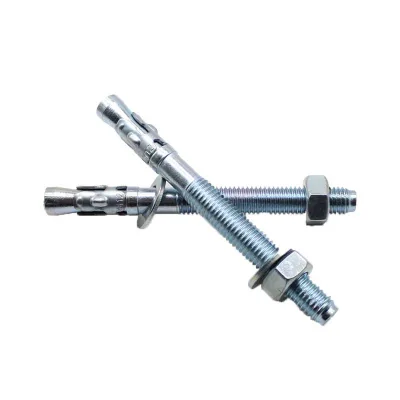


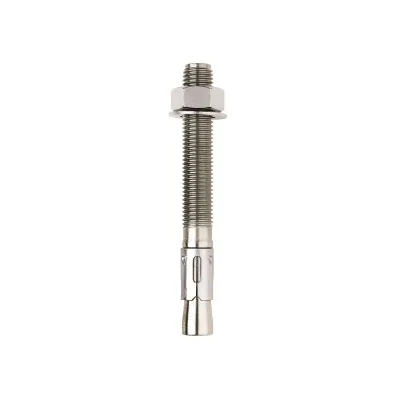


Comprehensive Sourcing Guide
Strategic Sourcing Guide for Wedge Anchor Expansion Anchors
Understanding Technical Specifications and Variants
When sourcing Wedge Anchor Expansion Anchors, buyers must first navigate a complex landscape of technical specifications that define the product's utility and compatibility. The core keyword, wedge anchor, refers to a specific type of mechanical fastener designed for concrete applications. Based on observed market data, these products are frequently categorized by their head type, with "Round" and "Hexagon" being the most prevalent configurations. The "Round Head" variant is often associated with specific models such as WA009 and WA023, while other listings indicate a "Hexagon" head type, which typically facilitates easier installation with wrenches.
Material composition is a critical differentiator in this category. The supply chain presents a dichotomy between "Stainless Steel" and "Carbon Steel" options. Stainless steel variants are often selected for environments requiring corrosion resistance, whereas carbon steel anchors, sometimes specified with a grade of 4 or 8, are common for general structural applications. The grade of the material directly influences the tensile strength and load-bearing capacity of the anchor. Buyers should verify the specific grade required for their project, as the observed data lists grades ranging from 4 to 8, indicating a spectrum of strength capabilities.
The dimensional specifications are equally vital. The product models observed, such as WA012, WA009, and WA023, suggest a standardized naming convention that often correlates with specific sizes. The measurement systems available include metric sizes ranging from M6 to M30, as well as imperial sizes spanning from 1/4 inch to 1-1/4 inch. Some listings specifically note a range of M6 to M20 or 1/4 inch to 3/4 inch. It is imperative for procurement teams to match the anchor diameter and length precisely to the substrate thickness and the load requirements of the application. The "Size" attribute is frequently listed as "Customized," indicating that manufacturers can produce non-standard dimensions, but this often introduces variability in lead times and minimum order quantities.
Compliance, Standards, and Certification Verification
In the realm of construction fasteners, adherence to international standards is non-negotiable for ensuring structural integrity and safety. The wedge anchor market is characterized by a robust adherence to multiple global standards. The observed data confirms that products comply with DIN, GB, ANSI, BSW, JIS, and GOST standards. This multi-standard compliance suggests that suppliers are capable of meeting diverse regulatory requirements across different regions, including Europe (DIN), China (GB), the United States (ANSI), and Japan (JIS).
However, the presence of these standards in product listings does not automatically guarantee that every unit supplied meets the specific performance criteria of the standard. Buyers must verify that the specific batch of anchors being purchased carries the relevant certification or test reports corresponding to the claimed standard. For instance, while "DIN" is a common listing, the specific DIN standard number (e.g., DIN 500 or similar) should be confirmed to ensure the anchor's pull-out strength and shear capacity meet the project's engineering specifications. Similarly, the "GB" standard is prominent, reflecting the origin of many suppliers, but international buyers must ensure that GB-compliant anchors are acceptable under local building codes in their jurisdiction.
The "Standard" attribute also includes references to "Window gecko," which appears to be a specific or proprietary standard designation within certain product lines. This underscores the need for buyers to request detailed technical datasheets that explicitly map the product to the specific standard number rather than relying on generic standard names. Furthermore, the "Customization" attribute being "Available" implies that while standard-compliant anchors are readily available, custom orders may deviate from standard testing protocols unless explicitly agreed upon. Therefore, verification of third-party testing results for custom orders is essential to maintain compliance.
Cost Drivers and Pricing Dynamics
The pricing of Wedge Anchor Expansion Anchors is influenced by a convergence of material costs, manufacturing processes, and logistical factors. The observed price range in the market spans from 0 to 599 USD, a wide variance that likely reflects differences in order volume, material grade, and packaging complexity rather than the unit price of a single anchor. The "MOQ" (Minimum Order Quantity) range is equally vast, extending from 1 to 20,000 units. This indicates that small buyers can source samples or small batches, while large-scale construction projects can leverage economies of scale to reduce per-unit costs.
Material selection is a primary cost driver. Stainless steel anchors generally command a higher price point than carbon steel alternatives due to the raw material cost and the additional processing required for corrosion resistance. The surface treatment also plays a significant role in pricing. The observed data lists "Galvanized Sheet" and "Blue-White Zinc Plated" as common finishes. Zinc plating is a standard cost-effective method for corrosion protection, while more advanced treatments or thicker plating layers will increase the unit cost. Additionally, the "Finish" attribute mentions "Bright (Uncoated)" and "Longer Life Ticn," suggesting that specialized coatings or treatments for enhanced durability will impact the final price.
Packaging requirements can also influence the total cost of procurement. Listings show a variety of packaging options, including "Carton," "Inner Boxes," "Small Box," "Bag," and "Pallet" configurations. The complexity of the packaging, such as the "36 Cartons Per Pallet" configuration or the use of "Inner Boxes" within cartons, adds to the manufacturing and logistics costs. Buyers should evaluate whether the packaging provided is sufficient for the shipping method and storage conditions of their project, as over-packaging can inflate costs while under-packaging risks product damage.
Typical Applications and Usage Scenarios
Wedge Anchor Expansion Anchors are versatile fasteners designed for a wide array of industrial and construction applications. The primary application identified in the market data is "Building Construction," where these anchors are used to secure structural elements to concrete foundations. Their ability to provide a strong mechanical grip in solid concrete makes them ideal for anchoring steel columns, machinery bases, and precast concrete elements.
Beyond general construction, the data highlights specific applications in the "Chemical Industry" and "Environmental" sectors. In these environments, the choice of material and finish becomes critical. For chemical plants, where exposure to corrosive substances is common, stainless steel or heavily galvanized anchors are preferred to prevent failure due to corrosion. The "Environmental" application suggests use in infrastructure projects that may be exposed to harsh weather conditions, further emphasizing the need for durable surface treatments like "Blue-White Zinc Plated" or "Galvanized" finishes.
"Machinery Mounting" is another significant application area. Wedge anchors are frequently used to secure heavy machinery to concrete floors, ensuring stability and reducing vibration. The "Function" attribute lists "Machinery" and "Building," reinforcing the dual utility of these fasteners. In such scenarios, the "Hexagon" head type is often preferred as it allows for higher torque application during installation, ensuring the anchor is fully seated and tightened to the required specification. The "Usage" is explicitly defined as "Fasten," indicating their role in creating a permanent, rigid connection between the anchor and the substrate.
Supplier Evaluation and Sourcing Strategy
Evaluating suppliers for Wedge Anchor Expansion Anchors requires a multi-faceted approach that goes beyond simple price comparison. The "Location" attribute indicates that the majority of suppliers are based in "China," with specific mentions of "Tianjin" as a production hub. This concentration suggests a mature supply chain with established logistics networks, but it also necessitates careful vetting of supplier capabilities. Buyers should verify the supplier's production capacity, quality control processes, and ability to meet the specific "Standard" requirements of their project.
The "Customization" capability is a key differentiator among suppliers. Many suppliers offer "OEM/OEM Custom" services and can produce items "Customized According to Drawings." This flexibility is valuable for projects with unique requirements, but it requires a robust communication channel to ensure that the custom specifications are accurately translated into the final product. Buyers should request samples, such as the "Sample: Avaliable" attribute suggests, to verify the quality of the customization before committing to a large order.
Supplier reliability is further indicated by the "prod_packing" consistency. Suppliers who offer standardized packaging like "Carton" or "Bag/Carton" with clear pallet configurations (e.g., "36 Cartons Per Pallet") are likely to have more mature logistics operations. Conversely, inconsistent packaging may indicate a smaller or less organized supplier. The "Feature" attribute, such as "Galvanized Anchor," should be cross-referenced with the supplier's production capabilities to ensure they can consistently deliver the specified finish.
Quality Control and Long-Term Procurement Considerations
Quality control is paramount when sourcing wedge anchors, as the failure of these fasteners can lead to catastrophic structural consequences. Buyers must implement a rigorous quality assurance protocol that includes verifying material grades, checking surface treatments, and confirming dimensional accuracy. The "Grade" attribute, ranging from 4 to 8, must be validated through mill test certificates or third-party inspection reports. Similarly, the "Surface Treatment" and "Finish" should be inspected for uniformity and thickness to ensure they meet the corrosion resistance requirements of the application.
Long-term procurement considerations involve establishing a relationship with a supplier who can provide consistent quality over time. The "Lead time" and "MOQ" variability observed in the market (1 to 20,000 units) suggests that buyers should plan for potential fluctuations in supply. For large projects, securing a long-term contract with a supplier who can guarantee consistent delivery schedules and quality standards is advisable. Additionally, buyers should consider the "Sample" availability as a tool for ongoing quality verification, requesting periodic samples from production batches to ensure consistency.
The "Application" diversity, ranging from "Building Construction" to "Chemical Industry," means that the same supplier may need to provide anchors with different specifications for different projects. Buyers should evaluate the supplier's ability to manage this complexity and maintain quality across different product lines. Finally, the "Standard" compliance must be continuously monitored, as regulations and standards can evolve. Buyers should stay informed about updates to DIN, ANSI, or GB standards to ensure that their procurement strategy remains compliant with current safety and performance requirements.
Summary of Key Sourcing Parameters
To facilitate a structured comparison during the sourcing process, the following table summarizes the key parameters observed in the wedge anchor market. This table serves as a checklist for buyers to ensure all critical aspects are addressed during supplier evaluation.
| Parameter | Observed Options/Range | Verification Requirement |
|---|---|---|
| Material | Stainless Steel, Carbon Steel | Verify grade (4 or 8) and material certificate. |
| Head Type | Round, Hexagon | Confirm compatibility with installation tools. |
| Standards | DIN, GB, ANSI, BSW, JIS, GOST | Match specific standard numbers to project codes. |
| Sizes | M6-M30, 1/4"-1-1/4", Custom | Validate diameter and length against substrate. |
| Finish | Blue-White Zinc, Galvanized, Bright | Check plating thickness and corrosion resistance. |
| MOQ | 1 - 20,000 Units | Negotiate based on project volume and budget. |
| Origin | China (Tianjin) | Verify logistics and import compliance. |
| Packaging | Carton, Box, Pallet, Bag | Ensure packaging protects product during transit. |
By systematically addressing these parameters, buyers can navigate the complexities of the wedge anchor market and secure high-quality fasteners that meet the rigorous demands of modern construction and industrial applications.
FAQs
What standards do Wedge Anchor Expansion Anchors comply with?
These anchors comply with DIN, GB, ANSI, BSW, JIS, and GOST standards. Buyers must verify specific batch certifications to ensure structural integrity, as listings confirm multi-standard capability but do not guarantee every unit meets specific performance criteria without test reports.
Which material grades are available for Wedge Anchor Expansion Anchors?
Available material grades include Carbon Steel with grades 4 and 8, as well as Stainless Steel options. The grade directly influences tensile strength, so procurement teams should verify the specific grade required for their project to match load-bearing capacity needs.
Can buyers obtain samples of Wedge Anchor Expansion Anchors?
Yes, samples are available for verification before committing to large orders. Buyers should request samples to check quality and customization accuracy, ensuring the product matches drawings and specifications before proceeding with bulk procurement for construction or machinery mounting projects.
How are Wedge Anchor Expansion Anchors typically packaged for shipment?
Packaging options include cartons, inner boxes, small boxes, bags, and pallet configurations. Suppliers often use 36 cartons per pallet or bag-in-carton setups, which affects logistics costs and requires evaluation to ensure sufficient protection during shipping to the destination.
What customization options exist for Wedge Anchor Expansion Anchors?
Customization is available for OEM services and production according to specific drawings. While standard compliant anchors are common, custom orders may deviate from standard testing protocols, so third-party testing results are essential to maintain compliance and safety for unique project requirements.
Where are Wedge Anchor Expansion Anchors primarily manufactured?
Most suppliers are located in China, with Tianjin identified as a specific production hub. This concentration suggests a mature supply chain, but buyers must vet supplier capabilities and quality control processes to ensure they meet the specific standard requirements of their project.
What is the price range for Wedge Anchor Expansion Anchors?
The observed price range spans from 0 to 599 USD, reflecting differences in order volume and material grade. This variance likely indicates bulk pricing structures rather than unit costs, with stainless steel and specialized finishes generally commanding higher prices than standard carbon steel options.