Source Wedge Insulated Tension Clamp for Line Fittings, Substation, Guy Wire
Compare 30 Wedge Insulated Tension Clamp options from verified Chinese suppliers. These fittings support overhead insulation lines, substation applications, and guy wire installations with customizable materials and galvanization standards.
Key considerations
Products List


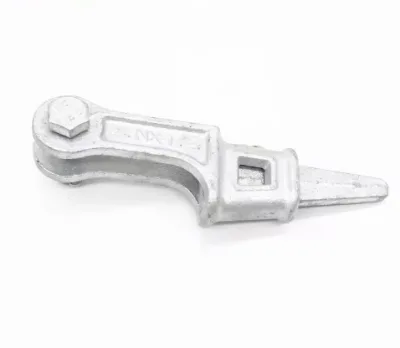
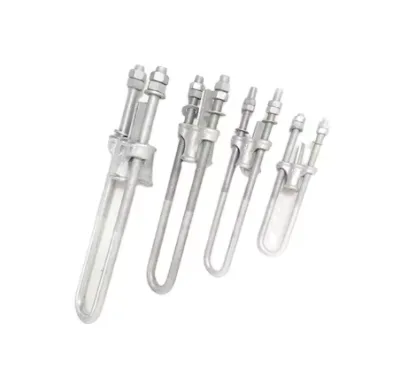


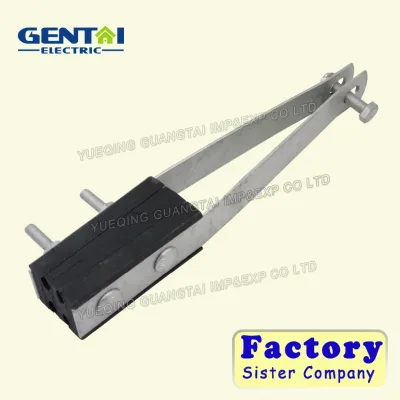
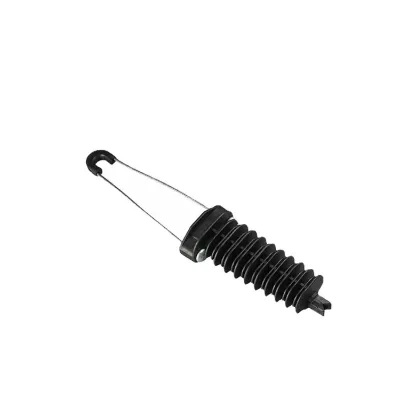
Comprehensive Sourcing Guide
Strategic Sourcing Guide for Wedge Insulated Tension Clamps
Understanding Product Architecture and Technical Specifications
When sourcing wedge insulated tension clamps, buyers must first distinguish between the mechanical tensioning mechanism and the specific insulation requirements. The core keyword implies a device designed to secure overhead lines while providing electrical isolation. Based on observed market data, these components are frequently categorized under "Line Fittings" and "Substation Fittings," indicating their critical role in power distribution infrastructure. The product architecture often varies significantly between models, such as the NX, PA, NXL, STC, and PAR series, each potentially serving distinct load-bearing or insulation needs.
A primary technical observation is the diversity in material composition. While some units are constructed from Aluminium Alloy to ensure lightweight durability and corrosion resistance, others utilize Carbon Steel or general Metal alloys for heavy-duty applications. The "Wedge Type" standard is explicitly noted for certain models, suggesting a mechanical locking mechanism that relies on the wedge principle to grip conductors under tension. This is distinct from other tensioning methods and requires specific verification of the wedge geometry and material hardness. Furthermore, the insulation aspect is critical; some listings specify an "Insulated" standard, while others describe a "Fibre Glass Reinforced Body" as the primary structural material. This suggests that the "insulated" attribute may refer to the body material itself rather than a separate coating, which is a vital distinction for procurement engineers evaluating dielectric strength.
The surface treatment is another defining technical characteristic. A significant portion of the observed inventory features "Hot-DIP Galvanized" finishes, adhering to the ISO 1461-2009 standard for hot-dip galvanizing. This process is essential for preventing rust in outdoor environments. However, buyers must also note the presence of "Galvanised" surface treatments listed alongside "Smooth" finishes. The variation in surface quality can impact the friction coefficient between the clamp and the conductor, directly influencing the grip strength. For instance, specific models list a grip strength range of 3.4 to 68, likely measured in kilonewtons (kN), though the unit is not explicitly defined in the source data. This wide range indicates that a single product line may cover applications from light distribution lines to heavy transmission lines.
Compliance Verification and Certification Standards
Navigating the compliance landscape for wedge insulated tension clamps requires rigorous verification against international and national standards. The supply chain for these components is global, with origins noted in Yangzhou City and Wenzhou, Zhejiang, China. Consequently, buyers must ensure that the products meet the specific regulatory requirements of their target market. The data indicates a mix of certification and standard adherence. Some products explicitly cite ISO certification, while others reference ISO9001:2008 for quality management systems. It is crucial to understand that ISO9001 certification applies to the manufacturer's process, not necessarily the specific product's performance, yet it serves as a baseline for operational reliability.
Standard compliance varies by region and application. The observed listings include adherence to GB (Guobiao) standards, which are Chinese national standards, as well as ANSI, IEEE, and IEC standards, which are widely recognized in North America and internationally. The "Wedge Type" standard is also mentioned, suggesting a specific mechanical configuration standard. Additionally, the NFC33-042 standard appears in the data, which is a French standard for electrical fittings. This diversity highlights the risk of importing products without verifying that the specific model matches the local grid code or utility specification. For example, a clamp compliant with GB standards may not automatically satisfy the mechanical or electrical requirements of an IEEE standard application without third-party testing.
Buyers should also scrutinize the "Insulated" standard mentioned in the product attributes. This does not merely imply the presence of an insulating material but suggests the product has been designed and tested to meet specific dielectric performance criteria. In high-voltage environments, the insulation must withstand specific voltage levels without breakdown. The "Fibre Glass Reinforced Body" material is a strong indicator of insulation capability, as fiberglass offers high dielectric strength and mechanical rigidity. However, the presence of "Carbon Steel" and "Aluminium Alloy" in other listings suggests that not all tension clamps in this category are fully insulated; some may rely on the insulation of the line itself or be used in grounded applications. Therefore, verifying the specific insulation standard against the project's voltage class is a mandatory step before procurement.
Cost Drivers and Economic Factors in Procurement
The economic landscape for wedge insulated tension clamps is influenced by several dynamic factors, including raw material volatility, manufacturing complexity, and logistics. The observed price range in the market spans from 0.1 to 10 USD, a broad spectrum that reflects the vast differences in material quality, size, and technical specifications. A clamp priced at the lower end of this range is likely a smaller, lighter unit made of standard carbon steel or aluminum with minimal surface treatment. Conversely, a unit at the higher end may feature advanced fiberglass reinforcement, complex hot-dip galvanization, or specialized compliance with multiple international standards.
Material costs are a primary driver of the final price. The shift between Aluminium Alloy, Carbon Steel, and Fibre Glass Reinforced materials significantly impacts the base cost. Aluminium is generally more expensive than carbon steel but offers superior corrosion resistance and weight savings. Fibre glass, being a composite material, often commands a premium due to its specialized manufacturing process and superior electrical properties. Additionally, the "Hot-DIP Galvanized" process, while essential for longevity, adds to the production cost compared to simpler surface treatments. Buyers must balance the initial purchase price against the lifecycle cost; a cheaper clamp that fails prematurely due to corrosion or mechanical failure will result in higher long-term expenses.
Minimum Order Quantity (MOQ) is another critical economic factor. The observed MOQ range extends from 1 to 2000 units. This flexibility allows buyers to source small quantities for pilot projects or maintenance repairs without significant capital outlay. However, for large-scale infrastructure projects, negotiating a lower unit price through higher volume orders is standard practice. The "Customization" and "ODM OEM" availability noted in the product attributes also influence cost. Custom molds or specific branding requirements will incur additional tooling and setup fees, potentially increasing the unit price and lead time. Furthermore, the "Free Samples" policy observed in the market can reduce the risk of procurement errors, allowing buyers to validate quality before committing to large orders, effectively acting as a cost-saving measure in the long run.
Typical Applications and Operational Context
The operational context for wedge insulated tension clamps is diverse, spanning from overhead insulation lines to heavy-duty clamp applications. The primary usage categories identified include "Line Fittings," "Substation Fittings," and "Guy Wire Fitting." This indicates that these components are integral to both the transmission of power and the structural support of the grid infrastructure. In overhead insulation lines, the clamp must secure the conductor while maintaining electrical isolation, preventing current leakage to the supporting tower or structure. The "Wedge Type" mechanism is particularly effective in these scenarios, as it provides a secure grip that tightens under tension, reducing the risk of slippage.
Heavy-duty applications require clamps capable of withstanding significant mechanical loads. The "Grip Strength" range of 3.4 to 68 suggests that these clamps are engineered for varying load conditions, from light distribution lines to heavy transmission lines. The "Carbon Steel" and "Metal" variants are likely suited for these high-stress environments where mechanical strength is paramount. In contrast, the "Fibre Glass Reinforced Body" models are ideal for applications where electrical insulation is the primary concern, such as in areas with high humidity or where corrosion resistance is critical. The "Guy Wire Fitting" application further expands the utility of these clamps, indicating their use in stabilizing poles and towers against wind and ice loads.
The "Injection Molding" technique mentioned in the technical attributes suggests that some components, possibly the insulating parts or specific fittings, are manufactured using this process. This method allows for high precision and consistency in the production of complex shapes, which is essential for ensuring a proper fit and seal. The "New" condition of the products listed implies that buyers should expect fresh inventory, but it also necessitates a check on the manufacturing date to ensure the materials have not degraded during storage. The "Export Standard Package" and "Wooden Case" options highlight the importance of proper packaging to prevent damage during transit, especially for delicate insulated components.
Supplier Evaluation and Quality Assurance Protocols
Evaluating suppliers for wedge insulated tension clamps requires a multi-faceted approach that goes beyond simple price comparison. The availability of "ODM OEM" services suggests that many suppliers are capable of custom manufacturing, which can be a significant advantage for buyers with specific project requirements. However, this also introduces the need for rigorous supplier vetting. Buyers should verify the supplier's location, with Yangzhou City and Wenzhou, Zhejiang, being key manufacturing hubs. Proximity to these hubs may offer logistical advantages, but it also means that buyers must ensure the supplier has a proven track record of exporting to their specific region.
Quality assurance is paramount, particularly given the safety-critical nature of electrical fittings. The "ISO" and "ISO9001:2008" certifications are strong indicators of a supplier's commitment to quality management, but they should be complemented by product-specific testing. Buyers should request test reports that verify the "Hot-DIP Galvanized" thickness against the ISO 1461-2009 standard and confirm the "Grip Strength" values. The "Free Samples" policy is a valuable tool in this evaluation process, allowing buyers to physically inspect the "Smooth" surface finish, verify the "Silver" or "Black" color consistency, and test the mechanical properties of the "Wedge Type" mechanism.
The "12 Months" warranty period is a standard offering that provides a baseline of protection against manufacturing defects. However, buyers should clarify the terms of this warranty, including what constitutes a defect and the process for claims. The "Condition: New" attribute confirms that the products are not refurbished, but it does not guarantee the absence of latent defects. Therefore, implementing a robust incoming quality control (IQC) process is essential. This should include visual inspections for surface imperfections, dimensional checks against the "Standard" or "ANSI, IEEE, IEC" specifications, and functional testing of the tensioning mechanism.
Long-Term Procurement and Lifecycle Management
Long-term procurement strategies for wedge insulated tension clamps must account for the lifecycle of the product and the evolving needs of the power grid. The "Customization" and "ODM OEM" capabilities of suppliers offer flexibility for future projects, allowing buyers to adapt the product design to changing technical requirements or grid upgrades. However, maintaining consistency in the supply chain is crucial for interoperability and maintenance. Buyers should aim to establish long-term relationships with suppliers who can guarantee consistent quality and availability of spare parts.
The "Warranty: 12 Months" period is a starting point, but the actual service life of these clamps is often much longer, especially when installed in environments with proper "Hot-DIP Galvanized" protection. Buyers should consider the total cost of ownership, including maintenance, replacement, and potential downtime costs. The "Export Standard Package" and "Cartons+Pallets" options ensure that the products are protected during storage, but buyers must also implement proper storage protocols to prevent moisture damage or physical deformation.
In conclusion, sourcing wedge insulated tension clamps requires a balanced approach that considers technical specifications, compliance standards, cost drivers, and supplier reliability. By leveraging the observed data on materials, standards, and manufacturing processes, buyers can make informed decisions that ensure the safety and efficiency of their electrical infrastructure. The diversity in product models and specifications underscores the importance of detailed specification matching and rigorous quality control to meet the unique demands of each project.
FAQs
What materials are used for wedge insulated tension clamps?
These clamps are constructed from Aluminium Alloy, Carbon Steel, or Fibre Glass Reinforced Body materials. The specific material depends on the model, such as NX or PA, to ensure durability and electrical insulation for overhead lines.
Which surface treatment standards apply to these fittings?
Most units feature Hot-DIP Galvanized surfaces adhering to the ISO 1461-2009 standard. Some listings also specify Galvanised finishes with smooth surfaces to prevent corrosion in outdoor environments.
Can buyers obtain free samples for wedge insulated tension clamps?
Yes, free samples are available for these products to verify quality before bulk ordering. This allows buyers to inspect the grip strength and surface finish without initial financial commitment.
What is the minimum order quantity for these tension clamps?
The minimum order quantity ranges from 1 to 2000 units depending on the supplier and customization needs. This flexibility supports both small maintenance projects and large infrastructure deployments.
How long is the warranty period for these line fittings?
The standard warranty period for these products is 12 months against manufacturing defects. This coverage applies to the mechanical and surface integrity of the clamps used in substation or line applications.
Which certifications do Wedge Insulated Tension Clamp manufacturers hold?
Manufacturers often hold ISO certification and adhere to ISO9001:2008 quality management standards. Specific products may also comply with GB, ANSI, IEEE, IEC, or NFC33-042 standards based on the target market.
What is the typical grip strength range for these clamps?
The grip strength typically ranges from 3.4 to 68, suitable for various load conditions. This variation allows the clamps to secure conductors in both light distribution lines and heavy-duty transmission applications.