Source Whistling Electric Water Kettle for Home, Office, and Travel
Explore 30 listings for the Whistling Electric Water Kettle, comparing features like 1000W power, stainless steel construction, and automatic shut-off. Buyers can evaluate options ranging from 1.7L capacity to customized colors and various certifications including LFGB and CE.
Key considerations
Products List


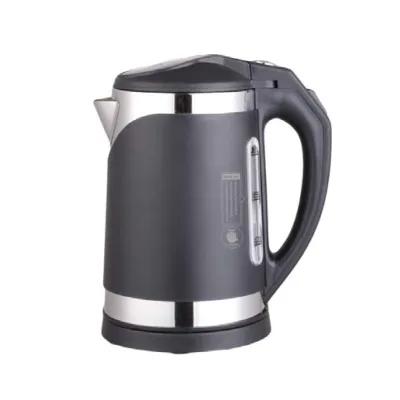


Hot Sale Stainless Steel Electric Water Kettle
$3.69 - $3.98
MOQ: 3000 Pieces
Guangzhou Kingray Electrical Appliances Technology Co., Ltd.


Glass Electric Kettle Hot Sell Home Appliance Water Electric Kettle Glass
$8.10 - $8.40
MOQ: 1200 Pieces

Electric Water Kettle 1.8 L Best Electric Kettle Stainless Steel Electric
$3.10 - $3.50
MOQ: 3000 Pieces


Comprehensive Sourcing Guide
Strategic Sourcing Guide for Whistling Electric Water Kettles
Understanding Product Specifications and Technical Attributes
When sourcing a Whistling Electric Water Kettle, buyers must first distinguish between consumer-grade appliances and industrial processing equipment, as the market often conflates these categories. Based on available product data, the core electric water kettle segment typically features a power rating of 1000W, operating within a voltage range of 220-240V at 50~60Hz. A critical technical specification for these units is the heating rate, which is observed to be under 4 minutes, ensuring rapid water boiling for commercial or high-volume domestic use. The heating style is predominantly coil heating, a method that offers efficient thermal transfer but requires careful inspection of the internal coating.
The material composition is a primary determinant of durability and safety. High-quality units in this category are constructed from stainless steel, specifically grades such as SS304 and SS316L, which provide resistance to corrosion and chemical interaction. The inner coating is also stainless steel, ensuring that the water does not come into contact with non-food-grade materials. For the structural integrity of the kettle, the wall thickness is typically observed at 0.5mm, a balance between weight reduction and heat retention. The capacity for standard units is often listed at 1.7L, though variations exist, including smaller 16 oz options for specific applications.
Safety features are integral to the design. Most units in this category include an automatic shut-off mechanism that activates upon boiling or when the kettle is lifted, preventing dry burning. The cord type is consistently corded, requiring the use of specific plugs such as the VDE Plug for European markets. The physical dimensions and standard specifications vary by model, with some units adhering to a standard size of 224209240mm. Buyers should verify that the specific model number, such as LPS-1538 or various XH-SS series codes, aligns with their operational requirements, as these identifiers often denote specific capacity or design iterations.
Compliance and Certification Verification
Navigating the regulatory landscape is essential for importing electric kettles, as non-compliance can lead to shipment seizures or market bans. The product data indicates a robust set of certifications that buyers should verify on a per-shipment basis. Key certifications observed include LFGB, GS, CE, RoHS, and CB. LFGB is particularly critical for food contact safety in Germany and the broader European market, ensuring the materials do not leach harmful substances. GS (Geprüfte Sicherheit) is a German safety certification that often exceeds standard CE requirements, providing a higher assurance of product safety.
RoHS compliance ensures that the product does not contain restricted hazardous substances, which is a mandatory requirement for electronics sold in the European Union. The CB scheme is an international certification system that facilitates the acceptance of test reports and certificates in participating countries, streamlining the import process. Additionally, ISOCE certification is noted in the data, which buyers should confirm corresponds to relevant international quality management standards. It is important to note that while these certifications are listed as high-confidence facts for the category, buyers must request valid, up-to-date certificates for the specific batch they intend to purchase, as certification status can vary between suppliers and production runs.
For buyers targeting other regions, the HS code 8479820090 is relevant for classification, though specific tariff codes may vary by destination country. The product origin is listed as China, with specific manufacturing hubs in Wenzhou and Zhejiang. Buyers should ensure that the supplier can provide documentation proving the origin and the validity of the certifications, as counterfeit certificates are a risk in the global supply chain. The warranty period is typically 1 year, which serves as a baseline for after-sales support, but buyers should negotiate terms that align with their local consumer protection laws.
Cost Drivers and Pricing Dynamics
The pricing for whistling electric water kettles is influenced by a complex interplay of material costs, certification expenses, and order volume. The observed price range in the market spans from $2.2 to $55 USD, a significant variance that reflects differences in quality, brand positioning, and production complexity. The lower end of the spectrum likely corresponds to basic models with standard stainless steel construction and minimal packaging, while the higher end may include premium features, custom colors, or specialized industrial-grade components.
The Minimum Order Quantity (MOQ) is a critical factor in determining the unit cost. Data indicates an MOQ range of 1 to 3000 units, with a specific high-confidence observation of 500 PCS for certain models. This suggests that buyers can source small quantities for testing or prototyping, with MOQs as low as 1 PCS for some suppliers, while bulk orders may require commitments of 500 units or more to achieve the lower price points. The ability to accept small orders is a valuable flexibility for new entrants or those testing market demand.
Customization is a major cost driver. The product attributes confirm that customization is available for color, branding, and potentially packaging. Customized colors and OEM branding will increase the unit price and may require a higher MOQ to amortize the setup costs. Packaging options, such as Gift Box+Master Carton or Wooden Case, also impact the final cost, with more elaborate packaging adding to the per-unit expense. Buyers should request detailed cost breakdowns to understand how much of the price is attributed to materials, labor, and certification, rather than just the final retail price.
Typical Applications and Usage Scenarios
The application scope for whistling electric water kettles extends beyond simple household boiling. While the primary function is heating water, the product data highlights specific industrial and commercial applications, including the processing of milk, yogurt, milk powder, and cheese. This indicates that the technology is adaptable for mild processing tasks in the food and beverage industry. The mixing type is listed as an agitator, and the acting mode includes electrical and steam heating, suggesting that these units can be integrated into larger processing lines for heating and mixing operations.
For commercial kitchens, hotels, and catering services, the 1.7L capacity and rapid heating rate of under 4 minutes make these kettles suitable for high-volume beverage preparation. The automatic shut-off feature is crucial for safety in unattended commercial environments. The material grades SS304 and SS316L are particularly suited for food processing applications where hygiene and corrosion resistance are paramount. The sealing materials, which can include Silicone, EPDM, Viton, PTFE, or NBR, allow for customization based on the specific chemical or temperature requirements of the application.
In industrial settings, the connection types such as weld, clamp, male, female, union, and flange enable the integration of these kettles into complex piping systems. The capacity range for industrial models can extend up to 1000L, as indicated by the standard specifications for larger units. The production capacity of 50 sets per month suggests that these units are often manufactured in batches, which buyers should factor into their supply chain planning. The age group is listed as "Adult," and the style is described as "Simple" or "Unicolor," reflecting a focus on functionality over aesthetic complexity, which is typical for B2B procurement.
Supplier Evaluation and Selection Criteria
Selecting the right supplier requires a rigorous evaluation process that goes beyond price comparison. Buyers should prioritize suppliers who demonstrate transparency in their certification status and production capabilities. The presence of multiple model numbers, such as XH-SS-001, XH-SS-003-#0582, and XH-BL06-#1055, indicates a supplier with a diverse product line, which can be advantageous for scaling operations or finding specific configurations. However, buyers must verify that the specific model they are sourcing matches the exact specifications required, as variations in thickness, capacity, and voltage can exist even within the same product family.
The supplier's location, specifically Wenzhou and Zhejiang in China, is a known manufacturing hub for stainless steel products. Buyers should assess the supplier's proximity to raw material sources and logistics networks, as this can impact lead times and shipping costs. The warranty of 1 year is a standard offering, but buyers should inquire about the supplier's track record for honoring warranties and providing replacement parts. The ability to accept small orders is a positive indicator of supplier flexibility, but buyers should also evaluate the supplier's capacity to handle large orders without compromising quality or delivery schedules.
Quality control is another critical factor. The surface finish of Ra 0.5 is a specific technical requirement that indicates a high level of smoothness, which is essential for hygiene in food processing. Buyers should request evidence of quality control processes, such as in-line inspections and final testing protocols. The production standard of 224209240mm and the capacity of 50 sets per month suggest a controlled manufacturing environment, but buyers should verify that the supplier can maintain these standards at scale. The use of OEM branding implies that the supplier is capable of private labeling, but buyers should ensure that the branding process does not compromise the product's integrity or certification status.
Quality Control and Long-Term Procurement Considerations
Implementing a robust quality control (QC) strategy is essential for mitigating risks associated with sourcing electric kettles. Buyers should establish clear acceptance criteria based on the observed specifications, such as the 0.5mm thickness, 1000W power rating, and automatic shut-off functionality. Regular third-party inspections should be conducted to verify that the products meet the stated certifications, including LFGB, GS, and CE. The sealing materials, which can vary between Silicone, EPDM, Viton, PTFE, or NBR, should be tested for durability and resistance to the specific substances they will encounter in operation.
Long-term procurement considerations involve building a sustainable relationship with the supplier. Buyers should negotiate terms that allow for flexibility in order quantities and delivery schedules, especially given the observed production capacity of 50 sets per month. The availability of customization options, such as color and packaging, should be leveraged to differentiate the product in the market, but buyers must ensure that these customizations do not introduce new compliance risks. The warranty period of 1 year should be clearly defined in the contract, including the scope of coverage and the process for claims.
Buyers should also consider the total cost of ownership, which includes not only the purchase price but also maintenance, energy consumption, and potential downtime. The rapid heating rate of under 4 minutes is a significant efficiency gain, but buyers should verify that the energy consumption aligns with their sustainability goals. The use of stainless steel and high-quality sealing materials suggests a long product lifespan, but regular maintenance and inspection are necessary to ensure continued performance. By focusing on these technical and operational aspects, buyers can secure a reliable supply of whistling electric water kettles that meet their specific needs and regulatory requirements.
Comparative Analysis of Key Product Attributes
To facilitate decision-making, the following table summarizes the key attributes observed in the product data, highlighting the variations and commonalities across the category.
| Attribute Category | Specific Attribute | Observed Value/Range | Notes for Verification |
|---|---|---|---|
| Power & Voltage | Power | 1000W | Verify actual wattage on unit label |
| Voltage | 220-240V, 50~60Hz | Check plug type (e.g., VDE) | |
| Heating Performance | Heating Rate | <4min | Test time to boil under standard conditions |
| Heating Style | Coil Heating | Inspect coil material and coating | |
| Material & Build | Material | Stainless Steel (SS304, SS316L) | Verify grade via mill certificate |
| Thickness | 0.5mm | Measure with caliper | |
| Inner Coating | Stainless Steel | Ensure no gaps or defects | |
| Safety & Control | Automatic Shut-off | Yes | Test activation at boiling point |
| Cord Type | Corded | Check cord length and insulation | |
| Capacity & Size | Capacity | 1.7L, 16 oz, 50-1000L | Confirm exact volume for specific model |
| Dimensions | 224209240mm | Verify physical fit for intended use | |
| Certifications | Certifications | LFGB, GS, CE, RoHS, CB, ISOCE | Request valid certificates for batch |
| Order Terms | MOQ | 1-3000 PCS (Commonly 500) | Negotiate based on volume |
| Warranty | 1 Year | Confirm claim process and coverage | |
| Origin & Packing | Origin | China (Wenzhou, Zhejiang) | Verify country of origin on invoice |
| Packing | Gift Box+Master Carton, Wooden Case | Check packaging integrity |
This comparative analysis serves as a checklist for buyers to ensure that the products they source align with their technical and operational requirements. By systematically verifying each attribute, buyers can minimize the risk of receiving non-compliant or substandard products.
FAQs
What certifications are required for this kettle?
The product holds LFGB, GS, CE, RoHS, CB, and ISOCE certifications. These ensure safety and compliance for food contact and electrical standards in various regions, particularly Europe.
How fast does the kettle heat water?
The heating rate is under 4 minutes for rapid boiling. This coil heating system delivers efficient thermal transfer suitable for both commercial and high-volume domestic use scenarios.
Can I customize the color and packaging?
Yes, customization is available for color and packaging options. Buyers can select customized colors and choose between gift box plus master carton or wooden case packaging for branding.
What is the minimum order quantity?
The minimum order quantity ranges from 1 to 3000 units depending on the supplier. Some models require 500 pieces, while others accept small orders starting at just one piece.
Which materials are used for construction?
The kettle is constructed from stainless steel grades SS304 and SS316L. The inner coating is also stainless steel to ensure durability and prevent chemical interaction with the water.
What is the power rating and voltage?
The unit operates at 1000W with a voltage of 220-240V at 50-60Hz. It uses a corded design with a VDE plug suitable for European electrical standards.
Does the kettle have an automatic shut-off?
Yes, the device features an automatic shut-off mechanism for safety. This function activates upon boiling or when the kettle is lifted to prevent dry burning and ensure user protection.