Source Food Vacuum Sealer for Food, Drug, and Electronics
Compare 30 Food Vacuum Sealer models from China, including semi-automatic and automatic options. Evaluate sealing lengths, vacuum degrees, and pneumatic or mechanical power sources for solid, liquid, and powdery applications; compare the available evidence and request quotations based on your requirements.
Key considerations
Products List

Food Vacuum Sealer Home Kitchen Electric Multi Function Vacuum Machine
$18.00 - $22.00
MOQ: 200 Pieces


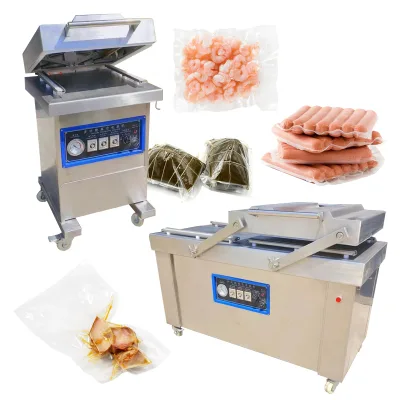

The High Quality Home Use Food Vacuum Sealer
$9.00 - $28.00
MOQ: 10 Pieces
Qingdao Zhongkang Printing and Packaging Machinery Co., Ltd.
Comprehensive Sourcing Guide
Food Vacuum Sealer Sourcing Guide
Selecting the right Food Vacuum Sealer requires balancing automation levels with specific packaging needs. Buyers must distinguish between semi-automatic and fully automatic units based on production volume. Semi-automatic models, such as the HN8005, offer flexibility for smaller batches, while automatic systems like the DZQ-600F suit high-throughput environments. Understanding these operational differences ensures alignment with daily output targets and labor constraints.
The choice between chamber and outside-pumping machines dictates product compatibility. Chamber sealers handle liquids and pastes effectively, whereas outside-pumping units are better for dry solids or delicate items. This distinction is critical for preserving food integrity. Buyers should evaluate the physical state of their products—solid, liquid, powder, or paste—to select a machine that prevents seal failure or product damage during the vacuuming process.
Product Scope and Observed Listing Signals
Market listings reveal a wide price range, from $0.01 to $48,000, reflecting diverse capabilities and build qualities. Minimum order quantities typically span from one to one thousand units, allowing flexibility for both pilot tests and large-scale deployments. High MOQs often correlate with customized configurations or bulk material discounts, so buyers should clarify pricing tiers early in negotiations to avoid unexpected cost escalations.
Observed specifications highlight key performance indicators like sealing length and vacuum degree. For instance, some models feature a sealing length of 32cm with a vacuum degree of -70 KPa, while others offer extended lengths up to 1400mm. These variations directly impact package size and vacuum quality. Buyers must match these technical parameters to their specific packaging film dimensions and required shelf-life extension goals to ensure operational efficiency.
Technical Specifications to Verify
Verify the sealing bar dimensions and chamber size to ensure compatibility with your packaging materials. Models like the DZ-600 feature a sealing bar dimension of 70010mm and a vacuum chamber of 700500100mm. Larger units, such as the 700 series, may have chambers measuring 880700*200mm. Confirming these physical constraints prevents bottlenecks and ensures that your largest product packages fit securely within the sealing area without compromising the vacuum seal integrity.
Power supply and automation type are critical for facility integration. Machines operate on 220V/380V or 220/50Hz, requiring electrical verification before installation. Automation ranges from semi-automatic to fully automatic, with production efficiencies noted as 3-4 times per minute for some models. Buyers must assess whether pneumatic, mechanical, or electric power sources align with their factory infrastructure and maintenance capabilities to avoid operational disruptions.
Compliance and Safety Documentation
Ensure all machinery carries relevant safety certifications, such as ISO and CE marks, which indicate adherence to international manufacturing standards. These certifications are vital for legal compliance and operational safety in many markets. Buyers should request valid certification documents from suppliers to verify that the equipment meets local electrical and mechanical safety regulations, reducing liability risks and ensuring smooth customs clearance during importation.
Documentation should also include detailed operational manuals and maintenance schedules. Clear instructions on handling inflatable devices, if present, and routine cleaning procedures are essential for food-grade hygiene. Since these machines contact food products, verifying that materials like stainless steel construction meet food safety standards is crucial. Proper documentation ensures that operators can maintain hygiene protocols effectively, preventing contamination and ensuring consistent product quality.
Cost Drivers and Commercial Terms
Packaging and shipping dimensions significantly influence total landed costs. Units may be packed in cartons, wooden boxes, or plywood cases, with dimensions like 574242cm or 17708001000mm for larger systems. Buyers must calculate freight costs based on these volumetric weights and choose appropriate shipping methods. Understanding packing details helps in planning warehouse storage and handling logistics, ensuring that the equipment arrives safely and fits within available facility space.
Lead times and payment terms vary by supplier and customization level. Standard models may have shorter lead times, while customized configurations require additional manufacturing time. Buyers should negotiate clear delivery schedules and payment milestones to manage cash flow effectively. Additionally, consider the cost of spare parts and after-sales support, as these ongoing expenses impact the total cost of ownership over the machine's lifespan.
Supplier Qualification and Quality Control
Assess supplier reputation and manufacturing capabilities through site audits or third-party inspections. Verify that the supplier has a proven track record in producing vacuum packing machines for the food industry. Quality control processes should include pre-shipment testing of vacuum degrees, sealing strength, and motor performance. Buyers should request test reports or video demonstrations to confirm that the machine meets the specified performance criteria before finalizing the purchase.
Evaluate the supplier’s after-sales service and technical support structure. Reliable suppliers offer comprehensive training, warranty coverage, and accessible spare parts. Inquire about response times for technical issues and the availability of local service engineers. A robust support network minimizes downtime and ensures that any operational issues are resolved quickly, maintaining continuous production flow and protecting your investment in the vacuum sealing equipment.
Long-Term Procurement Checks
Monitor machine performance and maintenance needs over time to ensure consistent operation. Regularly check sealing bars, vacuum pumps, and electrical components for wear and tear. Establish a preventive maintenance schedule based on usage intensity to extend the machine's lifespan. Tracking performance metrics helps identify potential issues early, allowing for timely repairs and avoiding costly production interruptions that could impact your supply chain efficiency.
Stay updated on industry trends and technological advancements in vacuum sealing. Newer models may offer improved energy efficiency, faster sealing speeds, or enhanced hygiene features. Periodically review your procurement strategy to ensure that your equipment remains competitive and compliant with evolving food safety regulations. Continuous evaluation allows for strategic upgrades and replacements, ensuring that your packaging operations remain efficient, safe, and cost-effective in the long run.
FAQs
What automation levels are available for food vacuum sealers?
Both semi-automatic and automatic models are available for food vacuum sealing applications. The semi-automatic option suits smaller batches, while the automatic model offers higher efficiency with production speeds reaching three to four times per minute for consistent results.
Which certifications do these vacuum packing machines hold?
Selected models carry ISO and CE certifications to ensure safety and compliance. These standards verify that the machinery meets international requirements for electrical safety and operational reliability when used for sealing food, drugs, or electronic components in industrial settings.
Can the machine handle solid, liquid, and powdery products?
Yes, the vacuum packing machine is designed to process solid, liquid, powdery, and paste states effectively. This versatility allows users to seal various food items and other materials without needing different equipment for each specific product state or consistency type.
What is the sealing width and length for these units?
Sealing dimensions vary by model, with widths around 3mm and lengths ranging from 32cm up to 1400mm. Specific configurations like the DZQ-600F offer extended sealing bars to accommodate larger packages while maintaining a consistent seal quality for different product sizes.
How is the machine powered and what voltage does it use?
Power options include pneumatic, mechanical, and electric systems depending on the specific model selected. Voltage requirements typically support 220V or 380V inputs, ensuring compatibility with various industrial power supplies found in different regions for reliable operation during continuous sealing cycles.
What is the typical production efficiency of automatic models?
Automatic models achieve a production efficiency of three to four cycles per minute. This rate ensures high throughput for commercial operations, allowing businesses to process large volumes of food or other items quickly while maintaining consistent vacuum levels and sealing integrity.
Are customization options available for these vacuum packing machines?
Customization is available to meet specific buyer requirements for machine configuration or packaging needs. Buyers can request tailored solutions that align with their production line specifications, ensuring the equipment integrates seamlessly with existing workflows and handles unique product dimensions effectively.