Source White Melamine Phosphate for Wire and Cable Coatings
Compare 30 listings of White Melamine Phosphate for Wire and Cable Coatings with varying purity, particle size, and nitrogen content. Buyers can evaluate specifications like decomposition temperature and phosphorus levels to find suitable industrial grade options from Chinese manufacturers.
Key considerations
Products List


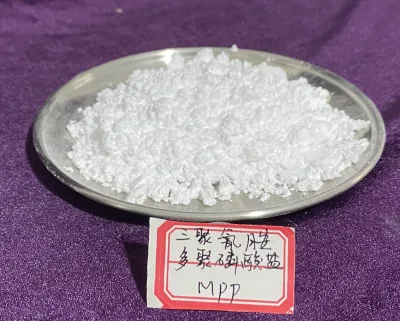
White Powder Flame Retardant Melamine Polyphosphate with High Purity Mpp
$5500.00 - $10625.00
MOQ: 1 Tons


White Powder Halogen-Free Retardant Melamine Polyphosphate with High Purity
$5500.00 - $10625.00
MOQ: 1 Tons




Comprehensive Sourcing Guide
Sourcing Guide for White Melamine Phosphate in Wire and Cable Coatings
Understanding the Material Profile and Technical Specifications
White melamine phosphate serves as a critical flame retardant additive in the wire and cable industry, primarily valued for its ability to suppress combustion without releasing toxic halogens. When sourcing this material, buyers must distinguish between specific product models that may share a common chemical family but differ in physical and thermal properties. The market data indicates a range of product models, including DovaFR MPP 307, Dova MP 303, and PF-MP variants, each tailored for specific performance requirements.
A primary observation in the current supply landscape is the variation in particle size, which directly impacts dispersion within polymer matrices. Specifications observed include particle sizes listed as less than 20 microns, as well as more precise distributions where D50 is less than or equal to 1.7 microns and D98 is less than or equal to 18 microns. For applications requiring high clarity or uniform coating thickness, the finer particle size distribution (D50<=1.7) is often preferred. Conversely, bulk density and stacking density are equally critical for handling and dosing accuracy. Observed stacking densities range from 300 to 500 kg/m³, while relative density values typically fall between 1.5 and 1.7. Buyers should verify the bulk density of specific batches, as values around 0.6 g/cm³ have been noted for certain grades, which influences the volumetric calculation required for mixing.
The chemical composition is the defining characteristic of white melamine phosphate. The material is characterized by a dual-element flame retardant mechanism involving nitrogen and phosphorus. Analysis of available product data reveals significant variation in elemental content. Some grades list Phosphorus (P) content between 12% and 14%, while others specify a range of 14% minimum or 17±2%. Similarly, Nitrogen (N) content varies, with observations ranging from 42-44% in specific high-nitrogen grades to 20±2% in others. This discrepancy suggests that "melamine phosphate" covers a spectrum of stoichiometries or blends. Purity levels are generally high, with observed values ranging from 90% to 99% minimum, and some specific grades achieving ≥99% purity. The whiteness of the powder is another critical aesthetic and quality metric, with some specifications requiring a whiteness of ≥93.0%.
Compliance, Certification, and Regulatory Standards
In the wire and cable sector, regulatory compliance is non-negotiable. Sourcing white melamine phosphate requires strict adherence to international safety and environmental standards. The supply chain data indicates that products are frequently associated with ISO certification, and specific listings include RoHS compliance. These certifications are essential for manufacturers exporting finished cables to the European Union and other regions with stringent chemical restrictions.
Beyond general certifications, the grade standard is a vital compliance indicator. The observed products are classified as "Industrial Grade," which implies they meet the rigorous demands of manufacturing processes but may differ from laboratory-grade purity. Buyers must verify that the specific batch they procure carries the necessary documentation to support their own product certifications. For wire and cable applications, the material must not only be flame retardant but also stable under the thermal stress of extrusion and curing. The decomposition temperature is a key safety metric; observed values range from a minimum of 280°C to 300°C, with some high-performance grades showing a decomposition temperature of 375°C minimum. This thermal stability ensures the additive does not degrade prematurely during the cable manufacturing process, which typically involves elevated temperatures.
The pH value of the material in an aqueous solution is another compliance and stability factor. Data suggests a pH range of 4 to 6 for a 1% aqueous solution, or 4.5±1.5 for a 10% suspension. Maintaining this acidic range is crucial to prevent corrosion of metal conductors within the cable assembly. Buyers should request a Certificate of Analysis (CoA) that explicitly states the pH value for the specific lot, as deviations can indicate moisture absorption or chemical degradation. Furthermore, the moisture content must be tightly controlled, with observed maximums of 0.3% at 105°C for two hours. Exceeding this threshold can lead to processing defects such as foaming or voids in the cable insulation.
Cost Drivers and Pricing Dynamics
The pricing of white melamine phosphate is influenced by a complex interplay of raw material costs, production complexity, and logistical factors. The observed price range in the market is exceptionally wide, spanning from $0.8 to $10,625 per unit. This vast disparity is likely due to differences in unit of measure (e.g., per kilogram versus per ton), product purity levels, and the specific model or grade being quoted. High-purity grades with precise particle size distributions and strict elemental content controls generally command a premium over standard industrial grades.
Production costs are driven by the synthesis of the nitrogen-phosphorus complex. The specific ratio of nitrogen to phosphorus, as well as the degree of crystallization and whiteness, affects the manufacturing yield and energy consumption. Grades with higher whiteness (≥93.0%) and tighter purity tolerances (≥99%) require more rigorous purification steps, which increases the base cost. Additionally, the packaging method plays a role in the final landed cost. While most products are packed in 25kg craft paper bags or standard paper bags, specialized packaging for moisture-sensitive applications may incur additional charges.
Minimum Order Quantity (MOQ) is another significant cost driver. The market data shows an MOQ range from 1 unit to 1000 units, with specific listings indicating a 500kg minimum for certain models. Smaller orders may carry a higher per-unit cost due to the fixed costs of handling and logistics. Buyers should align their order volume with their production schedule to optimize costs. The origin of the product, primarily from regions such as Shandong and Anhui in China, also impacts pricing due to local labor costs, energy prices, and export logistics. Buyers should request detailed quotes that break down the material cost, packaging, and shipping to understand the true cost structure.
Typical Applications and Performance Requirements
White melamine phosphate is predominantly utilized in the formulation of wire and cable coatings, particularly for applications requiring halogen-free flame retardancy. Its mechanism of action involves the release of non-flammable gases upon heating, which dilutes the oxygen concentration and cools the flame, while the formation of a char layer protects the underlying polymer. This makes it ideal for low-smoke zero-halogen (LSZH) cables used in public buildings, transportation systems, and industrial facilities.
The specific application dictates the required technical specifications. For high-temperature environments, such as aerospace or heavy industrial cabling, the decomposition temperature becomes a critical selection criterion. Grades with a decomposition temperature of 375°C minimum are better suited for these demanding applications compared to those with a lower threshold. The particle size also influences the mechanical properties of the final coating. Finer particles (D50<=1.7) ensure better dispersion and smoother surface finishes, which is essential for high-voltage cables where surface defects can lead to electrical breakdown.
The solubility of the material is another factor to consider for specific coating formulations. With a solubility of 0.05 g/100ml H2O at 20°C maximum, the material is largely insoluble in water, making it suitable for aqueous-based coatings where moisture sensitivity is a concern. However, for solvent-based systems, the compatibility with the solvent and the resin matrix must be verified. The storage requirements, typically a cool and dry place, are essential to maintain the material's integrity before application. Buyers should ensure their storage facilities meet these conditions to prevent clumping or degradation of the powder.
Supplier Evaluation and Quality Assurance
Evaluating suppliers for white melamine phosphate requires a multi-faceted approach that goes beyond price comparison. The first step is verifying the supplier's ability to provide consistent product specifications. Given the observed variations in elemental content and particle size, a reliable supplier must demonstrate a robust quality control system that ensures batch-to-batch consistency. Buyers should request samples for independent testing to verify claims regarding purity, nitrogen/phosphorus content, and decomposition temperature.
Documentation is a key component of supplier evaluation. A credible supplier should provide a Certificate of Analysis (CoA) for every shipment, detailing the specific test results for that lot. This document should confirm compliance with the agreed-upon standards, such as ISO and RoHS, and verify that the material meets the specific grade requirements (e.g., Industrial Grade). Additionally, suppliers should be able to trace the origin of their raw materials and provide evidence of their manufacturing processes.
The supply chain stability is another critical factor. With observed origins in Shandong and Anhui, China, buyers should assess the supplier's logistical capabilities and lead times. While specific lead times are not universally standardized, the ability to meet the MOQ of 500kg or higher without significant delays is crucial for maintaining production schedules. Suppliers with a history of reliable delivery and responsive customer service are preferable, especially for long-term procurement contracts.
Long-Term Procurement and Strategic Considerations
Long-term procurement of white melamine phosphate involves strategic planning to mitigate risks associated with supply chain volatility and market fluctuations. Buyers should consider establishing long-term contracts with suppliers who have demonstrated reliability and quality consistency. This approach can help stabilize pricing and ensure a steady supply of material, which is vital for continuous cable manufacturing operations.
Customization is a key feature observed in the market, with many suppliers offering tailored solutions. Buyers should leverage this flexibility to negotiate specifications that align precisely with their production needs, such as specific particle size distributions or elemental ratios. Customization can also extend to packaging, ensuring that the material is delivered in a manner that minimizes handling damage and moisture exposure.
Sustainability is increasingly becoming a priority in the wire and cable industry. Buyers should evaluate suppliers based on their environmental practices and commitment to reducing the carbon footprint of their production processes. While specific environmental certifications beyond RoHS are not explicitly detailed in the provided data, suppliers who proactively address sustainability can offer a competitive advantage in markets with strict environmental regulations.
Finally, buyers should maintain a diversified supplier base to mitigate the risk of supply disruptions. Relying on a single source for a critical component like white melamine phosphate can be risky, especially given the wide range of product models and specifications available. By engaging with multiple suppliers and maintaining a clear understanding of the technical and compliance requirements, buyers can ensure a resilient and efficient supply chain for their wire and cable coating operations.
Comparative Overview of Key Product Attributes
To assist in the selection process, the following table summarizes the key technical attributes observed across different product models. This comparison highlights the variability in specifications that buyers must consider when matching material to application requirements.
| Attribute | Model DovaFR MPP 307 | Model Dova MP 303 | Model PF-MP | Model PF-MPP-20 |
|---|---|---|---|---|
| Purity | 90%~99% | Not Specified | ≥99% | 98% MIN |
| Phosphorus (P) | 14% min | 12-14% | 17±2% | Not Specified |
| Nitrogen (N) | Not Specified | 42-44% | 20±2% | Not Specified |
| Particle Size | <20 | D50<=1.7, D98<=18 | Not Specified | 10 |
| Decomposition Temp | 300°C min | 375°C min | ≥280°C | Not Specified |
| Whiteness | Not Specified | Not Specified | ≥93.0% | Not Specified |
| Moisture | Not Specified | 0.3% max | ≤0.3% | Not Specified |
| Packaging | Craft Paper Bag | Paper Bag | 25kg | Bag |
| Origin | China | China | Shandong, China | Anhui, China |
This table underscores the importance of verifying specific attributes for each product model. Buyers should not assume that all white melamine phosphate products share the same specifications. Instead, they must carefully review the technical data sheet for the specific model they intend to purchase to ensure it meets the rigorous demands of their wire and cable coating applications.
FAQs
What certifications do white melamine phosphate products have?
Products typically hold ISO and RoHS certifications to meet international safety standards. These certifications ensure compliance for wire and cable applications, particularly for exports to regions with strict chemical restrictions like the European Union.
Which particle size specifications are available for this material?
Available specifications include particle sizes less than 20 microns and precise distributions where D50 is less than or equal to 1.7 microns. Finer distributions are preferred for high clarity coatings, while bulk density varies between 0.6 and 0.5 g/cm³.
How does the nitrogen content vary across different grades?
Nitrogen content varies significantly, with some grades listing 42-44% and others specifying 20±2%. This variation indicates different stoichiometries or blends within the melamine phosphate family, requiring buyers to verify specific elemental ratios for their formulations.
Can I find products with a decomposition temperature above 300°C?
Yes, specific high-performance grades show a decomposition temperature of 375°C minimum, while others start at 280°C. This thermal stability is critical for ensuring the additive does not degrade prematurely during the high-temperature extrusion and curing processes of cable manufacturing.
What is the typical packaging and origin for these products?
Products are commonly packed in 25kg craft paper bags or standard paper bags. The primary origins are located in Shandong and Anhui, China, where suppliers offer customization options and maintain specific storage requirements like cool, dry places.
Which purity levels are standard for industrial grade melamine phosphate?
Purity levels generally range from 90% to 99% minimum, with some specific grades achieving ≥99% purity. High whiteness values of ≥93.0% are also observed, indicating rigorous purification steps that may influence the final cost and application suitability.