Source White Light Inflatable Skydancer for Outdoor Ads
Compare 30 listings of White Light Inflatable Skydancer options tailored for outdoor advertising, trade shows, and event promotions. Buyers can evaluate customization, sizes, and blower specifications to find the right supplier.
Key considerations
Products List


Inflatable Waving Flame Air Dancer Dancing Man Inflatable Sky Air Dancer
$50.00 - $80.00
MOQ: 1 Pieces

Custom Inflatable Sky Dancer Character Air Tube Dancer for Outdoor Promotion or Advertising
$120.00 - $150.00
MOQ: 1 Pieces


Inflatable Funny Waves Sky Air Dancer Outdoor Inflatable Advertisement Air Dancer
$35.00 - $128.00
MOQ: 1 Pieces

Factory Price Custom Advertising Sky Dancer Custom Inflatable Air Dancer
$35.00 - $128.00
MOQ: 1 Pieces

Customized Outdoor Double Print Inflatable Sky Air Dancer for Advertising
$50.00 - $250.00
MOQ: 1 Pieces

Sports Music Outdoor Sports Inflatable Air Sky Dancer Star Inflatable Balloon
$35.00 - $128.00
MOQ: 1 Pieces


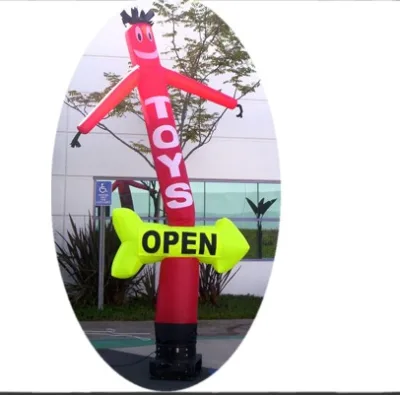
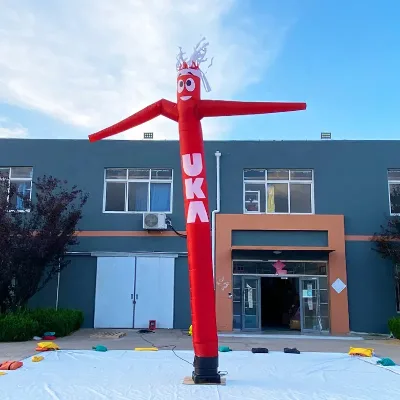


Popular Inflatable Air Dancer, Inflatable Sky Man, Inflatable Flame Air Man
$99.00 - $339.00
MOQ: 1 Pieces


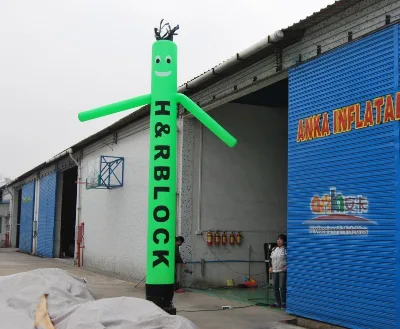
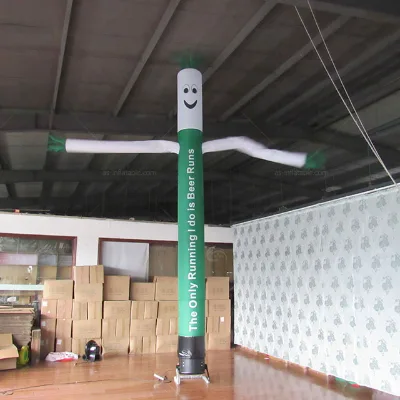
Comprehensive Sourcing Guide
Strategic Sourcing Guide for White Light Inflatable Skydancers
Understanding the Technical Architecture of Inflatable Air Dancers
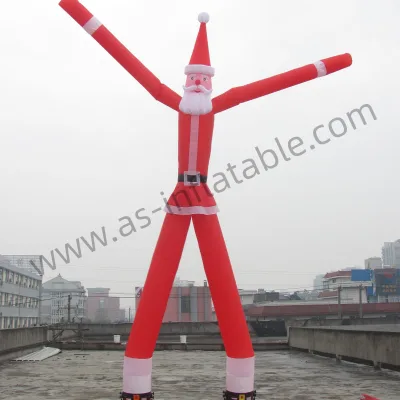
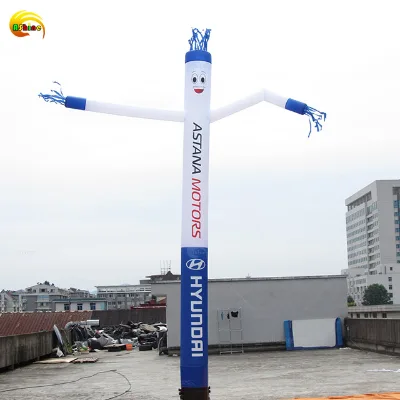
The White Light Inflatable Skydancer, often categorized under technical terms like "Inflatable Air Dancer," "Tube Man," or "Sky Dancer," represents a specialized category of promotional equipment designed for high-visibility outdoor advertising. The core functionality relies on a continuous flow of air to create a dynamic, waving motion that captures human attention. When sourcing these units, buyers must first distinguish between the structural materials and the inflation mechanisms that define their operational capabilities.
The primary construction material observed in the market is polyester, chosen for its durability and resistance to tearing. However, the specific manufacturing technique varies; some units are produced using machine work and sewing, while others utilize digital printing or heat transfer printing for graphic application. The standard inflation method involves an external blower, which is a critical component. The product specifications indicate that the blower is included in the package, often certified to specific voltage standards such as CE 220 V-240 V or UL 110 V-120 V, depending on the target market. It is essential to verify that the blower is an external unit rather than an internal fan, as this impacts the maintenance and noise profile of the installation.
The physical dimensions of these units are a primary variable in procurement. The observed size specifications range significantly, with common heights listed as 3 meters, 4 meters, 5 meters, 6 meters, and extending up to 9 meters or even higher based on customization requests. The base type is typically a round base, which provides stability during operation. The "white light" aspect of the keyword suggests a specific aesthetic or functional requirement, though the standard product attributes note that lighting is often not included in the base package. Buyers must explicitly confirm if the "white light" refers to the color of the fabric or the inclusion of integrated LED lighting systems, as the default specification often lists "Includes lighting: No." If illumination is required for night-time visibility, this must be treated as a custom requirement involving UV printing or digital printing capabilities to ensure the graphics remain visible against the white background.
Compliance, Certification, and Safety Standards
When procuring industrial or commercial-grade inflatables, compliance with safety standards is non-negotiable. The supplied data highlights specific standards such as EN14960, which is a recognized standard for inflatable amusement devices. This standard typically governs the structural integrity, fire resistance, and safety requirements for such equipment. Additionally, the electrical components, specifically the air blowers, are noted to carry CE and UL certifications. These certifications are critical for ensuring that the electrical systems meet the safety requirements of the European Union and the United States, respectively.
However, buyers must exercise caution regarding the scope of these certifications. The presence of a "CE/UL Certificated" label on the blower does not automatically certify the entire inflatable structure. The certification applies specifically to the electrical motor and the blower unit. The fabric and the structural assembly must be evaluated against the EN14960 standard or equivalent local regulations. In the context of the "white light" variant, if the unit includes integrated lighting, the electrical safety of those lights must also be verified. The standard voltage ranges provided are 220 V-240 V for CE compliance and 110 V-120 V for UL compliance. Sourcing a unit intended for a specific region requires matching the voltage and certification of the blower to the local grid and safety codes.
Furthermore, the manufacturing origin plays a role in compliance. The data indicates origins in Guangzhou and Jiangxi, China. While these are major manufacturing hubs, the buyer must verify that the specific supplier holds valid, up-to-date certificates for the batch being purchased. The "CE" certification mentioned in the low-confidence background should be treated as a claim to be verified rather than a guaranteed fact for every listing. Procurement teams should request the actual test reports and certification documents from the supplier before finalizing an order, ensuring that the "white light" features do not introduce new electrical hazards that bypass standard safety protocols.
Cost Drivers and Pricing Dynamics
The pricing for inflatable skydancers is influenced by a complex matrix of factors, including height, customization level, material quality, and the inclusion of accessories. The observed price range in the market spans from $30 to $1,500 USD. This wide variance is primarily driven by the height of the unit. A 3-meter unit will naturally cost significantly less than a 9-meter unit due to the increased amount of polyester material and the larger, more powerful blower required to inflate it.
Customization is another major cost driver. The product attributes confirm that customization is available for size, color, and logo. While the base price may be low, the addition of custom digital printing, UV printing, or specific color requests (such as a specific white shade or white lighting integration) will increase the unit cost. The "Factory Directly" sale mode suggests that buyers can access competitive pricing by bypassing intermediaries, but this requires direct engagement with the manufacturer.
The minimum order quantity (MOQ) is a critical factor in cost analysis. The data indicates an MOQ of 1 piece for air dancers. This low barrier to entry allows for single-unit purchases, which is advantageous for testing the market or for small-scale events. However, for larger procurement needs, buyers should negotiate based on volume, even if the stated MOQ is low. The packaging also affects the final cost; units are packed in PVC tarpaulin bags or cloth storage bags inside hard cartons. The choice of packaging impacts shipping costs and the risk of damage during transit. Buyers should factor in the cost of shipping, which is sometimes advertised as "Free Shipping" with a 7-10 day delivery window, but this often applies only to specific regions or order values.
Typical Applications and Operational Environments
Inflatable skydancers are designed primarily for outdoor advertising and promotional events. The "Application" attribute explicitly lists "Outdoor" and "Advertisement" as the primary use cases. The dynamic motion of the air dancer makes it an effective tool for drawing attention to retail stores, car dealerships, trade shows, and festival entrances. The "Suitable environment" attribute notes that these units can be used in both outdoor and indoor settings, provided the space is sufficient to accommodate the height and the blower has access to fresh air.
The "white light" specification suggests a specific application scenario where high visibility is required, potentially for night-time events or in environments with low ambient light. However, since the standard specification often lists "Includes lighting: No," buyers must clarify if the "white light" refers to the fabric color or an active lighting system. If the unit is intended for 24-hour operation, the durability of the polyester material against UV radiation and weather elements becomes a key consideration. The "Technics" attribute mentions "Machine Work" and "Sewing," which implies a robust construction suitable for repeated inflation and deflation cycles.
The base type, typically a round base, is designed for stability on various surfaces, including grass, concrete, and asphalt. For indoor use, the blower must be positioned to ensure adequate airflow without obstructing foot traffic. The "Style" attribute offers options for single or two-legged air dancers, allowing buyers to select a configuration that best fits the available space and the desired visual impact. The "Advantage" of fast delivery and good service is particularly relevant for event planners who need units deployed quickly for time-sensitive promotions.
Supplier Evaluation and Quality Control Protocols
Evaluating a supplier for inflatable skydancers requires a rigorous assessment of their manufacturing capabilities and quality control processes. The data indicates that suppliers in Guangzhou and Jiangxi, China, offer these products. Buyers should verify the supplier's production capacity and their ability to handle custom orders. The "Craftsmanship" attributes, such as "Digital Printing" and "Heat Transfer Printing," indicate that the supplier has the technical capability for high-quality graphic application. However, the quality of the print and the durability of the material must be verified through samples or previous client references.
Quality control should focus on the stitching and seam integrity. Since the "Technics" include sewing, the strength of the seams is critical to prevent air leaks and structural failure. Buyers should request a detailed inspection report that covers the tensile strength of the polyester fabric and the durability of the seams. The "prod_packing" specification mentions hard cartons for outdoor shipping, which is a positive indicator of the supplier's attention to logistics. However, the buyer should also verify the quality of the internal cloth storage bags to ensure the unit can be stored and transported safely without damage.
The "Blower Certification" is a key quality metric. Buyers must ensure that the blower is not only certified but also matches the voltage requirements of the destination country. A mismatch in voltage can lead to equipment failure or safety hazards. Additionally, the "Delivery" time of 7-10 days should be treated as a target rather than a guarantee. Buyers should confirm the lead time in writing and understand the potential for delays due to customization or shipping logistics. The "Fast Delivery Within 1 Week" claim should be validated against the specific order details.
Long-Term Procurement and Maintenance Considerations
For buyers planning long-term use of inflatable skydancers, maintenance and lifecycle management are essential. The "Material" is polyester, which is generally durable but susceptible to wear and tear from friction and UV exposure. Regular inspection of the fabric for tears, holes, or fading is necessary to maintain the unit's appearance and functionality. The "Accessories" list includes the air dancer, blower, and carry bag. The carry bag is crucial for storage, protecting the unit from dust and moisture when not in use.
The "Inflation Method" relies on an external blower, which is a mechanical device with moving parts. Over time, the blower may require maintenance or replacement. Buyers should inquire about the availability of spare parts and the warranty period for the blower. The "Standard" voltage specifications (CE 220 V-240 V or UL 110 V-120 V) indicate that the blower is designed for specific markets, and using it in a different region without a transformer can damage the unit.
The "Customization" aspect offers flexibility for branding, but it also introduces complexity in long-term management. If a company updates its logo or branding, the ability to reprint or replace the graphics on the existing unit becomes a consideration. The "Design" attribute suggests that suppliers offer free design assistance, which can be a valuable resource for maintaining brand consistency over time. However, buyers should be aware that custom designs may have a longer lead time and higher cost than standard stock items.
Finally, the "Sale Mode" of "Factory Directly" implies a direct relationship with the manufacturer. This can facilitate better communication regarding maintenance and repairs. Buyers should establish a clear line of communication with the supplier for any technical support needs. The "Advantage" of "Good Service" and "Good Price" should be balanced against the potential risks of dealing with a single source. Diversifying suppliers or maintaining a relationship with multiple manufacturers can mitigate the risk of supply chain disruptions.
Comparative Analysis of Product Specifications
To aid in decision-making, the following table summarizes the key technical and logistical attributes observed in the market for inflatable air dancers. This comparison highlights the variability in specifications that buyers must navigate during the sourcing process.
| Attribute | Standard Observation | Customization Options | Verification Requirement |
|---|---|---|---|
| Height | 3m, 4m, 5m, 6m | Up to 9m or Custom | Confirm exact height and base stability |
| Material | Polyester | Custom Colors | Verify fabric thickness and UV resistance |
| Inflation | External Blower | Included in package | Check voltage (CE/UL) and blower power |
| Lighting | Not Included | Custom Request | Confirm if "white light" means fabric or LEDs |
| Printing | Digital/Heat Transfer | UV Printing, Custom Logo | Review print quality and color fastness |
| Base Type | Round Base | Custom Style | Ensure base is suitable for surface type |
| Origin | Guangzhou, Jiangxi | N/A | Verify supplier location and shipping terms |
| Certification | EN14960, CE/UL | N/A | Request valid test reports for blower and fabric |
| MOQ | 1 PC | N/A | Confirm if volume discounts apply |
| Lead Time | 7-10 Days | Fast Delivery (1 Week) | Validate lead time against order complexity |
This table serves as a checklist for buyers to ensure that all critical parameters are addressed during the negotiation phase. By systematically verifying each attribute, buyers can mitigate the risks associated with sourcing specialized inflatable equipment and ensure that the final product meets their specific operational and safety requirements. The "white light" keyword, while specific, must be interpreted within the context of these broader specifications to avoid misunderstandings regarding the final product capabilities.
FAQs
How are white light inflatable skydancers customized for logos and colors?
You can customize the logo and color to your specific requirements using digital or UV printing. The supplier offers free design assistance to create a unique look. This customization applies to the polyester fabric and is available for all standard heights ranging from 3 to 9 meters.
What certifications do the air blowers for these units hold?
The included external blowers are certified with CE and UL standards to ensure electrical safety. These certifications verify compliance with voltage requirements of 220-240 V for CE markets and 110-120 V for UL markets. Always verify the specific blower certificate matches your destination country's grid.
Which heights are available for white light inflatable skydancers?
Available heights include 3, 4, 5, 6, 7, 8, and 9 meters, with options for custom sizing. The base type is typically a round base for stability on various surfaces. You can select a single or two-legged style depending on your space and visual needs.
Can buyers purchase a single unit as the minimum order quantity?
Yes, the minimum order quantity is one piece, allowing for single-unit purchases. This low barrier is ideal for testing the market or small events. The product ships with a carry bag and external blower included in the package.
How long does delivery take for these inflatable air dancers?
Delivery typically takes 7 to 10 days with free shipping options available in some regions. Some suppliers offer fast delivery within one week for standard orders. Lead times may vary slightly based on the level of customization requested for the design and printing.
What material is used to construct these outdoor advertising inflatables?
These units are constructed from durable polyester material designed for outdoor use. The fabric is treated to withstand weather elements and features machine work or sewing for structural integrity. The product is packed in PVC tarpaulin bags or cloth storage bags inside hard cartons for protection.
Which inflation method powers the White Light Inflatable Skydancer?
The unit uses an external blower for inflation rather than an internal fan. This method ensures the blower is separate from the inflatable body for easier maintenance. The blower is included in the package and operates on standard voltage ranges suitable for global markets.