Source Wire Crimper for Roof, Crimping, and Stripping Tasks
Find and compare 30 Wire Crimper options from verified Chinese suppliers. Buyers can evaluate models like JWD-WSD4-100 and HL-DP based on voltage, power, and automation grade to suit specific industrial needs.
Key considerations
Products List


Multi-Functional Wire Terminal Crimping Machine Cable Terminal Crimpers Machine
$500.00 - $1200.00
MOQ: 1 Sets


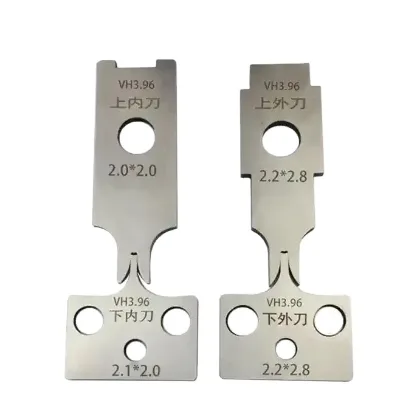


$700.00 - $300000.00
MOQ: 1 SET

$2600.00 - $3100.00
MOQ: 1 Pieces


Comprehensive Sourcing Guide
Strategic Sourcing Guide for Industrial Wire Crimpers
Understanding Technical Specifications and Operational Grades
When sourcing wire crimpers, buyers must first distinguish between the operational grade and the driven type, as these factors dictate the machine's integration into existing production lines. The market offers a spectrum of automation levels, ranging from fully automatic systems to semiautomatic units. Semiautomatic machines often require manual feeding or positioning by an operator, making them suitable for lower-volume production or prototyping environments where flexibility is prioritized over speed. In contrast, automatic models are designed for high-throughput manufacturing, reducing labor costs and ensuring consistent cycle times.
The driven type is another critical technical parameter. Electric-driven crimpers utilize motor power to generate the necessary force, typically offering precise control over the crimping cycle and energy efficiency. Some specifications indicate motor power ratings such as 400W or 750W, which should be matched against the required throughput and wire gauge. Pneumatic-driven units, on the other hand, rely on compressed air systems. These are often preferred in environments where electrical sparks are a safety concern or where existing pneumatic infrastructure is robust. The choice between electric and pneumatic systems should be based on the facility's available utilities and the specific force requirements of the application.
Physical dimensions and weight are also essential for facility planning. Machines vary significantly in footprint, with standard dimensions observed in the market ranging from compact units like 450x420x700mm to larger industrial frames measuring 530x400x830mm. Weight can range from lightweight handheld or benchtop tools at 1kg to heavy-duty floor-standing units weighing up to 70kg. Buyers must ensure their production floor can accommodate the specific weight and dimensions of the selected unit, including space for maintenance access and material loading.
Compliance, Certification, and Safety Standards
In the global B2B market, compliance with international standards is non-negotiable for ensuring product safety and market access. The primary certifications observed in the Wire Crimper sector include CE and ISO. The CE mark indicates conformity with health, safety, and environmental protection standards for products sold within the European Economic Area. It is a mandatory requirement for many industrial machines entering the EU market. ISO certification, often referenced alongside CE, suggests that the manufacturer adheres to specific quality management systems, which can be a proxy for consistent production quality.
Buyers should verify that the specific model they are considering carries the relevant certification documentation. For instance, some units are explicitly listed with both ISO and CE certifications, while others may only display CE. It is crucial to request the actual certification certificates from the supplier rather than relying solely on product descriptions. Additionally, electrical safety standards must be verified against the local grid requirements. Voltage specifications can vary, with common inputs being AC220V at 50/60Hz, but some models offer customizable voltage options to suit different regional standards.
Safety features should also be evaluated beyond mere certification. The transmission method, often described as "Machinery" in general listings, implies the presence of moving parts that require guarding. Buyers should look for machines equipped with emergency stop buttons, safety interlocks, and protective covers. The standard dimensions and structural integrity of the machine, such as the use of plywood boxes or fumigation-free wooden cases for shipping, also reflect the manufacturer's attention to detail and adherence to international shipping standards.
Cost Drivers and Pricing Variables
The pricing of wire crimpers is influenced by a complex matrix of factors, including automation level, material quality, customization options, and included accessories. The observed price range in the market is vast, spanning from approximately $1 to $300,000. This wide disparity reflects the difference between simple manual tools, basic semiautomatic benchtop units, and fully integrated automatic production lines.
Customization is a significant cost driver. Machines labeled as "Customized" or offering "Available" customization options often command a higher price due to the engineering time and specialized tooling required. Features such as adjustable crimping force, specific mold types (e.g., horizontal molds), and tailored voltage inputs add to the base cost. The scope of application also plays a role; machines designed to handle a wide range of wire gauges, such as 1-35mm, may be priced higher than those limited to specific, narrow ranges.
The minimum order quantity (MOQ) also impacts the effective unit cost. While some suppliers offer an MOQ of just 1 set, allowing for single-unit purchases, others may require orders of up to 1000 units. Bulk purchasing often leads to economies of scale, reducing the per-unit price. However, buyers must balance this with their storage capacity and cash flow. Packaging requirements, such as the choice between nude packages, plywood boxes, or fumigation-free wooden cases, can also add to the final landed cost.
Typical Applications and Material Compatibility
Wire crimpers are versatile tools used across various industries, with applications ranging from automotive wiring harnesses to construction and telecommunications. The specific application dictates the required machine features. For example, machines designed for "Roof" applications may have specific mounting or portability requirements, while those for "Crimping" general purposes focus on precision and speed. The "Applicable Terminal" is a key specification; some units are optimized for "Continuous Terminal" processing, which is common in high-speed automated lines, while others may handle discrete terminals.
Material compatibility is another critical consideration. The machine must be capable of crimping the specific conductor materials used in the buyer's products, such as copper or aluminum. The "Automatic Grade" and "Product Name" often hint at the intended material; for instance, a "Copper Motor" designation suggests a machine optimized for copper conductors. The crimping force, observed in some models at 2.0t, must be sufficient to create a reliable mechanical and electrical bond without damaging the wire insulation or conductor.
The scope of application, such as the 1-35mm range, indicates the versatility of the machine. A wider scope allows a single machine to handle multiple product lines, reducing the need for multiple specialized units. However, buyers should verify that the machine's mold compatibility, such as the "Horizontal Mold" specification, aligns with the terminal types they intend to use. Incompatible molds can lead to poor crimp quality, resulting in product failures and safety hazards.
Supplier Evaluation and Origin Verification
Evaluating suppliers requires a rigorous assessment of their location, production capabilities, and reputation. The "Place of Origin" is a significant indicator of the supply chain's maturity. Many wire crimpers are manufactured in regions like Guangdong, China, which is a major hub for industrial machinery. Buyers should verify the specific location of the factory to assess logistics costs and lead times.
Brand reputation is another factor, though specific brand names like "Hilong" should be treated as examples of market presence rather than endorsements. Buyers should look for suppliers with a history of providing "New" condition products and offering a "12 Months" warranty. The warranty period is a strong indicator of the manufacturer's confidence in their product's durability. A longer warranty period often correlates with higher quality components and better after-sales support.
The "Selling Units" specification, such as "Single item," suggests flexibility in purchasing, but buyers should also inquire about the supplier's capacity to handle larger orders. The "Capacity (kg/h)" and "Power(W)" metrics can help gauge the supplier's ability to meet production demands. A capacity of 0 kg/h in some listings may indicate a manual or low-speed unit, while higher numbers suggest automated throughput. Buyers should request detailed technical datasheets to confirm these figures.
Quality Control and Inspection Protocols
Implementing a robust quality control (QC) protocol is essential to ensure that the purchased wire crimpers meet performance expectations. The first step is to verify the "Condition" of the product, ensuring it is brand new and free from defects. Buyers should request photos or videos of the actual product before shipment to confirm the physical state and packaging integrity.
During the inspection phase, critical parameters such as "Crimping Force," "Voltage," and "Motor Power" must be tested against the specifications. For example, a machine rated at 2.0t crimping force should be tested to ensure it delivers consistent force across multiple cycles. The "Applicable Mold" should be tested with the actual terminals to verify the quality of the crimp. Visual inspection of the crimped terminals for uniformity, compression, and insulation damage is also necessary.
Packaging inspection is equally important. The "Packing" method, whether "Plywood Boxes," "Nude Package," or "Fumigation Free Wooden Case," must be suitable for the mode of transport and the destination's import regulations. Damaged packaging can lead to product damage during transit. Buyers should include a clause in their purchase agreement requiring the supplier to provide a pre-shipment inspection report, which may include third-party verification of the machine's specifications and functionality.
Long-Term Procurement and Maintenance Considerations
Long-term procurement success depends on the availability of spare parts, technical support, and the machine's adaptability to future needs. The "Customization" feature allows buyers to tailor the machine to their specific requirements, but it also means that spare parts may be unique to that configuration. Buyers should ensure that the supplier guarantees the availability of spare parts for at least 5 to 10 years.
Maintenance is a recurring cost that should be factored into the total cost of ownership. Machines with "Electric" or "Pneumatic" drives require regular maintenance of motors, air filters, and seals. The "Warranty" period covers initial defects, but ongoing maintenance costs will be the buyer's responsibility. Buyers should inquire about the recommended maintenance schedule and the cost of routine service visits.
Scalability is another long-term consideration. As production volumes increase, the current machine may become a bottleneck. Buyers should evaluate whether the supplier offers upgrade paths or modular systems that can be expanded. The "Automatic Grade" of the machine should be sufficient to handle projected growth without requiring a complete replacement. Finally, the "Standard" dimensions and "Transmission Method" should be compatible with future production line layouts to minimize the need for costly reconfigurations.
FAQs
What certifications do wire crimpers typically have?
Wire crimpers typically hold CE and ISO certifications. Some models explicitly list both ISO and CE marks, while others may only display CE. Buyers should verify specific documentation for each unit to ensure compliance with regional safety standards.
Can I customize the voltage for a Wire Crimper?
Yes, voltage customization is available for many wire crimpers. While standard models often use AC220V at 50/60Hz, specific listings indicate that voltage can be customized to meet different regional grid requirements or specific operational needs.
Which driven types are available for wire crimpers?
Wire crimpers are available in electric and pneumatic driven types. Electric models utilize motor power, often rated at 400W or 750W, while pneumatic units rely on compressed air systems for operation in environments where electrical sparks are a concern.
What is the warranty period for new wire crimpers?
New wire crimpers generally come with a 12-month warranty. This warranty period indicates the manufacturer's confidence in product durability and covers initial defects, though ongoing maintenance costs remain the buyer's responsibility after the warranty expires.
How does the automatic grade affect Wire Crimper operation?
The automatic grade ranges from semiautomatic to fully automatic. Semiautomatic units require manual feeding for flexibility, whereas automatic models are designed for high-throughput manufacturing to reduce labor costs and ensure consistent cycle times in production lines.
What packaging options are used for wire crimpers?
Packaging options include plywood boxes, nude packages, and fumigation-free wooden cases. The choice depends on the specific model and shipping requirements, with some units shipped in plywood cases while others use nude packaging for smaller components.