Find With Lock Modern Medical Records Box for clinics
Source 30 verified options for a With Lock Modern Medical Records Box designed for hospitals, clinics, and medical offices. Compare specifications like material, dimensions, and lock types to find the right storage solution for your facility.
Key considerations
Products List
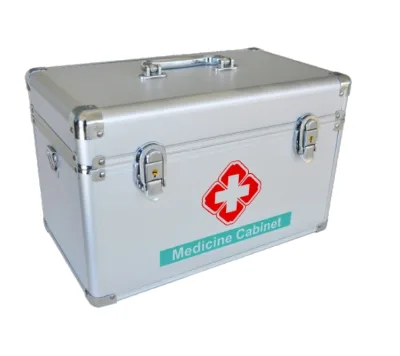
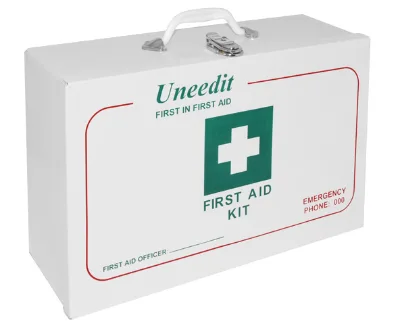


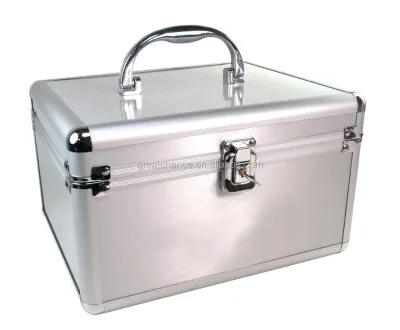


Comprehensive Sourcing Guide
Strategic Sourcing Guide for Modern Medical Records Boxes with Locks
Defining Technical Specifications and Material Integrity
When sourcing a modern medical records box with a lock, the primary objective is to identify units that balance robust security with the operational demands of clinical environments. The product landscape for these items is diverse, ranging from compact wall-mounted units to mobile trolleys designed for high-volume file management. A critical observation in the current market is the variation in material composition. Buyers must verify whether the unit is constructed from Aluminum Alloy, which offers a favorable strength-to-weight ratio, or if it utilizes general Metal composites that may provide different durability characteristics. Some specifications explicitly list Aluminum Alloy as the primary material, often paired with a Powder Coated finishing process to enhance corrosion resistance and facilitate easy cleaning. This finishing is essential in healthcare settings where frequent sanitization is required to maintain hygiene standards.
The physical dimensions of the records box are not uniform and often depend on the intended application. While some models adhere to specific standard sizes such as 241516cm, others are offered in "Customer Size" configurations to accommodate unique storage needs. For mobile solutions, such as patient case folder trolleys, dimensions can be significantly larger, with standard profiles reaching lengths of 650mm and widths of 475mm to 480mm. Height variations are also common, with some units designed to be 898mm, 985mm, or 1043mm tall to optimize vertical storage space. The internal capacity is another vital specification; typical units are rated to hold between 30 to 40 pieces of patient files. Buyers should not assume a single standard applies to all products but must cross-reference the specific model number, such as FS-9016 or JDEBL254, against their inventory requirements.
Security Mechanisms and Locking Systems
The inclusion of a lock is a non-negotiable feature for medical records boxes, given the sensitive nature of patient data. The locking mechanism varies significantly across different product categories. Wall-mounted boxes often utilize a simple Key lock system, providing a straightforward method for authorized access. In contrast, mobile trolleys designed for hospital corridors may feature more complex security arrangements. Specific models are equipped with a Central Lock style, which can secure multiple drawers or compartments simultaneously. The number of locks can vary, with some units featuring a single central mechanism while others are designed with 2PCS Central Locks or even 2 individual locks to ensure comprehensive security.
The integration of locking systems into mobile units often involves additional components. For instance, trolleys may be fitted with Swivel Casters, including specific configurations where 2 of the 4 casters are equipped with brakes. This braking mechanism is crucial for safety, preventing the trolley from rolling when stationary and ensuring that the records remain secure during patient transport. The lock style must be compatible with the intended workflow; a key-based system is standard, but the ease of key management and the durability of the lock cylinder under frequent use are factors that require careful evaluation. Buyers should verify that the locking mechanism is robust enough to withstand the rigors of a busy medical facility without compromising the integrity of the stored documents.
Compliance, Certification, and Regulatory Standards
In the medical device and healthcare supply chain, compliance with international standards is a prerequisite for procurement. The market data indicates that many modern medical records boxes carry the CE certification, signifying conformity with health, safety, and environmental protection standards for products sold within the European Economic Area. For higher-tier procurement, especially for equipment intended for international hospitals, the presence of ISO9001 and ISO13485 certifications is a strong indicator of quality management systems and specific requirements for medical device quality assurance. These certifications suggest that the manufacturer adheres to rigorous processes for design, production, and risk management.
Beyond certifications, the classification of the product is essential for regulatory alignment. Most medical records boxes and trolleys fall under Class I instrument classification, which typically denotes devices with the lowest risk profile. However, this classification does not negate the need for thorough due diligence. Buyers must verify that the product meets the specific regulatory requirements of their target market, as standards can vary by region. The presence of Design Patents and Utility Model Patents on certain models, such as those originating from Hebei, China, suggests that the product design has undergone a formal review process, which can be a proxy for innovation and legal standing. When evaluating a supplier, requesting proof of these certifications and patent documentation is a critical step to ensure the product is legally compliant and safe for use in clinical settings.
Cost Drivers and Procurement Economics
The pricing structure for medical records boxes is influenced by several variable factors, including material costs, customization levels, and production complexity. The observed price range in the market spans from 0.01 to 430 USD, a wide disparity that reflects the difference between basic wall-mounted boxes and complex, multi-drawer mobile trolleys. The material choice is a primary cost driver; Aluminum Alloy units often command a premium over standard metal alternatives due to the material's durability and lighter weight. Additionally, the finishing process, such as powder coating, adds to the production cost but offers long-term value through enhanced corrosion resistance and aesthetic appeal.
Customization is another significant factor affecting the final cost. While some products are available in standard colors and sizes, many suppliers offer "Color Customerized" options and "Customer Size" configurations. These bespoke requirements typically involve higher Minimum Order Quantities (MOQ), which can range from 1 to 3000 units depending on the complexity of the customization. The lead time for customized orders will also be longer than for stock items. Buyers must balance the need for specific branding or sizing against the budget constraints and the urgency of the procurement. Understanding the MOQ is crucial for small clinics or startups, as they may need to negotiate with suppliers who can accommodate smaller batch sizes, whereas large hospital chains may leverage high-volume orders to secure better pricing tiers.
Supplier Evaluation and Geographic Considerations
When selecting a supplier for medical records boxes, geographic origin plays a role in logistics, lead times, and manufacturing capabilities. The market data highlights key production hubs in China, specifically in provinces such as Guangdong, Zhejiang, and Hebei. Suppliers from Guangdong are noted for producing items with specific model numbers like FS-9016, while Zhejiang-based manufacturers may offer different product lines such as the FG60008. Hebei appears to be a center for larger trolley systems, with models like JDEBL254 and JDEBL234 originating from this region. Each location may have distinct supply chain efficiencies and logistical advantages.
Evaluating a supplier requires looking beyond the location to their production capacity and quality control measures. The presence of a "Lifetime" warranty on certain trolleys is a strong signal of supplier confidence in their product durability, though buyers should scrutinize the terms and conditions of such warranties. The condition of the product is typically listed as "New," but verifying the manufacturing date and shelf life, which can be up to 5 years for certain components, is advisable. Suppliers should also demonstrate their ability to handle the packaging requirements, with options ranging from standard Cartons to Palletized shipping for larger orders. A reliable supplier will provide clear documentation regarding their production process, including the finishing techniques used, and should be transparent about their ability to meet the specific certification requirements of the buyer's region.
Quality Control and Long-Term Procurement Strategy
Implementing a robust quality control (QC) strategy is essential for ensuring that the medical records boxes meet the demanding standards of healthcare facilities. Buyers should prioritize products that feature specific attributes such as "Easy Cleaning" and "Corrosion Resistance," as these directly impact the longevity and hygiene of the equipment. The hardness of the material, described in some contexts as "Partial Hard," should be verified to ensure it can withstand daily handling without significant wear. For mobile units, the stability of the casters and the effectiveness of the braking system are critical QC checkpoints.
Long-term procurement considerations involve assessing the total cost of ownership rather than just the initial purchase price. A unit with a higher upfront cost but superior materials and a lifetime warranty may offer better value over time compared to a cheaper alternative that requires frequent replacement. The availability of spare parts, such as replacement keys or casters, should be confirmed before finalizing a contract. Additionally, the ability of the supplier to provide consistent stock, indicated by a "Yes" status in current inventory, ensures that replenishment orders can be fulfilled without significant delays. Buyers should also consider the environmental impact of the materials used, particularly the Aluminum Alloy and the finishing processes, to align with sustainability goals. By focusing on these long-term factors, organizations can build a resilient supply chain that supports their operational needs for years to come.
Comparative Analysis of Product Attributes
To facilitate informed decision-making, the following table summarizes the key attributes observed in the market for medical records boxes and trolleys. This comparison highlights the variations in specifications that buyers must navigate when selecting the right product for their specific needs.
| Attribute Category | Product Type A (Wall Mounted) | Product Type B (Mobile Trolley) | Product Type C (Compact Box) |
|---|---|---|---|
| Primary Material | Metal | Aluminum Alloy / Metal | Aluminum Alloy |
| Locking Mechanism | Key Lock | 2PCS Central Lock | Key Lock |
| Dimensions | Customer Size | L650W475H898/985/1011mm | 241516cm |
| File Capacity | Not Specified | 30/40PCS | Not Specified |
| Mobility | Wall Mounted | 4PCS Casters (2 with Brake) | Stationary |
| Certification | CE | CE, ISO9001, ISO13485 | CE |
| Origin | Zhejiang | Hebei, China | Guangdong, China |
| Warranty | Not Specified | Lifetime | 5 Years (Shelf Life) |
| Customization | Available | Available (Color/Size) | Available (Color) |
This table illustrates that while the core function remains the same, the execution varies widely. Wall-mounted units prioritize space efficiency, while mobile trolleys focus on transportability and high capacity. Compact boxes offer a balance of size and security. Buyers must align these attributes with their specific facility layout and workflow requirements to ensure optimal performance.
FAQs
What materials are used for With Lock Modern Medical Records Box?
These boxes are typically constructed from Aluminum Alloy or general Metal composites. Some models feature a Powder Coated finishing process to enhance corrosion resistance and facilitate easy cleaning in clinical environments.
Which locking mechanisms are available for these medical records units?
Options include simple Key locks for wall-mounted units and Central Lock styles for mobile trolleys. Some mobile units are equipped with two individual locks or a dual central lock system to ensure comprehensive security for patient files.
How large is the file capacity for these medical records boxes?
Typical units are rated to hold between 30 to 40 pieces of patient files. Mobile trolleys often feature specific file capacities of 30 or 40 pieces to accommodate high-volume storage needs in hospitals and clinics.
Can I find With Lock Modern Medical Records Box with CE certification?
Yes, many units carry CE certification, signifying conformity with health and safety standards. Higher-tier products may also include ISO9001 and ISO13485 certifications to demonstrate adherence to rigorous quality management systems for medical devices.
What is the warranty period for mobile medical records trolleys?
Certain mobile trolley models offer a Lifetime warranty, indicating strong supplier confidence in durability. Other components may have a shelf life of up to 5 years, ensuring long-term reliability for clinical operations.
Where are these medical records boxes typically manufactured in China?
Production hubs are located in Guangdong, Zhejiang, and Hebei provinces. Specific models like FS-9016 originate from Guangdong, while larger trolley systems often come from Hebei, offering distinct supply chain efficiencies.