Source With Logo Printing Desk Pen for Office, School, Business
Compare 30 desk pens with logo printing options from Chinese manufacturers. Buyers can evaluate materials, ink types, and customization features for promotional gifts and office use.
Key considerations
Products List


Promotional Plastic Black Gel Ink Pen with Custom Logo for Office School
$0.09 - $0.12
MOQ: 1000 Pieces


Business Office Stationery Advertising Pen Custom Engraving Logo Metal Pen
$0.62 - $0.64
MOQ: 200 Pieces




Comprehensive Sourcing Guide
Strategic Sourcing Guide for Logo Printing Desk Pens
Understanding Product Categories and Technical Specifications
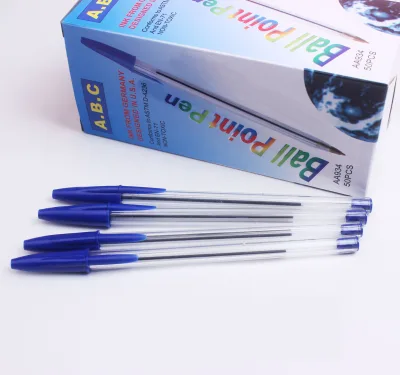
When sourcing desk pens with logo printing capabilities, buyers must first distinguish between the specific mechanical and material attributes that define the product's utility and durability. The market offers a diverse range of options, primarily categorized by the barrel material, ink type, and opening mechanism. Based on available product data, the core material composition varies significantly between plastic and metal constructions. Plastic barrel pens are frequently cited as the standard for promotional applications, offering a lightweight profile suitable for high-volume distribution. In contrast, metal barrel pens provide a more premium tactile experience, often commanding a different price point and perceived value in corporate gifting scenarios.
The ink mechanism is another critical technical differentiator. Buyers should verify whether the pen utilizes a water-based ball point or an oil-based ball point system. Water-based inks often dry faster and are suitable for general office use, while oil-based inks may offer better flow consistency on various paper types. The point diameter is a precise specification that affects writing smoothness and line width. Observed specifications indicate point diameters of 0.5mm and 0.7mm, representing the standard fine and medium writing widths respectively. A 0.5mm tip is ideal for detailed note-taking, whereas a 0.7mm tip provides a bolder line often preferred for general correspondence.
The opening style of the pen dictates its usability and longevity. Common mechanisms include click-action, twist, and plug bush designs. Click-action pens are highly popular for desk use due to their convenience and the ability to retract the tip, protecting it from damage when not in use. Twist mechanisms offer a sleek, minimalist aesthetic but may be less convenient for frequent retraction. Plug bush styles are often associated with disposable or semi-disposable units. Furthermore, the hardness of the pen barrel is a specific attribute to consider; some products are rated as "medium soft," while others are described as "partial hard." This attribute influences the grip comfort and the structural integrity of the pen during daily handling.
Customization Capabilities and Branding Integration
The primary value proposition for desk pens in a B2B context is the ability to integrate corporate branding. The "with logo printing" requirement is central to this category. Suppliers typically offer a variety of imprint methods to accommodate different branding needs and budget constraints. Silk screen printing and heat transfer printing are standard techniques observed in the market. These methods allow for the application of logos, slogans, or contact information directly onto the pen barrel. For products with metal barrels, laser engraving or logo engraving is often available, providing a permanent and high-contrast finish that does not fade over time.
The capacity for customization extends beyond the logo itself to the physical appearance of the pen. Buyers should note that barrel colors are often customizable, allowing for alignment with corporate color palettes. The color quantity options vary, ranging from single-color finishes to multi-color configurations, such as eight-color or four-color options. This flexibility is essential for creating distinct product lines or seasonal promotional items. However, the complexity of the customization directly impacts the Minimum Order Quantity (MOQ). While some standard models may have lower entry thresholds, highly customized runs often require substantial volume commitments to justify the setup costs for printing and molding.
The imprint size is another variable that affects the design layout. Specifications indicate that imprint areas can be "big," allowing for larger logos or multi-line text. When planning the design, buyers must ensure the artwork fits within the available surface area of the specific pen model. The packing method also plays a role in the final presentation. Options range from individual OPP bags to inner boxes and master cartons. For example, a common packing configuration involves 1 piece per OPP bag, 50 pieces per inner box, and 500 pieces per master carton. This tiered packaging ensures the pens remain protected during transit and are ready for immediate distribution upon arrival.
Cost Drivers and Economic Considerations
The total cost of ownership for logo printing desk pens is influenced by several interconnected factors, with material composition and order volume being the most significant. Plastic barrel pens generally present a lower unit cost compared to metal alternatives, making them the preferred choice for large-scale promotional campaigns where the primary goal is mass distribution. Metal pens, while more expensive, offer a higher perceived value and are often reserved for executive gifts or high-value client appreciation.
Order volume is the primary lever for cost reduction. The market data indicates a wide range of Minimum Order Quantities (MOQ), spanning from 3,000 pieces to 10,000 pieces, with some scenarios observing ranges up to 28,800 pieces. The specific MOQ depends on the complexity of the customization and the material used. For instance, a standard plastic pen with a simple silk screen print might have a lower MOQ threshold compared to a metal pen requiring engraving or a multi-color barrel. Buyers must balance the desire for lower unit costs against the capital required to meet these volume thresholds.
Payment terms are another economic factor to consider. Standard industry practice often involves Telegraphic Transfer (T/T) as the primary payment method. This term requires buyers to be aware of the cash flow implications, as payments are typically due before or during the production phase. Additionally, the production capacity of the supplier influences the lead time and potential costs. A supplier with a stated output capacity of 50,000 pieces in 35 days suggests a robust manufacturing capability, which can help mitigate risks of delays. However, buyers should verify if this capacity is consistent with their specific order timeline and if rush fees apply for expedited production.
Compliance, Certification, and Standards Verification
Ensuring that sourced desk pens meet relevant safety and quality standards is a critical step in the procurement process. While specific certification statuses vary by manufacturer, buyers should look for adherence to recognized international standards. In the provided data, the CE mark is mentioned as a standard, indicating compliance with European health, safety, and environmental protection standards. This is particularly relevant for products intended for distribution within the European market.
Material safety is paramount, especially for items that come into direct contact with users. The distinction between plastic and metal barrels must be verified against material safety data sheets. For plastic components, buyers should ensure the materials are free from harmful substances such as BPA or phthalates, although specific chemical certifications are not explicitly listed in the general product data. The "plastic barrel pen" and "metal barrel pen" standards serve as general classifications, but detailed material composition should be confirmed with the supplier.
Furthermore, the origin of the product is a key factor in compliance. Many products in this category originate from China, with specific manufacturing hubs in regions like Zhejiang. Sourcing from these regions requires careful vetting of the supplier's ability to meet international export standards. Buyers should verify that the supplier can provide necessary documentation, such as material safety declarations or factory audit reports, to ensure the products do not violate import regulations in the destination country. The "prod_standard" field often contains dimensional specifications (e.g., 1337.5mm or 13510MM), which serve as a quality control benchmark for the physical dimensions of the pen.
Supplier Evaluation and Operational Reliability
Selecting the right supplier requires a holistic evaluation of their operational capabilities, not just their product catalog. A key metric is the supplier's production capacity and lead time reliability. Data suggests that suppliers may have an output capacity of 50,000 pieces within a 35-day cycle. This figure provides a baseline for planning, but buyers must confirm if this capacity is available for their specific order size and timeline. Suppliers with higher capacity are generally better equipped to handle large orders and potential fluctuations in demand.
The location of the supplier is also a significant factor. Products originating from Zhejiang, China, are common in this sector. Buyers should assess the logistical implications of sourcing from this region, including shipping costs, transit times, and potential customs duties. The proximity to major ports can be an advantage for reducing shipping costs and lead times. Additionally, the supplier's history of customization is crucial. The ability to handle various imprint methods, from silk screen to engraving, and manage complex color requirements indicates a mature production line.
Payment terms and flexibility are also indicators of supplier reliability. The standard T/T term requires a clear understanding of the payment schedule. Buyers should negotiate terms that align with their cash flow while ensuring the supplier has sufficient capital to commence production. It is also advisable to review the supplier's track record regarding quality consistency. While specific test results are not provided in the general data, buyers should request samples to verify the hardness, ink flow, and durability of the pens before committing to a large order. The "Non-Disposable" and "Disposable" classifications are also important; for long-term desk use, non-disposable pens with refillable mechanisms are generally preferred to reduce waste and long-term costs.
Quality Control and Long-Term Procurement Strategy
Implementing a robust quality control (QC) strategy is essential for maintaining brand reputation when sourcing promotional pens. The QC process should begin with the verification of technical specifications. Buyers must ensure that the point diameter matches the ordered specification, whether 0.5mm or 0.7mm. The ink flow should be tested for consistency, ensuring that the water-based or oil-based ink does not skip or bleed. The opening mechanism, whether click, twist, or plug bush, must be tested for smooth operation and durability over repeated cycles.
For long-term procurement, establishing a relationship with a supplier who can maintain consistent quality is more valuable than finding the lowest unit price. The ability to produce pens with specific attributes, such as "medium soft" hardness or "partial hard" finishes, requires precise manufacturing control. Buyers should request pre-production samples that match the exact specifications of the final order. These samples should be subjected to rigorous testing, including drop tests to check for structural integrity and writing tests to verify ink performance.
The packaging quality is also a critical component of the QC process. The standard packing configurations, such as 1PC/OPP Bag or 50PCS/Inner Box, must be verified to ensure they protect the pens during shipping. Damaged packaging can lead to customer dissatisfaction and returns. Additionally, the branding application must be checked for alignment, color accuracy, and adhesion. For engraved logos, the depth and clarity of the engraving should be consistent across all units.
Finally, buyers should consider the environmental impact of their procurement choices. The distinction between disposable and non-disposable pens is significant. Non-disposable pens, particularly those with refillable ink cartridges, offer a more sustainable option for office environments. By selecting pens that are designed for longevity, companies can reduce their environmental footprint and align with corporate sustainability goals. The "Novelty" attribute, while appealing for certain campaigns, should be weighed against the practicality and durability required for daily office use. A strategic approach to sourcing involves balancing these factors to create a procurement plan that delivers value, quality, and brand consistency over the long term.
FAQs
What customization options are available for logo printing desk pens?
Logo printing is available with options for silk screen, heat transfer, and engraving. Buyers can choose from single-color or multi-color barrels, including eight-color and four-color configurations. Customization extends to barrel colors and imprint sizes, which can be big for larger logos.
Which opening styles are common for desk pens with logo printing?
Common opening styles include click, twist, and plug bush mechanisms. Click-action pens are popular for desk use due to their retractable tips. Twist mechanisms offer a sleek look, while plug bush styles are often associated with disposable or semi-disposable units.
How does the material affect the choice of desk pen?
Desk pens are available in plastic or metal barrels. Plastic barrels are lightweight and standard for promotional use, while metal barrels offer a premium feel for corporate gifting. The material choice influences the perceived value and the specific printing methods available.
What are the typical point diameters for these ball pens?
Point diameters typically range from 0.5mm to 0.7mm. A 0.5mm tip is ideal for detailed note-taking, whereas a 0.7mm tip provides a bolder line for general correspondence. Buyers should verify the specific diameter to match their writing preference.
Can buyers find pens with specific hardness ratings?
Yes, pens are available with hardness ratings such as medium soft or partial hard. This attribute influences grip comfort and structural integrity during daily handling. Buyers should check the hardness specification to ensure the pen meets their tactile requirements.
What are the standard packaging configurations for bulk orders?
Standard packaging often includes 1 piece per OPP bag, 50 pieces per inner box, and 500 pieces per master carton. Some options feature 1000 pieces per carton. This tiered packaging ensures protection during transit and readiness for immediate distribution.
What is the minimum order quantity for customized desk pens?
Minimum order quantities vary, with observed ranges starting at 3,000 pieces and going up to 10,000 pieces or higher. The specific MOQ depends on the complexity of customization and the material used. Buyers must balance volume requirements with budget constraints.