Source Wood Pellet Mill Main Shaft for Construction, Agriculture, and Industrial Use
Compare 30 listings for the Wood Pellet Mill Main Shaft featuring high strength, precision tolerance, and corrosion resistance. Buyers can review specifications like journal diameter, surface hardness, and customization options for construction and agricultural equipment applications.
Key considerations
Products List

JIS Scm440 Alloy Steel Heavy Duty Wood Pellet Mill Main Shaft-Manufacturer
$50.00 - $100.00
MOQ: 100 Pieces


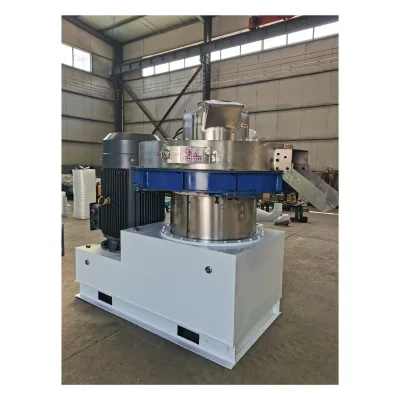
Professional 1-15 Tons/H Biomass Wood Pellet Mill/Wood Pellet Machine
$15000.00 - $50000.00
MOQ: 1 Sets




Comprehensive Sourcing Guide
Strategic Sourcing Guide for Wood Pellet Mill Main Shafts
Understanding Technical Specifications and Performance Parameters
When sourcing a main shaft for a wood pellet mill, buyers must first establish a clear understanding of the critical technical parameters that define the component's operational integrity. The main shaft is the central rotating element that transmits torque from the motor to the die and rollers, making its dimensional accuracy and material composition paramount. Based on observed industry data, the main journal diameter typically ranges from 60mm to 150mm, though these dimensions are often customized to fit specific mill models. The shaft length is equally variable, with standard observed ranges falling between 250mm and 600mm, subject to customization based on the machine's footprint.
Precision is not merely a preference but a functional necessity. The dimensional accuracy for the journal diameter is specified within the IT6-IT7 tolerance class, ensuring a tight fit within the bearing housings. Furthermore, the surface roughness of the journal must be maintained between 0.63μm and 0.16μm to minimize friction and prevent premature wear. The coaxiality tolerance is strictly controlled at ≤ 0.02mm, a critical metric to prevent vibration and uneven load distribution during high-speed operation. The shaft design typically features 3 to 5 sections, allowing for complex load paths and bearing placements. The eccentric distance, which affects the dynamic balance of the shaft, is observed to range from 3mm to 10mm, or as per specific drawing requirements.
The material composition is the foundation of the shaft's durability. Common material grades include 42CrMo, 40Cr, Stainless Steel (Ss), or fully customized alloys. These materials are selected for their ability to withstand high torsional stress. The forging ratio for these components is generally greater than or equal to 3:1, a process that refines the grain structure and enhances mechanical strength. The die-to-ring clearance is a manufacturing parameter often cited between 0.1mm and 0.3mm, influencing the final assembly fit. Understanding these specific numerical ranges allows buyers to verify that a supplier's product matches the rigorous demands of industrial wood pellet production.
Compliance, Certification, and Quality Standards
In the B2B procurement of heavy industrial machinery components, compliance with international standards is a non-negotiable requirement. The main shafts observed in the market frequently carry certifications such as ISO and CE. These certifications indicate that the manufacturing process adheres to specific quality management systems and safety standards. Buyers should verify that the supplier provides valid certification documents that correspond to the specific batch of goods being purchased. The presence of these marks suggests that the product has undergone rigorous testing for structural integrity and safety.
Beyond external certifications, the internal quality control processes are vital. High-confidence facts indicate that video outgoing-inspection is provided for these components. This feature allows buyers to visually verify the condition of the shaft, including surface finish and dimensional checks, before shipment. This transparency is a significant advantage in remote procurement scenarios. Additionally, the product standard is listed as either standard specifications or customized, meaning buyers must explicitly define their requirements to ensure the supplier adheres to the correct protocol.
The manufacturing process itself contributes to the compliance profile. The shafts undergo heat treatment processes including quenching and tempering, followed by surface hardening. This treatment results in a surface hardness of HRC 55-62, with a core hardness of HRC 28-35. These hardness values are critical for resisting wear and deformation under the high loads of a pellet mill. The surface finish is polished, which not only improves aesthetics but reduces the risk of stress concentrations that could lead to fatigue failure. Buyers must ensure that the supplier's quality assurance protocols explicitly document these heat treatment cycles and hardness test results for every unit produced.
Cost Drivers and Pricing Dynamics
The pricing of a Wood Pellet Mill Main Shaft is influenced by a complex interplay of factors, including material costs, manufacturing complexity, and customization levels. The observed price range in the market is extremely broad, spanning from $0.50 to $200,000. This wide variance is not indicative of a single product type but rather reflects the diversity of specifications, from small replacement parts to large, fully customized assemblies for high-capacity industrial mills. Buyers should not rely on a single price point but must analyze the cost structure relative to the specific technical requirements of their project.
Material grade is a primary cost driver. Shafts made from standard carbon steels like 40Cr will generally be more affordable than those utilizing 42CrMo or stainless steel, which offer superior corrosion resistance and strength. The customization level also significantly impacts the final price. While standard specifications are available, the market supports extensive OEM and ODM customization. Customizing the shaft length, diameter, or specific step configurations requires additional engineering time and specialized tooling, which increases the unit cost. The minimum order quantity (MOQ) ranges from 1 to 100 units, suggesting that small-batch orders may carry a higher per-unit cost due to setup fees, whereas bulk orders can leverage economies of scale.
Other cost factors include the complexity of the heat treatment and surface finishing processes. Achieving a surface hardness of HRC 55-62 with a precise core hardness requires controlled industrial furnaces and skilled labor. The packaging method, whether international standard packaging or specialized plywood boxes, also adds to the logistics cost. Buyers should request a detailed breakdown of costs to understand the value proposition. It is essential to note that the lowest price does not always equate to the best value; a shaft that fails prematurely due to substandard heat treatment will result in significantly higher downtime and replacement costs over the long term.
Typical Applications and Operational Context
The primary application for these main shafts is within the construction and agricultural equipment sectors, specifically in the manufacturing of wood pellet mills. These mills are essential for converting wood waste into fuel pellets, a process that demands high reliability and continuous operation. The main shaft must withstand the intense torque and vibration generated by the die and roller system. The observed applications highlight the need for high strength and high corrosion resistance, as the environment can be harsh and abrasive.
The specific power requirements for the mills utilizing these shafts vary. Some configurations are designed for motors with a main power of 132kW, while others support much larger capacities with main motors ranging from 200kW to 315kW. The auxiliary power requirements also differ, with some systems utilizing 1.5kW+0.37kW auxiliary motors, while others may require up to 18kW. The capacity of the mill, measured in tons per hour, typically ranges from 2.5 to 6 tons, influencing the size and strength of the main shaft required. The machine weight for these systems can be substantial, reaching up to 20.3 tons, which necessitates a robust main shaft design to support the entire assembly.
The voltage supply for these systems is typically 380V, indicating a standard industrial power configuration. The energy-saving features of the mills are also a consideration, as efficient power transmission from the motor to the shaft reduces overall energy consumption. The shafts are designed to operate in new condition, ensuring maximum performance from the outset. Whether for a small-scale agricultural operation or a large industrial construction project, the main shaft serves as the critical link that ensures the pellet mill operates smoothly and efficiently.
Supplier Evaluation and Verification Protocols
Evaluating a supplier for wood pellet mill main shafts requires a multi-faceted approach that goes beyond price comparison. Buyers should prioritize suppliers who offer OEM and ODM customization, as this indicates a level of engineering capability and flexibility. The origin of the product is a key factor, with many suppliers located in China, specifically in regions like Jinan. While the location is a known fact, buyers must verify the specific manufacturing capabilities of the facility.
A critical aspect of supplier evaluation is the verification of their quality control processes. The provision of video outgoing-inspection is a strong indicator of a transparent and confident supplier. Buyers should request these videos to visually confirm the shaft's condition, surface finish, and dimensional accuracy before making a payment. Additionally, the supplier's ability to provide detailed documentation regarding the heat treatment process and hardness testing is essential. The supplier should be able to demonstrate that their forging ratio meets or exceeds the 3:1 standard and that their die-to-ring clearance is within the 0.1mm-0.3mm range.
The lead time is another important metric for supplier evaluation. The observed lead time for these products is approximately 20 days, which serves as a benchmark for planning. Buyers should confirm if this timeline is consistent with their specific customization requirements. The warranty period, typically 2 years, is a significant indicator of the supplier's confidence in their product's durability. Buyers should also check the packaging standards, ensuring that the product is shipped in plywood boxes or international packages to prevent damage during transit. Finally, the supplier's capacity to handle different order sizes, from single units to bulk orders, should be assessed to ensure they can meet the buyer's volume needs.
Long-Term Procurement and Maintenance Considerations
Procuring a main shaft is not a one-time transaction but the beginning of a long-term relationship focused on operational continuity. The warranty period of 2 years provides a safety net for early failures, but buyers must also consider the long-term maintenance requirements. The high strength and corrosion resistance of the shaft are designed to minimize wear, but regular inspection is necessary to ensure ongoing performance. The polished surface finish helps reduce friction, but buyers should verify that the lubrication systems in their pellet mills are compatible with the shaft's material and finish.
The customization aspect of the shaft offers long-term benefits in terms of compatibility and efficiency. By specifying exact dimensions and material grades, buyers can ensure that the shaft fits perfectly within their existing mill infrastructure, reducing the risk of misalignment and vibration. The ability to customize the shaft length and diameter allows for optimization of the mill's layout and performance. However, buyers must maintain clear records of their custom specifications to facilitate future replacements or repairs.
Inventory management is also a key consideration. Given the lead time of 20 days and the potential for high demand, buyers should consider maintaining a stock of critical spare parts. The MOQ range of 1 to 100 units offers flexibility, allowing buyers to order small quantities for immediate needs or larger batches for strategic stockpiling. The container capacity, typically 20GP, should be factored into logistics planning to ensure efficient shipping. Ultimately, the goal is to secure a supply chain that ensures the wood pellet mill operates at peak efficiency with minimal downtime, leveraging the high-quality specifications and robust manufacturing processes of the main shaft.
FAQs
What certifications do wood pellet mill main shafts have?
Wood pellet mill main shafts typically carry ISO and CE certifications. These marks indicate adherence to international quality management and safety standards, ensuring the component meets rigorous structural integrity requirements for industrial use.
Which material grades are used for these main shafts?
Common material grades include 42CrMo, 40Cr, Stainless Steel, or customized alloys. These materials are selected for their high strength and ability to withstand the intense torsional stress found in wood pellet mill operations.
How is the surface hardness of the shaft determined?
The surface hardness is typically HRC 55-62 after heat treatment. This is achieved through quenching, tempering, and surface hardening processes, while the core hardness remains between HRC 28-35 to balance wear resistance with toughness.
Can the shaft dimensions be customized for specific mills?
Yes, customization is available for shaft length and diameter. Standard ranges include lengths of 250mm to 600mm and main journal diameters from 60mm to 150mm, but buyers can request specific dimensions based on their machine drawings.
What is the typical lead time for these components?
The standard lead time for wood pellet mill main shafts is 20 days. This duration accounts for the manufacturing process, including forging, heat treatment, and quality inspections like video outgoing-inspection before shipment.
What warranty is provided for the main shaft?
A 2-year warranty is typically provided for these main shafts. This coverage reflects the supplier's confidence in the product's durability, high strength, and high corrosion resistance under normal operating conditions.
How is the dimensional accuracy of the journal defined?
The journal diameter dimensional accuracy is specified within the IT6-IT7 tolerance class. Additionally, the surface roughness is maintained between 0.63μm and 0.16μm to ensure a tight fit and minimize friction during operation.