Source Carbon Steel Finger and Toe Nail Clipper for Home, Salon, and Travel
Compare 30 listings of Carbon Steel Finger and Toe Nail Clipper options from verified suppliers. Review specifications including thickness, model numbers, and MOQs to find the right tool for personal or commercial use.
Key considerations
Products List


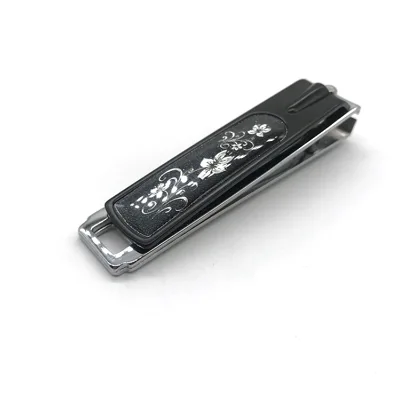
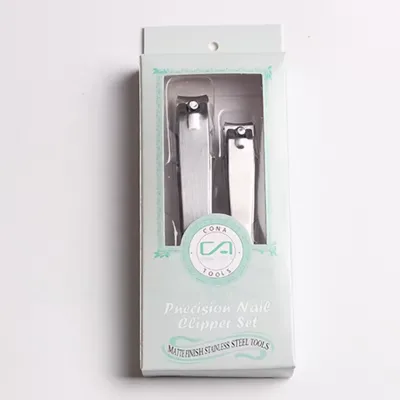
High Quality Ultra Sharp Stainless Steel Nail Clipper with File for Finger & Toe
$1.32 - $2.76
MOQ: 3000 Pieces



Comprehensive Sourcing Guide
Strategic Sourcing Guide for Carbon Steel Finger and Toe Nail Clippers
Understanding Product Specifications and Material Integrity
When sourcing carbon steel finger and toe nail clippers, the primary focus must remain on the material composition and the resulting mechanical properties. The supplied product data explicitly identifies Carbon Steel as a primary material attribute for specific models, distinguishing these items from stainless steel alternatives. Carbon steel is historically valued in cutting instruments for its ability to hold a sharp edge and its hardness, which is critical for the shearing action required to cut thick toenails or hardened fingernails without dulling quickly. However, the procurement strategy must account for the inherent trade-off: while carbon steel offers superior cutting performance, it is more susceptible to oxidation and corrosion compared to stainless steel variants found in the same product category.
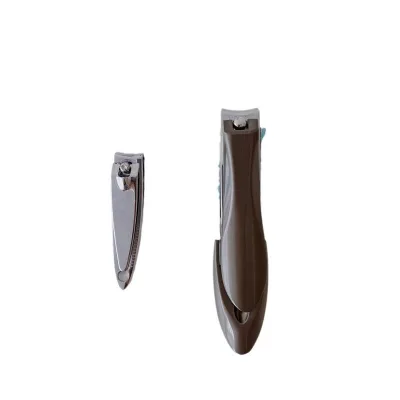
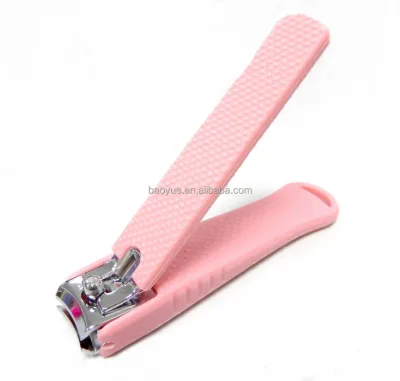
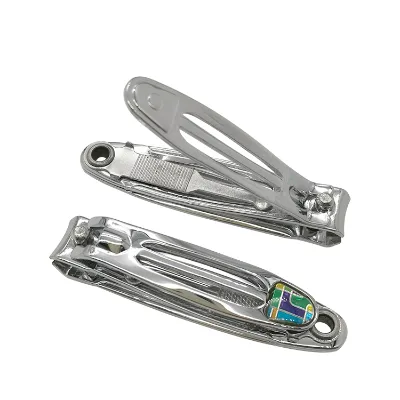
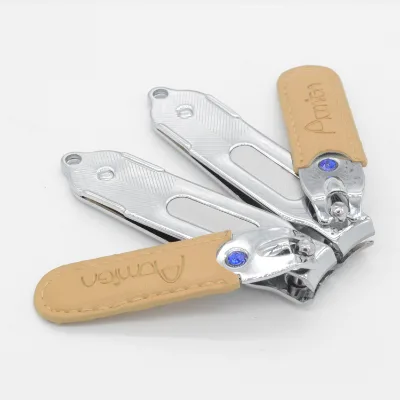
The technical specifications observed in the market data reveal a variance in physical dimensions and thickness that directly impacts the tool's durability and user experience. For instance, specific models are listed with a thickness of 1.5mm, while others in the same category are recorded at 1.2mm. This difference in gauge is not merely cosmetic; a 1.5mm thickness generally implies a heavier-duty tool capable of withstanding higher torque during use, which is essential for toe nail clippers where the leverage required is significantly higher than for fingernail clippers. The product models cited, such as 211PQ-8, 211G, and 802B, represent distinct design iterations. Buyers must verify that the specific model selected matches the intended application, as the "Flat Head" shape is a consistent attribute across the carbon steel listings, suggesting a design optimized for precision cutting on both fingers and toes.
The dimensional standards provided, such as 8.1*1.5cm and 8.3*1.5cm, indicate a standardized form factor for these tools. These measurements likely refer to the overall length and the width of the cutting head or the handle width. A consistent standard of roughly 8cm suggests a compact, ergonomic design suitable for home use or professional pedicure kits. When evaluating a supplier, the buyer should request detailed engineering drawings to confirm that the carbon steel composition aligns with these dimensional tolerances. The absence of a universal international standard number for the material grade in the provided data means that the "Carbon Steel" designation must be validated against the supplier's internal quality sheets to ensure it meets the necessary hardness requirements for a cutting edge.
Compliance, Certification, and Regulatory Verification
In the B2B procurement of personal care tools, compliance is a critical risk management area. The supplied data lists the product origin as China, specifically from regions like Guangdong, Zhejiang, and Foshan. While these are major manufacturing hubs, the origin alone does not guarantee compliance with destination market regulations. Buyers must not assume that products labeled as "Carbon Steel" automatically meet the safety standards of the European Union, the United States, or other target markets.
The product data mentions a standard of Stainless steel needle for one model, which creates a potential confusion point regarding material consistency. If a buyer is specifically sourcing carbon steel, they must ensure the supplier does not substitute materials or provide mixed batches. The "Standard" attribute in the data varies from dimensional measurements (e.g., 912120mm) to material descriptions. This inconsistency highlights the need for rigorous verification. Buyers should demand a Certificate of Analysis (CoA) or a Material Safety Data Sheet (MSDS) that explicitly confirms the carbon content and the absence of harmful heavy metals, such as lead or cadmium, which are often regulated in consumer goods.
Furthermore, the data indicates that OEM and Customization are accepted. This flexibility is a double-edged sword in compliance. While customization allows for branding, it introduces the risk of altering the product's safety profile. If a buyer requests a specific coating or finish to prevent rust on the carbon steel, they must ensure this coating is non-toxic and meets the relevant food-grade or skin-contact safety standards of the destination country. The "User Sex: Unisex" and "Age Group: Adult" attributes suggest the product is intended for general consumer use, which typically requires adherence to general product safety directives like the CPSIA in the US or the EN 71 series in Europe, though specific toy or medical device regulations may not apply unless the product is marketed as such.
Cost Drivers and Economic Factors in Procurement
The economic landscape for sourcing carbon steel nail clippers is influenced by several distinct factors visible in the data. The observed MOQ (Minimum Order Quantity) range is vast, spanning from 10 to 600,000 units. This wide range indicates a market that accommodates both small boutique buyers and large-scale distributors. However, the specific listings show MOQs of 600 sets and 6000 PCS, suggesting that while low-volume entry is possible, the most competitive pricing is likely reserved for orders in the thousands.
The price range observed in the market data is $0.12 to $10.00 USD. This significant spread is not indicative of a single product tier but rather reflects the divergence between basic, unbranded carbon steel models and premium, customized, or gift-boxed versions. The lower end of the spectrum likely represents the raw carbon steel clippers with minimal packaging, while the higher end includes models with Gift Box or White Box packaging, custom branding, and potentially higher quality control standards. The Weight of a single unit is listed as 0.018 Kg, which is a crucial data point for logistics. At this weight, shipping costs are relatively low per unit, but the total weight of a carton (e.g., 18kgs/19kgs for 600 pieces) must be calculated to optimize freight costs.
Packaging is another major cost driver. The data shows various packaging configurations, including 12PCS/Box with 600PCS/CTN or 1200PCS/CTN. The choice between White Box, Gift Box, or bulk packaging directly impacts the unit cost. A buyer seeking to minimize costs might opt for the 1200PCS/CTN configuration, but this may not be suitable for retail-ready products. Additionally, the Lead Time of 30 days noted in the data suggests a standard production cycle. Buyers should factor this into their inventory planning, as carbon steel production may involve additional steps like heat treatment and surface finishing, which can extend lead times if not managed efficiently.
Typical Applications and Market Segmentation
The versatility of carbon steel nail clippers is evident in the listed usage attributes. The products are explicitly designed for Finger, Toe, and Finger Nail Toe Nail Cutting. This dual-purpose capability expands the market segmentation significantly. While some models are marketed specifically for Home use, the robust nature of carbon steel makes these tools suitable for professional settings, such as barbershops, salons, and medical clinics where durability is paramount.
The Shape: Flat Head attribute suggests a design that is particularly effective for cutting flat surfaces, such as toenails, reducing the risk of ingrown nails. The Color: Silver is a standard finish for carbon steel, often resulting from a natural oxide layer or a specific plating process. However, the susceptibility of carbon steel to rust means that these products are often marketed with a warning or a specific care instruction, which can be a differentiator in the market.
The Brand Name: SSS and the availability of Customization indicate that the market is segmented between private-label brands and generic unbranded goods. For buyers targeting the mass market, the generic models with standard packaging are likely the most cost-effective. Conversely, for buyers targeting the premium or gift market, the Gift Box options and custom branding capabilities are essential. The User Sex: Unisex attribute further broadens the potential customer base, allowing these tools to be marketed to a wide demographic without the need for gender-specific design changes.
Supplier Evaluation and Quality Control Protocols
Evaluating suppliers for carbon steel nail clippers requires a focus on their ability to maintain material consistency and dimensional accuracy. The data shows multiple models with similar specifications but different model numbers (e.g., 211PQ-8, 211G, 802B, 0817B, 380PF4, BOMR045, 716, N-0818). This proliferation of model numbers suggests a high degree of product variation, which can complicate quality control. Buyers should request a sample of each model to verify that the carbon steel composition is consistent across the batch.
Quality control protocols should include a rigorous inspection of the cutting edge. Since carbon steel is harder than stainless steel, it is more prone to chipping if the heat treatment is not performed correctly. Buyers should verify that the supplier has a process for testing the hardness of the cutting blades. Additionally, the Thickness variance (1.2mm vs. 1.5mm) must be strictly controlled. A deviation in thickness can alter the leverage and cutting force, leading to user dissatisfaction or product failure.
The Carton Size of 43.5X18.5X15cm and the N.W/G.W of 18kgs/19kgs provide a baseline for logistics quality control. Buyers should ensure that the packaging is robust enough to prevent damage during transit, especially since the sharp edges of the clippers can puncture weak packaging. The Delivery time of 30 days should be monitored closely to ensure that the supplier can meet deadlines consistently. Any deviation from this timeline should be investigated, as it may indicate production bottlenecks or quality issues.
Long-Term Procurement Considerations and Risk Management
Sourcing carbon steel nail clippers involves long-term considerations regarding supply chain stability and product lifecycle. The Customization: Available and Customized attributes indicate that suppliers are willing to adapt to buyer needs, which is a positive sign for long-term partnerships. However, buyers must be cautious of the potential for material substitution. Over time, a supplier might switch to a cheaper steel alloy to reduce costs, which would compromise the product's performance.
To mitigate this risk, buyers should establish a clear contract that specifies the exact material grade and includes a clause for material testing. The OEM: Accepted status suggests that the supplier is experienced in working with private labels, but the buyer must ensure that the intellectual property rights regarding the design and branding are protected. The Origin: China, Guangdong and Zhejiang locations are advantageous for cost, but geopolitical factors and trade tariffs should be considered in the long-term strategy.
Finally, the Lead Time of 30 days should be factored into the inventory management strategy. Buyers should maintain a safety stock to account for potential delays. The MOQ of 600 sets or 6000 PCS requires a commitment to volume, so buyers should ensure they have a reliable sales channel to absorb the inventory. By focusing on these long-term factors, buyers can build a sustainable procurement strategy that balances cost, quality, and reliability in the carbon steel nail clipper market.
FAQs
What material is used for the carbon steel nail clippers?
The primary material is carbon steel, which provides superior hardness and edge retention for cutting thick nails. Some models may use stainless steel, so buyers must verify the specific material grade before ordering to ensure the correct durability and corrosion resistance.
Which thickness options are available for these nail clippers?
Available thickness options include 1.2mm and 1.5mm, with the thicker 1.5mm gauge offering enhanced durability for heavy-duty use. Buyers should select the 1.5mm version for toe nail cutting to ensure sufficient leverage and structural integrity during operation.
Can suppliers provide customized packaging for these clippers?
Yes, customization is available, including options like gift boxes, white boxes, or bulk cartons with specific piece counts. Buyers can request tailored packaging configurations such as 12 pieces per box or 600 pieces per carton to match their retail or distribution needs.
What is the minimum order quantity for carbon steel clippers?
Minimum order quantities vary by supplier, with observed ranges starting at 600 sets or 6000 pieces for specific models. Buyers should confirm the exact MOQ with the manufacturer, as some vendors may require higher volumes to achieve competitive pricing tiers.
How long is the standard lead time for production?
The standard lead time is approximately 30 days from order confirmation to delivery. This duration accounts for material sourcing, heat treatment, and packaging, so buyers should plan their inventory cycles accordingly to avoid stockouts during peak demand periods.
Which regions in China manufacture these nail clippers?
Manufacturing origins include Guangdong, Zhejiang, and Foshan, which are major hubs for personal care tool production. Buyers should verify the specific factory location to assess logistics costs and ensure the supplier meets regional quality standards and export compliance requirements.