Source wool turtleneck baby tee for infants, toddlers, and kids
Explore 30 listings for wool turtleneck baby tee options suitable for infants, toddlers, and young children. Buyers can compare materials, customization services, and pricing to find the best fit for their needs; compare the available evidence and request quotations based on your requirements.
Key considerations
Products List

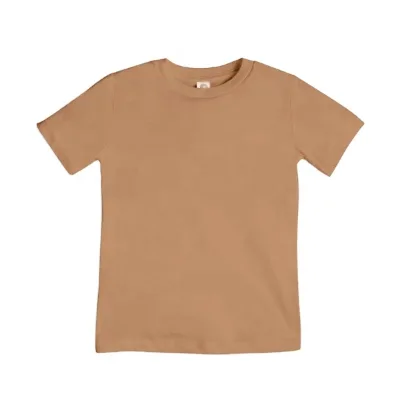
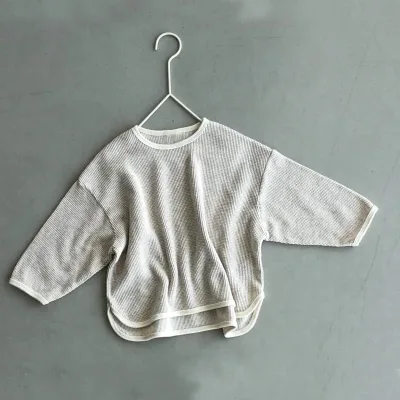
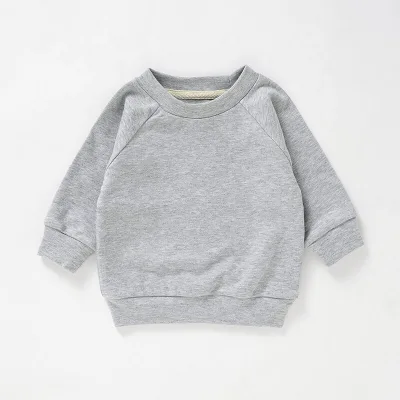
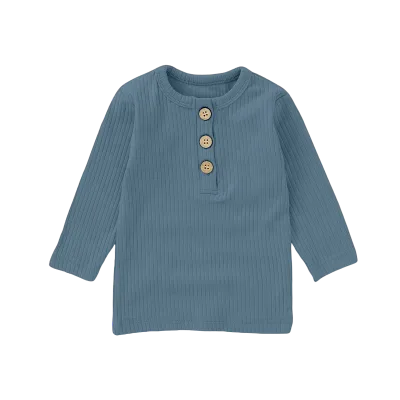


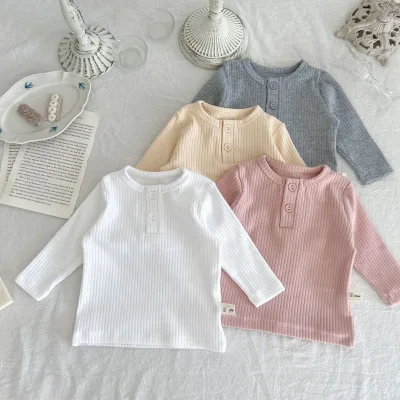

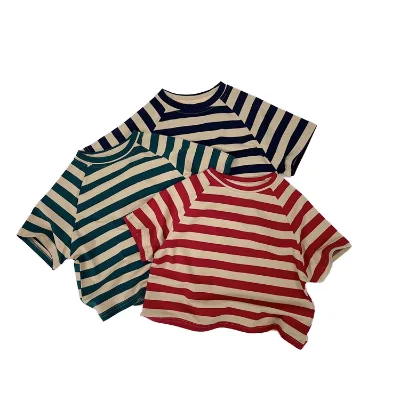


Comprehensive Sourcing Guide
Wool Turtleneck Baby Tee Sourcing Guide
The provided product data reveals a significant material mismatch for a wool turtleneck baby tee, as the observed listings exclusively feature cotton, polyester, and organic cotton blends rather than wool fibers. Buyers must recognize that the current market signals for this specific keyword are dominated by summer-weight knitted and woven fabrics, including waffle textures and plain dyed options, which contradicts the thermal requirements of a wool garment. This discrepancy suggests that sourcing a true wool turtleneck from this specific supplier pool will require a specialized request outside the standard catalog offerings.
Procurement teams should treat the observed "Cotton" and "100% organic cotton" attributes as baseline observations rather than indicators of wool availability. The listings highlight "Breathable" features and "Summer" season suitability, which are functionally incompatible with the insulation properties expected from wool turtlenecks. Consequently, buyers must explicitly define material composition requirements in their initial inquiry to filter out the prevalent cotton-based baby tees and tank tops that currently dominate the search results.
Product Scope and Observed Listing Signals
The current inventory scope is heavily skewed toward casual, breathable baby tees and tank tops made from cotton or polyester blends, with no evidence of wool-based construction in the supplied facts. Observed attributes include "Round Neck" collars, "Normal" sleeve shapes, and "Solid" pattern types, which differ fundamentally from the high-neck, insulated design of a turtleneck. The "Waffle" fabric type and "Knitted" technics noted in the data describe lightweight structures unsuitable for the heavy warmth associated with wool garments.
Buyers must verify if suppliers can pivot from their standard "Plain Dyed" and "Woven" production lines to create wool-specific items, as the existing "Various Option" fabric list does not confirm wool availability. The observed "Customization" and "Custom logo tag" support indicate flexibility in branding, yet the core material composition remains a critical gap. Sourcing a wool turtleneck from this specific dataset requires a clear distinction between the available cotton-based baby tees and the desired wool product to avoid fulfillment errors.
Technical Specifications to Verify
Technical verification must prioritize fiber content, as the supplied data lists "60 polyester 35% Organic Cotton 5% Spandex" and "100% organic cotton" but omits wool entirely. Buyers need to confirm the specific wool blend percentage and fiber diameter, as the observed "Single gross weight" of 0.300 kg to 0.400 kg reflects lightweight cotton garments rather than the heavier density of wool. The "Collarless" and "Round Neck" attributes found in the listings must be explicitly overridden to ensure the final product meets the structural requirements of a turtleneck design.
Dimensional and packaging specifications also require scrutiny, as the observed "Single package size" of 25x32x3 cm and 30x25x2.5 cm suggests compact, lightweight items. A wool turtleneck would likely necessitate different packaging dimensions to accommodate bulkier fabric and potential shrinkage during washing. Buyers should request detailed fabric weight (GSM) and shrinkage test results, as the current "204040cm" standard and "Box" packing options may not align with the logistics of shipping heavier wool products.
Compliance and Safety Documentation
Safety compliance for baby garments is paramount, yet the provided facts do not explicitly confirm adherence to specific textile safety standards beyond a low-confidence mention of OEKO-TEX. Buyers must demand verified test reports for formaldehyde, pH levels, and heavy metals, as the "100% organic cotton" claim does not automatically guarantee compliance with all regional safety regulations for infant wear. The "Age" range of 0-3 months to 24 months in the data highlights the critical need for rigorous safety documentation to protect vulnerable consumers.
Documentation verification should extend to the "Customized" logo and print methods, ensuring that any applied inks or tags meet flammability and chemical safety standards for baby clothing. The observed "PE bag or customized" packaging must be evaluated for suffocation hazards, particularly for the 0-3 month age group. Procurement teams should require a full compliance dossier before proceeding, as the current data lacks explicit confirmation of safety certifications required for wool or blended infant apparel.
Cost Drivers and Commercial Terms
Cost structures for wool turtlenecks will differ significantly from the observed price range of 0.98 to 19.99 USD, which likely reflects the lower cost of cotton and polyester blends. Wool fibers generally command a higher raw material cost, and the "ODM, Oem Service" capability implies that custom wool development will incur additional tooling or sampling fees. Buyers should anticipate that the "7 days sample order lead time" for cotton items may extend for wool due to the complexity of sourcing and processing natural fibers.
Commercial terms must account for the "MOQ range" of 1 to 3000, with wool orders likely requiring higher minimums to justify production runs. The "Supply Type" of ODM and OEM suggests that pricing will be highly dependent on the specific wool blend and customization level requested. Buyers should negotiate clear terms regarding material price fluctuations, as wool markets are more volatile than cotton, and clarify how "Custom print" and "Custom logo tag" support impact the final unit cost.
Supplier Qualification and Quality Control
Supplier qualification must focus on their ability to source and process wool, as the current product list is dominated by cotton and synthetic blends. Buyers should audit the supplier's experience with natural fibers, specifically their capacity to handle "Waffle" or "Knitted" wool fabrics without compromising the integrity of the material. The "Plain Dyed" and "Printed" techniques observed in the data need to be validated for their suitability on wool, as dyeing processes for natural fibers differ from those used for polyester or cotton.
Quality control protocols must be expanded to include shrinkage testing and pilling resistance, which are critical concerns for wool garments. The observed "Stock: Not available" status for some items indicates a made-to-order model, which requires robust quality assurance during the production phase. Buyers should implement pre-shipment inspections that specifically target the structural integrity of the turtleneck collar and the softness of the wool, ensuring the final product meets the high standards expected for infant wear.
Long-Term Procurement Checks
Long-term procurement strategies should include regular audits of the supplier's material sourcing capabilities to ensure consistent access to high-quality wool. The "Place of Origin" in Henan, China, is a known textile hub, but buyers must verify if the specific facilities have the infrastructure to handle wool processing distinct from their cotton operations. Continuous monitoring of the "Sample time" of 7-15 working days is essential, as wool development cycles may vary and impact the overall supply chain timeline.
Buyers should establish a feedback loop to track the performance of wool garments in the market, comparing them against the "Breathable" and "Summer" attributes of the current cotton inventory. Regular reviews of the "Customization" options and "Pattern Type" flexibility will ensure the supplier can adapt to changing fashion trends in baby apparel. Maintaining a relationship with the supplier for future wool-specific innovations will help mitigate risks associated with material availability and ensure a stable supply of high-quality turtleneck baby tees.
FAQs
What materials are used for these baby tees?
The baby tees are crafted from various materials including cotton, 100% organic cotton, and blends containing polyester and spandex. Some styles feature waffle fabric for added texture. These options ensure comfort and durability for infants, with choices ranging from plain dyed to customized patterns suitable for different seasons and preferences.
Can I customize the logo and pattern on the tees?
Yes, customization is available for both logos and patterns. Buyers can request customized logos and various pattern types, including solid colors or specific designs. The supplier offers ODM and OEM services, allowing for tailored branding and design elements to meet specific market needs or brand identity requirements for the baby apparel line.
What are the sample order lead times?
Sample orders are supported with a lead time of 7 days for standard requests. For more complex customizations, the sample time may extend to 7-15 working days. This allows buyers to review quality and fit before committing to larger production runs, ensuring the final product meets their specific requirements and standards.
What sizes are available for the baby tees?
Sizes range from 0-3 months up to 24 months, including specific increments like 3-6M, 6-12M, and 12-18M. Some styles also include toddler sizes such as 2T, 3T, and 4T. This comprehensive size range ensures that the tees fit various age groups within the infant and toddler demographic effectively.
How are the baby tees packaged for shipment?
Packaging options include individual boxes or PE bags, with customization available for specific buyer requirements. Standard packaging dimensions vary by model, such as 30x25x2.5 cm or 25x32x3 cm per single package. This flexible packaging approach helps protect the garments during transit while allowing for branded or neutral presentation as needed.
Where are these baby tees manufactured?
These baby tees are manufactured in China, specifically originating from Henan province. The production facilities support both ODM and OEM services, ensuring that buyers can access reliable manufacturing capabilities. This location provides access to established supply chains and production expertise for high-quality baby apparel manufacturing.