Broken Head Screw Extractor Suppliers and Manufacturers
Source 23 verified suppliers for Broken Head Screw Extractor tools. Compare key dimensions including location, lead time, MOQ, and response time to identify suitable partners. Contact suppliers directly to verify pricing and specifications; review the available evidence before requesting comparable quotations from suitable candidates.
Suppliers List

Shenzhen Alisi Electronic Technology Co., Ltd.
- Trading Company, Distributor/Wholesaler
- Guangdong, China
- Lead time3 days
- Avg. response≤ 2h
Main productselectron component,temperature controller,Auto parts,sensor,Wireless Controller
Main marketsSouth America(20.00%), Eastern Europe(20.00%), North America(15.00%), Western Europe(5.00%), Domestic Market(5.00%), South Asia(5.00%), Southern Europe(5.00%), Northern Europe(5.00%), Central America(5.00%), Eastern Asia(3.00%), Mid East(3.00%), Oceania(3.00%), Africa(3.00%), Southeast Asia(3.00%)
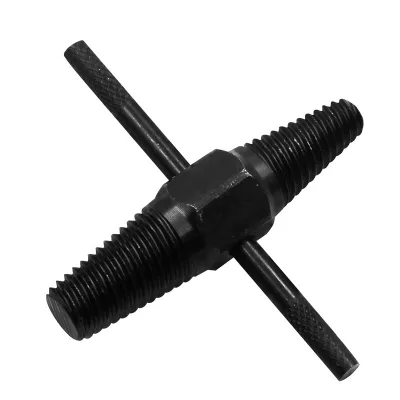
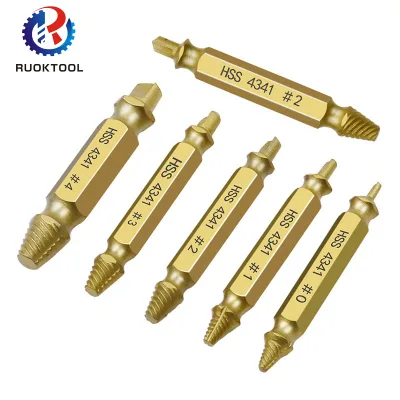
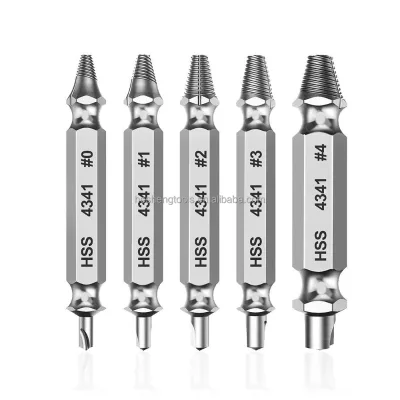
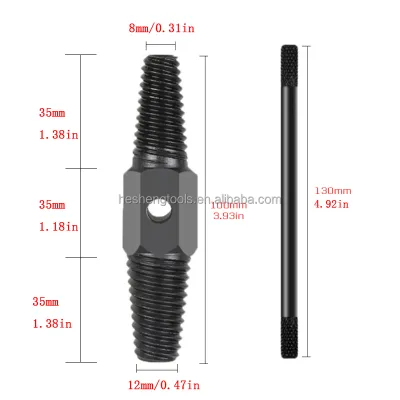
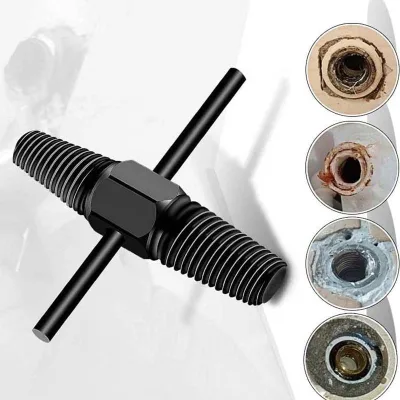
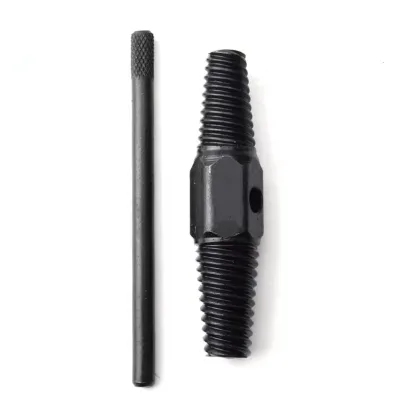
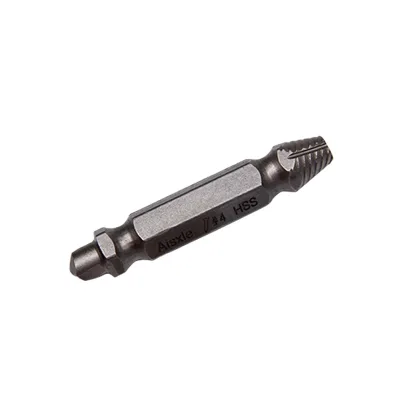
Double head broken wire extractor water pipe slip tooth screw out tooth extractor
$0.82 - $1.23
MOQ: 20 Minimum

SHUIFU HANYANG MACHINERY TECHNOLOGY CO., LTD
- Verified by TUVRHEINLAND
- Trading Company
- China Yunnan
- Lead time30 days
- Avg. response≤ 2h
Main productsManufacturing Processing Machinery, Sheet Metal Stamping, Springs, Stud Bolt, Clamp, Washer, Nut, Screw, Rivets, Stainless Steel
Main marketsSoutheast Asia/ Mideast,Europe,North America

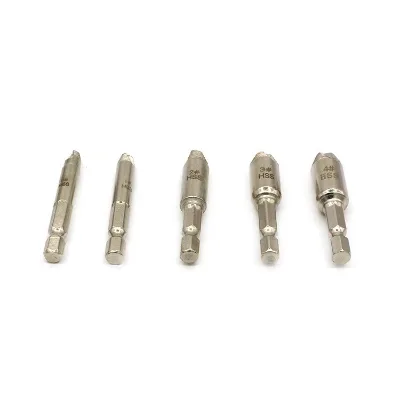
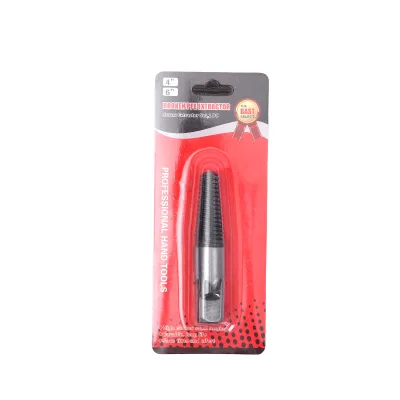
Broken Head Screw Extractor Universal Short Head Screw Tool Wire Extractor
$0.03 - $0.30
MOQ: 100 Pieces


Xuzhou Perfect Tools Co., Ltd.
- Trading Company
- China Jiangsu
- Lead time23 days
- Avg. response≤ 18h
Main productsHSS Drill Bit, Saw Blade, Hole Saw, Screw Taps, End Mill, Drill Bits, Screwdriver, Wrench, Air Tools, Plier
Main marketsSouth America,Africa,Southeast Asia/ Mideast,East Asia(Japan/ South Korea),Europe,Australia,North America


$2.50 - $5.00
MOQ: 200 Pieces


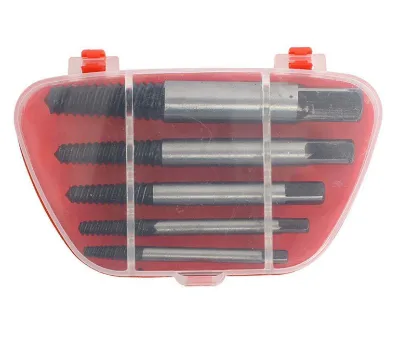
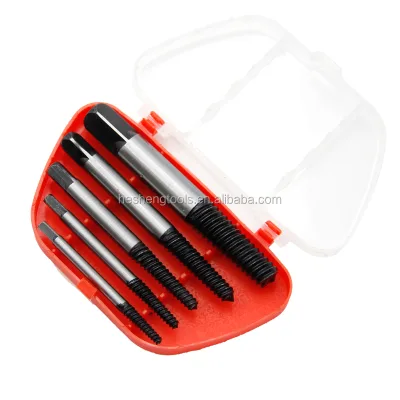
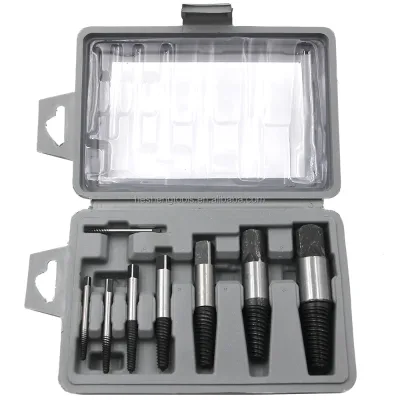
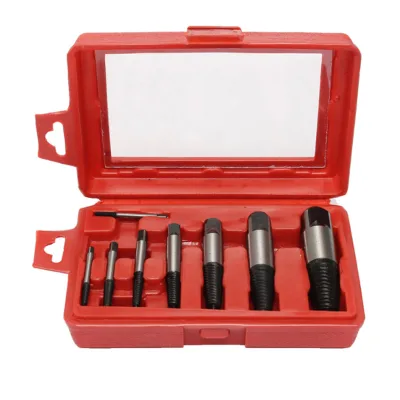
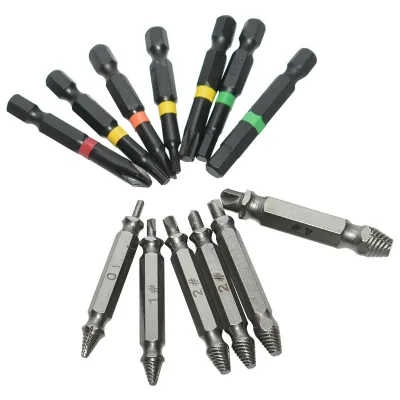
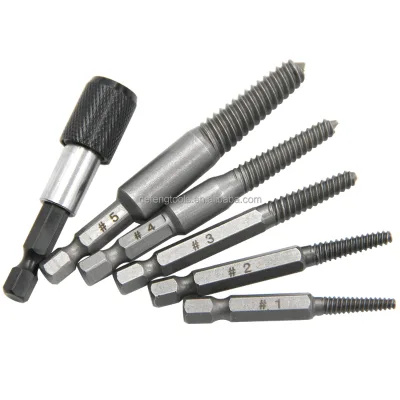
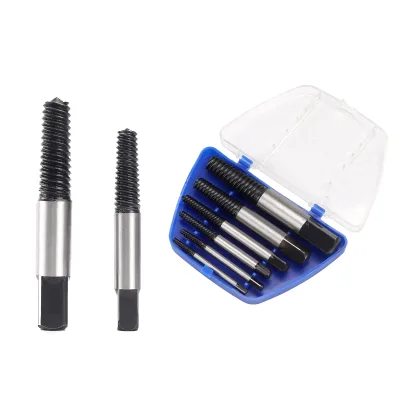
5PCS spiral Flute Water Pipe Broken Pipe Sliding Tooth Broken Head Screw Extractor Set
$2.00 - $5.00
MOQ: 500 Pieces

5PCS Black and White Broken Damaged Screw Extractor Set for Remover Damaged Bolt and Broken Screw
$2.00 - $5.00
MOQ: 200 Pieces
Ningbo E-Friend Import & Export Co., Ltd.
- Trading Company
- ZHEJIANG, China
- Lead time0 days
- Avg. response≤ 3h
Main productsDRILL BITS & SAW BLADES,HARDWARE TOOLS,POWER TOOLS,AUTO SPARE PARTS
Main marketsSouth Asia(10.00%), Northern Europe(10.00%), Western Europe(10.00%), Mid East(10.00%), Oceania(10.00%), Africa(10.00%), Southeast Asia(10.00%), Eastern Europe(10.00%), South America(10.00%), North America(10.00%)
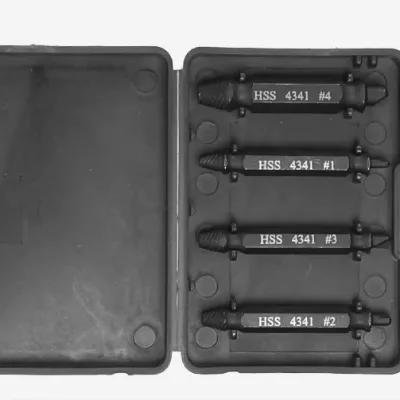
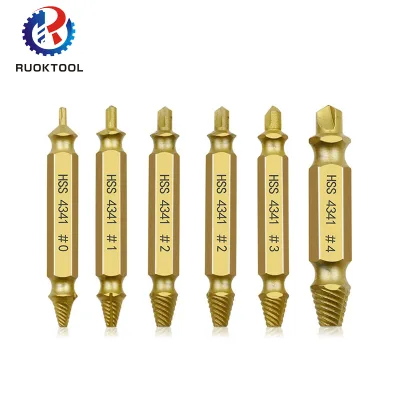
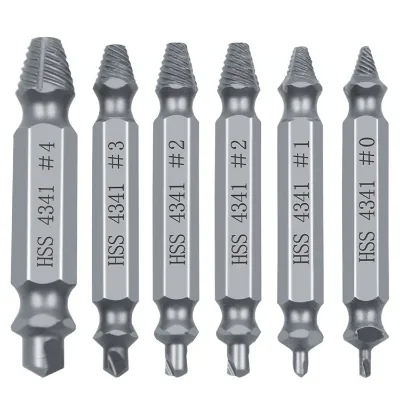
Double Head Screw Extractor High Speed Steel 4341 Double Head Broken Wire Extractor
$0.36 - $0.42
MOQ: 10 pieces
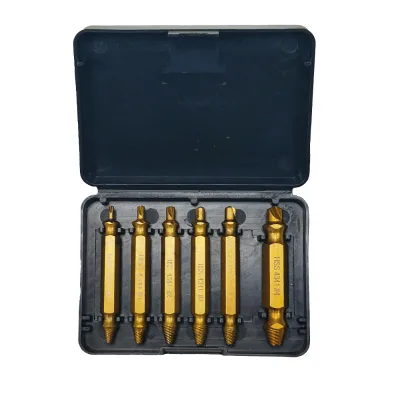
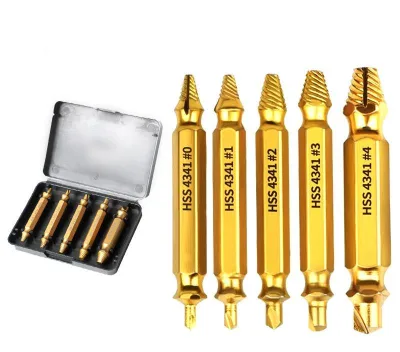
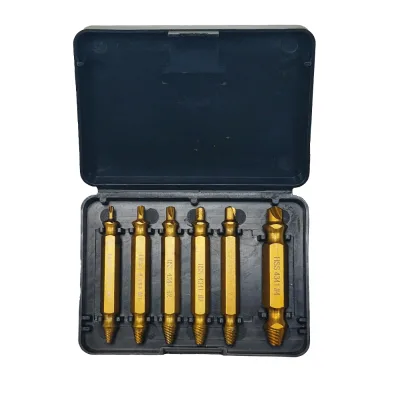
- Manufacturer, Trading Company
- Jiangsu, China
- Lead time30 days
- Avg. response≤ 7h
Main productsTwist Drill Bits,Saw Blade,Taps,Hole Saw,Tool Accessories
Main marketsNorth America(28.00%), Western Europe(25.00%), Domestic Market(20.00%), Southeast Asia(15.00%), South America(2.00%), Eastern Europe(2.00%), Mid East(2.00%), Southern Europe(1.00%), Central America(1.00%), Oceania(1.00%), South Asia(1.00%), Eastern Asia(1.00%), Africa(1.00%)
Danyang Hesheng Tools Co., Ltd.
- Manufacturer, Trading Company
- Jiangsu, China
- Lead time3 days
- Avg. response≤ 7h
Main productsHardware Tools
Main marketsDomestic Market(50.00%), North America(10.00%), Eastern Europe(7.00%), Africa(3.00%), South Asia(3.00%), Eastern Asia(3.00%), Northern Europe(3.00%), Central America(3.00%), South America(3.00%), Southeast Asia(3.00%), Western Europe(3.00%), Mid East(3.00%), Oceania(3.00%), Southern Europe(3.00%)

ZHEJIANG SHALL TOOLS CO., LTD.
- Combined
- China Zhejiang
- Lead time23 days
- Avg. response≤ 9h
Main productsPower Tools, Garden Tools, Hand Tools, Pneumatic Tools, Automotive Accessories, Hardware, Fastener
Main marketsSoutheast Asia/ Mideast,Europe,Australia,North America
- Trading Company
- Shanghai, China
- Lead time0 days
- Avg. response≤ 4h
Main productsDiagnostic Tools,Auto Repair Tools,Oil Pump,Oil Funnel,Test Tools
Main marketsNorth America(50.00%), Western Europe(20.00%), South America(15.00%), Eastern Asia(15.00%)

DANYANG DAMING TOOLS CO., LTD.
- Trading Company
- China Jiangsu
- Lead time30 days
- Avg. response≤ 15h
Main productsHSS Twist Drill Bits, Diamond Saw Blade, Hole Saw, Tct Saw Blade, Grinding Wheel, Diamond Core Bit, Masonry Drill Bits, SDS Drill Bits, Screw Bits, Screw Extractor
Main marketsSouth America,Africa,Southeast Asia/ Mideast,East Asia(Japan/ South Korea),Domestic,Europe,Australia,North America

Chengdu Rise Win International Trade Co., Ltd.
- Trading Company
- Sichuan, China
- Lead time35 days
- Avg. response≤ 4h
Main productsTools,Machinery,Hardware,Power tool accessories,Machine tools
Main marketsWestern Europe(30.00%), Oceania(20.00%), North America(20.00%), Northern Europe(10.00%), Eastern Europe(10.00%), Eastern Asia(10.00%)

Hunan Weirui Trading Co., Ltd.
- Trading Company
- Hunan, China
- Lead time15 days
- Avg. response≤ 1h
Main productswrench,plier,scissors,screw,screwdriver
Main marketsNorth America(50.00%), Eastern Europe(10.00%), Southeast Asia(10.00%), Central America(5.00%), Oceania(5.00%), Western Europe(5.00%), Northern Europe(5.00%), Southern Europe(2.00%), Africa(2.00%), South America(2.00%), Mid East(1.00%), Domestic Market(1.00%), South Asia(1.00%), Eastern Asia(1.00%)

Shanghai Ostar Tools Int'l Co., Ltd.
- Trading Company,Manufacturer/Factory
- China Shanghai
- Lead time45 days
- Avg. response≤ 15h
Main productsOscillating Multi Tool Blades, Hole Saws, Jigsaw Blade, Reciprocating Saw Blade, Tct Saw Blade, Diamond Saw Blade, SDS Drill Bits, HSS Drill Bits, Cutting Disc, Cutting Tools
Main marketsSouth America,Eastern Europe,North America,Western Europe
Suzhou Toryin Trading Co., Ltd.
- Trading Company
- Jiangsu, China
- Lead time30 days
- Avg. response≤ 4h
Main productsHand Tools,Car Tools,Outdoor Tools,Garden Tools,Kitchen Tools
Main marketsSouth America(21.00%), North America(18.00%), Western Europe(8.00%), Eastern Europe(8.00%), Southern Europe(7.00%), Domestic Market(7.00%), Central America(5.00%), Southeast Asia(5.00%), Northern Europe(5.00%), Africa(5.00%), South Asia(3.00%), Eastern Asia(3.00%), Mid East(3.00%), Oceania(2.00%)

Ningbo Magma Tooling Co., Ltd.
- Trading Company,Manufacturer/Factory,Other
- China Zhejiang
- Lead time45 days
- Avg. response≤ 14h
Main productsAutomotive Tools, Socket Sets, Auto Repair Tools, Ratchet Handle, Garage Equipment, Car Repair Tools, Car Tools Set, Car Maintenance, Injection Moulding, Plastic Injection Mould
Main marketsSouth America,Eastern Europe,North America,Western Europe


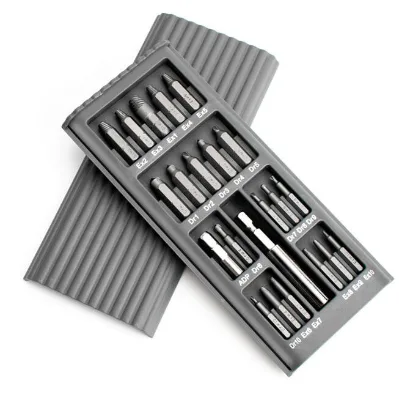
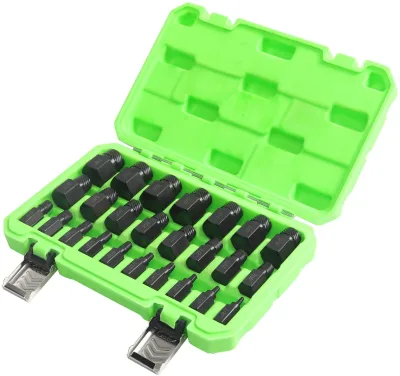
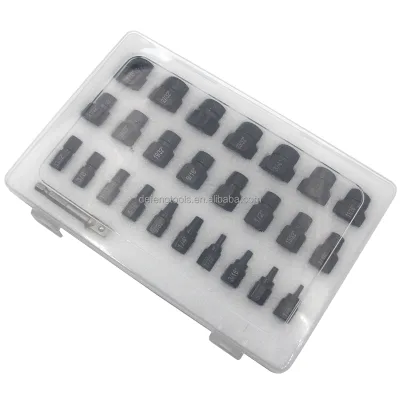
25 PCS Screw Extractor Set (MG50936)
MOQ: 200 Sets

Henan Rowdai Machinery Equipment Co., Ltd.
- Verified by SGS
- Trading Company
- China Henan
- Lead time15 days
- Avg. response≤ 1h
Main productsElectric Tapping Machine, Machining Center, Gear Hobbing Machine, Surface Grinding Machine, Band Saw Machine, Drilling Machine, Milling Machine, Lathe Machine, CNC Machine Tool, Bending Machine
Main marketsSouth America,Africa,Southeast Asia/ Mideast,Europe


600W High-Frequency Electrical Sparking Broken Screw Extractor for Sale
$400.00 - $470.00
MOQ: 1 Pieces

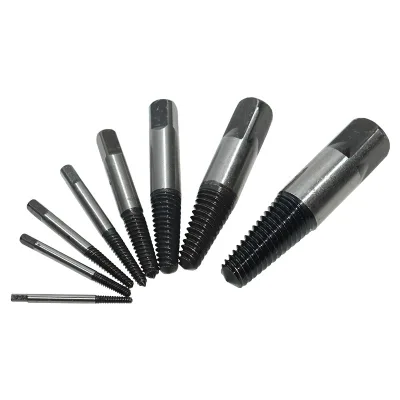
Stud Extraction Portable EDM Small Hole Drilling Removal Tool Screw Extractor
$400.00 - $480.00
MOQ: 1 Pieces


SHANGHAI JUST BETTER TOOLS CO., LTD.
- Trading Company,Manufacturer/Factory
- China Shanghai
- Lead time0 days
- Avg. response≤ 15h
Main productsPdr Tools, Auto Tools, Paintless Dent Repair Tools, Car Dent Repair Tools, Dent Tool Kit, Dent Puller Kit, Pdr Car Body Repair Tool, Pdr Kit

5PC Square Type Screw Extractor Set
MOQ: 300 Sets

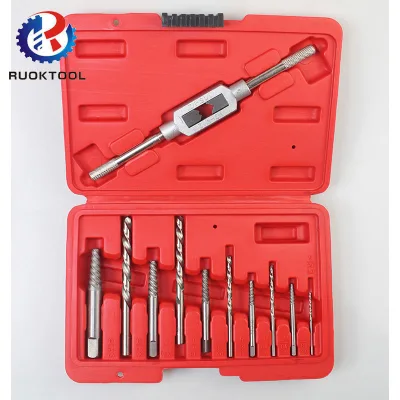
10PCS Multi Spline Screw Extractor Kit
MOQ: 300 Sets

18PC Bolt, Stud & Screw Extractor Set
MOQ: 300 Sets

10PCS Multi Spline Screw & Nut Extractor Set
MOQ: 300 Sets

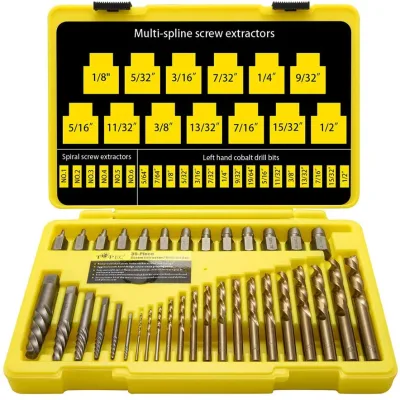
25PCS Multi Spline Screw Extractor Set
MOQ: 300 Sets

Screw Extractor Set 5PC 1/2"Sq Drive
MOQ: 300 Sets
- Verified by Intertek
- Manufacturer, Trading Company
- Lead time45 days
- Avg. response≤ 2h
Main productsHSS Twist Drill Bits, SDS Drill Bits, Wood Working Drill Bits, Masonry Drill Bits, HSS Hole Saws
Main marketsDomestic Market(50%), Eastern Europe(25%), Northern Europe(15%)

ZHENGZHOU YUSHOU HEAVY INDUSTRY CO., LTD.
- Combined
- China Henan
- Lead time15 days
- Avg. response≤ 4h
Main productsSoap Machinery Laundry Soap Line, Three Roll Mill, Soap Stamper, Soap Mixer, Oil & Fat Saponification Machinery
Main marketsAfrica,Southeast Asia/ Mideast,East Asia(Japan/ South Korea),Domestic,Europe

Superior Heavy-Duty Yusou Screw Oil Extractor - High-Yield & Easy-Operate
$600.00 - $4000.00
MOQ: 1 Pieces

Danyang Defeng Tools Trading Co., Ltd.
- Trading Company
- Jiangsu, China
- Lead time3 days
- Avg. response≤ 3h
Main productsHandware tools,Drill Bit,Screw extractor,Screwdriver Set Head,Accessory
Main marketsDomestic Market(50.00%), North America(10.00%), Eastern Europe(7.00%), South America(3.00%), Southeast Asia(3.00%), Africa(3.00%), Oceania(3.00%), Mid East(3.00%), Eastern Asia(3.00%), Western Europe(3.00%), Central America(3.00%), Northern Europe(3.00%), Southern Europe(3.00%), South Asia(3.00%)
Shenzhen Jiulingsheng Technology Co., Ltd.
- Trading Company
- Guangdong, China
- Lead time0 days
- Avg. response≤ 4h
Main productsScrewdriver,Scraper,Suction Cup,Screwdriver Set,Tweezers
Main marketsSouth America(100.00%), Africa(100.00%), Domestic Market(50.00%), South Asia(20.00%), North America(10.00%), Mid East(4.00%), Southern Europe(2.00%), Eastern Europe(2.00%), Northern Europe(2.00%), Central America(2.00%), Western Europe(2.00%), Eastern Asia(2.00%), Oceania(2.00%), Southeast Asia(2.00%)

Henan Lanphan Industry Co., Ltd.
- Verified by TUVRHEINLAND
- Trading Company
- China Henan
- Lead time15 days
- Avg. response≤ 4h
Main productsFreeze Dryer, Autoclave/Sterilizer, Spray Dryer, Solvent Recovery Machine, Rotary Evaporator, Centrifuge, Trichome Separator, Muffle Furnace, Short-Path Distillation/Closed Loop, Color Sorter
Main marketsSoutheast Asia/ Mideast

- Verified by BV
- Manufacturer/Factory
- China Zhejiang
- Lead time30 days
- Avg. response≤ 3h
Main productsBrush Cutter, Tiller, Garden Equipment, Chain Saw, Bike Rack, Motorcycle Lift, Furniture, Hooks, Garage Rack, Storage Bin
Main marketsSouth America,Eastern Europe,Mid East,North America,Southeast Asia,Eastern Asia,Oceania,Western Europe,Africa

Screw Extractor Drill Guide Set Removal Broken Screw Bolts Fasteners Tools
$27.00 - $29.00
MOQ: 100 Pieces


Wenzhou Lihong Machinery Technology Co., Ltd.
- Verified by BV
- Combined
- China Zhejiang
- Lead time45 days
- Avg. response≤ 5h
Main productsDairy Equipment, Mixing Tank, Stainless Teel Tank, Bulk Farm Milk Cooling Tank, Wine Tank, Pharmaceutical Equipments, Milk Tank, Milk Cooling Tank, Brewery Equipments, Pipe
Main marketsSouth America,Africa,Southeast Asia/ Mideast,Europe,North America








Comprehensive Sourcing Guide
Broken Head Screw Extractor Supplier Concentration and Factory Types
Listings for Broken Head Screw Extractor products on this page cluster in a few Chinese provinces, with high-confidence location data pointing to Guangdong, Jiangsu and Yunnan. Guangdong-based listings include single-piece extractors, double-head broken wire extractors for plumbing applications, and S2 steel reverse-tooth tools, with place of origin stated at province level. Jiangsu suppliers describe themselves through their main product lines — HSS drill bits, saw blades, hole saws, screw taps and wrenches — which signals a hardware-cutting-tools background rather than a pure fastener-removal niche. Yunnan-based entries lean toward manufacturing processing machinery and fasteners such as studs, screws, nuts and rivets, suggesting the extractor sits alongside a broader industrial hardware catalog.
Supplier types on the page split between trading companies, distributors/wholesalers, and one trading company with a TÜV Rheinland verification label. This mix matters because a specialist hand-tool producer, a general fastener house, and a reseller will quote differently on customization, packaging and tolerance questions. Several listings label themselves as trading companies, so factory audits or direct production questions are worth asking early. To identify additional clusters beyond the supplied locations, sort prospective suppliers by stated place of origin and count how many quote the same extractor variants — broken-head, sliding-thread and broken-tap removal — before deciding where to consolidate sampling. Product listings alone do not prove factory ownership; the buyer must confirm which entities actually manufacture.
How to Verify Broken Head Screw Extractor Suppliers
Start with the attributes each supplier actually displays. One entry on this page carries an is_verified label from TÜV Rheinland, which is a third-party verification signal rather than a product certification, so treat it as a starting point for due diligence instead of proof of quality. Company type labels — trading company versus distributor/wholesaler — tell you who is quoting you, but not who makes the goods. For extractor products, ask directly whether the supplier produces in-house or sources from a tooling factory, because the answer affects your ability to specify steel grade, flute geometry and heat treatment. Several listings state "please contact us" for model numbers and details, which means the listing is incomplete and verification requires a written product specification sheet.
Material claims are the highest-value item to verify. This page shows extractors described as S2 steel, high speed steel, carbon steel and alloy steel across different listings, and one Jiangsu kit lists a raw material of carbon steel, alloy steel and HSS. Ask each candidate to confirm the exact steel grade for the specific SKU you will order, ideally with material test documentation you can request under NDA. Also verify hardness treatment for the broken-head use case, since the tool must bite into hardened fastener material. Request a production sample against the stated product attributes — dimensions, packing format, and origin marking — and compare it with the listing description. Where a supplier's response time field is present, use it to gauge communication reliability during the verification window itself.
What to Compare Across Broken Head Screw Extractor Suppliers
Compare the quantified fields side by side rather than relying on product photos. On this page, lead times range from as short as three days to roughly thirty days, a spread wide enough to change your inventory planning if you reorder seasonally. Response times shown include figures near two hours and one other supplier under two hours at about 1.6 hours, against another at more than seventeen hours — significant when you need quick answers on spec clarifications. MOQs vary dramatically: single-piece listings start at ten units, plumbing-style double-head extractors at twenty, a steel universal short-head tool at one hundred, while a double-head disassembly tool set requires five thousand units. Match MOQ to your sell-through before shortlisting.
Use the listed price ranges as comparison anchors, acknowledging they are quotation floors. Single extractors list from roughly 0.41 to 0.82 and up to about 1.23 per unit depending on variant; a Yunnan-listed tool spans 0.03 to 0.30; a Jiangsu extractor kit lists 2.00 to 5.00, and a six-piece set tops out around 4.50. Note that not every supplier displays every field — some entries show no price or lead time at all — so record missing values as "to confirm" instead of assuming parity. Compare main products too: a supplier whose core lines are drill bits, taps and pliers may handle extractor quality assurance differently from a fastener-focused wholesaler. Finally, weigh customization statements; several listings mark customization as available or custom made, while others are fixed-configuration items.
Common Broken Head Screw Extractor Sourcing Risks
The most common risk in this category is material misrepresentation. Listings on this page name S2 steel, high speed steel, carbon steel and alloy steel across similar-looking extractors, and one product line blends three material descriptions in a single raw-material field. A tool sold as hardened S2 but delivered as unhardened carbon steel will fail on the first seized bolt, and the failure appears at your customer, not at the factory. Protect against this by writing the steel grade and hardness requirement into the purchase order and by destructive-testing samples from the actual production batch, not from supplier-provided showroom samples.
A second risk is specification opacity. Several entries here list no model number, no brand name, and "please contact us" for functional application details, which makes repeat ordering vulnerable to silent substitutions. Fix the model designation in your PO and require written confirmation that any change triggers renegotiation. Third, watch the gap between MOQ and storage reality: a five-thousand-unit MOQ on a double-head set commits you to slow-moving stock if your channel is retail. Conversely, a ten-unit MOQ entry may reflect a drop-shipping or trading posture with weaker production control. Finally, misaligned packaging — PVC bag versus blister card versus plastic or metal box — affects shelf presentation, so confirm packing format in writing, since one Jiangsu listing offers both options and the choice changes unit cost.
Broken Head Screw Extractor Regional Sourcing and Logistics
The supplied location data places these suppliers in Guangdong, Jiangsu and Yunnan, which shapes logistics in concrete ways. Guangdong's dense export infrastructure supports the short lead time shown in one listing — around three days — which is plausible for stock items moving to nearby ports, though you should confirm whether the quoted lead time applies to your specific SKU or only to inventory on hand. Jiangsu suppliers list lead times near twenty-three days, longer but still workable for standard reorder cycles, and their hardware-tooling cluster context suggests the extractor may be one line within a larger HSS tool production run. Yunnan, a less export-central province, shows a lead time around thirty days and longer inland transit to port, so build that into your delivery buffer.
Because listings state origin only at province level, ask each supplier for the actual factory city before calculating freight, and request whether goods ship FOB from a named port or ex-works from the factory. Packaged weight matters here: one listing reports a product size of roughly 8.89 by 6.35 by 0.64 centimeters at about 100 grams, which allows dense cartonization, while extractor kits packed in plastic or metal boxes occupy more volume and raise per-unit freight. For mixed orders, consolidating extractors with other hand tools from the same supplier can reduce shipment count. Always confirm the stated lead time in the purchase contract rather than relying on the listing figure.
Broken Head Screw Extractor Commercial Terms and Order Planning
Plan your first order around the MOQ and price structure visible on this page. Sampling is inexpensive here because several entries list MOQs of ten to one hundred units with per-unit prices from a few cents to roughly 1.23, so you can evaluate multiple variants and materials before committing. For the Jiangsu extractor kit, the 200-unit MOQ at 2.00 to 5.00 per unit is a moderate trial commitment, while the five-thousand-unit MOQ on the double-head set should follow a proven sample and a confirmed sales channel. Stage your spending: sample across suppliers, benchmark performance on seized fasteners, then negotiate volume pricing on the winning configuration, using the displayed price ranges as your opening reference points.
On payment terms, ask each shortlisted supplier what protection mechanisms they support, since platform escrow availability is not uniform across listings and this page does not display escrow labels for the suppliers shown — confirm directly rather than assuming coverage. Request the price valid for your target quantity and packaging format in writing, because the ranges shown are listing floors, not binding quotes. Lock lead time, model number, steel grade and packing in the contract, and align reorder cycles with the quoted production lead times, which range from days to roughly a month across this page. Finally, plan a second-source in a different province to hedge against single-cluster disruption, using the regional spread in the supplied data as your shortlist framework.
Word count: 1417
FAQs
Where are broken head screw extractors manufactured?
Most listed products originate from Guangdong, China, with some items sourced from Jiangsu and Yunnan regions. Buyers should verify the specific place of origin for each order, as manufacturing locations vary across different suppliers offering these tools.
What is the minimum order quantity for these tools?
Minimum order quantities vary significantly by product type and supplier. Some single items require only ten units, while specialized sets may demand orders of two hundred or even five thousand units depending on the specific model and customization needs.
How long does it take to receive these extractors?
Lead times for delivery range from three days to thirty days based on the supplier and product specifications. Some suppliers offer faster turnaround, while others with larger production runs or custom requirements may require up to a month to complete orders.
What materials are used for broken screw extractors?
Common materials include high-speed steel, carbon steel, alloy steel, and S2 steel for durability. Some products are explicitly described as steel, while others specify high-speed steel or alloy compositions to ensure strength during the extraction process.
Are these tools available for custom manufacturing?
Yes, several suppliers offer custom-made options for broken head screw extractors. Buyers can request specific models or modifications, though some standard items are listed as non-customized, so confirming customization availability with the specific vendor is essential.
What is the price range for these extractors?
Prices vary widely, ranging from approximately 0.03 to 5.00 per unit depending on the product type and quantity. Specific items like single extractors may cost under one dollar, while specialized sets or bulk orders can reach higher price points.
How quickly do suppliers respond to inquiries?
Response times for supplier inquiries vary, with some vendors replying within two hours and others taking up to seventeen hours. Buyers should expect different response speeds depending on the specific supplier and their current workload or operational hours.