Bridge Type Plastic Cable Chain Suppliers and Manufacturers
Source 12 verified Bridge Type Plastic Cable Chain suppliers from China. Compare key dimensions including lead times, MOQs, certifications, and response rates. Review product specs and request quotes to streamline your procurement process; review the available evidence before requesting comparable quotations from suitable candidates.
Suppliers List
Hebei Huayuan Machine Tool Accessories Co., Ltd.
- Manufacturer, Trading Company
- Hebei, China
- Lead time5 days
- Avg. response≤ 2h
Main productsBellows Cover,Drag Chain,Cooling Pipe,Chip Conveyor,Leveling Feet
Main marketsNorth America(40.00%), Southern Europe(20.00%), Western Europe(20.00%), Mid East(10.00%), Southeast Asia(7.00%), South America(3.00%)
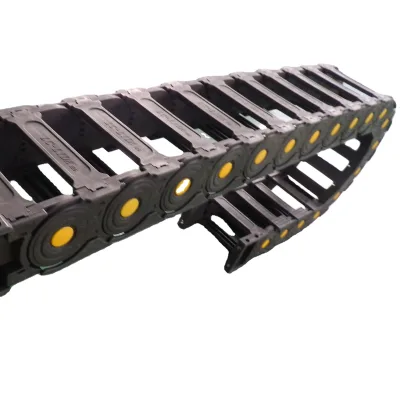
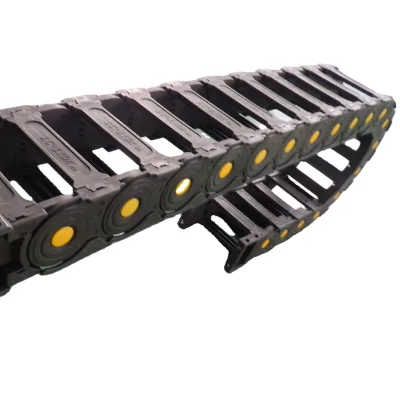
Cable Chain Closed Type protection Cable Chain
$4.00 - $5.00
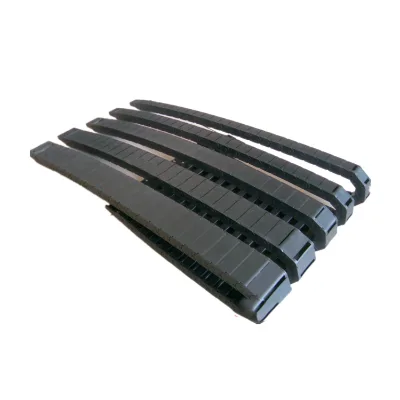

Dezhou Tianhai Precision Machinery Co., Ltd
- Verified by BV
- Combined
- China Shandong
- Lead time23 days
- Avg. response≤ 5h
Main productsmachine tool accessories
Main marketsAfrica,Southeast Asia/ Mideast,East Asia(Japan/ South Korea),Europe,Australia,North America

Bridge Type Plastic Cable Chain Manufacturer Nylon Bridge Type Cable Chain
$3.00 - $3.80
MOQ: 50 Meters

Plastic Nylon Drag Chain Openable Protection Bridge Cable Protection Chain
$16.00 - $17.50
MOQ: 1 meters

Plastic Nylon Cable Carrier Openable Type Protective Bridge Drag Cable Chain
$3.00 - $3.80
MOQ: 50 Meters


Plastic Nylon Cable Bracket Drag Chain Openable Protection Bridge Drag Chain
$16.00 - $17.50
MOQ: 1 meters


Hangzhou Vision Chain Transmission Co., Ltd.
- Verified by TUVRHEINLAND
- Combined
- China Zhejiang
- Lead time30 days
- Avg. response≤ 9h
Main productsRoller Chain, Sprocket, Pulley, Gear, Rack, Couplings, Taper Bush, Conveyor Chain, Lock, Transmission Parts
Main marketsDomestic

Hebei Tonex Rubber And Plastic Co., Ltd.
- Verified by TUVRHEINLAND
- Trading Company
- China Hebei
- Lead time15 days
- Avg. response≤ 2h
Main productsDrag Chain, Bellow Cover, Chip Conveyor
Main marketsSouth America,Africa,Southeast Asia/ Mideast,Europe,Australia,North America

Hot Seller Flexible Plastic Cable Carrier Cable Drag Chain Bridge Type Cable Protection Chain
$6.50 - $18.50
MOQ: 1 Meters


Plastic Cable Drag Chain CNC Cable Chain Bridge Type Cable Carrier Chain for CNC Machine
$6.50 - $18.00
MOQ: 1 Meters

Plastic Cable Drag Chain CNC Cable Chain Bridge Type Cable Track Chain for CNC Machine
$6.50 - $18.00
MOQ: 1 Meters

Enclosed Plastic Cable Chain Bridge Cable Carrie Customizable Cable Chain for CNC Machine
$6.00 - $17.50
MOQ: 1 Meters

High Strength Plastic Drag Chain Bridge Cable Chain Flexible Cable Drag Chain
$6.50 - $18.00
MOQ: 1 Meters

Hebei Ruiao Machine Tool Accessories Producing Co., Ltd.
- Verified by SGS
- Combined
- China Hebei
- Lead time15 days
- Avg. response≤ 4h
Main productsCable Chain, Slideway Cover, Oil Mist Collector, Chip Conveyor and Chain, Cantilever Control Box
Main marketsOthers(foreignTradeCapacity.exportBusinessCapacityMarketOther),Southeast Asia/ Mideast,Europe,Australia,North America

Kwlid (Jiangsu) Intelligent Equipment Manufacturing Co., Ltd.
- Verified by SGS
- Manufacturer
- China Jiangsu
- Lead time15 days
- Avg. response≤ 3h
Main productsCable Drag Chain, Bellows Cover, Chip Conveyor, Oil Mist Collector, Cantilever Control Box
Main marketsSouth America,Africa,Southeast Asia/ Mideast,Europe,Australia,North America

Flexible Plastic Cable Carrier Chain for Bridge Protection in CNC Applications
$5.00 - $20.00
MOQ: 1 Meters


Qingyun Weijie CNC Machine Tool Accessories Manufacturing Co., Ltd.
- Combined
- China Shandong
- Lead time15 days
- Avg. response≤ 3h
Main productsCable Chain
Main marketsSoutheast Asia/ Mideast,Domestic

Flexible Cable Towing Chain20*38 S Type Nylon Bridge Type Plastic Cable Drag Chain
$70.00
MOQ: 100 Meters


ZHEJIANG STARS PLASTIC SAFETY DEVICE CO., LTD.
- Verified by SGS
- Combined
- China Zhejiang
- Lead time15 days
- Avg. response≤ 25h
Main productsTraffic Baton, Safety Baton, Traffic Warning Light, Road Stud, Road Cone, Traffic Direction Sign, Solar Warning Light, Solar Traffic Sign, Safety Vests, Plastic Chain
Main marketsNorth America

MOQ: 500 Pieces

MOQ: 500 Pieces

MOQ: 500 Pieces

MOQ: 100 Meters

TANG CHENG INTERNATIONAL TRADE CO., LTD.
- Trading Company,Manufacturer/Factory
- China Jiangsu
- Lead time15 days
- Avg. response≤ 6h
Main productsWelding Robot, CNC Cutting Machine, Welding Machine, Laser Machine, Industrial Robot, Flux Recovery Machine, Welding Tractor, H-Beam Production Line, Laser Cutting Machine Parts, Plasma Cutting Machine Parts
Main marketsSouth America,Eastern Europe,Mid East,North America,Southeast Asia,Eastern Asia,Oceania,Western Europe,Africa

Shandong Zhongde Machine Tool Accessories Producing Co., Ltd.
- Verified by SGS
- Combined
- China Shandong
- Lead time15 days
- Avg. response≤ 8h
Main productsChip Conveyor, Drag Chain, Work Light, Guard Bellows Cover, Support Arms System
Main marketsSoutheast Asia/ Mideast,Europe,North America

Wuhan Yichao Technology Equipment Co., Ltd.
- Verified by BV
- Trading Company
- China Hubei
- Lead time23 days
- Avg. response≤ 9h
Main productsHDD Machine and Accessories, Port Machinery Spare Parts, Plasma Consumables, Packing Machine, Material Handling Machine
Main marketsSoutheast Asia/ Mideast,Europe,North America

Nylon Plastic Bridge Type Non-Opening Reinforced Cable Chain, Suitable for 5mm of Cable
$100.00 - $1000.00
MOQ: 1 Pieces

Wire Protection Durable Bridge Type Exterior Opening Reinforced Cable Chain, Suitable 9mm Cable
$100.00 - $1000.00
MOQ: 1 Pieces

Enclosed-Type Durable Reinforced Both Side Opening Reinforced Cable Chain for 41mm Cable
$200.00 - $2000.00
MOQ: 1 Pieces

Shandong Licheng Link Chain Co., Ltd.
- Verified by TUVRHEINLAND
- Trading Company
- China Shandong
- Lead time15 days
- Avg. response≤ 5h
Main productsLink Chain, Shackle, Wire Rope Clips, Hook, Turnbuckle, Wire Rope, Aluminum Sleeves, Thimble, Eye Bolt, Anchor Chain
Main marketsSouth America,East Asia(Japan/ South Korea),Europe


Comprehensive Sourcing Guide
Bridge Type Plastic Cable Chain Supplier Concentration and Factory Types
Current data indicates manufacturing clusters primarily in Hebei and Shandong provinces, where specific suppliers list these locations alongside their core product lines. These regions host a mix of manufacturers and trading companies offering bridge type plastic cable chains, drag chains, and related machine tool accessories. Some entities in Shandong explicitly state their origin as the province while listing ISO 9001:2015 certification and ODM capabilities, suggesting a concentration of established production facilities. Buyers should verify if a supplier's stated location matches their physical factory address, as trading companies may operate from these hubs without owning production lines. The presence of combined company types in search results implies that some vendors act as intermediaries while others function as direct producers.
When assessing factory types, look for explicit declarations of manufacturer status versus trading company status in the supplier profile. A manufacturer typically lists specific production capacities like ODM or OEM services, whereas a trading company might focus on aggregating products from various sources. In the observed results, some suppliers claim combined capabilities, which requires careful verification of their actual production assets. Buyers should request proof of factory ownership or long-term partnership agreements if direct manufacturing is a priority. The distinction matters for quality control, as manufacturers often have more direct oversight over the nylon material selection and molding processes used in bridge type cable chains.
How to Verify Bridge Type Plastic Cable Chain Suppliers
Verification begins with checking third-party audit reports and certification documents provided in the supplier profile. Some observed suppliers display BV verification or TÜV Rheinland certification, which adds a layer of credibility to their business operations. Buyers must confirm that these certifications are current and specifically cover the manufacturing of plastic cable chains, not just general business registration. ISO 9001:2015 is a common standard cited for quality management systems, but it does not guarantee product performance without supporting test reports. Always request the full certificate text and verify the scope of certification to ensure it includes the specific production of drag chains and cable carriers.
Response time and verification badges are also critical indicators of supplier reliability and operational readiness. A response time of two hours suggests a highly active sales team, while a time of eight hours or more may indicate a slower communication cycle or different time zone alignment. Buyers should test the response speed by sending a specific inquiry about Bridge Type Plastic Cable Chain specifications before placing an order. Additionally, check for video outgoing inspection services, which allow buyers to see the actual production line and finished goods. This visual verification helps confirm that the supplier has the physical capacity to produce the requested model numbers and customization options.
What to Compare Across Bridge Type Plastic Cable Chain Suppliers
Lead times vary significantly among suppliers, ranging from five days to thirty days depending on the order volume and customization requirements. Some suppliers offer a lead time of five days for standard models, while others with complex customization needs or lower production capacity may require up to thirty days. Buyers must align their project timelines with these lead times to avoid production delays. It is essential to clarify whether the quoted lead time includes material procurement, molding, assembly, and packaging, as these stages can impact the total delivery schedule. Comparing these timelines helps identify suppliers capable of meeting urgent delivery needs without compromising quality.
Minimum Order Quantities (MOQ) and pricing structures also differ widely across the supplier base. Some vendors accept orders as low as one piece or one meter, while others require a minimum of fifty units. Pricing can range from approximately three dollars to eighteen dollars per unit, influenced by material grade, size, and customization features like logo printing or specific color requirements. Buyers should compare the total cost of ownership, including shipping and potential tooling fees for custom molds. Evaluating the price range against the MOQ helps determine the most cost-effective supplier for the specific order volume. Always verify if the price includes all necessary accessories and packaging to prevent hidden costs later.
Common Bridge Type Plastic Cable Chain Sourcing Risks
One significant risk involves the discrepancy between advertised specifications and actual product performance, particularly regarding material quality and durability. Some product listings mention "high speed" or "wear resistance" features, but without independent test results, these claims remain unverified. Buyers should request material data sheets and wear resistance test reports to confirm that the nylon or plastic used meets the required standards for their specific application. Relying solely on marketing keywords like "reinforced" or "high flexibility" without technical backing can lead to premature chain failure in demanding industrial environments.
Another risk is the inconsistency in after-sales support and warranty terms across different suppliers. While some providers offer a one-year warranty and 24-hour online service, others may have limited or no after-sales support. Buyers must clarify the warranty coverage details, including what constitutes a defect and the process for claiming replacements. Inconsistent support can lead to extended downtime if a batch of cable chains fails prematurely. Additionally, verify the supplier's ability to provide replacement parts or technical assistance for installation issues. Ensuring robust after-sales terms is crucial for maintaining operational continuity in machinery applications.
Bridge Type Plastic Cable Chain Regional Sourcing and Logistics
Sourcing from regions like Hebei, Shandong, and Zhejiang offers access to established industrial clusters, but logistics costs and lead times vary by location. Suppliers in these provinces may have different shipping efficiencies based on their proximity to major ports and transportation networks. Buyers should calculate the total landed cost, including freight, insurance, and customs duties, which can vary significantly depending on the supplier's location. For instance, suppliers in Shandong might have different shipping rates compared to those in Zhejiang due to port accessibility and local logistics infrastructure.
Packaging standards also play a critical role in protecting the bridge type plastic cable chains during transit. Some suppliers use plywood boxes, while others utilize chain bags, neutral boxes, or wooden cases. The choice of packaging affects the risk of damage during shipping and the ease of handling upon arrival. Buyers should specify packaging requirements to ensure the chains arrive in perfect condition, especially for long-distance international shipments. Verifying the packaging method and requesting photos of the packed goods before shipment can mitigate the risk of transit damage. Proper packaging ensures that the product maintains its structural integrity and functionality upon delivery.
Bridge Type Plastic Cable Chain Commercial Terms and Order Planning
Commercial terms such as payment methods, escrow usage, and delivery conditions must be clearly defined before finalizing any order. While some suppliers may offer escrow services for added security, others might require direct bank transfers or letters of credit. Buyers should prioritize suppliers who offer secure payment options to protect their financial interests. Understanding the payment schedule, including deposit percentages and balance due dates, is essential for effective cash flow management. Always ensure that the commercial terms align with the buyer's internal financial policies and risk tolerance.
Order planning requires a detailed review of customization options and production capacity to ensure the supplier can meet specific requirements. Some suppliers offer customized sizes, colors, and logo printing, while others may have limited flexibility. Buyers should confirm the availability of custom molds and the associated costs before placing an order. Additionally, verify the supplier's ability to handle large volume orders without compromising quality or delivery timelines. Planning for potential delays and having a contingency plan in place is crucial for maintaining project schedules. Clear communication of all requirements and expectations helps prevent misunderstandings and ensures a smooth procurement process.
FAQs
What is the typical lead time for bridge type plastic cable chains?
Lead times vary by supplier, ranging from 5 days to 30 days. Some manufacturers in Hebei offer a 5-day turnaround, while others in Shandong may require up to 23 days. Buyers should confirm specific delivery schedules with the supplier before placing an order to ensure timely project completion.
What are the minimum order quantities for these cable chains?
Minimum order quantities differ significantly across suppliers. Some vendors accept orders as low as 1 piece or 1 meter, while others require a minimum of 50 units. Buyers must check individual product listings to verify the specific MOQ before proceeding with a purchase to avoid unexpected costs.
Which certifications are available for bridge type plastic cable chains?
Many suppliers provide ISO 9001:2015 certification for their nylon drag chains. Some manufacturers also hold BV or TÜV Rheinland verification status. Buyers should request valid certificates directly from the supplier to confirm compliance with international quality standards before finalizing any procurement agreement.
What is the price range for bridge type plastic cable chains?
Prices typically range from 3.00 to 18.00 per unit depending on specifications. Basic models may cost between 3.00 and 5.00, while specialized nylon chains can reach up to 18.00. Buyers should compare multiple listings to find the best value that meets their specific technical requirements.
Where are the manufacturers of these chains located?
Manufacturers are primarily located in Hebei, Shandong, and Zhejiang provinces in China. Specific products originate from these regions, with some suppliers offering customized sizes. Buyers should verify the exact origin of the goods to assess shipping costs and potential import duties for their specific location.
How quickly do suppliers typically respond to inquiries?
Response times vary, with some suppliers replying within 2 hours and others taking up to 8.5 hours. Fast response is common among manufacturers in Hebei, while others may take longer. Buyers should prioritize suppliers with quick response times to ensure efficient communication during the sourcing process.
Are customization options available for these cable chains?
Yes, many suppliers offer customized sizes, colors, and logo printing services. Customization is available for nylon drag chains with features like hollow chain structures. Buyers should specify their unique requirements clearly to ensure the manufacturer can produce the exact specifications needed for their machinery applications.