Convertible Modern Plastic Stool Suppliers and Manufacturers
Compare 16 verified Convertible Modern Plastic Stool suppliers by location, response time, and lead times. Review product specifications and pricing to source reliable options for your specific business needs and requirements today; review the available evidence before requesting comparable quotations from suitable candidates.
Suppliers List
Xuzhou Risen Industry and Supply Co., Ltd
- Verified by TUVRHEINLAND
- Trading Company
- China Jiangsu
- Lead time30 days
- Avg. response≤ 3h
Main productsHousehold Adornment, Household Supplies, Home Decoration, Compressed Sofa, Dining Furniture, Bothroom Organizer, Kitchen Storage, Glass Ornaments, Ceramic Tableware, Home Fragrance
Main marketsSouth America

TIANJIN CHRCASE FURNITURE TECHNOLOGY DEVELOPMENT CO., LTD.
- Verified by SGS
- Trading Company
- China Tianjin
- Lead time15 days
- Avg. response≤ 6h
Main productsOffice Chair, Gaming Chairs, Chair Accessories, Dining Chair, Coffee Chair, Plastic Chair, Bar Chair, Hardware Products, Furniture Spare Parts
Main marketsAfrica,Europe

Hebei ChangXin Import and Export Trade Co., Ltd.
- Verified by SGS
- Trading Company
- China Hebei
- Lead time15 days
- Avg. response≤ 17h
Main productsTV Stand, Dining Chair, Office Chair, Dining Table, Bar Chair, Coffee Table
Main marketsEurope

Suzhou Highbright Enterprise Limited
- Combined
- China Jiangsu
- Lead time30 days
- Avg. response≤ 4h
Main productsShopping Trolley, Shopping Cart, Gondola Shelf, Display Shelf, Shop Fittings, Store Fixtures, Roll Container, Shopping Basket, Checkout Counter, Swing Gate
Main marketsSouth America,Africa,Southeast Asia/ Mideast,East Asia(Japan/ South Korea),Europe,Australia,North America


Plastic High Stool Rolling Step Stool
MOQ: 500 Pieces

Cheap Rolling Round Plastic Two Step Stool
MOQ: 100 Pieces

- Trading Company
- China Zhejiang
- Lead time0 days
- Avg. response≤ 12h
Main productsHousehold, Personal Care, Kitchenware, Fitness, Car Items, Tools, Health Care, Paint Brush, Magic Mesh, Beauty


Kids Stool Foldable Stool Folding Step Stool Backrest Stool
MOQ: 1000 Pieces

Shanghai Pumei furniture Co., Ltd.
- Verified by BV
- Combined
- China Shanghai
- Lead time60 days
- Avg. response≤ 19h
Main productsOffice Desk, Panel Furniture, Chairs and Sofa, Laboraty Furniture, Conference Table, Safety Cabinet, Staff Workstation, Office Partition, Training Chair, Laboratory Fume
Main marketsSouth America,Africa,Others(foreignTradeCapacity.exportBusinessCapacityMarketOther)
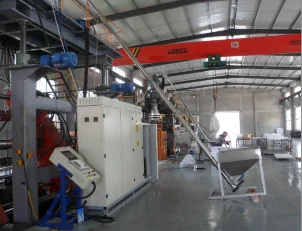
Jiangsu Hongma Furniture Co., Ltd.
- Manufacturer
- Jiangsu, China
- Lead time15 days
- Avg. response≤ 4h
Main productsFolding Furniture, Sports Products
Main marketsNorth America(32.00%), Western Europe(20.00%), Domestic Market(18.00%), Africa(10.00%), Mid East(10.00%), Southeast Asia(10.00%)

Jiangsu Miaohong Environmental Protection New Material Co., Ltd.
- Verified by BV
- Combined
- China Jiangsu
- Lead time15 days
- Avg. response≤ 5h
Main productsSponge, Cleaning Sponge, Kitchen Sponge, Dishcloth, Magic Sponge
Main marketsSouth America,Southeast Asia/ Mideast,Domestic,Europe,North America
- Verified by BV
- Trading Company,Manufacturer/Factory,Group Corporation
- China Shandong
- Lead time0 days
- Avg. response≤ 2h
Main productsAwning, Pergola, Sunshade, Outdoor Product, Mop, Gazebos, Canopy, Fences, Retractable Awning
Main marketsSouth America,Eastern Europe,Mid East,North America,Southeast Asia,Eastern Asia,Oceania,Western Europe,Africa

New Design Plastic Retractable Folding Stool Portable Stool for Camping Fishing
$2.60 - $3.00
MOQ: 100 Pieces

Outdoor Travel Stool Camping Fishing Picnic Folding Chair Lightweight Sturdy Colorful Plastic Stool
$2.60 - $3.00
MOQ: 100 Pieces

Easy to Carry Camping Outdoor Fishing Foldable Chair Colorful Collapsible Stool
$2.60 - $3.00
MOQ: 100 Pieces


Tianjin Kingnod Furniture Co., Ltd.
- Verified by BV
- Manufacturer/Factory
- China Tianjin
- Lead time23 days
- Avg. response≤ 4h
Main productsDining Chair, Restaurant Chair, Office Chair, Bar Stool, Game Chair, Plastic Chair, Metal Chair, Dining Table, Gaming Table, Barstool
Main marketsSouth America,Eastern Europe,Mid East,North America,Southeast Asia,Eastern Asia,Oceania,Western Europe,Africa

Modern Contemporary Design Stackable Plastic Bar High Chair Stool with Back for Pub Counter
$10.42 - $12.48
MOQ: 200 Pieces


Contemporary Plastic Outdoor Counter Height Swivel Bar Stool with Soft Cushion for Living Room
$11.41 - $15.42
MOQ: 200 Pieces

Modern Colorful Cooling Wholesale Price High Plastic Bar Stool with Armrest
$15.99 - $19.99
MOQ: 200 Pieces

Modern Plastic Steel Legs PP Bar Chairs Low Back Bar Chair Stool for Bar Furniture
$13.71 - $14.58
MOQ: 200 Pieces

Cixi Shuangyuan Electric Co., Ltd.
- Verified by BV
- Combined
- China Zhejiang
- Lead time30 days
- Avg. response≤ 25h
Main productsPoker Chip, Poker Chip Set, Poker, Chip, Casino Poker Chip, Sticker Chip, Poker Chips, Casino Chip Set, High Quality Poker Chip, Clay Poker Chip
Main marketsSouth America,Southeast Asia/ Mideast,East Asia(Japan/ South Korea),Domestic,Europe,Australia,North America

Langfang Airun Imp. & Exp. Co., Ltd.
- Verified by BV
- Trading Company
- China Hebei
- Lead time15 days
- Avg. response≤ 10h
Main productsDining Table, Coffee Table, Dining Chair, Hotel Chair, Leisure Chair, Plastic Chair, Metal Chair, Fabric Covered Chair, TV Stand, Sideboard
Main marketsSouth America,Africa,Southeast Asia/ Mideast,Europe,North America

Bazhou Yuehui Metal Products Co., Ltd.
- Verified by SGS
- Trading Company
- China Hebei
- Lead time30 days
- Avg. response≤ 8h
Main productsDining Chair, Dining Table, Chair, Furniture
Main marketsSouth America,Europe,North America

Portable Outdoor Furniture Plastic Stool Chair Travel Camping Folding Adjustable Telescopic Stool
$4.60 - $5.20
MOQ: 200 Pieces

Outdoor Retractable Foldable Plastic Chair Stool for Outdoor Fishing Camping Hiking
$4.60 - $5.20
MOQ: 200 Pieces
Xiamen Anzhiyan Industrial and Trade Co., Ltd.
- Verified by TUVRHEINLAND
- Trading Company,Manufacturer/Factory
- China Fujian
- Lead time0 days
- Avg. response≤ 16h
Main productsMetal Bed, Iron Bed, Metal Chair, Bookshelf


High-Quality Plastic Folding Stool Folding Stool Portable Folding Foot Stool
$12.00 - $20.00
MOQ: 100 Pieces

Ningbo Coooko Imp. & Exp. Co., Ltd.
- Verified by TUVRHEINLAND
- Trading Company
- China Zhejiang
- Lead time45 days
- Avg. response≤ 11h
Main productsBaby Mirror, Potty Training, Baby Car Mirror, Stroller Hook, Portable Potty, Step Stool, Car Headrest Pillow, Faucet Extender, Spout Cover, Makeup Kits
Main marketsEastern Europe,Mid East,North America

Foshan Womei Furniture Co., Ltd.
- Verified by BV
- Trading Company,Manufacturer/Factory,Other
- China Guangdong
- Lead time0 days
- Avg. response≤ 3h
Main productsSchool Furniture, School Desk, School Chair, Student Desk, Student Chair, School Desk and Chair, Student Desk and Chair, Classroom Furniture, Office Table, Office Chair
Main marketsSouth America,Eastern Europe,Mid East,North America,Southeast Asia,Eastern Asia,Oceania,Western Europe,Africa




Comprehensive Sourcing Guide
Convertible Modern Plastic Stool Supplier Concentration and Factory Types
China remains the primary sourcing base for convertible modern plastic stools, and the suppliers visible in this category cluster across several provinces. Jiangsu-based listings include a trading company with household and home-decoration products alongside stackable plastic stools, showing that this item often appears within broader home-goods portfolios rather than as a factory's core product. Tianjin suppliers list office chairs, gaming chairs, dining chairs, bar chairs, plastic chairs, furniture spare parts and hardware, which indicates a seating-focused industrial base where plastic stools sit alongside complementary chair categories. Hebei listings emphasize TV stands, dining chairs, office chairs, dining tables, bar chairs and coffee tables, again positioning plastic stools as part of a wider furniture range. When no cluster data is displayed for a candidate supplier, check whether the listed city is known for plastics injection molding or seating manufacture, and compare quoted regions across multiple suppliers to infer concentration.
The supplier mix in this category includes both trading companies and manufacturers. A Jiangsu trading company in the results explicitly identifies as a trading company, verified by TÜV Rheinland, while Tianjin and Hebei listings carry SGS verification and no system certification respectively. Buyers should expect trading companies to offer broader product breadth and easier consolidation, while factories may offer tighter control over molding tooling. Ask each candidate directly whether they mold the stool shells in-house or subcontract, since that distinction affects pricing, customization depth and quality accountability for a convertible design with moving parts.
How to Verify Convertible Modern Plastic Stool Suppliers
Start with the verification badges and company data already displayed on supplier profiles. In the current results, one Jiangsu supplier is TÜV Rheinland-verified, one Tianjin supplier is SGS-verified, and a Hebei supplier shows no system certification at all. Treat a displayed third-party verification as a screening signal rather than proof of product compliance: it typically confirms business registration and site audits, not that a convertible plastic stool meets the mechanical-safety rules of your destination market. Request the actual certificates behind any badge, check the certificate holder's legal name matches the export entity, and confirm scope covers furniture or household goods. For the supplier showing no certification, ask what quality-system documentation they can provide before ruling them out entirely.
Beyond badges, verify operational substance for a stool design with convertible or multi-position functionality. Ask for a short video call showing the molding line or the assembly area where conversion mechanisms are fitted, and request samples of the exact SKU rather than a similar stackable model. Where a listing shows "Customization: Available," as several results do, probe what that means in practice: new tooling, color changes only, or logo printing. Cross-check the contact person's name against the business license, confirm the export location matches the listed province, and test responsiveness against the displayed response-time figures, which in these results range from under three hours to roughly seventeen hours.
What to Compare Across Convertible Modern Plastic Stool Suppliers
Build a comparison sheet from the attributes suppliers actually display. Response time varies widely in this category — the visible figures run from about three hours for a Jiangsu trading company to around five hours for Tianjin and roughly seventeen hours for Hebei — so weight communication speed heavily if your project needs rapid iteration on the conversion mechanism. Lead time is another measurable difference: the Tianjin supplier displays fifteen days while the Jiangsu supplier shows thirty, a gap that will shape your reorder calendar. MOQ also differs sharply: a Jiangsu stackable stool lists a 100-piece minimum at a flat unit price, while another Jiangsu listing requires 200 pieces at a higher unit price, and several Tianjin stool SKUs show no displayed MOQ, meaning you must ask.
Compare product dimensions and packaging too, since convertible designs ship differently from fixed stools. Displayed model sizes range from compact child stools around 26.5 by 30 by 28 centimeters to a backrest chair at 40 by 40 by 80 centimeters, and one Hebei bar stool packs four pieces per carton with 800 pieces fitting a 40HQ container. Also weigh main-product alignment: suppliers whose catalogs center on chairs and furniture spare parts are more likely to understand load-bearing requirements than general household-goods traders. Price spreads in the results run from roughly 1.85 to 5.24 dollars, so request quotes on identical specifications before drawing conclusions from listed prices.
Common Convertible Modern Plastic Stool Sourcing Risks
The biggest technical risk with convertible designs is mechanism failure, and it is compounded in this category because many suppliers appear to be adapted from fixed-stool lines. Listings describe attributes such as "Reinforced Heavy-Duty Version," thickened plastic and fixed rotary settings, which suggests that most catalog models are static stools with conversion functionality bolted on, if offered at all. A supplier can legitimately list a modern plastic stool yet have never produced a folding or convertible variant. Insist on written confirmation that the quoted model is genuinely convertible, then test hinge, pin or sliding-joint durability through repeated cycle counts before approving production, because thin-wall molding weakens quickly around load-bearing joints.
Commercial risks cluster around vague listings and verification gaps. Several results show identical unit prices with no tiered quotation, which often means the price reflects a standard color and quantity rather than your requirements; a customization flag marked "Available" on one listing and "Customized" versus "Non-Customized" on others signals inconsistent internal records. One Hebei supplier displays no system certification and the slowest response time in the results, so budget extra communication cycles there. Other common risks include carton-only packing without drop testing, color batches drifting across production runs, and suppliers trading across unrelated categories — one Jiangsu company lists ceramic tableware, glass ornaments and home fragrance alongside stools — which can dilute category expertise. Document every specification in a signed product sheet.
Convertible Modern Plastic Stool Regional Sourcing and Logistics
The regional picture in the visible results spans three provinces with different strengths. Jiangsu suppliers lean toward household and home-decoration assortments, with stackable stools offered in multiple colors and a thirty-day displayed lead time; this suits buyers consolidating mixed home-goods orders. Tianjin's supplier base centers on seating — office, gaming, dining, bar and plastic chairs plus spare parts — with the fastest displayed lead time at fifteen days, making it attractive for time-sensitive replenishment of stool programs. Hebei's listings tilt toward dining and bar furniture, including molded plastic bar stools, so the region is worth checking when your convertible stool doubles as counter-height or outdoor seating. Where a candidate's region is unknown, ask about the nearest plastics-industrial zone and freight hub before committing.
Logistics planning should start from displayed packing data. A Hebei bar-stool listing specifies four pieces per carton and 800 pieces per 40HQ container, giving a usable benchmark for volume math even though convertible mechanisms will likely reduce pieces-per-container versus fixed stools. Carton packing is the default across the results, so confirm carton dimensions and stacking limits, then ask whether the conversion mechanism needs protective inserts to avoid crush damage. Since plastic stools are lightweight relative to their cube, freight cost often hinges on container utilization rather than weight; compare 40HQ quotes across regions. Note that a fifteen-day Tianjin lead time may offset higher inland-to-port transfer costs compared with a thirty-day Jiangsu alternative, so model the total door-to-door timeline per region rather than the factory lead time alone.
Convertible Modern Plastic Stool Commercial Terms and Order Planning
Order planning should anchor on the MOQ and price structures actually displayed. One Jiangsu stackable stool lists 100 pieces minimum at a single price point, while another Jiangsu listing sets 200 pieces with a higher unit price; Tianjin models span roughly 1.85 to 5.24 dollars per unit but show no minimum in the visible data, and the Hebei bar stool is sold non-customized with fixed colorways of white, red and black. Where a listing shows customization as available, expect the supplier to quote separately for color matching, logo work or tooling changes to the conversion mechanism, and ask for tiered pricing at your target volumes rather than accepting the flat displayed figure. Confirm what the price includes — packing style, whether the stool ships assembled or flat, and sample-versus-production tooling costs.
Structuring terms well matters more here than in fixed-stool categories because the convertible mechanism carries the main quality risk. Tie a deposit-and-balance payment schedule to pre-shipment inspection of cycle-tested samples, and keep the initial order close to the displayed MOQ so you can validate the mechanism before scaling. Check whether an escrow or platform-protected payment option is offered, and if none is displayed, ask directly and verify independently. One Jiangsu supplier explicitly marks supply type as stable, which supports repeat-order planning, but for others confirm production capacity and re-run timelines. Finally, reconcile the supplier's displayed lead time — fifteen days in Tianjin's case, thirty in Jiangsu's — against your sell-through, then lock reorders with agreed tooling retention so the convertible model stays reproducible.
Word count: 1392
FAQs
What is the typical lead time for plastic stools?
Lead times vary by supplier, with observed ranges from 15 to 30 days. Some manufacturers in Jiangsu offer 30-day delivery, while Tianjin suppliers may complete orders in 15 days. Buyers should confirm specific timelines before placing orders to ensure timely delivery.
Are these stools available for customization?
Customization options are available for many models, including color and design variations. Some listings specify non-customized options, while others allow full customization. Buyers must check individual product attributes to confirm if specific modifications like colors or logos are supported.
What is the minimum order quantity for these items?
Minimum order quantities typically range from 100 to 200 units depending on the supplier and model. Specific listings show MOQs of 100 for standard stools and 200 for customized versions. Buyers should verify the exact requirement for their selected product before initiating a purchase.
Where are the suppliers located?
Suppliers are primarily located in China, with specific facilities in Jiangsu, Tianjin, and Hebei provinces. These regions host trading companies and manufacturers offering various plastic stool models. Buyers can filter results by these locations to find suppliers with specific logistical advantages.
What materials are used for the stools?
Most stools are constructed from thickened plastic, ensuring durability and heavy-duty performance. Some models feature reinforced versions designed for high load capacity. The material is consistently listed as plastic across various product attributes, suitable for both indoor and outdoor use.
Do suppliers offer verification certifications?
Some suppliers hold verification certifications such as TÜV Rheinland or SGS, indicating quality assurance. However, not all listings display system certifications, with some marked as NIL. Buyers should request specific certification documents to verify compliance with international safety and quality standards.
What is the price range for these stools?
Prices generally range from 1.85 to 5.24 USD per unit based on the model and features. Specific listings show prices like 3.00 USD for standard stools and 5.24 USD for high-quality backrest chairs. Costs vary by material thickness, design complexity, and order volume.
How quickly do suppliers respond to inquiries?
Response times vary significantly, with some suppliers replying within 3 hours and others taking up to 17 hours. Observed response times include 2.96 hours for Jiangsu suppliers and 16.96 hours for Hebei suppliers. Faster response times often correlate with higher engagement levels.