Industrial Wooden Bookshelf Suppliers and Manufacturers
Explore 20 verified options for Industrial Wooden Bookshelf from China Fujian, Henan, and Guangdong. Compare response times, lead times, certifications, and customization capabilities to select the right partner for your project today; review the available evidence before requesting comparable quotations from suitable candidates.
Suppliers List

Xiamen Guangfuxin Industrial Co., Ltd.
- Verified by TUVRHEINLAND
- Combined
- China Fujian
- Lead time30 days
- Avg. response≤ 18h
Main productsDisplay Rack, Metal Bed Frame, Coffee Desk, TV Stand, Drawer Cabinet, Office Desk
Main marketsDomestic

Luoyang Orpheus Industrial Limited Company
- Manufacturer/Factory
- China Henan
- Lead time23 days
- Avg. response≤ 5h
Main productsSteel Furniture, Steel Locker, Steel Cabinet, Office Furniture, Home Furniture, School Furniture, Mailbox, Smart Locker, Bunk Beds, Filing Cabinet
Main marketsSouth America,Eastern Europe,Mid East,North America,Southeast Asia,Eastern Asia,Oceania,Western Europe,Africa
Hebei Ximu Furniture Sales Co., Ltd.
- Trading Company,Manufacturer/Factory
- China Guangdong
- Lead time45 days
- Avg. response≤ 4h
Main productsFurniture, Home Furniture, Living Room Furniture., Ding Room Furniture, Bed Room Furniture, Coffee Table, TV Stand, Dining Table, Chairs, Bath Room Furniture
Main marketsSouth America,Eastern Europe,North America,Southeast Asia,Western Europe
Zhangzhou More Star Furniture Co., Ltd.
- Verified by TUVRHEINLAND
- Manufacturer/Factory
- China Fujian
- Lead time60 days
- Avg. response≤ 12h
Main productsCoffee Table, Bunk Bed, Bookshelf, TV Stand, Computer Desk, Kitchen Cabinet, Wardrobe, Display Rack, Dining Table, Kitchen Cart
Main marketsMid East,North America,Southeast Asia,Western Europe

- Verified by BV
- Manufacturer/Factory
- China Zhejiang
- Lead time30 days
- Avg. response≤ 3h
Main productsBrush Cutter, Tiller, Garden Equipment, Chain Saw, Bike Rack, Motorcycle Lift, Furniture, Hooks, Garage Rack, Storage Bin
Main marketsSouth America,Eastern Europe,Mid East,North America,Southeast Asia,Eastern Asia,Oceania,Western Europe,Africa

Guangdong Everpretty Furniture Co., Ltd.
- Combined
- China Guangdong
- Lead time23 days
- Avg. response≤ 16h
Main productsStudent Desk & Chair, Kid's Desk & Chair, Laboratory Benches & Stools, Canteen Table Benches, Library Bookshelf Desk & Chair, Bunk Bed & Roomset Furniture, Auditorium & Theater Chair, White Board Green Board Cork Board, Storage Cabinet & Wardrobe, Office Table & Chair
Main marketsAfrica,Southeast Asia/ Mideast

$95.00 - $100.00
MOQ: 100 Pieces


Double Sided Library Shelf Library Bookcase Wooden Bookshelf Storage Shelving
$240.00 - $290.00
MOQ: 20 Pieces


Dongguan Simply Metal Products Co., Ltd.
- Trading Company
- China Guangdong
- Lead time23 days
- Avg. response≤ 9h
Main productsWire Shelving, Wire Shelving Units, Shelving, Shelf, Wire Wall Shelf, Wire Rack Shelving, Wire Storage Racks, Wire Racks, Metal Wire Shelving, Wire Storage Shelves
Main marketsSouth America,Africa,Southeast Asia/ Mideast,Europe,Australia,North America

Beijing Tianyuan Rongli Technology Co., Ltd.
- Verified by SGS
- Trading Company
- China Beijing
- Lead time15 days
- Avg. response≤ 3h
Main productsMelamine Board, Chipboard, MDF, Solid Wood Pellet Board, Custom-Made Furniture, Dining Room Furniture, Living Room Furniture, Steel-Wood Furniture
Main marketsSoutheast Asia/ Mideast


Heavy-Duty 6-Tier Industrial Office Storage Bookshelf for Efficient Organization
$37.00 - $40.00
MOQ: 50 Pieces


Xuzhou Risen Industry and Supply Co., Ltd
- Verified by TUVRHEINLAND
- Trading Company
- China Jiangsu
- Lead time30 days
- Avg. response≤ 4h
Main productsHousehold Adornment, Household Supplies, Home Decoration, Compressed Sofa, Dining Furniture, Bothroom Organizer, Kitchen Storage, Glass Ornaments, Ceramic Tableware, Home Fragrance
Main marketsSouth America

SHOUGUANG DAWN FOREST WOOD CO., LTD.
- Manufacturer/Factory
- China Shandong
- Lead time23 days
- Avg. response≤ 16h
Main productsFurniture, Kitchen Cabinet, Wardrobe, Shoe Rack & Cabinet, Plywood, Melamine Plywood, Film Faced Plywood, MDF, Melamine MDF, Melamine Particle Board
Main marketsSouth America,Eastern Europe,Mid East,North America,Western Europe,Africa

Dongguan Webber Steel Furniture Co., Ltd.
- Verified by SGS
- Manufacturer
- China Guangdong
- Lead time15 days
- Avg. response≤ 2h
Main productsFurniture, Office Furniture, Morden Furniture, Chinese Furniture, Mobile Filing Cabinet, School Furniture, Server Racks, File Cabinet, Network Cabinet, Household Furniture
Main marketsEast Asia(Japan/ South Korea),Europe,North America

LUOYANG SHIDIU IMPORT AND EXPORT CO., LTD.
- Verified by BV
- Combined
- China Henan
- Lead time30 days
- Avg. response≤ 3h
Main productsOffice Furniture, Filing Cabinet, Locker, Office Desk, Rack, TV Stand, Bunk Bed, Safe, Office Cupboard, Bookcase
Main marketsSoutheast Asia/ Mideast,East Asia(Japan/ South Korea),Domestic,Europe,North America


Wood Texture Steel Bookshelf for Library/Book Shelf/Office Rack Shelf Furniture
$68.00 - $88.00
MOQ: 50 Pieces
- Trading Company
- China Zhejiang
- Lead time30 days
- Avg. response≤ 11h
Main productsHome Appliance, Cookware Set, Thermos, Home Storage, Furniture, Pet Supplies, Garden Tools, Outdoor Supplies, Baby Supplies, Houesehold Items
Main marketsSouth America,Africa,Southeast Asia/ Mideast,East Asia(Japan/ South Korea),Domestic,Europe,Australia,North America

Adidea (Xiamen) Industry And Trade Co., Ltd.
- Trading Company
- China Fujian
- Lead time30 days
- Avg. response≤ 18h
Main productsMetal Display Shelf, Display Stand, Metal Display Rack, MDF Display Showcase, Solid Wood Display Stand, Acrylic Display Stand, Supermarket Display Shelves, Wine Beverage Food Display Rack, Garment Bag Shoe Jewelry Display Stand, Tile Stone Granite Quartz Mosaic Display Stand
Main marketsSoutheast Asia/ Mideast,Europe,North America

Wooden Bookshelf Rack Hot Sale Products Wooden Display Shelf Widely Used for Display Bookshelf
$35.00 - $40.00
MOQ: 100 Pieces

White Freestanding Book Storage Shelf Wooden Bookcase Display Book Shelf Bookshelf Storage Rack
$25.00 - $29.00
MOQ: 100 Pieces

Shouguang Yamazon Home Materials Co., Ltd.
- Verified by BV
- Manufacturer/Factory
- China Shandong
- Lead time23 days
- Avg. response≤ 10h
Main productsWooden Furniture, Wood Beam, Glulam Beam, Wardrobe, Wooden Plywood Beams, Aluminum Alloy, Wooden Column, Log Cabins, Equestrian Jump Poles, Aluminum Car Pedals
Main marketsSouth America,Eastern Europe,Mid East,North America,Southeast Asia,Eastern Asia,Oceania,Western Europe,Africa

- Combined
- China Guangdong
- Lead time30 days
- Avg. response≤ 6h
Main productsBedroom Furniture, Living Room Furniture, Dining Furniture, Hotel Furniture, Sofa Furniture, King&Queen Bed, Wardrobe, Chest Drawers, Coffee Table, TV Stand
Main marketsSouth America
LUOYANG SALOFER FURNITURE CO., LTD.
- Verified by CTI
- Trading Company,Manufacturer/Factory
- China Henan
- Lead time23 days
- Avg. response≤ 3h
Main productsBunk Bed Steel Bed Single Bed, Office Desk Office Table Computer Table, Tool Cabinet Workbench Tool Chest Tool Box, Monitoring Command Desk, Mobile Shelving Storage Rack, Filing Cabinet Drawer Filing Cabinet, Lateral Filing Cabinet Vertical Filing Cabinet, Storage Locker Folding Locker Cellphone Locker, Student Desk and Chair Book Shelf, Safe Box Electronic Locker
Main marketsSouth America,Eastern Europe,Mid East,North America,Southeast Asia,Eastern Asia,Oceania,Western Europe,Africa

Classic Library Bookshelves Double-Sided Bookshelves Multi-Layered Bookshelf
$100.00 - $120.00
MOQ: 10 Pieces

Guangzhou Deyingxuan Furniture Co., Ltd.
- Verified by TüVRheinland
- Trading Company
- Lead time0 days
- Avg. response≤ 2h
Main productsCabinet, Wardrobe, Bookcase, Wine Cabinet, Display Cabinet
Main marketsDomestic Market(60%), North America(20%), Western Europe(15%)
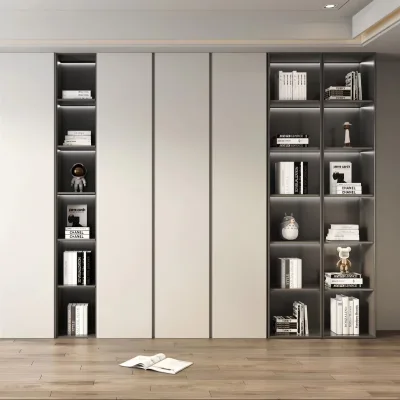
High Quality Wholesale Durable High-Capacity Space-Saving Bookshelf Storage Shelf
$81.02 - $409.17
MOQ: 5 Minimum

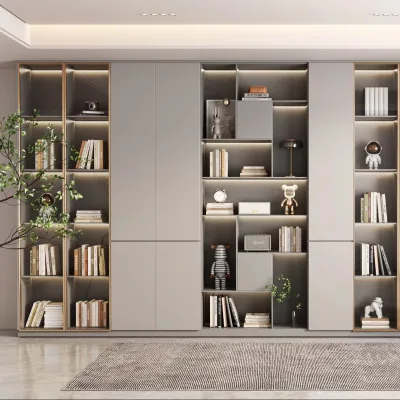


Weifang Fine Life Household Products Co., Ltd
- Verified by SGS
- Trading Company
- China Shandong
- Lead time30 days
- Avg. response≤ 5h
Main productsFurniture, Particle Boards, MDF Boards, Hand Woven Crafts
Main marketsEast Asia(Japan/ South Korea)

Honsoar New Building Material Co., Ltd.
- Verified by TUVRHEINLAND
- Combined
- China Shandong
- Lead time30 days
- Avg. response≤ 16h
Main productsParticle Board, Plywood, MDF, Kitchen Cabinet
Main marketsSouth America,Africa,Southeast Asia/ Mideast,Europe,Australia,North America


Comprehensive Sourcing Guide
Industrial Wooden Bookshelf Supplier Concentration and Factory Types
Industrial Wooden Bookshelf manufacturing clusters are primarily concentrated in China's Fujian and Guangdong provinces, where supply chains for wood processing and metal framing are deeply established. In Fujian, suppliers often operate as combined entities, blending trading and manufacturing capabilities to offer diverse product lines including display racks and metal bed frames alongside wooden bookshelves. These combined firms typically leverage local raw material access to produce items like the industrial style bookcase with medium-sized wooden shelves, ensuring a steady flow of materials for custom orders. Buyers should verify if a supplier's location aligns with these known clusters to confirm their capacity for rapid production and material sourcing.
In contrast, suppliers in Henan province frequently operate as dedicated manufacturers or factories, focusing heavily on steel furniture and metal bookshelves rather than purely wooden units. These factories often hold certifications like BSCI and ISO 9001, indicating a structured approach to quality control and labor standards. While some Guangdong-based entities function as trading companies or manufacturers, they may prioritize living room furniture and dropshipping services over heavy industrial shelving. When evaluating potential partners, buyers must distinguish between pure manufacturers who control the production line and trading companies that aggregate goods from various sources, as this distinction directly impacts customization flexibility and lead time reliability for Industrial Wooden Bookshelf projects.
How to Verify Industrial Wooden Bookshelf Suppliers
Verification of Industrial Wooden Bookshelf suppliers requires a rigorous check of their system certifications and third-party audit results to ensure operational legitimacy. Some suppliers in the current results have achieved TUVRHEINLAND verification, a significant indicator of compliance with international safety and quality standards. Additionally, manufacturers in Henan often display BSCI, ISO 14001, and QC 080000 certifications, which validate their environmental management and quality control processes. Buyers should request current certification documents rather than relying on profile badges, as these credentials confirm the supplier's ability to maintain consistent production standards for complex wooden and metal hybrid structures.
Beyond certifications, response time and verification status serve as critical metrics for assessing supplier reliability and communication efficiency. A supplier with a response time under five hours, such as those observed in the Henan cluster, demonstrates a high level of operational readiness and customer service commitment. Conversely, suppliers with response times exceeding seventeen hours may indicate slower internal processes or limited staffing. Buyers should also examine the "is_verified" status and cross-reference it with the supplier's claimed establishment years and capacity for OEM or ODM services. Confirming that a supplier can handle custom designs while maintaining a verified status ensures that the partnership will be stable and responsive throughout the sourcing lifecycle.
What to Compare Across Industrial Wooden Bookshelf Suppliers
Comparing suppliers requires a detailed analysis of lead times, minimum order quantities, and pricing structures to determine the best fit for specific project needs. Lead times in the current data range from twenty-three days for steel-focused manufacturers to forty-five days for combined entities in Guangdong, reflecting differences in production complexity and supply chain depth. Minimum order quantities also vary significantly, with some suppliers requiring as few as twenty pieces for metal library bookshelves while others demand one hundred units for wooden bookcases. Buyers must align these constraints with their inventory requirements and budget to avoid overstocking or facing unfulfillable order thresholds.
Pricing and product attributes provide another layer of comparison essential for cost-effective sourcing. Prices for industrial wooden bookshelves can range from approximately twenty dollars to nearly fifty dollars per unit, depending on dimensions, material quality, and customization options. Attributes such as frame material, door configuration, and maximum weight capacity directly influence the final cost and suitability for specific environments. For instance, a bookshelf with a steel frame and fire retardant standards will command a different price point than a simple wooden unit. Buyers should evaluate these product specifications alongside the supplier's main product list to ensure the offered items match the intended industrial application and aesthetic requirements.
Common Industrial Wooden Bookshelf Sourcing Risks
One significant risk in sourcing industrial wooden bookshelves is the variability in product specifications and material quality across different suppliers. While some products are described as having solid wood frames and specific dimensions like 1454518cm, others may lack detailed material breakdowns or use lower-grade composites. Without clear evidence of the frame material or wood style, buyers risk receiving units that do not meet durability expectations for heavy-duty industrial use. It is crucial to verify the exact composition of the wood and metal components, as well as the maximum weight capacity, to prevent structural failures in high-traffic environments.
Another critical risk involves the discrepancy between claimed customization capabilities and actual production capacity. Although many suppliers list "Customization: Available" and offer OEM or ODM services, the ability to execute complex custom designs depends heavily on the supplier's specific R&D capacity and factory setup. Some combined entities may struggle with intricate custom orders compared to dedicated manufacturers with established production lines. Additionally, the lack of standardized packaging or inconsistent product standards can lead to shipping damages or assembly issues. Buyers must confirm that the supplier has the technical expertise to handle custom requests without compromising the structural integrity or finish of the industrial bookshelf.
Industrial Wooden Bookshelf Regional Sourcing and Logistics
Regional sourcing strategies must account for the specific logistical advantages and challenges associated with different manufacturing hubs in China. Suppliers in Fujian and Guangdong benefit from proximity to major ports, which can streamline the export process for wooden and metal furniture. However, lead times in these regions can extend up to forty-five days due to the complexity of combined manufacturing and trading operations. In contrast, suppliers in Henan may offer shorter lead times of around twenty-three days but might require different shipping arrangements depending on their inland location. Buyers should factor in these regional differences when planning their supply chain timelines and inventory replenishment schedules.
Logistics planning also involves understanding the specific packing standards and shipping methods employed by different suppliers. Some manufacturers utilize carton packing for metal bookshelves, while others may use KD packing for wooden units to facilitate flat-pack shipping. The choice of packing method affects the volume of the shipment and the potential for damage during transit. Buyers should verify the packing details, such as the use of shipping containers or specific carton types, to ensure that the goods arrive in optimal condition. Additionally, understanding the origin of the product, whether it is explicitly stated as China or a specific province like Henan, helps in calculating accurate freight costs and import duties for the final destination.
Industrial Wooden Bookshelf Commercial Terms and Order Planning
Commercial terms for Industrial Wooden Bookshelf orders are heavily influenced by the supplier's established policies on payment, delivery, and after-sales support. While specific payment terms are not always explicitly detailed in initial product listings, the presence of escrow services or verified status often implies a structured transaction process. Buyers should clarify the payment schedule, such as deposits and balance payments, before placing an order to ensure financial security. Furthermore, understanding the supplier's capacity for handling large orders is vital, as some manufacturers may have limits on their monthly output that could delay fulfillment for bulk purchases.
Order planning must also consider the customization lead times and the potential for production delays. Suppliers offering custom designs may require additional time beyond the standard lead time to finalize prototypes and production runs. Buyers should plan for these extended timelines by maintaining a buffer in their inventory management system. Additionally, the availability of spare parts or replacement components for damaged units should be discussed during the negotiation phase. By aligning order quantities with the supplier's minimum order requirements and production capabilities, buyers can ensure a smooth procurement process and maintain a consistent supply of high-quality industrial wooden bookshelves for their operations.
FAQs
What is the price range for industrial wooden bookshelves?
Prices for industrial wooden bookshelves typically range from $20.00 to $66.00 per unit. Specific models vary based on material and size, with some options starting at $41.57 and others reaching $48.91. Buyers should check individual product listings for exact pricing tiers and volume discounts available from suppliers.
What is the minimum order quantity for these bookshelves?
Minimum order quantities vary by supplier and product type. Some manufacturers require a minimum of 100 units for standard wooden models, while others accept orders as low as 20 pieces for steel or specialized library bookshelves. Buyers must verify the specific MOQ for their chosen design and customization level.
How long does production take for custom orders?
Lead times generally range from 23 to 45 days depending on the supplier location and order complexity. Suppliers in Henan may offer faster turnaround times around 23 days, while those in Guangdong might require up to 45 days. Buyers should confirm specific timelines during the quotation process.
Are these bookshelves customizable for branding or design?
Yes, customization is widely available across many suppliers. Options include custom designs, specific colors like brown, and tailored dimensions such as 145*45*18cm or 165*30*15cm. Many manufacturers support OEM and ODM services, allowing buyers to modify styles, materials, and packaging to meet specific brand requirements.
What certifications do these suppliers hold?
Certifications vary by supplier, with some holding ISO 9001, ISO 14001, BSCI, and QC 080000 standards. Others may have HSE or GMP certifications. Verification services like TÜV Rheinland are also utilized by some suppliers. Buyers should request current certification documents to ensure compliance with their regional standards.
Where are these industrial bookshelves manufactured?
Manufacturing locations include China, specifically in the Fujian, Henan, and Guangdong provinces. Suppliers in these regions offer various materials, including wood and metal combinations. Buyers can filter results by location to prioritize suppliers based on logistical preferences or regional trade agreements.
How quickly do suppliers respond to inquiries?
Response times vary, with some suppliers replying within 3.10 hours and others taking up to 17.87 hours. Faster response times are often associated with trading companies or larger factories. Buyers should expect varying reply speeds and may need to follow up to ensure timely communication regarding quotes and samples.