Disposable Nonwoven Lab Coat Suppliers and Manufacturers
Compare 16 verified suppliers of disposable nonwoven lab coats based on location, lead times, certifications, and pricing. Review product attributes like material and sterilization methods before contacting factories in China Hubei and Shanghai; review the available evidence before requesting comparable quotations from suitable candidates.
Suppliers List

- Verified by BV
- Manufacturer/Factory
- China Hubei
- Lead time23 days
- Avg. response≤ 14h
Main productsDisposable Medical Supplies, Disposable Nonwoven Products, Disposable Polyethylene Products, Disposable Paper Consumables
Main marketsSouth America,Eastern Europe,Mid East,North America,Southeast Asia,Eastern Asia,Oceania,Western Europe,Africa

Shanghai Best Medical Products Company Limited
- Manufacturer/Factory
- China Shanghai
- Lead time30 days
- Avg. response≤ 9h
Main productsHospital, Lab, Dentist's, Industry Supplies, Beauty Salon, SPA, Bathroom Supplies, Restaurant, Kitchen, Hotel Supplies
Main marketsSouth America,Eastern Europe,Mid East,North America,Southeast Asia,Eastern Asia,Oceania,Western Europe,Africa

Xiantao Topmed Nonwoven Protective Products Co., Ltd.
- Verified by BV
- Combined
- China Hubei
- Lead time23 days
- Avg. response≤ 4h
Main productsSurgical Gown, Surgical Pack, Surgical Drape, Lsolation Gown, Lab Coat, Disposable Coverall, Bed Sheet, Disposable Cap, Face Mask, Dental Bib
Main marketsSouth America,Europe,North America

Anhui Guohong Industrial and Trading Co., Ltd.
- Verified by BV
- Combined
- China Anhui
- Lead time15 days
- Avg. response≤ 16h
Main productsFace Mask, Disposable Glove, Coverall, Bouffant Cap, Hairnet, Lab Coat, Shoe Cover, PE Apron, Sleeve Cover, Surgical Gown
Main marketsSouth America,Southeast Asia/ Mideast,Europe,North America

Xinxiang Safemed Disposables Co., Ltd.
- Verified by BV
- Combined
- China Henan
- Lead time30 days
- Avg. response≤ 9h
Main productsIsolation Gown, Boot Cover, Bed Sheet
Main marketsSoutheast Asia/ Mideast,Domestic,Europe


Factory Direct Price Disposable Nonwoven Lab Coat for Doctor One Time Use Lab Coats
$0.20 - $2.20
MOQ: 8000 Pieces

Disposable Non-Woven Long Sleeve Protective Lab Coat Factory Supply Lab Coat for Industry
$0.20 - $2.20
MOQ: 8000 Pieces

Hubei Mingerkang Health & Safety Appliances Co., Ltd.
- Verified by SGS
- Trading Company,Manufacturer/Factory
- China Hubei
- Lead time23 days
- Avg. response≤ 4h
Main productsFace Mask, Shoe Cover, Protective Clothing, Isolation Gown, Bouffant Cap, Surgical Gown, Lab Coat, Disposable Coverall, Disposable Face Mask, Medical Face Mask
Main marketsSouth America,Eastern Europe,Mid East,North America,Southeast Asia,Eastern Asia,Oceania,Western Europe,Africa

Hubei Ruichen Protective Products Co., Ltd
- Verified by CTI
- Combined
- China Hubei
- Lead time23 days
- Avg. response≤ 4h
Main marketsDomestic,Europe


CE Certification Non-Woven Disposable Work Uniform Protective Clothing Lab Coat
$0.15 - $0.30
MOQ: 20000 Pieces

HUBEI HEALTHWELL PROTECTIVE PRODUCTS CO., LTD.
- Verified by SGS
- Trading Company,Manufacturer/Factory
- China Hubei
- Lead time23 days
- Avg. response≤ 14h
Main productsHeadphone Cover, Coverall, Isolation Gown, Lab Coat, Bouffant Cap, Shoe Cpver, Surgical Gown, Face Mask, Clip Cap, Surgical Packs
Main marketsSouth America,Eastern Europe,Mid East,North America,Southeast Asia,Eastern Asia,Oceania,Western Europe,Africa

Wuhan Raytex Protection Co., Ltd.
- Verified by SGS
- Manufacturer/Factory
- China Hubei
- Lead time90 days
- Avg. response≤ 4h
Main productsShoe Cover, Disposable Coverall, Face Mask, Bouffant Cap, Lab Coat, Surgical Gown, Overshoes, Mob Cap, Hood, Respirator
Main marketsSouth America,Eastern Europe,Mid East,North America,Southeast Asia,Eastern Asia,Oceania,Western Europe,Africa


Disposable Nonwoven Microporous PP SMS Lab Coat with Button Zipper for Laboratory
$0.50 - $0.60
MOQ: 10000 pc

Wellmien Healthcare Tech. (Suzhou) Co., Ltd.
- Verified by BV
- Trading Company
- China Jiangsu
- Lead time15 days
- Avg. response≤ 2h
Main productsUnderpads, Surgical Pack, Wound Care, Emergency Blanket, Face Masks, Surgical Masks, Shoe Cover, First Aid Product, Emergency Transfer Sheet, Body Bag
Main marketsSouth America,Southeast Asia/ Mideast,Europe

Lightweight Protective Lab Coat Disposable Nonwoven Medical Visitor Lab Coat
$0.40 - $0.43
MOQ: 10000 Pieces


Disposable Protective Lab Coat Nonwoven Breathable Visitor Coat for Medical Use
$1.20 - $1.90
MOQ: 5000 Pieces

Nonwoven Protective Disposable White Lab Coat for Medical Laboratory Industrial Use
$1.20 - $1.90
MOQ: 5000 Pieces

Anhui Mingde Medical Care Products Co., Ltd.
- Trading Company
- China Anhui
- Lead time15 days
- Avg. response≤ 6h
Main productsSterilization Pouch, Dental Bibs, Examination Paper Couch Roll, Protective Bed Sheet, Dental Accessories, Disposable Underpad, Sterilized Packaging, Dental Appliance, Disposable Medical Consumables, Disposable Beauty Items
Main marketsSouth America,Africa,Southeast Asia/ Mideast,East Asia(Japan/ South Korea),Europe,Australia,North America

Qingdao Trusty Industry & Trade Co., Ltd.
- Verified by TUVRHEINLAND
- Manufacturer/Factory
- China Shandong
- Lead time23 days
- Avg. response≤ 6h
Main productsChemical Protective Clothing, Disposable Coveralls, PPE Suits, Non Woven Fabric, Isolation Gown, Shoe Covers, Safety Clothing, Medical Supplies Consumables, Disposable Towel, Civil Disposable Protective Mask
Main marketsSouth America,Eastern Europe,Mid East,North America,Southeast Asia,Eastern Asia,Oceania,Western Europe,Africa


Professional Disposable Non Woven Lab Coat White with Button Closure for Science
$0.50 - $0.70
MOQ: 500 Pieces

Anhui Jinye Industrial Co., Ltd.
- Verified by SGS
- Trading Company,Manufacturer/Factory
- China Anhui
- Lead time120 days
- Avg. response≤ 7h
Main productsFace Mask, Nitrile Glove, PE Glove, PE Apron, CPE Gown, Coveralls, Disposable Isolation Gown, Shoe Cover, Lab Coat, Clip Cap
Main marketsSouth America,Eastern Europe,Mid East,North America,Southeast Asia,Eastern Asia,Oceania,Western Europe,Africa

HUBEI BEST IMPORT AND EXPORT CO., LTD.
- Verified by TUVRHEINLAND
- Trading Company
- China Hubei
- Lead time0 days
- Avg. response≤ 3h
Main productsNon Woven Face Mask, Disposable Cap, Disposable Shoe Cover, Disposable Gown, Disposable Coverall, Disposable Lab Coat, Disposable Bed Sheet Sets, Disposable KN95 Mask, Disposable Scrub Suits, Non Woven Farbics
Main marketsSouth America,Africa,Southeast Asia/ Mideast,Europe,North America


Wholesale Disposable PP Non-Woven Visit Gown Lab Coat with Two Pockets
$0.19 - $0.19
MOQ: 10000 Pieces
Xiantao Hank Protective Products Co., Ltd.
- Verified by TüVRheinland
- Manufacturer, Trading Company
- Lead time30 days
- Avg. response≤ 4h
Main productsSurgical Gown, Isolation Gown, Face Mask, Coverall, Shoe Cover
Main marketsDomestic Market(35%), Southern Europe(20%), Africa(18%)
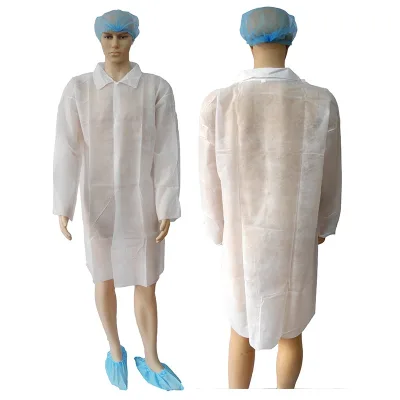
Non Woven Disposable Lab Coat Visitor Gown Disposable Nonwoven Long Lab Dressing Coat S M L XL 2XL
$0.20 - $0.55
MOQ: 5 pieces

- Verified by BV
- Trading Company,Manufacturer/Factory
- China Jiangsu
- Lead time23 days
- Avg. response≤ 6h
Main productsPPE, Work Wear, PVC Boots, Nitrile Gloves, Uniform, Safety Glassess, Coveralls, Scrub, Lab Coat, Safety Harness
Main marketsSouth America,Eastern Europe,Mid East,North America,Southeast Asia,Eastern Asia,Oceania,Western Europe,Africa


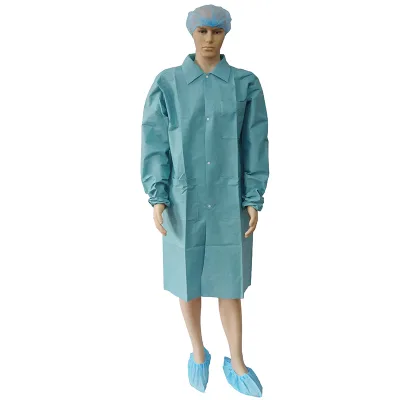
Blue Disposable PP Nonwoven Dustproof Long Sleeve Medical Lab Coat with Collar
$0.29 - $0.49
MOQ: 100 Pieces

$0.40 - $0.50
MOQ: 100 Pieces


Comprehensive Sourcing Guide
Disposable Nonwoven Lab Coat Supplier Concentration and Factory Types
Current data indicates a concentration of manufacturing facilities in China, specifically within the Hubei and Shanghai regions. These locations host factories that specialize in disposable medical supplies, nonwoven products, and polyethylene items. The primary supplier type observed is the Manufacturer/Factory, which suggests direct production capabilities rather than pure trading. These entities often list capabilities for OEM, ODM, and own-brand production, such as the Everest brand noted in capacity records. This concentration allows buyers to find specialized production lines for items like disposable nonwoven lab coats, visitor gowns, and surgical coveralls directly from the source.
When evaluating the factory type, buyers should look for explicit declarations of manufacturing status rather than trading company labels. The presence of specific product attributes like reinforced spunlace, SMS, or PP materials often points to in-house production. Factories in these regions typically handle the full lifecycle from raw material processing to final packing, such as the 10 pieces per bag and 100 pieces per carton configurations seen in product data. Buyers must verify if the supplier claims to be a factory by checking for specific production equipment details or factory audit reports, as trading companies may simply resell goods from these Hubei or Shanghai-based plants without adding value to the manufacturing process.
How to Verify Disposable Nonwoven Lab Coat Suppliers
Verification begins with checking for third-party audit credentials, such as BV verification, which confirms the supplier's operational legitimacy. In the current dataset, specific suppliers display BV status alongside ISO 9001 system certifications, providing a baseline for quality management reliability. Buyers should also scrutinize product-specific certifications like SGS, which appear on junior lab coat listings, to ensure the materials meet safety standards for medical or industrial use. These credentials are critical because they validate that the factory adheres to recognized quality protocols rather than relying solely on self-declared claims.
Beyond certifications, response time and lead time serve as practical indicators of supplier reliability and operational efficiency. Data shows response times ranging from approximately 8 to 14 hours, with lead times varying between 23 and 30 days. A supplier with a faster response time, such as the 8.28-hour average observed, may indicate a more responsive sales team capable of handling urgent inquiries. However, buyers must cross-reference these metrics with the actual lead time required for production and shipping. Verifying these numbers through direct communication helps confirm that the supplier can meet delivery schedules without compromising on the quality of the disposable nonwoven lab coats or other protective clothing items.
What to Compare Across Disposable Nonwoven Lab Coat Suppliers
Buyers should compare minimum order quantities (MOQ) and pricing structures to align with their procurement budget and volume needs. The observed data reveals significant variation, with some listings showing an MOQ of 50 units while others require 5,000 units. Price points also fluctuate, ranging from as low as $0.01 to $0.25 per unit depending on the specific product model and material composition. Comparing these figures helps buyers identify suppliers that offer flexible terms for smaller orders versus those that require bulk commitments for cost efficiency. This comparison is essential for determining the total landed cost and ensuring the supplier fits the buyer's scale of operation.
Material composition and customization options are equally critical dimensions for comparison. Suppliers offer various materials including SMS, spunbond, and polyethylene, with some providing options for logo printing and others offering standard unicolor designs. The ability to customize, such as adding a logo or selecting specific colors like white, blue, or green, varies by supplier and product line. Additionally, features like ethylene oxide sterilization status and quality guarantee periods, often listed as two years, differ across listings. Buyers must evaluate which combination of material, customization, and warranty terms best suits their specific application, whether for hospital surgery, laboratory work, or industrial use, to ensure the final product meets their operational requirements.
Common Disposable Nonwoven Lab Coat Sourcing Risks
One significant risk involves the inconsistency of product specifications, particularly regarding sterilization and material weight. Some listings explicitly state "Without Ethylene Oxide Sterilization," while others may imply different processing methods. Buyers must verify if the lab coats require sterilization for their intended use, as non-sterile items may be unsuitable for surgical environments. Furthermore, material weight variations, such as 30g versus 55g SMS, directly impact durability and protection levels. Failing to confirm these specific attributes before ordering can lead to receiving products that do not meet safety standards or fail during critical procedures, resulting in potential liability and operational disruptions.
Another risk stems from the variability in lead times and the potential for delays in production or shipping. While some suppliers list lead times of 23 days, others indicate 30 days, and sample delivery times can range from 7 to 9 days. These discrepancies can complicate supply chain planning, especially for time-sensitive medical or industrial projects. Buyers should also be cautious of suppliers who do not clearly define their packing methods or origin locations, as this can affect customs clearance and import regulations. Ensuring that the supplier provides clear documentation on the product origin, such as Hubei or Shanghai, and adheres to agreed-upon timelines is vital to mitigate these logistical and compliance risks.
Disposable Nonwoven Lab Coat Regional Sourcing and Logistics
Sourcing from China, specifically the Hubei and Shanghai regions, offers access to established manufacturing clusters for disposable medical supplies. These regions are known for their concentration of factories producing nonwoven products, including lab coats, gowns, and protective clothing. The proximity of raw material suppliers and finished goods manufacturers in these areas often facilitates efficient production cycles. However, buyers must account for the logistics involved in shipping from these inland and coastal hubs to international destinations. Understanding the specific port of origin and the associated freight costs is necessary to accurately calculate the total cost of goods and ensure timely delivery.
Logistics planning should also consider the specific packing configurations provided by suppliers, such as 10 pieces per bag and 100 pieces per carton. These standard packing methods affect how goods are loaded into containers and can influence shipping efficiency and cost. Buyers should verify if the supplier can accommodate custom packing requirements if their distribution channels demand different unit counts or labeling. Additionally, the origin location impacts the transit time and potential customs duties. By understanding the regional logistics landscape, buyers can better estimate delivery windows and select suppliers whose shipping capabilities align with their distribution network requirements, ensuring a smooth flow of goods from the factory to the end user.
Disposable Nonwoven Lab Coat Commercial Terms and Order Planning
Commercial terms regarding payment and order planning must be clearly defined to avoid disputes and ensure smooth transaction execution. Buyers should verify the specific payment terms, such as escrow availability, which provides a layer of financial security for both parties. While the current data does not explicitly list all payment methods, the presence of verified suppliers suggests that secure transaction channels are likely available. Establishing clear terms for deposits, balance payments, and penalties for late delivery is crucial for managing cash flow and maintaining a healthy business relationship with the supplier.
Order planning requires a detailed review of the product attributes, including size ranges, color options, and material specifications. The data shows sizes ranging from S to XL with specific dimensions, and colors including white, blue, green, and yellow. Buyers must ensure that the selected product model matches their inventory needs and that the supplier can consistently produce these specifications. Additionally, the quality guarantee period, often cited as two years, should be factored into the long-term planning and risk assessment. By carefully aligning commercial terms with precise product requirements, buyers can optimize their procurement strategy and minimize the risk of receiving non-compliant or substandard disposable nonwoven lab coats.
FAQs
What is the price range for disposable nonwoven lab coats?
Prices for disposable nonwoven lab coats typically range from $0.01 to $0.25 per unit depending on material and specifications. Basic polypropylene options start near $0.01, while SMS or reinforced nonwoven variants cost between $0.15 and $0.25. Minimum order quantities often influence the final unit cost, with bulk orders of 5000 pieces yielding lower rates than smaller batches of 50 units.
What certifications do these lab coats hold?
Manufacturers of disposable nonwoven lab coats commonly hold ISO 9001 system certification to ensure quality management standards. Some specific product lines also carry SGS certification for material safety and compliance. Buyers should verify that the specific coat model matches their regulatory requirements, as sterilization methods like ethylene oxide are often excluded from standard nonwoven garments.
How long does production take for these coats?
Standard lead times for disposable nonwoven lab coats generally range from 23 to 30 days after order confirmation. Sample production is faster, typically requiring 7 to 9 days for delivery. These timelines apply to manufacturers in China, including facilities in Hubei and Shanghai, and may vary based on customization needs like logo printing or specific material thickness.
Can I customize the lab coats with my logo?
Customization is available for most disposable nonwoven lab coats, including options for logo printing. Some models support with logo printing, while others are supplied without it. Buyers can also select specific colors like white, blue, green, or yellow, and choose materials such as SMS, spunlace, or polypropylene to meet their specific institutional or industrial branding requirements.
What materials are used for these disposable coats?
Disposable nonwoven lab coats are primarily made from polypropylene, SMS, or spunlace materials. SMS stands for Spunbond-Meltblown-Spunbond, offering enhanced barrier protection. Weights vary from 20-50gsm for standard use to 45-55gsm for SMS variants. These materials provide features like anti-static, waterproof, and wearproof properties suitable for hospital, laboratory, or industrial environments.
What is the minimum order quantity for these items?
Minimum order quantities for disposable nonwoven lab coats vary significantly by supplier and product type. Some manufacturers accept orders as low as 50 pieces for specific models, while others require a minimum of 5000 pieces for bulk pricing. Buyers should confirm the MOQ with the supplier, as it directly impacts the unit price and shipping logistics for the order.