Ebook Reader Suppliers and Manufacturers in China
Discover 13 verified suppliers offering Ebook Reader devices with varying lead times, response speeds, and certifications. Buyers can compare locations, MOQs, and product specifications to source the right device. Contact suppliers directly to request quotes and verify capabilities; review the available evidence before requesting comparable quotations from suitable candidates.
Suppliers List

Shenzhen Letine Technology Co., Ltd.
- Verified by CTI
- Combined
- China Guangdong
- Lead time15 days
- Avg. response≤ 5h
Main productsPC Monitor, Advertising Player, Demo Server, Gaming Monitor, Rugged Tablet, Ai Solution, Graphics Card, Motherboard
Main marketsSouth America,Africa,Southeast Asia/ Mideast,Europe,Australia,North America

Advanced Color Screen E-Reader Multimedia E-book Device 4GB+32GB Ebook Reader
$219.00 - $243.00
MOQ: 1 Pieces

Premium E-Ink Epaper Tablet Ebook Reader for Ultimate Reading Experience
$181.00 - $205.00
MOQ: 1 Pieces

Ultra HD Full Color E-Ink Ebook Reader for Reading Writing and Meeting
$219.00 - $243.00
MOQ: 1 Pieces


Shenzhen Vitek Electronics Co., Ltd.
- Verified by BV
- Manufacturer/Factory
- China Guangdong
- Lead time23 days
- Avg. response≤ 6h
Main productsLaptop, Tablet PC, Digital Signage, Mini PC, LCD Monitor, All in One PC, Interactive Flat Panel, Advertising Screen, Self Payment Kiosk, POS Tablet
Main marketsSouth America,Eastern Europe,Mid East,North America,Southeast Asia,Oceania,Western Europe,Africa

Shenzhen Sunson International Science & Technology Co., Ltd.
- Manufacturer
- China Guangdong
- Lead time15 days
- Avg. response≤ 25h
Main productsDocument Camera, Visualizer, Portable Visualizer, Portable Scanner, Projectors, Business Card Scanner, Mini Scanner, DLP Projectors, Interactive Whiteboard, LED Projector
Main marketsSoutheast Asia/ Mideast,Domestic,Europe,North America

Tianjin Caile Printing Co., Ltd
- Verified by TUVRHEINLAND
- Trading Company
- China Tianjin
- Lead time60 days
- Avg. response≤ 8h
Main productsPlanner, Journal, Notebook, Calendar, Box, Diary, PU Leather Binder, Pop up Book, First Aid Kit, Gift Set
Main marketsEurope,Australia,North America

Ebook 7 Inch Optional WiFi Bt Ebook Reader 4/8/16 GB Option Quad Core A4 Ebook Reader
$50.00 - $300.00
MOQ: 10 Pieces

6inch Ebook Reader E-Reader Wholesale OEM Eink Touch Screen E Paper Ereader Ebook Eink Reader
$50.00 - $300.00
MOQ: 10 Pieces


6" E Book Reader BLE WiFi Pdf Format E Ink Touch Screen E Paper Ereader Ebook
$50.00 - $300.00
MOQ: 10 Pieces

$50.00 - $300.00
MOQ: 10 Pieces

Shenzhen Huayi Technology Co., Ltd.
- Manufacturer
- Lead time旺季: "1 - 100":14,"> 100":"To be negotiated", 淡季: "1 - 100":14,"> 100":"To be negotiated"
- Avg. response≤ 8h
Main productssmart esl,eink products,pcb&pcba,smart home appliances,smart plug & power strip
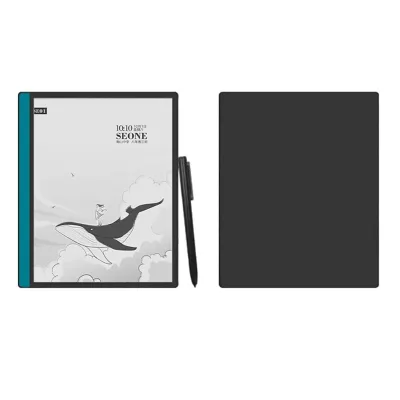
$266.09 - $286.56
MOQ: 100 Minimum
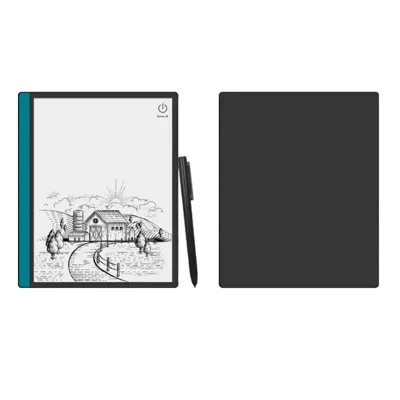
$266.27 - $286.75
MOQ: 100 Minimum
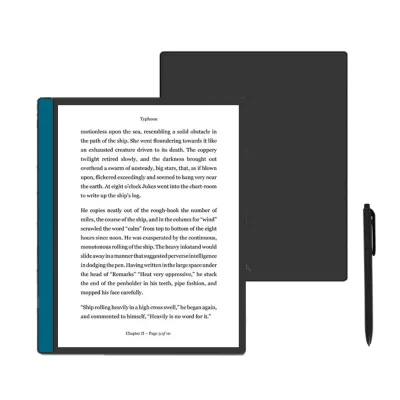
$266.27 - $286.75
MOQ: 100 Minimum
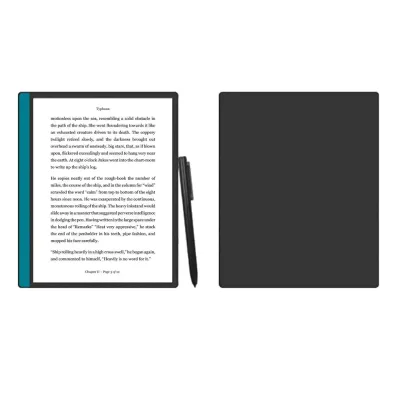
$266.27 - $286.75
MOQ: 100 Minimum
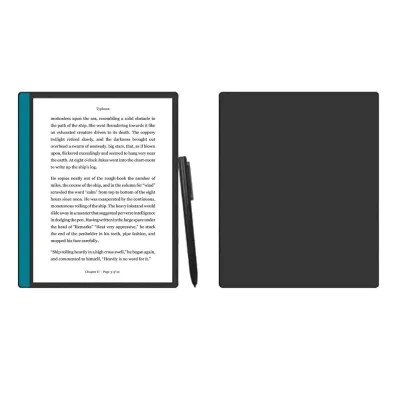
$267.01 - $287.55
MOQ: 100 Minimum
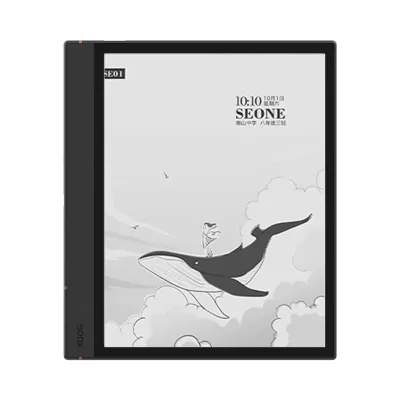
$267.01 - $287.55
MOQ: 100 Minimum

Qingdao Ansenke Electronics CO., LTD
- Verified by TUVRHEINLAND
- Combined
- China Shandong
- Lead time30 days
- Avg. response≤ 7h
Main productsE Ink E-Paper Display, Rotary Knob Display Module, E-Paper ESL / Smart Labels, Monitor, Touch Screen, LCD, Drive Board, Monochrome LCD Display, Capacitive Touch Panel, Consumer Electronics
Main marketsDomestic,Europe


E-Reader E Paper Touch Screen E-Reader Android Eink Ereader E Book Reader E-Ink Ebook Reader
$379.99 - $409.99
MOQ: 1 Pieces

Best Ebook Reader Eink Tablet PC, Ereader 13.3'' Flexible Screen Android E-Ink Reader
$859.00 - $879.99
MOQ: 1 Pieces

6 Inch E Ink Book Reader Android Pdf E-Reader Note Tablet with Free Online Apps
$49.00 - $55.00
MOQ: 1 Pieces


Pocket Slim E-Ink Reader Easy Carry WiFi Pdf Format 6 Inch Ebook Reader OEM E Reader Ebook
$24.09 - $27.59
MOQ: 1 Pieces

Yiwu Aurora Smart Technology Co., Ltd.
- Trading Company
- Zhejiang, China
- Lead time30 days
- Avg. response≤ 4h
Main productsSmart Home System Solution,Smart Gateway,Smart Switch,NB-IOT system,Sensors
Main marketsDomestic Market(25.00%), Western Europe(25.00%), North America(25.00%), Eastern Europe(5.00%), Central America(5.00%), South America(5.00%), Mid East(5.00%), Southeast Asia(5.00%)
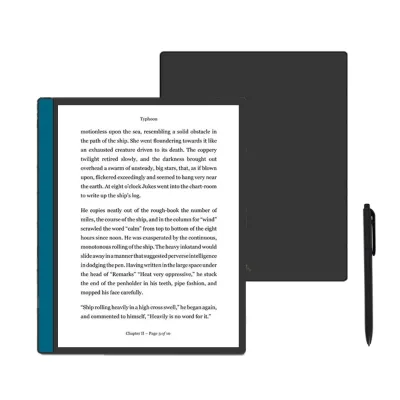
$267.93 - $288.54
MOQ: 100 Minimum
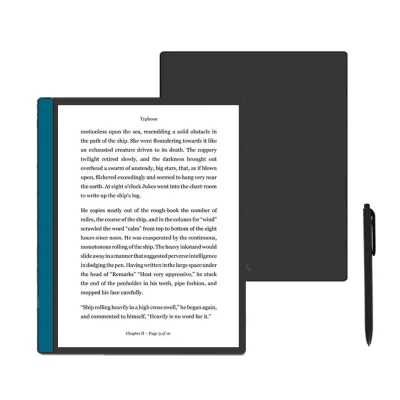
$267.93 - $288.54
MOQ: 100 Minimum
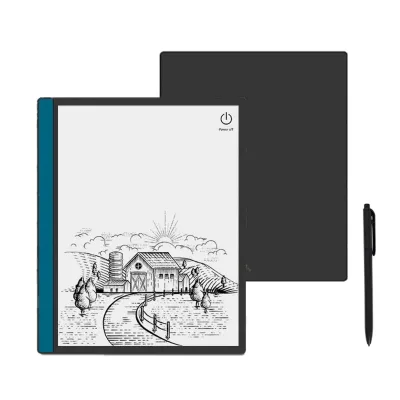
$267.93 - $288.54
MOQ: 100 Minimum
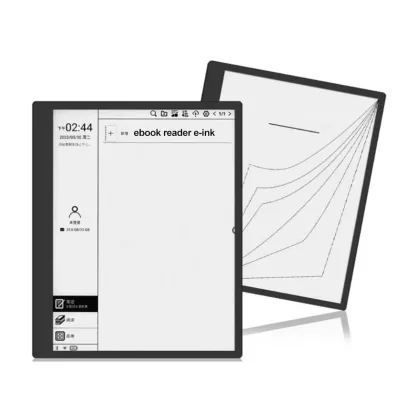
$267.93 - $288.54
MOQ: 100 Minimum

$268.12 - $288.74
MOQ: 100 Minimum
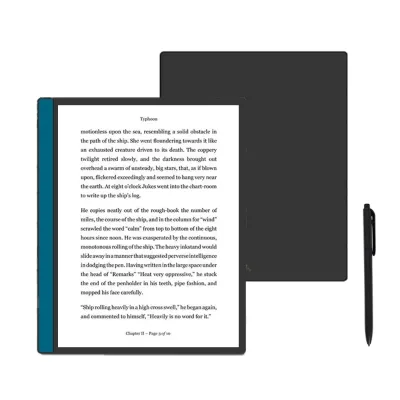
$267.93 - $288.54
MOQ: 100 Minimum

Quanzhou Hecere Electronic Co., Ltd.
- Verified by TUVRHEINLAND
- Manufacturer/Factory
- China Fujian
- Lead time0 days
- Avg. response≤ 9h
Main productsPlastic Business/Gift/Membership Card, Membership Cards Promotional Cards, VIP Cards Photo Cards, Promotional/VIP/Photo/Discount Cards, Sle4428(Blank Card)/Sle4428/Sle4442, MIFARE/Ti High(Low) Frequency IC / I-Cod, MIFARE/I-Code Sli IC Cards, Contactless ID /RFID/RFID Smart Card Co, Contactless ID /RFID/RFID Smart Card, Die Cut/Metal Card Card Reader
Main marketsSouth America,Eastern Europe,Mid East,North America,Southeast Asia,Eastern Asia,Oceania,Africa

Smart Libraray Books Detetor RFID Library Management ISO15693 Library Reader
$998.00 - $1307.00
MOQ: 1 Pieces

Smart Modern Library Books Automation Management Equipment RFID Reader
$998.00 - $1307.00
MOQ: 1 Pieces

Library 24/7 Hour Self-Service Book Return RFID Reader Machine Wall Embedded
$6500.00 - $7000.00
MOQ: 1 Pieces


Shenzhen Chuangxin Reciprocal Electronic Technology Co., Ltd.
- Manufacturer, Trading Company, Distributor/Wholesaler
- Guangdong, China
- Lead time15 days
- Avg. response≤ 1h
Main productsElectronics Sales,Audio equipment sales,Domestic and foreign trade agency,Goods import and export,Luggage Bags & Cases
Main marketsWestern Europe(40.00%), Northern Europe(10.00%), North America(10.00%), South Asia(10.00%), Eastern Europe(10.00%), South America(10.00%), Eastern Asia(5.00%), Southern Europe(5.00%)
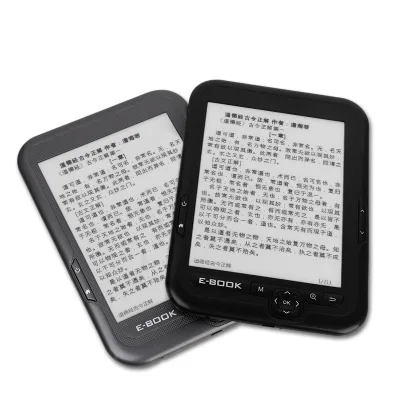
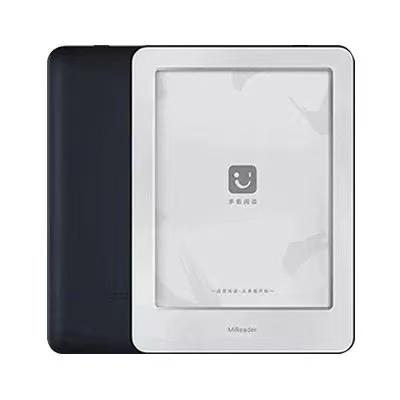
BK-6006 Eink Screen E-reader 6inch Ebook Reader with Linux System 4gb 8gb 16gb
$52.00 - $69.90
MOQ: 2 pieces
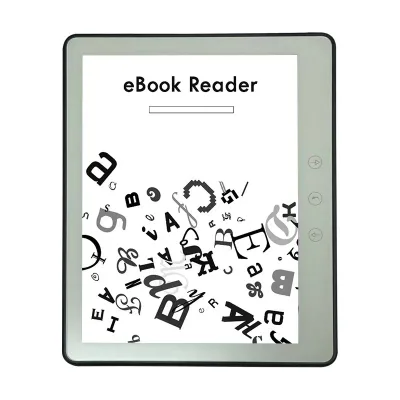
Wholesale E-Reader 6-inch Quad-core CPU for Ink Screen High Quality E-reader
$88.00 - $95.00
MOQ: 5 pieces
- Verified by TüVRheinland
- Manufacturer, Trading Company
- Lead time0 days
- Avg. response≤ 4h
Main productsARM Embedded Edge Al, Industrial ARM AIPC, ARM Embedded Board, Edge AIoT Devices, Epaper Solution
Main marketsNorth America(50%), Eastern Asia(18%), Western Europe(10%)

$319.90 - $329.90
MOQ: 100 pieces
$326.27 - $336.47
MOQ: 1 pieces
- Trading Company
- Taiwan, China
- Lead time45 days
- Avg. response≤ 10h
Main productsadvertising display,operating system,smart display,ePaper,software development
Main marketsDomestic Market(90.00%), Eastern Europe(5.00%), Eastern Asia(5.00%)
Hangzhou Hangkai Technology Co., Ltd.
- Trading Company
- Zhejiang, China
- Lead time7 days
- Avg. response≤ 5h
Main productsMagnetic Cable, Wireless Charger , Silicone TV Remote Case, HDMI Cable, Keyboard
Main marketsNorth America(30.00%), Domestic Market(30.00%), South America(10.00%), Western Europe(10.00%), Southeast Asia(10.00%), Eastern Europe(5.00%), Mid East(3.00%), Africa(2.00%)

Shenzhen Baoan Kunyuan Business Center
- Manufacturer
- Guangdong, China
- Lead time0 days
- Avg. response≤ 3h
Main productseink tablet,e reader,eink smartphone,eink monitor
Main marketsNorth America(20.00%), Eastern Europe(15.00%), Domestic Market(15.00%), South America(10.00%), Eastern Asia(10.00%), Western Europe(10.00%), Southern Europe(10.00%), Northern Europe(5.00%), South Asia(5.00%)


Comprehensive Sourcing Guide
Ebook Reader Supplier Concentration and Factory Types
The current supplier landscape for ebook readers reveals a distinct concentration of manufacturing capabilities within China, specifically in the Guangdong region. This area serves as a primary hub for electronics assembly, where suppliers offer a mix of combined company types and dedicated manufacturers. Some entities operate as combined firms capable of handling diverse product lines, while others function strictly as manufacturers or factories specializing in specific device categories. The observed data indicates that suppliers in this cluster often list main products ranging from PC monitors and gaming devices to specialized e-ink tablets and digital signage, suggesting a robust ecosystem for electronic component sourcing.
When evaluating the factory types available, buyers must distinguish between combined entities and pure manufacturers. The evidence shows that some suppliers possess ODM and OEM capabilities alongside their own brands, allowing for significant customization of Ebook Reader designs. Others are identified strictly as manufacturers or factories, which may imply a more focused production line for items like document cameras or visualizers alongside their e-reader offerings. Understanding this distinction is critical because combined suppliers might offer broader logistical flexibility, whereas dedicated manufacturers could provide deeper technical expertise in specific display technologies. Buyers should verify the exact company type to ensure alignment with their volume and customization requirements before proceeding with negotiations.
How to Verify Ebook Reader Suppliers
Verification of Ebook Reader suppliers relies heavily on third-party audit results and specific certification statuses rather than self-declared claims. The available data indicates that some suppliers have undergone verification processes by recognized bodies such as CTI or BV, which provides a layer of confidence regarding their operational legitimacy. However, not all suppliers in the current results display system certifications like ISO 14001 or ISO 9001, and some show a status of NIL for system certification. Buyers must treat the absence of a visible certification as a signal to request documentation directly, rather than assuming the supplier lacks quality standards. Relying solely on the presence of a verification badge without cross-referencing the specific audit scope can lead to incomplete due diligence.
Beyond verification badges, buyers should scrutinize the specific attributes listed in supplier profiles to confirm their operational capacity. The evidence highlights that response times vary significantly, with some suppliers showing a response time of 4.28 hours while others take up to 25 hours. This variance can indicate differences in staffing levels or operational efficiency that directly impact communication during the sourcing process. Additionally, the presence of specific product attributes, such as touch screen capabilities or memory capacity details, serves as a proxy for the supplier's technical depth. Buyers should request proof of these attributes through sample testing or detailed specification sheets to ensure the supplier can deliver the exact technical requirements for their Ebook Reader projects.
What to Compare Across Ebook Reader Suppliers
Comparing suppliers requires a systematic analysis of lead times, minimum order quantities, and pricing structures to determine the best fit for specific business needs. The observed data reveals a wide range in lead times, with some suppliers offering a 15-day turnaround while others require 23 days or more. Similarly, minimum order quantities vary drastically, with some products available for a single unit while others mandate orders of 500 or 1000 units. These differences are critical for buyers balancing inventory costs against production speed. A supplier with a low MOQ might be ideal for prototyping, whereas a supplier with a longer lead time might offer better economies of scale for mass production.
Pricing and product specifications also form a key comparison dimension across the supplier base. The evidence shows price points ranging from approximately $45 to over $400 depending on the device features, such as screen size, memory capacity, and display technology. Some suppliers offer 10.3-inch color e-ink readers with 32GB storage, while others provide 6-inch black-and-white models with 4GB storage. Buyers must align these specifications with their target market requirements to avoid overpaying for unnecessary features or under-specifying for their audience. Additionally, the availability of customization options, such as logo printing or software pre-loading, should be compared alongside base pricing to calculate the true total cost of ownership for the project.
Common Ebook Reader Sourcing Risks
One significant risk in sourcing ebook readers involves the discrepancy between advertised specifications and actual product performance, particularly regarding display technology and battery life. The data shows a mix of e-ink and LCD screen types, with some products claiming color capabilities while others are limited to black-and-white displays. Buyers face the risk of receiving units that do not match the intended user experience if they do not rigorously verify the screen type and color depth. Furthermore, memory capacity claims, such as 4GB versus 32GB, must be validated through independent testing to ensure the device can handle the required file formats and applications without performance degradation.
Another critical risk is the variability in supply chain reliability and after-sales support, often reflected in response times and certification gaps. Suppliers with slower response times, such as those taking 25 hours to reply, may struggle to address urgent production issues or quality concerns during the manufacturing cycle. The absence of system certifications like ISO 9001 in some profiles suggests a potential lack of standardized quality control processes, increasing the risk of inconsistent product quality. Buyers should mitigate these risks by establishing clear communication protocols and requesting detailed quality assurance plans before placing large orders, ensuring that any deviations from the agreed specifications can be addressed promptly and effectively.
Ebook Reader Regional Sourcing and Logistics
Sourcing ebook readers from the identified region of China, specifically Guangdong, offers access to a mature electronics supply chain but requires careful logistics planning. The concentration of manufacturers in this area facilitates the assembly of complex devices like e-ink tablets and digital signage, yet it also means that shipping times and customs procedures can vary based on the specific port of origin. Buyers should account for the 15 to 23-day lead times observed in the data when planning their inventory replenishment cycles, as delays in production can cascade into significant delays in delivery. Understanding the local logistics infrastructure is essential for estimating the total time from order placement to final receipt at the destination warehouse.
Logistics costs and packaging standards also play a pivotal role in the overall sourcing strategy for this region. The evidence indicates that products are typically packed in cartons or standard packaging, which must be evaluated for durability during international transit. Buyers should verify if the packaging meets specific export requirements to prevent damage to sensitive e-ink screens during shipping. Additionally, the origin of the components, such as the display panels and memory chips, may influence the final product's reliability and compliance with international standards. Buyers should request detailed packing lists and shipping documentation to ensure that the logistics process aligns with their distribution network and that all regulatory requirements for importing electronics are met.
Ebook Reader Commercial Terms and Order Planning
Commercial terms for ebook readers are heavily influenced by the minimum order quantities and pricing tiers observed across different suppliers. The data shows that some suppliers accept orders as low as one unit, while others require minimums of 500 or 1000 units, which directly impacts the buyer's ability to test the market or scale production. Buyers must negotiate payment terms that align with these MOQs, potentially using escrow services to protect funds until the goods are verified. The price ranges, which span from under $50 to over $400, suggest that volume discounts may be available for larger orders, but these should be confirmed through direct negotiation rather than assumed based on listed prices.
Order planning must also consider the customization capabilities and production lead times to ensure timely market entry. Suppliers offering ODM and OEM services can tailor products to specific brand requirements, but this customization often extends the lead time beyond the standard 15 to 23 days observed for generic models. Buyers should factor in the time required for design approval, prototyping, and mass production when creating their project timelines. Additionally, the response times of suppliers, which range from a few hours to a full day, should be considered when planning for rapid issue resolution. A robust order plan includes buffer time for these variables to prevent delays in launching the Ebook Reader product line.
FAQs
What is the typical lead time for ebook readers?
The typical lead time for these devices ranges from 15 to 23 days depending on the specific supplier and order volume. Some manufacturers offer faster turnaround times while others require longer production schedules. Buyers should confirm exact delivery dates before placing large orders to ensure timely receipt of goods.
What are the minimum order quantities for these devices?
Minimum order quantities vary significantly across suppliers, ranging from a single unit to 1000 units for bulk purchases. Some vendors accept small orders starting at one piece, while others require minimums of 500 or 1000 units for specific models. Buyers must check individual product listings to determine the applicable MOQ.
Where are these Ebook Reader manufacturers located?
Most manufacturers supplying these devices are located in Guangdong, China. This region is a major hub for electronics manufacturing and offers a wide range of options for buyers. Buyers should verify specific factory locations when evaluating suppliers to ensure they meet their logistical and sourcing requirements.
What certifications do these suppliers hold?
Some suppliers hold ISO 9001 and ISO 14001 certifications for quality and environmental management. Other suppliers may not display specific system certifications in their profiles. Buyers should request current certification documents directly from suppliers to verify compliance with international standards before finalizing any procurement agreements.
What is the price range for 10.3 inch models?
Prices for 10.3 inch models typically range from 181 to 423 US dollars depending on features and memory capacity. Higher specifications like 32GB storage or full color screens command higher prices. Buyers should compare specific product listings to find the best value for their budget and technical requirements.
Do these devices support touch screen functionality?
Many models feature touch screen capabilities, while some basic versions do not include this feature. Buyers can find both touch and non-touch options across different product listings. It is essential to check product attributes carefully to ensure the selected device meets the desired user interface requirements.
What memory capacities are available for these readers?
Available memory capacities include 4GB and 32GB options for various Ebook Reader models. Some devices support external storage expansion via TF cards up to 32GB. Buyers should verify the internal storage specifications in product details to ensure sufficient space for their digital library needs.
How quickly do suppliers typically respond to inquiries?
Supplier response times vary, with some responding within 4 hours and others taking up to 25 hours. Faster response times are often associated with suppliers offering higher service levels. Buyers should consider response speed when selecting partners to ensure efficient communication throughout the sourcing process.