Freestanding Modern Belt Display Stand Suppliers and Manufacturers
Compare 15 verified suppliers offering Freestanding Modern Belt Display Stand options with customizable sizes, metal materials, and powder coating finishes. Review lead times, certifications, and MOQs to select the right partner for your retail needs today; review the available evidence before requesting comparable quotations from suitable candidates.
Suppliers List

Suzhou Highbright Enterprise Limited
- Combined
- China Jiangsu
- Lead time30 days
Main productsShopping Trolley, Shopping Cart, Gondola Shelf, Display Shelf, Shop Fittings, Store Fixtures, Roll Container, Shopping Basket, Checkout Counter, Swing Gate
Main marketsSouth America,Africa,Southeast Asia/ Mideast,East Asia(Japan/ South Korea),Europe,Australia,North America

Foshan Giantmay Metal Production Co., Ltd.
- Manufacturer/Factory
- China Guangdong
- Lead time23 days
Main productsDisplay Stand, Display, Rack, Stand, Metal Display Rack, Metal Display Stand, Shelf, Wire Stand, Grid Stand
Main marketsSouth America,Eastern Europe,Mid East,North America,Southeast Asia,Eastern Asia,Oceania,Western Europe,Africa

Retail Store Free Standing Metal Exhibition Advertising Display Stand for Product
$59.99 - $159.59
MOQ: 1 Pieces

Black Spinning Free Standing Triangle Metal Hanging Wire Gird Mesh Display Rack
$35.58 - $75.58
MOQ: 50 Pieces

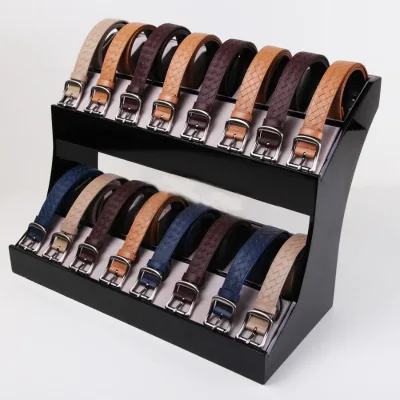
Wholesale Retail Store Portable Leather Belt Rack Display Stand for Hanging
$39.58 - $79.58
MOQ: 100 Pieces

Adidea (Xiamen) Industry And Trade Co., Ltd.
- Trading Company
- China Fujian
- Lead time30 days
Main productsMetal Display Shelf, Display Stand, Metal Display Rack, MDF Display Showcase, Solid Wood Display Stand, Acrylic Display Stand, Supermarket Display Shelves, Wine Beverage Food Display Rack, Garment Bag Shoe Jewelry Display Stand, Tile Stone Granite Quartz Mosaic Display Stand
Main marketsSoutheast Asia/ Mideast,Europe,North America


Leather Belt Display Rack with Metal Hooks Hanging Store Display Stand
$130.00 - $155.00
MOQ: 200 Pieces


Jinhua Weihai Plexiglass Product Co., Ltd.
- Verified by SGS Group
- Manufacturer, Trading Company
- Lead time15 days
- Avg. response≤ 3h
Main productsAcrylic Displays, Acrylic Furniture, Acrylic tray, Photo Frames, Acrylic keychain

Changshu Xunxun Merchants Super Equipment Co., Ltd.
- Trading Company,Manufacturer/Factory
- China Jiangsu
- Lead time23 days
Main productsSupermarket Shelves, Warehouse Racks, Hardware Racks
Main marketsSouth America,Eastern Europe,North America,Southeast Asia


Customized Multi-Layar Shelf Wooden Storage Stand Free Standing Display Rack
$45.00 - $50.00
MOQ: 10 Pieces

Wholesale Factory Direct Customizable Design Boltless Slotted Angle Steel Display Stand Racking
$45.00 - $50.00
MOQ: 10 Pieces

Kunshan Deco POP Display Co., Ltd.
- Verified by TUVRHEINLAND
- Trading Company,Manufacturer/Factory
- China Shanghai
- Lead time15 days
Main productsDisplay Stand, Cardboard Display Stand, Floor Display, Counter Display, Cardboard Display Box, Paper Display, Pop Display, Pallet Display, Acrylic Display, Display Rack Shelf
Main marketsSouth America,Eastern Europe,Mid East,North America,Southeast Asia,Eastern Asia,Oceania,Western Europe,Africa


Cardboard Beer Display Stand Paper Display Shelf Exhibition Stand for Retail
$5.99 - $12.99
MOQ: 100 Pieces


$10.00 - $60.00
MOQ: 100 Pieces


Shanghai Xutai Industrial Co., Ltd.
- Verified by SGS
- Trading Company
- China Shanghai
- Lead time15 days
Main productsDisplay Stand, Display Rack, Display Box, Iron Display Shelf, Acrylic Display Stand, Paper Display Stand, Supermarket Display Rack, Design Display Stand; , Custom Display Stand, Paper PDQ
Main marketsDomestic

Jiashan Vega Display Co., Ltd.
- Verified by SGS
- Trading Company
- China Zhejiang
- Lead time15 days
Main productsData Strip, Plastic Divider, Candy Box, Plastic Pusher, Gravity Bin, Acrylic Table Holder, Sign Holder, Shelf Pusher, Label Tag, Food Dispenser
Main marketsSoutheast Asia/ Mideast

Shanghai Tongjie Printing Production Co., Ltd.
- Verified by TUVRHEINLAND
- Combined
- China Shanghai
- Lead time15 days
Main productsBanner, Outdoor Banner, Sticker, Flag, Flatbed Printing, Pull up Banner, Decal, Poster, Digital Printing, Indoor Banner
Main marketsEurope,Australia,North America

Suzhou Sigmetal Business Equipment Co., Ltd.
- Verified by SGS
- Trading Company
- China Jiangsu
- Lead time30 days
Main productsDisplay Rack, Gondola Shelving, Store Fixtures, Shop Fitting, Checkout Counter, Shopping Trolley, Display Hook, Shopping Basket, Furniture Accessories, Supermarket Supporting Facilities
Main marketsEurope,Australia

Jiaxing Eachsign New Material Co., Ltd.
- Verified by BV
- Trading Company
- China Zhejiang
- Lead time15 days
Main productsSelf Adhesive Vinyl, Car Wrap Vinyl, Flex Banner, Display Stand, PVC Tarpaulin, PE Tarpaulin, Canvas, PVC Foam Board, Acrylic Sheet, Aluminum Composite Panel
Main marketsSouth America,Africa,Southeast Asia/ Mideast,East Asia(Japan/ South Korea),Europe,Australia,North America

Shenzhen Tianlang Advertising Media Co., Ltd.
- Verified by BV
- Combined
- China Guangdong
- Lead time15 days
Main productsSeg Light Box, Exhibition Light Box, Exhibition Standing, Folding Light Box, Folding Cloth Frame Booth
Main marketsSouth America,Africa,Southeast Asia/ Mideast,East Asia(Japan/ South Korea),Europe,Australia,North America

Dongguan Chinyik Plastic and Hardware Products Factory
- Verified by SGS
- Combined
- China Guangdong
- Lead time30 days
Main productsMould, Acrylic Mould Injection, LED, Plastic Injection Mould
Main marketsDomestic
Foshan Dasi Metal Technology Co., Ltd.
- Verified by SGS
- Combined
- China Guangdong
- Lead time15 days
Main productsFlag & Banner, Beach Flags, Backdrop, Tents, Promotion Table, Pop up Wall, a Frame Banner, Beach Flagpole, Beach Flagbase, Display Accessories
Main marketsDomestic,Europe

- Verified by SGS
- Combined
- China Guangdong
- Lead time15 days
Main productsLight Box, Sign Board, LED Sign, Display Rack, Sign, Letter Sign, LED Light Box, Signage, Signage Board, Advertising Light Box
Main marketsSoutheast Asia/ Mideast,Domestic,Europe,North America




Comprehensive Sourcing Guide
Freestanding Modern Belt Display Stand Supplier Concentration and Factory Types
Current data indicates that suppliers offering freestanding modern belt display stands are concentrated in specific Chinese provinces, with Jiangsu and Guangdong emerging as primary manufacturing hubs. Factories in Jiangsu, such as those in Suzhou, often combine OEM and ODM capabilities alongside their own brand development, suggesting a mature ecosystem for custom metal display solutions. These facilities frequently list main products that include shopping trolleys, gondola shelves, and various store fixtures, indicating a broad capacity to handle diverse retail hardware needs. The presence of ISO9001:2015 and ISO 9000 certifications among these entities signals a standardized approach to quality management within these regional clusters.
In contrast, suppliers located in Guangdong and Fujian present different operational profiles, with some operating as trading companies while others function as direct manufacturers or factories. A trading company in Fujian may aggregate products like metal display shelves and solid wood showcases, whereas a factory in Guangdong might focus specifically on wire stands and grid racks. Buyers should verify the company type listed in supplier profiles to distinguish between a direct factory with in-house production lines and a trading entity that sources from multiple workshops. This distinction is critical because factory types directly influence the ability to customize dimensions, finishes, and structural designs for specific belt display requirements without excessive markup or communication delays.
How to Verify Freestanding Modern Belt Display Stand Suppliers
Verification begins with scrutinizing the system certifications and product standards explicitly listed in supplier profiles. Many suppliers in the current results hold ISO9001:2015 or ISO 9000 certificates, which serve as a baseline for quality assurance but do not guarantee specific product performance. Buyers must cross-reference these general system certifications with product-specific standards such as CE, ROHS, TUV, or SGS, which are often cited for individual display models. For instance, a supplier claiming to offer metal display racks should provide evidence of SGS or CE compliance for the specific model intended for belt display, ensuring the materials and construction meet safety and durability expectations for retail environments.
Beyond certifications, buyers should validate the supplier's capacity for customization and their specific product attributes. The current data shows that customization is available for many items, with options for size, loading capacity, and surface treatments like powder coating. However, not all suppliers offer the same level of flexibility; some may only provide standard sizes while others allow for fully custom dimensions. Buyers must request detailed product attributes, including material specifications, finish types, and structural designs, to confirm the supplier can meet the unique requirements of a freestanding belt display. Additionally, checking the origin of the product, such as Suzhou Jiangsu or China Guangdong, helps confirm the manufacturing location matches the claimed capabilities and logistical expectations.
What to Compare Across Freestanding Modern Belt Display Stand Suppliers
When evaluating potential partners, lead time and minimum order quantity (MOQ) are critical comparative metrics that vary significantly across the supplier base. Current observations reveal lead times ranging from 23 to 30 days, with some suppliers offering faster turnaround while others require longer production windows. Similarly, MOQs fluctuate widely, with some suppliers requiring as few as one unit for certain display stands, while others mandate orders of 50 or 100 pieces. Buyers must align these constraints with their inventory strategy and cash flow, as a supplier with a low MOQ might be ideal for testing new designs, whereas a supplier with a higher MOQ might offer better unit economics for large-scale retail rollouts.
Price ranges and product specifications also require careful comparison to ensure value alignment. The data indicates price points can vary from approximately $9.70 to $180.00 depending on the complexity, size, and material of the display stand. A simple wire grid rack may fall at the lower end of the spectrum, while a specialized, custom-sized metal floor stand could command a premium. Buyers should compare not just the base price but also the included services, such as OEM and ODM support, and the specific product attributes like surface treatment and loading capacity. It is essential to verify that the quoted price includes all necessary components and that the supplier's main product list aligns with the specific type of belt display stand required for the project.
Common Freestanding Modern Belt Display Stand Sourcing Risks
One significant risk involves the discrepancy between claimed capabilities and actual production capacity, particularly regarding customization and material quality. While many suppliers list customization as available, the extent of this flexibility varies; some may only offer minor adjustments while others provide full design services. Buyers must be cautious of suppliers who promise extensive customization without providing clear evidence of their engineering or design teams. Additionally, the material specifications, such as metal type and powder coating finish, must be verified against the intended usage environment to prevent issues like corrosion or structural failure in high-traffic retail areas.
Another risk pertains to the reliability of shipping and packaging standards, which can impact the condition of goods upon arrival. The current data shows varied packaging methods, ranging from bulk packs in export cartons to flat packages and bubble wrap protection. Inconsistent packaging can lead to damage during transit, especially for delicate or large display units. Buyers should explicitly confirm the packaging details for their specific order and ensure the supplier has a track record of secure shipping. Furthermore, the lack of antitheft features in some display models may require additional security measures from the buyer, which should be factored into the overall cost and operational planning to mitigate potential losses in retail settings.
Freestanding Modern Belt Display Stand Regional Sourcing and Logistics
Sourcing from China offers distinct logistical advantages, with major manufacturing clusters in Jiangsu, Guangdong, and Fujian providing diverse supply chain options. Suppliers in Jiangsu, such as those in Suzhou, often benefit from established infrastructure and proximity to major ports, facilitating efficient export processes. The lead times observed in these regions, typically around 23 to 30 days, reflect a balance between production complexity and logistical readiness. Buyers should consider the specific location of the supplier when planning their supply chain, as regional differences can impact shipping costs, transit times, and the availability of specialized logistics partners familiar with the local industrial landscape.
Logistics planning must also account for the specific product dimensions and packaging requirements to optimize freight costs. The data indicates that products vary significantly in size, from compact units to large floor-standing racks, which directly influences shipping volume and weight. Buyers should request detailed packaging dimensions and weight information to calculate accurate freight charges and select the most cost-effective shipping method. Additionally, the origin of the product, whether from Suzhou, Jiangsu, or other regions, can affect customs clearance procedures and import duties. Understanding these regional nuances allows buyers to anticipate potential delays and ensure a smooth transition from factory floor to retail floor.
Freestanding Modern Belt Display Stand Commercial Terms and Order Planning
Commercial terms, including payment structures and order planning, require careful negotiation to align with the supplier's capabilities and the buyer's financial constraints. The current data shows that some suppliers offer flexible MOQs, allowing for smaller initial orders, while others require larger commitments. Buyers should clarify the payment terms, such as deposit percentages and balance due dates, and ensure they match the supplier's standard practices. Additionally, understanding the lead time variations, which range from 23 to 30 days, is crucial for effective inventory management and order scheduling to avoid stockouts or overstocking situations.
Order planning should also consider the customization process and the associated timelines for design approval and production. Since customization is available for many products, buyers must allocate sufficient time for the design phase, including the review of prototypes and final specifications. The supplier's ability to provide OEM and ODM services can streamline this process, but it requires clear communication and defined milestones. Buyers should establish a detailed project timeline that accounts for design, production, quality control, and shipping, ensuring that all parties are aligned on expectations. This proactive approach helps mitigate risks and ensures a successful procurement process for freestanding modern belt display stands.
FAQs
What is the typical lead time for freestanding modern belt display stands?
Lead times vary by supplier, with some offering 23 days and others 30 days. Buyers should verify specific delivery schedules based on order volume and customization needs before confirming production start dates.
What are the minimum order quantities for these display stands?
Minimum order quantities typically range from 1 to 100 units depending on the specific model and supplier. Some listings require 100 pieces, while others accept orders as low as a single unit for testing purposes.
Are these metal display stands available for indoor specialty stores?
Yes, many models are designed specifically for indoor use in specialty stores and supermarkets. They feature metal construction with powder coating finishes suitable for retail environments requiring durable and aesthetic display solutions.
Do suppliers offer customization for size and loading capacity?
Customization is widely available for size, loading capacity, and design features. Buyers can request specific dimensions and finishes to match their store layout requirements while maintaining structural integrity for heavy product loads.
What certifications do these display stands typically hold?
Common certifications include ISO 9001, ISO 9000, CE, ROHS, TUV, and SGS. These standards ensure quality management and product safety, though specific certifications should be verified against the supplier's current documentation.
Where are the manufacturers of these display stands located?
Manufacturers are primarily located in China, specifically in Jiangsu, Guangdong, and Fujian provinces. Buyers should confirm the exact origin city to assess shipping logistics and potential tariffs for their specific import region.
What is the price range for a freestanding metal belt rack?
Prices generally range from approximately 9.70 to 159.59 USD per unit depending on specifications. The final cost is influenced by material quality, customization level, order quantity, and specific design features requested by the buyer.