Modern Led Linear Downlight Suppliers and Manufacturers
Source 12 verified Modern Led Linear Downlight suppliers from Guangdong, China. Compare key dimensions including MOQ, lead times, response rates, and certifications. Review product specs and request quotes to streamline your procurement process; review the available evidence before requesting comparable quotations from suitable candidates.
Suppliers List

Guangdong Allway Lighting Electric Company Limited
- Combined
- China Guangdong
- Lead time15 days
- Avg. response≤ 3h
Main productsLED Down Light, LED Panel Light, LED Bulb, LED Track Light, LED Ceiling Light, LED Spot Light, LED Grill Light
Main marketsSouth America,Southeast Asia/ Mideast,Europe

Zhongshan Xusheng Lighting Co., Ltd.
- Verified by SGS
- Manufacturer
- China Guangdong
- Lead time23 days
- Avg. response≤ 5h
Main productsDownlight, Spot Light, Track Light, Magnetic Track Light
Main marketsSouth America,Southeast Asia/ Mideast,Europe

Jiangmen Synno Lighting Co., Ltd.
- Verified by TUVRHEINLAND
- Combined
- China Guangdong
- Lead time30 days
- Avg. response≤ 3h
Main productsDownlight, Garden Light, Underground Light, Inground Light, Swimming Pool Light, LED Flood Lights, LED Track Lights, LED Under Water Light, LED Ceiling Light, Landscape Lighting
Main marketsSoutheast Asia/ Mideast


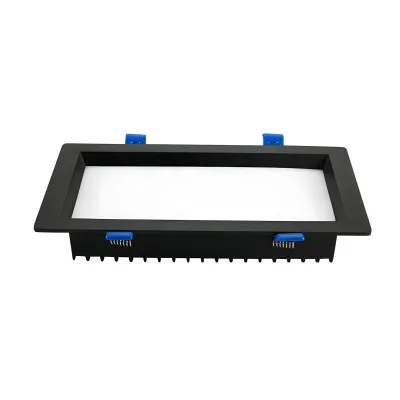
Ceiling Light Modern Indoor Ceiling LED Adjustable Downlight Recessed Down Light
$6.90 - $12.90
Moq: 20


Zhongshan Haofeng Lighting Decoration Factory
- Manufacturer, Trading Company
- Guangdong, China
- Lead time15 days
- Avg. response≤ 5h
Main productsLinear Light/ Downlight/ Panel Light/ Track Lighting/ Customized Shaped Lights
Main marketsDomestic Market(50.0%), North America(10.0%), Southeast Asia(10.0%), Western Europe(8.0%), Eastern Asia(3.0%), Southern Europe(3.0%), Africa(3.0%), South Asia(2.0%), South America(2.0%), Central America(2.0%), Northern Europe(2.0%), Eastern Europe(2.0%), Mid East(2.0%), Oceania(1.0%)

Anboo (Shenzhen) Technology Co., Ltd
- Verified by TUVRHEINLAND
- Manufacturer/Factory
- China Guangdong
- Lead time23 days
- Avg. response≤ 2h
Main productsLED Linear Light, LED Downlight, LED Tri-Proof Light, LED Tubular Light, LED Spot Light, LED Track Light, LED Solar Light
Main marketsSouth America,Eastern Europe,North America,Southeast Asia,Eastern Asia,Western Europe

Shenzhen GISIH Lighting Co., Ltd.
- Manufacturer/Factory
- China Guangdong
- Lead time15 days
- Avg. response≤ 2h
Main productsLED Display Special Lights, LED Ceiling Spotlight, LED Cabinet Spotlight, LED Track Light, LED Ceiling Light, LED Vertical Spotlight, LED Downlight, LED Strip Light, LED Showcase Lights
Main marketsSouth America,Eastern Europe,Mid East,North America,Southeast Asia,Eastern Asia,Oceania,Western Europe,Africa

New Shine Lighting (Guangzhou) Co., Ltd
- Verified by SGS
- Combined
- China Guangdong
- Lead time15 days
- Avg. response≤ 3h
Main productsArchitectural Lighting, LED Linear Lighting, Circle Ring Lighting, Acoustic Lighting, Ceiling Lighting, LED Pendant Lights, Hanging Lights, Commercial Lighting
Main marketsNorth America

Guangzhou Yi Can Lighting Co.,Ltd
- Verified by TUVRHEINLAND
- Trading Company,Manufacturer/Factory
- China Guangdong
- Lead time15 days
- Avg. response≤ 5h
Main productsSolar Street Light, Solar Flood Light, Solar Ceiling Light, Solar Garden Light, Solar Rubber Light, Solar UFO Light, Solar Hight Bay, LED Track Light, LED Downlight, LED Tube
Main marketsSouth America,Eastern Europe,Mid East,North America,Western Europe

How Bright Electronics Limited
- Trading Company
- China Guangdong
- Lead time23 days
- Avg. response≤ 4h
Main productsWall Lamp, Ceiling Lamp, Pendant Lamp, Spot Light, Down Light, Track Light
Main marketsSouth America,Africa,Southeast Asia/ Mideast,East Asia(Japan/ South Korea),Europe,Australia,North America

Zhongshan Fansen Lighting CO., LTD.
- Verified by CTI
- Combined
- China Guangdong
- Lead time30 days
- Avg. response≤ 6h
Main productsLED Light, LED Downlight, LED Tracklight, LED Spotlight, LED Linearlight
Main marketsSoutheast Asia/ Mideast,Domestic

Zhongshan HOSD Lighting Co., Ltd.
- Verified by SGS
- Manufacturer/Factory
- China Guangdong
- Lead time30 days
- Avg. response≤ 17h
Main productsLED Down Light, LED Linear Light, LED Track Light, LED Spot Light, LED Strip Light, LED Magnet Track System, LED Panel Light, LED Wall Light, LED Wallwash Light
Main marketsSouth America,Eastern Europe,Mid East,Southeast Asia,Western Europe,Africa

Zhongshan Aier Lighting Technology Co., Ltd
- Verified by SGS
- Combined
- China Guangdong
- Lead time15 days
- Avg. response≤ 4h
Main productsLED Tube Light, LED Ceiling Light, LED Panel Light, Magnetic Track Light, High Bay Light, Street Light, Flood Light, Solar Light, Ceiling Fan
Main marketsSouth America,Africa,Southeast Asia/ Mideast,East Asia(Japan/ South Korea),Europe,North America




Comprehensive Sourcing Guide
Modern Led Linear Downlight Supplier Concentration and Factory Types
The available data indicates that suppliers for modern LED linear downlights are concentrated in the Guangdong province of China, specifically within the Zhongshan area. This region serves as a primary manufacturing hub for lighting products, offering a dense ecosystem of factories capable of producing various LED fixtures. When evaluating potential partners, buyers should verify if the supplier's stated origin matches this high-confidence location fact to ensure proximity to established supply chains. The supplier types observed in the current results are classified as "Combined," suggesting these entities may operate as both manufacturers and trading companies. This hybrid model can offer flexibility in sourcing but requires careful verification of their actual production capacity versus their trading capabilities.
Buyers must distinguish between pure manufacturing facilities and combined entities when assessing the supply chain. The observed supplier profile includes capabilities for Own Brand, ODM, and OEM services, which indicates a readiness to customize products according to specific project requirements. However, the absence of specific system certifications in the general supplier profile means that individual product certifications must be scrutinized on a case-by-case basis. It is crucial to confirm whether the supplier's "Combined" status implies direct factory ownership or merely a trading arrangement with third-party manufacturers. Understanding this distinction is vital for negotiating pricing and ensuring quality control standards are met directly at the source of production.
How to Verify Modern Led Linear Downlight Suppliers
Verification of suppliers begins with confirming their physical location and operational history, as the data points to Zhongshan, Guangdong, as a key origin. Buyers should request proof of address and business registration to validate that the supplier is indeed based in this manufacturing cluster. Since the general supplier profile lists "NIL" for system certification, buyers must not assume broad compliance and should instead demand specific product-level certifications for each item. The product evidence shows certifications such as CE, RoHS, CB, EMC, and SAA for specific models, which serves as a benchmark for what valid documentation should look like. Requesting these specific test reports for the exact models being considered is a necessary step to ensure regulatory compliance in the target market.
Response time and lead time are critical metrics for verifying supplier reliability and operational efficiency. The observed response time of 2.94 hours suggests a high level of communication readiness, which is a positive indicator for supplier engagement. However, buyers should verify if this speed is consistent across different time zones and communication channels. The lead time of 15 days provides a baseline for production scheduling, but this figure must be confirmed for the specific order volume and customization level required. Buyers should also check for the availability of escrow services to protect payments until delivery milestones are met. Without explicit confirmation of escrow availability in the general profile, this should be a direct question during the initial inquiry phase to mitigate financial risk.
What to Compare Across Modern Led Linear Downlight Suppliers
When comparing suppliers, the primary focus should be on the technical specifications and pricing structures of the specific products offered. The data reveals a wide range of wattages, from 5W to 30W, and varying lumen outputs, such as 500 lumens for a 6W unit and 1200 lumens for an 18W unit. Buyers must compare these performance metrics against their project requirements to ensure the selected product meets the necessary illumination standards. Additionally, the driver brands vary, with some products utilizing Lifud drivers and others using Kgp drivers. This variation can significantly impact the longevity and reliability of the lighting system, making it a key differentiator in the comparison process.
Minimum Order Quantity (MOQ) and pricing are also essential factors for comparison across different supplier offerings. The observed MOQs range from 10 units for certain linear downlights to 100 units for others, which directly impacts the feasibility of small-scale orders. Pricing data shows a range from approximately $2.15 to $15.54 per unit, depending on the model and specifications. Buyers should calculate the total cost of ownership, including shipping and potential customs duties, rather than focusing solely on the unit price. Furthermore, the warranty periods, such as the 3-year warranty noted for several models, should be compared to assess long-term value. Ensuring that the warranty terms are clearly defined and enforceable is critical for protecting the investment in these lighting solutions.
Common Modern Led Linear Downlight Sourcing Risks
One significant risk in sourcing modern LED linear downlights is the potential discrepancy between claimed certifications and actual product compliance. Since the general supplier profile indicates "NIL" for system certification, there is a risk that individual product certifications may be outdated or not applicable to the specific batch being ordered. Buyers must verify that the CE, RoHS, and other listed certifications are current and issued by recognized bodies. Relying on generic claims without requesting specific test reports for the exact model numbers can lead to non-compliance issues in the destination market, potentially resulting in rejected shipments or legal penalties.
Another risk involves the variability in product quality and customization capabilities. While the data indicates that customization is available, the extent of this customization and the associated costs are not fully detailed in the general profile. Buyers face the risk of receiving products that do not meet their specific design or functional requirements if the customization process is not clearly defined. Additionally, the lead time of 15 days may not account for delays caused by customization or unexpected supply chain disruptions. Buyers should establish clear communication channels and set realistic expectations regarding production timelines to mitigate the risk of project delays. Ensuring that the supplier has the capacity to handle custom orders without compromising quality is essential for a successful sourcing outcome.
Modern Led Linear Downlight Regional Sourcing and Logistics
Sourcing from the Guangdong region, specifically Zhongshan, offers logistical advantages due to the established infrastructure for exporting lighting products. The concentration of manufacturers in this area facilitates efficient coordination between production and shipping, potentially reducing transit times. However, buyers must verify the specific shipping terms and Incoterms provided by each supplier to understand their responsibilities for freight and insurance. The location of the factory also influences the availability of local logistics partners who are experienced in handling fragile lighting components, which is crucial for minimizing damage during transit.
Logistics planning should also consider the impact of regional trade policies and customs regulations on the import of LED products. Different countries may have varying requirements for electrical safety and energy efficiency, which can affect the clearance process. Buyers should ensure that the supplier is familiar with the specific documentation required for their target market to avoid delays at customs. The observed product origins in Zhongshan, Guangdong, suggest that the suppliers are accustomed to international shipping, but buyers must confirm the specific packaging standards used to protect the products. Proper packaging, such as the neutral packing mentioned in the data, is vital for ensuring that the products arrive in perfect condition and meet the buyer's branding requirements.
Modern Led Linear Downlight Commercial Terms and Order Planning
Commercial terms for modern LED linear downlights often include specific payment structures and delivery schedules that must be clearly defined before placing an order. The observed lead time of 15 days serves as a baseline for production, but buyers should negotiate a detailed timeline that includes buffer periods for quality checks and shipping. Payment terms should be structured to protect the buyer's interests, potentially utilizing escrow services if available. It is essential to clarify the conditions under which payments are released, such as upon completion of production or after successful delivery, to ensure financial security throughout the transaction.
Order planning requires a thorough understanding of the Minimum Order Quantity (MOQ) and the pricing tiers associated with different order volumes. The data shows MOQs ranging from 10 to 100 units, which means buyers must carefully calculate their inventory needs to avoid overstocking or underordering. Additionally, the price range of $2.15 to $15.54 per unit indicates that bulk purchasing may offer significant cost savings. Buyers should plan their orders to maximize these economies of scale while maintaining flexibility for future adjustments. Clear communication regarding the expected delivery dates and any potential penalties for delays is also crucial for maintaining a strong business relationship and ensuring project timelines are met.
FAQs
What is the typical lead time for modern LED linear downlights?
The typical lead time for these products is 15 days. This duration applies to standard orders from suppliers located in Guangdong, China. Buyers should confirm specific timelines with the manufacturer before placing bulk orders to ensure timely delivery.
What are the minimum order quantities for these lights?
Minimum order quantities vary by product model, ranging from 10 units to 100 units. Some sleek linear downlights require a minimum of 10 pieces, while other modern recessed options start at 100 pieces. Check the specific product listing for exact requirements.
Which certifications do these LED downlights typically hold?
Many modern LED linear downlights carry CE, RoHS, EMC, and CB certifications. Some models also include GS and SAA standards to meet international safety requirements. Verify the specific certificate list for each product to ensure compliance with your local regulations.
What is the response time for supplier inquiries?
Suppliers in this category generally respond within 2.94 hours to buyer inquiries. This quick response time helps facilitate faster communication regarding product specifications and pricing. Buyers can expect timely updates on order status and availability from these combined type companies.
What warranty periods are available for these lights?
Several modern LED linear downlights come with a 3-year warranty period. This coverage applies to specific models designed for hotels and commercial spaces. Always confirm the exact warranty terms with the supplier before finalizing the purchase to ensure product reliability.
What materials are used for the light body?
The light body is primarily constructed from aluminum alloy or die-casting aluminum. These materials provide durability and efficient heat dissipation for indoor lighting applications. Some models also feature a white lamp body finish to match modern interior design aesthetics.
Can these lights be customized for specific projects?
Yes, customization is available for many Modern Led Linear Downlight models. Buyers can request specific wattages, colors, or driver brands like Lifud or Kgp. Contact the supplier directly to discuss custom requirements for your specific commercial or residential lighting project needs.