Source 13t Mechanical Suspension for trucks, trailers, and semitrailers
Find 30 listings for 13t Mechanical Suspension designed for trucks, trailers, and semitrailers. Buyers can compare axle counts, wheelbases, and load capacities from verified Chinese manufacturers offering ISO and CCC certifications.
Key considerations
Products List


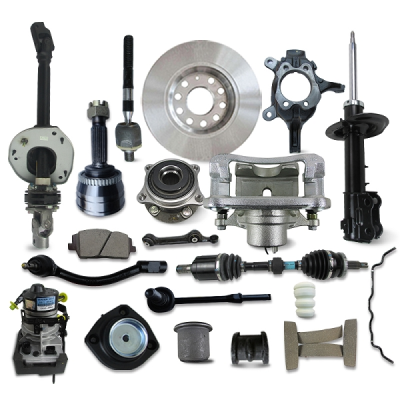


Coilover Suspension Lowering Kit, 32 Damping Adjustment, Ride Height Adjustable
$320.00 - $370.00
MOQ: 5 pieces

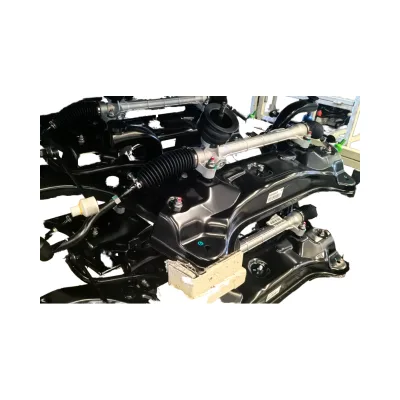


13t 16t Three Axle Mechanical Suspension for Truck American German Style
$670.00 - $770.00
MOQ: 1 Pieces
Comprehensive Sourcing Guide
Strategic Sourcing Guide for 13-Ton Mechanical Suspension Systems
Technical Specifications and Configuration Analysis
When sourcing a 13-ton mechanical suspension system, buyers must first navigate the specific technical parameters that define the product's capability and compatibility. The core of this inquiry involves understanding the load-bearing capacity, axle configuration, and dimensional constraints. Based on observed market data, the load capacity for these systems is explicitly defined in discrete tiers, including 11 tons, 12 tons, 13 tons, 14 tons, and 16 tons. A 13-ton specification represents a critical midpoint in this range, often selected for heavy-duty semitrailers that require robust support without the excessive weight of higher-capacity 16-ton units.
The physical architecture of the suspension is equally critical. The axle count is a primary variable, with available configurations ranging from 1 to 4 axles. However, specific product listings for mechanical suspension units frequently highlight 2-axle and 3-axle standards. For a 13-ton application, a 2-axle configuration is common, though 3-axle setups are also available to distribute the load further. The wheelbase, which dictates the spacing between axles, is observed in specific measurements such as 1310 mm, 1360 mm, 1500 mm, and variations like 1315 mm, 1360 mm, and 1385 mm. Selecting the correct wheelbase is essential for ensuring the trailer chassis aligns properly with the suspension geometry.
Furthermore, the specific component type often identified in these listings is the "Suspension Spring," specifically designed for mechanical suspension applications. The leaf spring size is a vital dimension to verify, with observed specifications including dimensions like 75x13x8 mm. The axle beam itself may be constructed as a square profile, with a 150 mm square beam being a noted configuration. These physical attributes must be cross-referenced against the buyer's vehicle chassis design to ensure mechanical fitment. The condition of the units is typically listed as "New," and the materials often include stainless steel components, which can influence corrosion resistance and longevity.
Compliance, Certification, and Regulatory Standards
Navigating the regulatory landscape is a non-negotiable aspect of sourcing industrial suspension components. Buyers must verify that suppliers possess valid certifications that align with international and regional safety standards. The observed market data indicates a high prevalence of ISO/TS16949 certification, which is the automotive industry-specific quality management standard. This certification is crucial for ensuring that the manufacturing processes meet the rigorous quality control requirements of the automotive supply chain.
In addition to ISO/TS16949, other certifications frequently appear in product listings, including CCC (China Compulsory Certification), DOT (Department of Transportation), ISO, and CE. The presence of these marks suggests that the products may meet specific safety and performance criteria for different markets. However, buyers should exercise caution and treat these as observations rather than universal guarantees for every listed item. The standard "ISO9001" is also mentioned in background contexts, though specific verification is required to confirm its applicability to the specific 13-ton unit being purchased.
Material standards are another layer of compliance. Listings sometimes reference "ISO/TS Material: Stainless Steel" or "ISO Material: Stainless Steel," indicating that the material composition is a key compliance factor. For a 13-ton application, the structural integrity of the steel is paramount. Buyers should request material test reports to confirm that the stainless steel or other alloys used meet the necessary tensile strength and fatigue resistance requirements for heavy-load applications. The absence of a specific standard code in some listings (marked as "NA") necessitates a proactive inquiry where the buyer must ask the supplier to define the applicable standard for the specific batch of goods.
Cost Drivers and Pricing Variables
Understanding the cost structure of 13-ton mechanical suspension systems requires an analysis of several dynamic variables. The observed price range in the market is exceptionally broad, spanning from $0.25 to $7,000 USD. This vast disparity indicates that the "13-ton mechanical suspension" keyword encompasses a wide spectrum of products, from individual components like single leaf springs or small hardware to complete suspension assemblies or multi-axle setups. A buyer must clarify exactly what is included in the quoted price to avoid misalignment between expectations and deliverables.
The Minimum Order Quantity (MOQ) is a significant cost driver. The observed MOQ range extends from 1 unit up to 20,000 units. For a buyer seeking a single unit or a small pilot batch, the unit price will likely be at the higher end of the spectrum due to the lack of economies of scale. Conversely, buyers capable of committing to larger volumes may negotiate prices closer to the lower end of the range. The customization factor also plays a pivotal role in pricing. While "Customization" is listed as available, the "Customized" attribute also appears as "Non-Customized" in other contexts. Custom orders, such as specific color requests (e.g., Red, or Customized colors) or unique wheelbase adjustments, typically incur additional tooling and setup costs compared to standard OEM sizes.
Packaging and logistics further influence the final landed cost. Packaging options range from standard pallets to bulk loading within a 20ft container, where specific data suggests a capacity of 58 pieces per container. The choice of packaging affects shipping efficiency and damage risk. Additionally, the origin of the product, primarily identified as China, impacts freight costs and import duties. Buyers should factor in the total cost of ownership, including shipping, insurance, and potential tariffs, rather than focusing solely on the ex-works price.
Typical Applications and Operational Context
The 13-ton mechanical suspension system is primarily designed for heavy-duty transport applications, specifically within the realm of semitrailers. The product attributes explicitly state the application as "Mechanical Suspension for Semitrailer." This positioning suggests that the system is intended for commercial freight transport where reliability and load distribution are critical. The suspension is suitable for adult users, implying a professional operational context rather than recreational or light-duty use.
The versatility of these systems is evident in their compatibility with various vehicle makes. The observed data lists a wide array of compatible manufacturers, including Volvo, Lexus, Audi, Roewe, Buick, Hyundai, BMW, WuLing, and Volkswagen. This broad compatibility suggests that the suspension components are often designed to be adaptable or are used in aftermarket modifications for these vehicle platforms. However, buyers must verify the specific fitment for their intended vehicle model, as "OEM" size is listed as a specification, but actual compatibility depends on the chassis design.
The operational environment also dictates the choice of features. For instance, the presence of ABS (Anti-lock Braking System) is noted as a feature in some listings, which is critical for maintaining control under heavy loads. The condition of the product is consistently listed as "New," ensuring that the buyer receives a unit with full operational life remaining. The warranty period of 12 months provides a baseline for performance assurance, and the availability of after-sales service is a key indicator of supplier reliability. The "Tent Type" attribute, listed as both "Complex" and "Simple," may refer to the structural complexity of the suspension linkage or a specific feature of the trailer body, requiring clarification based on the specific application needs.
Supplier Evaluation and Quality Assurance
Evaluating a supplier for 13-ton mechanical suspension systems requires a rigorous assessment of their production capabilities and quality control measures. The origin of the products is predominantly China, and buyers should verify the specific manufacturing location to assess logistics and communication efficiency. The "Quality" attribute is listed as "Good," but this is a subjective observation. Buyers should demand objective evidence, such as third-party inspection reports or detailed quality assurance protocols.
The "Standard" attribute varies, with some listings citing "SGS ISO CCC" and others showing "NA." This inconsistency highlights the need for buyers to explicitly request the specific standards applicable to the 13-ton unit. Verification of the "ISO/TS16949" certification is essential, as it is a strong indicator of automotive-grade manufacturing processes. Buyers should also inquire about the testing procedures used to validate the load capacity, ensuring that the 13-ton rating is not merely a nominal claim but a verified performance metric.
After-sales support is another critical evaluation criterion. The availability of "After-sales Service" and a "12 Months" warranty are positive indicators, but the scope of this service must be defined. Does the warranty cover only manufacturing defects, or does it include wear and tear? What is the lead time for replacement parts? The "Packing" method, whether "Standard Package," "Pallet," or "As your request," also reflects the supplier's attention to detail and ability to meet specific logistical requirements. A supplier that offers flexible packaging and clear after-sales terms is generally more reliable for long-term procurement relationships.
Long-Term Procurement and Lifecycle Management
Sourcing 13-ton mechanical suspension systems is not a one-time transaction but part of a long-term lifecycle management strategy. The "Warranty" of 12 months is a starting point, but buyers should plan for the entire operational life of the suspension. The "Condition" being "New" ensures a fresh start, but the durability of the materials, such as the "Stainless Steel" components, will determine the maintenance intervals and replacement frequency.
Customization options, such as "Color: Customized" or "Optional," allow buyers to align the product with their fleet's branding or specific operational requirements. However, custom orders may impact lead times and future availability of spare parts. Buyers should consider the "Tire Number" (observed as 4 or 6) and "Axle Number" (2 or 3) in the context of their fleet's maintenance schedule. A 3-axle system with 6 tires may require different maintenance protocols compared to a 2-axle system with 4 tires.
The "Loading Weight" of 13t is a fixed specification, but the actual operational load may vary. Buyers should ensure that the suspension system has a safety margin above the typical operating load to prevent premature fatigue. The "Wheel Base" options (1310, 1360, 1500, etc.) should be selected based on the specific trailer design to optimize stability and maneuverability. Finally, the "Powder" attribute listed as "No" and "State" as "Liquid" in some contexts may refer to specific coating or lubrication processes, which should be verified to ensure they do not negatively impact the suspension's performance in harsh environments. By considering these long-term factors, buyers can secure a suspension system that delivers value and reliability over its entire service life.
FAQs
What load capacities are available for 13t Mechanical Suspension systems?
Available load capacities include 11, 12, 13, 14, and 16 tons. Buyers should select the 13-ton tier for heavy-duty semitrailers that require robust support without the excessive weight of higher-capacity units.
Which axle configurations can be found for these suspension units?
Configurations range from 1 to 4 axles, with 2-axle and 3-axle standards being common. Specific listings often highlight 2-axle setups with 4 tires or 3-axle setups with 6 tires for load distribution.
What certifications do suppliers typically hold for these products?
High-confidence certifications include ISO/TS16949, CCC, DOT, ISO, and CE. These marks suggest compliance with automotive quality and safety standards, though verification for specific batches is recommended.
How does the minimum order quantity affect pricing for this item?
The minimum order quantity ranges from 1 to 20,000 units, significantly impacting unit cost. Smaller orders often incur higher prices due to a lack of economies of scale compared to bulk purchases.
Can the color and wheelbase be customized for this suspension system?
Customization is available for color, with options like red or customized shades, and specific wheelbases like 1310 or 1360 mm. Custom orders may incur additional tooling costs compared to standard OEM sizes.
What warranty and after-sales support are provided for new units?
New units typically come with a 12-month warranty and available after-sales service. Buyers should clarify if the warranty covers manufacturing defects or wear and tear to ensure full operational assurance.
Which vehicle makes are compatible with these mechanical suspension springs?
Compatible makes include Volvo, Lexus, Audi, Roewe, Buick, Hyundai, BMW, WuLing, and Volkswagen. Buyers must verify specific fitment against their chassis design despite the broad compatibility list.