Source 15 cm Stationery Set for Office, School, and Promotion
Compare 30 available options for a 15 cm Stationery Set designed for office supplies, school needs, and promotional gifts. Buyers can review customization features, materials like plastic and metal, and various styles including cartoon and eco-friendly designs from suppliers in China.
Key considerations
Products List


Personalized Office Stationery Recycled Stationery Set with Zipper Case
$1.00 - $1.50
MOQ: 10000 Pieces


Fashion Promotion Custom List of Office Stationery Gift Stationery Set
$0.40 - $25.00
MOQ: 3000 pieces


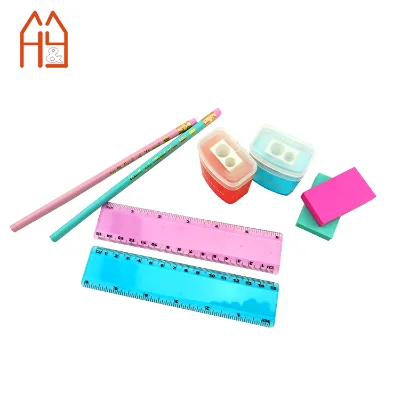


Office Stationery 4PCS 15cm Plastic Soft Geometric Ruler Set with Sequin
$0.07 - $0.09
MOQ: 10000 Sets


Manufacturer Supplies Custom School Office Journal Children Gift Stationery Set
$4.71 - $5.14
MOQ: 500 Pieces


3-Piece Office Stationery Set - Promotional & Conference Gift with Custom Logo
$9.40 - $10.00
MOQ: 300 Pieces
Comprehensive Sourcing Guide
15 cm Stationery Set Sourcing Guide
Sourcing a 15 cm Stationery Set requires a nuanced understanding of how dimensional constraints intersect with material selection, customization capabilities, and target demographics. In the B2B procurement landscape, the "15 cm" specification often serves as a critical filter for compact, portable, or promotional items rather than full-sized organizational tools. Buyers must recognize that this size category frequently overlaps with pencil cases, small zippered pouches, and eco-friendly starter kits designed for primary school students or corporate gifting. The procurement strategy must therefore balance aesthetic appeal and functional utility against the logistical realities of shipping lightweight, high-volume goods. Understanding the specific use case—whether for office supplies, school essentials, or promotional giveaways—is the foundational step in defining technical requirements and evaluating supplier proposals.
The market for these items is characterized by high variability in materials, ranging from durable metals and plastics to paper-based eco-friendly composites. Suppliers often offer extensive customization options, including logo printing, color matching, and structural modifications, which can significantly impact the final unit cost and minimum order quantity (MOQ). Procurement teams must navigate this complexity by establishing clear priorities regarding brand visibility versus cost efficiency. By aligning the product scope with the intended audience, such as unisex designs for general promotion or gender-specific styles for targeted school supplies, buyers can streamline the selection process and avoid unnecessary engineering changes during the sampling phase.
Product Scope and Observed Listing Signals
The observed market signals indicate a diverse range of product types falling under the broad umbrella of stationery sets, with specific models like MY-227, MY-255, and YHL-0084 representing distinct design approaches. These listings reveal that the 15 cm dimension is often associated with compact, portable solutions such as zipper case stationery sets or eco-friendly sets designed for primary school use. The presence of attributes like "Cartoon" style and "Grey" or "Pink" color options suggests that visual appeal and demographic targeting are key differentiators in this segment. Buyers should note that while some products are marketed as "Eco Stationery Sets," others may utilize traditional materials like metal or plastic, requiring careful verification of material composition to ensure alignment with sustainability goals or durability requirements.
Further analysis of listing attributes highlights the importance of packaging and origin in evaluating supplier capabilities. Products originating from Guangzhou and Zhejiang, China, often leverage established manufacturing ecosystems to offer competitive pricing and rapid turnaround times. The observed packing methods, including cartons, polybags, and other unspecified formats, indicate that suppliers have varying degrees of flexibility in how they prepare goods for shipment. This variability can influence the buyer’s decision on whether to handle repacking or if the supplier’s standard packaging meets the end-user’s expectations. Additionally, the availability of customization for colors and logos underscores the potential for brand integration, allowing companies to create unique promotional items that stand out in crowded markets.
Technical Specifications to Verify
Verifying the exact dimensions and structural integrity of a 15 cm Stationery Set is paramount to ensuring it meets functional requirements. While the core keyword specifies a 15 cm size, observed listings show variations such as 24183.2cm or 16.5*17.5cm, indicating that "15 cm" may refer to a specific dimension like length or width rather than the overall footprint. Buyers must request detailed technical drawings or physical samples to confirm that the product’s internal capacity can accommodate the intended stationery items, such as pens, pencils, and erasers. The distinction between a simple pouch and a structured case with compartments can significantly affect usability, so verifying the presence of zippers, dividers, or rigid supports is essential for products marketed as "Office" or "School Supplies."
Material selection plays a critical role in the durability and aesthetic of the final product. Listings indicate the use of metal, plastic, and paper-based materials, each offering different trade-offs in terms of weight, cost, and environmental impact. For instance, metal components may add durability but increase weight and shipping costs, while paper-based eco-friendly options may appeal to sustainability-conscious buyers but require careful handling to prevent damage. Buyers should verify the specific grade of materials used, such as the type of plastic or the thickness of paper, to ensure they meet the expected quality standards. Additionally, the "Good" quality attribute observed in some listings should be validated through rigorous testing, as this term is subjective and lacks a standardized definition without accompanying test reports or quality control protocols.
Compliance and Safety Documentation
Compliance and safety documentation are non-negotiable elements in the procurement of stationery sets, particularly those targeted at children or intended for educational environments. Although specific certification statuses such as BSCI, FSC, and RoHS are mentioned in background data, buyers must independently verify the current validity and scope of these certifications for each supplier. BSCI certification indicates adherence to social compliance standards, which is crucial for ethical sourcing, while FSC certification ensures that paper-based materials come from responsibly managed forests. RoHS compliance is vital for products containing electronic components or specific plastics, ensuring they are free from hazardous substances. Buyers should request up-to-date certificates and audit reports to confirm that suppliers maintain these standards consistently across production batches.
Safety standards for stationery sets often include requirements for non-toxic materials, sharp edge testing, and small part warnings, especially for products aimed at primary school students. Buyers must ensure that suppliers comply with relevant international safety regulations, such as EN71 in Europe or ASTM F963 in the United States, depending on the target market. The "Eco-Friendly" and "High Quality" attributes observed in some listings should be substantiated by third-party test results that verify the absence of harmful chemicals like phthalates or heavy metals. Additionally, buyers should inquire about the supplier’s quality control processes, including in-line inspections and final random inspections, to ensure that every unit meets safety and performance criteria before shipment.
Cost Drivers and Commercial Terms
The cost of a 15 cm Stationery Set is influenced by several key drivers, including material selection, customization complexity, and order volume. Observed price ranges of $0.05 to $25 USD reflect the vast diversity in product quality and features, from basic paper-based sets to premium metal or multi-compartment cases. Buyers must understand that lower prices often correlate with simpler designs, standard colors, and higher MOQs, while higher prices may include custom printing, unique materials, or lower MOQs. The observed MOQ range of 20 to 10,000 pieces indicates that suppliers are flexible, but buyers should negotiate terms that align with their inventory management strategies and cash flow constraints. Understanding the cost breakdown, including material, labor, and overhead, can help buyers identify areas for potential savings without compromising quality.
Commercial terms, including payment methods, lead times, and shipping arrangements, also play a significant role in the total cost of ownership. Buyers should clarify whether prices are quoted on an EXW, FOB, or CIF basis, as this affects responsibility for shipping and insurance costs. The observed origin locations in Guangzhou and Zhejiang suggest that suppliers may have established logistics networks, potentially offering competitive shipping rates. However, buyers must verify lead times to ensure they can meet their delivery deadlines, especially for promotional items with fixed launch dates. Negotiating favorable payment terms, such as a deposit with the balance against a copy of the bill of lading, can mitigate financial risk and ensure that suppliers remain committed to fulfilling the order.
Supplier Qualification and Quality Control
Supplier qualification is a critical step in mitigating risks associated with sourcing stationery sets from international manufacturers. Buyers should conduct thorough due diligence, including verifying business licenses, production capacity, and past performance with similar clients. The observed customization capabilities, such as accepting custom colors and logos, indicate that suppliers have the technical infrastructure to handle bespoke orders, but buyers must assess their ability to maintain consistency across large batches. Requesting references or case studies from previous clients can provide insights into the supplier’s reliability and responsiveness. Additionally, buyers should evaluate the supplier’s communication skills and willingness to collaborate on design improvements, as this can significantly impact the success of the procurement project.
Quality control measures must be integrated into the procurement process to ensure that the final products meet specified standards. Buyers should implement a robust inspection plan, including pre-production samples, in-line inspections during manufacturing, and final random inspections before shipment. The observed "Good" quality attribute should be validated through objective criteria, such as dimensional accuracy, material strength, and print clarity. Buyers may also consider hiring third-party inspection agencies to conduct independent audits, providing an unbiased assessment of the supplier’s quality management system. Establishing clear acceptance criteria and rejection protocols in the purchase agreement can help resolve disputes and ensure that only conforming products are delivered.
Long-Term Procurement Checks
Long-term procurement success depends on establishing a strategic partnership with suppliers who can adapt to changing market demands and regulatory requirements. Buyers should regularly review supplier performance metrics, including on-time delivery rates, defect rates, and responsiveness to issues, to identify areas for improvement. Building a diversified supplier base can mitigate risks associated with single-source dependencies, allowing buyers to leverage competition for better pricing and service. Additionally, buyers should stay informed about emerging trends in stationery design, such as increased demand for eco-friendly materials or smart features, to ensure their product offerings remain relevant and competitive.
Continuous improvement initiatives, such as joint product development projects or shared sustainability goals, can strengthen the buyer-supplier relationship and drive innovation. Buyers should encourage suppliers to invest in research and development to create unique products that differentiate them in the market. Regular communication and feedback loops can help align expectations and foster a culture of collaboration. By focusing on long-term value creation rather than short-term cost savings, buyers can build a resilient supply chain that supports their business growth and enhances their brand reputation in the global marketplace.
FAQs
What customization options are available for the stationery sets?
Customization is available for these stationery sets, allowing buyers to tailor products to specific needs. You can request customized sizes, colors, and printing logos to match your brand or event requirements effectively.
Which materials are used to manufacture these stationery sets?
The stationery sets are manufactured using various materials including plastic, metal, and paper. This variety ensures durability and aesthetic appeal suitable for office supplies, promotion gifts, and school supplies across different applications.
Can I find stationery sets with specific model numbers like MY-227?
Yes, specific model numbers such as MY-227, MY-255, and MY-254 are available in the product listings. These models represent distinct designs and features that cater to different user preferences and functional requirements.
What is the minimum order quantity for these stationery sets?
The minimum order quantity ranges from 20 to 10,000 pieces depending on the specific product and supplier. Some items like the Eco Stationery Set have a specific MOQ of 5,000 pieces, while others may start lower.
Where are these stationery sets manufactured and shipped from?
These products originate from manufacturing locations in Guangzhou and Zhejiang, China. The origin ensures access to established supply chains while maintaining quality standards for international buyers seeking reliable sourcing partners.
Are there eco-friendly options available for the stationery sets?
Yes, eco-friendly options are available, featuring attributes like high quality and clear printing. These sets are designed to be environmentally conscious while still providing the necessary functionality for primary school students and office use.