Source 15 Inch Gaming Laptop for design, streaming, and development
Explore 30 listings for the 15 Inch Gaming Laptop featuring Intel processors, RTX graphics, and Windows OS. Buyers can compare models with varying weights, RAM, and storage options to find the right device for professional tasks.
Key considerations
Products List


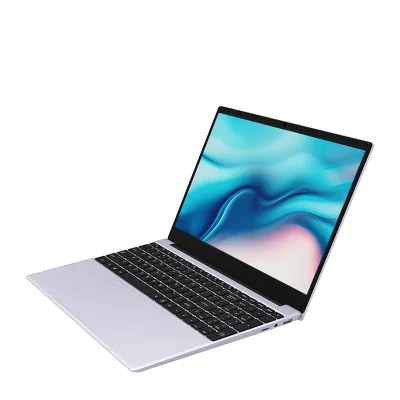
Core I3 I5 I7 High Performance Gaming Laptop School Home Business Laptop Compute
$459.00 - $465.50
MOQ: 1000 Pieces


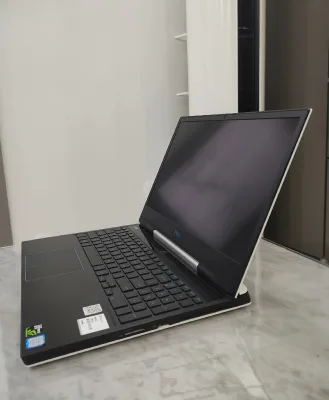
Gaming Laptop on Sale 15.6 Inch Core I7 6500u Portable Laptop for Game & Office
$225.00 - $235.00
MOQ: 100 Pieces


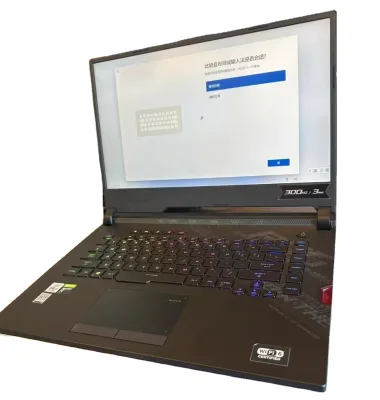
Laptop Notebook 15.6 Inch RAM 20GB Quad Cores AMD R5 2500u Gaming Laptop
$30.00 - $220.00
MOQ: 1 Pieces

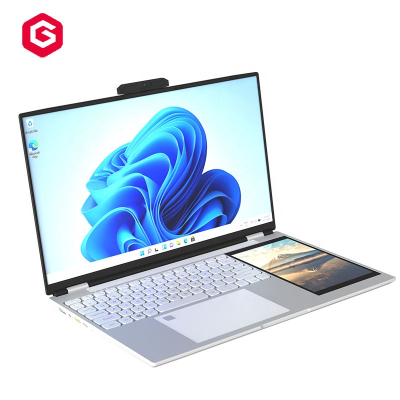
Laptop Hot Sell I3 I5 I7 15.6 Inch Student Office Laptop and Gaming Laptop
$305.00 - $330.00
MOQ: 1 Pieces


Comprehensive Sourcing Guide
15 Inch Gaming Laptop Sourcing Guide
Sourcing a 15-inch gaming laptop requires a nuanced understanding of the trade-offs between portability, thermal management, and raw computational power. The 15-inch form factor has long been the industry standard for balancing screen real estate with manageable chassis dimensions, making it a versatile choice for both mobile gamers and stationary workstation users. When evaluating suppliers, buyers must distinguish between models designed for high-performance dedicated graphics and those optimized for general productivity, as the internal architecture and cooling solutions differ significantly. The observed market data indicates a wide variance in specifications, ranging from lightweight ultrabooks to heavy-duty rigs, necessitating a rigorous verification process to ensure the selected unit meets specific performance thresholds.
The procurement landscape for these devices is characterized by a broad spectrum of customization options and component configurations. Suppliers often offer OEM and ODM services, allowing buyers to tailor hardware specifications such as RAM, ROM, and processor brands to their target market’s demands. However, this flexibility introduces complexity in quality control and supply chain management. Buyers must navigate a price range that spans from entry-level configurations to high-end gaming machines, with observed listings indicating costs from $30 to $7,000. This disparity reflects the difference between integrated graphics solutions and systems equipped with dedicated RTX series GPUs, requiring clear definition of technical requirements before engaging with potential manufacturers.
Product Scope and Observed Listing Signals
The current market listings for 15-inch laptops reveal a diverse array of product identities, ranging from specialized gaming rigs to versatile yoga laptops and standard business notebooks. Observed models include the VK-K7G, which is explicitly associated with dedicated graphics cards and RTX 3060 GPUs, indicating a focus on high-performance gaming and content creation. In contrast, other listings such as the VKI4DI2YGH and L1837 describe products with integrated graphics, Intel Atom processors, or specific screen sizes of 14 inches, highlighting the importance of verifying the exact model number and screen dimensions. Buyers must carefully cross-reference the listed model codes with the actual physical attributes, as some suppliers may list multiple product types under a single category, leading to potential confusion regarding the final delivered specifications.
Weight and build quality are critical differentiators in this segment, with observed data showing a wide range from ultra-lightweight units under 1.0 kg to heavier systems exceeding 2.0 kg. The VK-K7G, for instance, is noted to weigh more than 2.0 kg, a typical characteristic of gaming laptops that require robust cooling systems and larger batteries. Conversely, models like the L008 are listed with weights under 1.0 kg, suggesting a focus on portability over raw power. Additionally, packaging options vary, with some units shipped in gift boxes for retail readiness, while others use standard cartons for bulk distribution. These physical attributes directly impact logistics costs and the end-user experience, making it essential for buyers to specify weight tolerances and packaging requirements in their purchase orders.
Technical Specifications to Verify
Processor and graphics capabilities are the primary determinants of a gaming laptop’s performance, and buyers must verify these components with precision. The observed data highlights the presence of Intel processors, with specific mentions of i3, i5, and i7 series options, as well as dedicated GPUs like the RTX 3060, 3070, 3080, and 3090. It is crucial to confirm that the listed GPU is indeed a dedicated card, as integrated graphics solutions, while suitable for basic tasks, cannot handle modern gaming workloads. Furthermore, buyers should verify the specific generation of the Intel CPU, as older models like the 8th Gen i5 may not meet the performance expectations for contemporary gaming applications. The presence of built-in Bluetooth and WiFi 6e connectivity is also a key technical feature to confirm, ensuring seamless wireless peripherals and high-speed network performance.
Memory, storage, and display quality are equally important technical parameters that require detailed verification. Observed specifications include RAM capacities of 8GB and 16GB, and storage options ranging from 128GB to 1TB, with some listings mentioning specific SSD capacities. Buyers must ensure that the storage type is solid-state for optimal load times and system responsiveness. The display is another critical area, with observed data indicating 15-inch IPS panels with 1920x1080 resolution. However, buyers should also inquire about refresh rates and color gamut coverage, as these factors significantly impact the gaming experience. Additionally, the presence of a full keyboard with RGB backlighting is a common feature in gaming laptops, but its quality and customization options should be confirmed to ensure it meets user expectations.
Compliance and Safety Documentation
Electrical safety and electromagnetic compatibility are fundamental requirements for importing consumer electronics, and buyers must ensure that suppliers provide the necessary certification documentation. While specific certification statuses are not explicitly listed in the observed data, standard compliance with international safety standards is typically required for laptops sold in major markets. Buyers should request test reports for electrical safety, including insulation resistance and leakage current tests, to ensure the device poses no risk of electric shock or fire. Additionally, electromagnetic compatibility (EMC) certifications are essential to verify that the laptop does not emit excessive interference that could disrupt other electronic devices or be susceptible to external interference.
Battery safety is a particularly critical area of compliance for laptops, given the potential risks associated with lithium-ion batteries. Buyers must verify that the battery, which is observed to have a capacity of 5000mAh in some models, meets relevant safety standards for transport and usage. This includes compliance with UN38.3 testing for lithium batteries, which is mandatory for air and sea freight. Furthermore, buyers should inquire about the battery’s protection circuits, including overcharge, over-discharge, and short-circuit protection, to ensure long-term reliability and user safety. Documentation such as the Material Safety Data Sheet (MSDS) and a declaration of conformity for battery safety should be obtained from the supplier prior to placing large orders.
Cost Drivers and Commercial Terms
The cost of a 15-inch gaming laptop is driven primarily by the choice of processor, graphics card, and memory configuration. High-end models equipped with RTX 3070 or 3080 GPUs and i7 processors will naturally command a higher price point compared to entry-level models with integrated graphics and i3 processors. The observed price range of $30 to $7,000 reflects this significant variance, with the lower end likely representing older or lower-specification units and the higher end representing top-tier gaming machines. Buyers must align their budget with their performance requirements, avoiding over-specification for applications that do not demand high-end graphics processing power.
Minimum Order Quantities (MOQ) and lead times are key commercial terms that impact procurement planning. Observed data indicates an MOQ range of 1 to 1000 units, offering flexibility for both small-scale buyers and large distributors. However, higher MOQs may be required for customized configurations, such as specific RAM or storage combinations. Lead times are also variable, with some listings indicating a lead time of 20-40 days, which is typical for OEM orders involving component sourcing and assembly. Buyers should negotiate clear delivery schedules and penalty clauses for delays, especially when dealing with customized products. Additionally, payment terms and warranty policies should be clearly defined to mitigate financial risk and ensure after-sales support.
Supplier Qualification and Quality Control
Supplier qualification is a critical step in ensuring the reliability and consistency of the sourced laptops. Buyers should conduct thorough due diligence on potential suppliers, verifying their business licenses, manufacturing capabilities, and past performance. Given the observed customization options, it is essential to confirm that the supplier has the technical expertise to handle OEM and ODM requests without compromising quality. Requesting samples of different models, such as the VK-K7G and VK-K5G, allows buyers to assess build quality, thermal performance, and component authenticity before committing to a larger order.
Quality control measures should be established to monitor production consistency and final product integrity. Buyers should implement pre-shipment inspections to verify that the delivered units match the agreed-upon specifications, including processor, GPU, RAM, and storage. Additionally, testing for functional defects, such as screen dead pixels, keyboard responsiveness, and battery health, is crucial. For customized orders, buyers should require a detailed bill of materials (BOM) and component sourcing records to ensure that genuine parts are used. Establishing a clear defect rate threshold and a process for handling non-conforming products is essential to maintain supply chain efficiency and customer satisfaction.
Long-Term Procurement Checks
Long-term procurement success depends on establishing a robust relationship with suppliers and implementing continuous improvement processes. Buyers should regularly review supplier performance metrics, including on-time delivery rates, product quality, and responsiveness to issues. For customized products, maintaining open communication channels with the supplier’s engineering team is vital to address any design or manufacturing challenges that may arise during production. Additionally, staying informed about technological advancements in the laptop market, such as new processor generations or GPU architectures, allows buyers to update their specifications and remain competitive.
After-sales support and warranty management are critical components of long-term procurement. Buyers should ensure that suppliers offer comprehensive warranty coverage for hardware defects and provide clear procedures for returns and repairs. Establishing a local or regional service center, or partnering with a third-party logistics provider for reverse logistics, can enhance customer satisfaction and reduce the burden on the buyer. Furthermore, monitoring market trends and consumer feedback can help buyers refine their product offerings and identify opportunities for new models or features. By maintaining a proactive approach to supplier management and product development, buyers can sustain a competitive edge in the dynamic laptop market.
FAQs
What graphics cards are available for 15 inch gaming laptops?
Available graphics options include dedicated cards like the Rtx3060 and integrated graphics. Some listings also reference higher-end models such as Rtx 3070, 3080, or 3090 depending on the specific configuration selected by the manufacturer.
Can I customize the specifications of a 15 Inch Gaming Laptop?
Yes, customization is available for many models, including options for OEM and ODM services. Buyers can often select specific processors, RAM sizes, and storage capacities to meet their unique performance requirements.
What is the typical weight range for these laptops?
Weights vary significantly by model, ranging from under 1.0 kg to over 2.0 kg. Some specific units fall between 1.2 and 1.4 kg, while others designed for heavy performance may exceed 2.0 kg.
Which operating systems are pre-installed on these devices?
Windows is the standard operating system found on these laptops. Most units are configured with Windows to ensure compatibility with gaming software and professional applications out of the box.
What screen resolution is standard for a 15 Inch Gaming Laptop?
The standard resolution is 1920 by 1080 pixels on an IPS panel. This widescreen display provides clear visuals suitable for gaming and multimedia consumption across various models.
How long is the lead time for ordering these laptops?
The typical lead time ranges from 20 to 40 days for production and delivery. This duration allows for manufacturing, quality checks, and packaging before the goods are shipped to the buyer.
What storage capacities are offered for these gaming laptops?
Storage options range from 128GB up to 1TB, including configurations like 256GB, 512GB, and 1024GB. Buyers can choose based on their needs for game installation and data storage.