Source 2 Layer Standing Fruit and Vegetable Rack for Shop, Supermarket, and Store
Explore 30 verified listings for a 2 Layer Standing Fruit and Vegetable Rack designed for retail environments. Buyers can compare specifications, materials, and customization options from suppliers in China to find the ideal display solution for shops, supermarkets, and convenience stores.
Key considerations
Products List


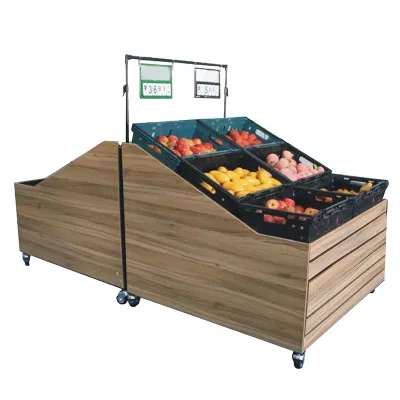
Wooden Fruit and Vegetable Rack Stands Display Rack for Supermarket Vegetable Rack
$250.00 - $350.00
MOQ: 10 Minimum


Supermarket Fruit and Vegetable Display Shelves Use for Fruit Vegetable Display Rack
$215.00 - $230.00
MOQ: 10 Pieces







Comprehensive Sourcing Guide
Strategic Sourcing Guide for 2 Layer Standing Fruit and Vegetable Racks
Understanding Product Specifications and Structural Design
When sourcing a 2-layer standing fruit and vegetable rack, buyers must first distinguish between the specific configurations available in the current market. The core keyword implies a standing unit with two distinct levels for product display, yet observed market data reveals a complex landscape of variations. While the target is a two-layer unit, the supplied product facts indicate that manufacturers frequently offer multi-layer alternatives, such as 3-layer models, alongside single-sided and double-sided configurations. A critical initial step is verifying the exact layer count and side configuration to ensure the unit matches the intended retail floor plan.
The structural integrity of these racks is primarily derived from the materials used. The predominant material observed in high-volume listings is steel, often treated with a powder-coated finish to enhance durability and aesthetic appeal. Some specific models integrate painted steel with ABS (Acrylonitrile Butadiene Styrene) components, particularly for shelving surfaces or accents, which can offer a lighter weight profile compared to all-metal constructions. The surface treatment is a vital specification; a powder-coated finish not only provides a smooth, uniform appearance but also offers resistance to scratches and corrosion, which is essential in environments where moisture from produce is common.
Dimensions vary significantly based on the model. Observed standards include specific footprint measurements such as 1500mm by 900mm with a height of 1800mm, or alternative configurations like 1200mm by 1200mm with a height of 2050mm. Buyers must align these dimensions with their available floor space. Furthermore, the weight capacity is a crucial technical parameter. While some units are marketed as "light weight" for ease of movement, others are engineered to support substantial loads, with observed capacities ranging from 50kg to 150kg per unit. This variance dictates the type of produce that can be safely displayed; heavy root vegetables require a higher load-bearing capacity than lightweight leafy greens.
Compliance, Certification, and Safety Standards
In the B2B procurement of retail display equipment, compliance with international safety and quality standards is non-negotiable. The market data indicates that reputable suppliers often provide certifications such as CE (Conformité Européenne), which signifies that the product meets EU safety, health, and environmental requirements. Additionally, some listings reference ISO9001:2000, a standard for quality management systems that ensures the manufacturer maintains consistent quality control processes during production.
However, buyers must exercise caution. The presence of a certification claim in a product listing does not automatically guarantee that every unit in a specific order is certified. It is imperative to request valid, up-to-date certification documents directly from the supplier before finalizing a purchase. The verification process should include checking the certificate number against the issuing body's database to ensure authenticity.
Beyond formal certifications, the physical construction must adhere to safety standards relevant to the destination market. For instance, in the United States, racks must often meet specific stability requirements to prevent tipping, especially when loaded with heavy produce. The "Fixed" rotary attribute observed in some listings suggests that certain models are designed to be stationary, which inherently aids stability, whereas mobile units require robust locking mechanisms on their casters. Buyers should verify that the design includes features to prevent accidental tipping, such as a wide base or anti-tip mechanisms, particularly for double-sided units which may have a higher center of gravity when fully loaded.
Cost Drivers and Pricing Dynamics
The pricing of fruit and vegetable racks is influenced by a complex interplay of factors, including material composition, surface treatment, customization levels, and order volume. The observed price range in the market spans from $2.50 to $1,500 USD, a wide spectrum that reflects the diversity of product types. A unit priced at the lower end of this spectrum is likely a basic steel model with minimal customization and standard dimensions. Conversely, units at the higher end may feature premium finishes, custom branding, specialized ABS components, or complex engineering for higher load capacities.
Material costs are a primary driver. Steel is generally more cost-effective than high-grade stainless steel or aluminum, but the choice of steel grade and the thickness of the metal directly impact the final price. The addition of ABS plastic for shelving or decorative elements adds to the material cost but can improve the visual appeal and reduce the overall weight. Surface treatments also play a role; a standard powder-coated finish is cost-effective, while specialized colors or custom finishes may incur additional charges.
Customization is another significant cost factor. The market data confirms that customization is available, including options for customized logos and specific color choices like blue or black. While these features add value for branding, they typically increase the unit price and may affect the minimum order quantity (MOQ). Buyers should note that the MOQ varies widely, with some suppliers requiring as few as 3 pieces, while others set the threshold at 10 or even 500 pieces. Ordering closer to the supplier's standard MOQ can often result in better per-unit pricing, whereas small orders may attract a premium.
Typical Applications and Retail Environments
The versatility of 2-layer standing fruit and vegetable racks makes them suitable for a wide array of retail environments. The primary applications identified in the market data include shops, supermarkets, convenience stores, and drug stores. These units are designed to maximize vertical space, allowing retailers to display a greater variety of produce within a compact footprint. The "Hanging Style" attribute observed in some listings suggests that certain models are designed to be wall-mounted or suspended, offering an alternative to floor-standing units for stores with limited floor space.
For supermarkets and large grocery chains, the double-sided configuration is particularly valuable. These racks allow for efficient use of aisle space, enabling customers to access produce from both sides of the unit. This configuration is ideal for high-traffic areas where visibility and accessibility are paramount. In contrast, single-sided racks are better suited for perimeter displays or end-of-aisle promotions where the back of the unit is not visible to customers.
The specific design of the rack must also align with the type of produce being displayed. For heavy items like potatoes or onions, a rack with a high load capacity (e.g., 150kg) and a sturdy steel construction is essential. For lighter items like berries or leafy greens, a lighter-weight design with a more open structure may be preferred to enhance visibility. The "Acrylic Pallet" feature mentioned in some listings indicates that certain models are designed to hold specific types of produce containers, adding another layer of versatility to the product line.
Supplier Evaluation and Sourcing Strategy
Selecting the right supplier is critical to ensuring product quality and reliable delivery. When evaluating potential partners, buyers should look for suppliers with a proven track record in manufacturing retail display equipment. The location of the supplier is a key factor; the majority of the observed products originate from China, specifically from regions like Jiangsu and Zhejiang. These regions are known for their robust manufacturing infrastructure and expertise in metal fabrication.
Buyers should verify the supplier's production capacity and lead times. The market data indicates a supply ability of approximately 100 pieces per day for some manufacturers, with delivery times ranging from 15 to 20 days. These figures should be cross-referenced with the buyer's specific timeline requirements. It is also important to assess the supplier's ability to handle customization requests. Suppliers that offer support for customized logos and colors demonstrate a higher level of flexibility and customer service.
Packaging is another aspect of supplier evaluation. The standard packaging observed includes bubble film and cartons, which are designed to protect the product during transit. However, for international shipments, buyers should ensure that the packaging meets the necessary standards for long-distance transport to prevent damage. Some suppliers offer specialized packing for acrylic vegetable racks, which may require additional protective measures.
Quality Control and Long-Term Procurement Considerations
Quality control is essential to ensure that the purchased racks meet the required specifications and perform reliably over time. Buyers should implement a rigorous inspection process that includes checking the structural integrity of the steel, the uniformity of the powder-coated finish, and the stability of the unit when loaded. The "Light Weight" attribute observed in some listings should be verified against the actual load capacity to ensure that the unit does not compromise safety for the sake of portability.
Long-term procurement considerations involve assessing the durability and maintenance requirements of the racks. Steel racks with powder-coated finishes are generally low-maintenance and resistant to rust, but buyers should verify the thickness of the coating and the quality of the steel to ensure longevity. In high-traffic environments, the racks may be subject to frequent movement and impact, so the robustness of the joints and the stability of the base are critical factors.
Buyers should also consider the scalability of their procurement strategy. If the initial order is successful, the supplier should be able to accommodate future orders with consistent quality and lead times. Establishing a long-term relationship with a reliable supplier can lead to better pricing, priority production scheduling, and improved support for any issues that arise. Additionally, buyers should plan for potential product lifecycle management, including the availability of replacement parts or the ability to upgrade existing units as retail needs evolve.
Comparative Analysis of Key Product Attributes
To facilitate informed decision-making, the following table summarizes the key attributes observed in the market for fruit and vegetable racks. This comparison highlights the variability in specifications and helps buyers identify the features that best match their specific requirements.
| Attribute | Observed Variations | Strategic Implication |
|---|---|---|
| Material | Steel, Painted Steel & ABS | Steel offers durability; ABS adds lightness and aesthetics. |
| Layer Count | 2 Layers (Target), 3 Layers (Common) | Verify exact count; 3-layer models offer more storage but require more height. |
| Side Configuration | Single Sided, Double Sided | Double-sided maximizes aisle efficiency; single-sided for perimeter use. |
| Load Capacity | 50-150kg | Match capacity to produce weight; heavy items require higher limits. |
| Dimensions | 1500x900x1800mm, 1200x1200x2050mm | Align with floor space; height is critical for ceiling clearance. |
| Certification | CE, ISO9001:2000 | Verify authenticity; essential for EU and quality assurance. |
| Customization | Logo, Color (Blue/Black), Size | Adds branding value but may increase MOQ and cost. |
| MOQ | 3 PCS to 500 PCS | Lower MOQs allow for smaller test orders; higher MOQs reduce unit cost. |
| Lead Time | 15-20 Days | Plan production schedules accordingly; verify current capacity. |
By carefully analyzing these attributes and understanding the nuances of the market, buyers can make strategic decisions that align with their operational needs, budget constraints, and quality expectations. The goal is to source a 2-layer standing fruit and vegetable rack that not only meets immediate display requirements but also contributes to the long-term efficiency and aesthetic appeal of the retail environment.
FAQs
Can I get customized logos on these racks?
Yes, customized logos are available for these fruit and vegetable display racks. Buyers can request specific branding on the steel or ABS components to match their store identity. This customization option supports various retail environments like supermarkets and convenience stores.
What is the typical lead time for delivery?
The standard delivery time for these racks is between 15 to 20 days. This timeline applies to orders placed with suppliers in China who offer the specified powder-coated steel models. Buyers should account for this duration when planning inventory replenishment.
Which certifications do these racks typically hold?
Many models come with CE certification and meet ISO9001:2000 quality standards. These certifications indicate compliance with safety and quality management requirements for the European market. Buyers should verify specific certificate documents directly with the supplier before purchasing.
What are the standard dimensions for these units?
Standard dimensions include models measuring 1500 by 900 by 1800 mm or 1200 by 1200 by 2050 mm. These sizes are designed to fit various retail floor plans while maximizing vertical display space. Specific dimensions vary by model number such as YD-V007 or YD-V009.
How much weight can these racks support?
Some units are engineered to support a capacity ranging from 50 to 150 kg per rack. This load-bearing capability ensures stability for displaying heavy produce like root vegetables. Buyers must verify the specific capacity of the model they select to ensure safety.
What is the minimum order quantity for these racks?
The minimum order quantity varies, with some suppliers requiring as few as 3 pieces while others set it at 10 or 500 pieces. The specific MOQ depends on the manufacturer and the customization level requested. Buyers should confirm the threshold before placing an order.
Which materials are used to construct these racks?
These racks are primarily constructed from steel, often with a powder-coated finish for durability. Some models integrate painted steel with ABS components to reduce weight and enhance aesthetics. The material choice ensures resistance to corrosion in produce-heavy environments.