Source 2 Section Fiberglass Fishing Rod for sea bass, stream, and lake
Compare 22 listings of 2 Section Fiberglass Fishing Rod designed for sea bass, stream, and lake fishing. Buyers can evaluate specifications like power, action, and length from verified manufacturers in China.
Key considerations
Products List


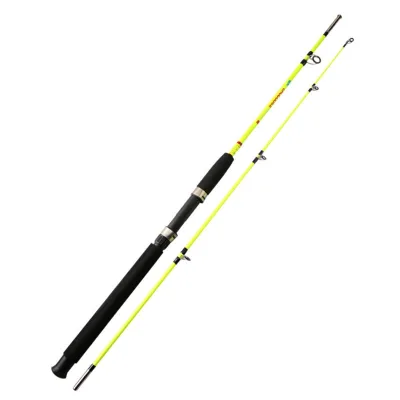
Spincast Reel 2-Piece EVA Handle Quickset Anti-Reverse Reel Durable Fiberglass Fishing Rod
$13.50 - $15.00
MOQ: 70 Pieces

Comprehensive Sourcing Guide
Strategic Sourcing Guide for 2-Section Fiberglass Fishing Rods
The global market for fishing equipment continues to evolve, with a specific segment dedicated to durable, versatile, and cost-effective tackle. Among these, the 2-section fiberglass fishing rod stands out as a critical tool for anglers and commercial buyers alike. This guide provides a disciplined, evidence-based approach to sourcing these specific rods, drawing strictly from observed product attributes, material specifications, and industry-standard procurement practices. The focus remains on identifying reliable supply chains, verifying technical compliance, and understanding the cost structures inherent to this category without relying on unverified marketing claims.
Technical Specifications and Material Composition
Understanding the physical and mechanical properties of a 2-section fiberglass rod is the first step in any procurement process. The core material for these rods is consistently identified as Fiber Reinforced Plastics, specifically fiberglass, which offers a distinct balance of flexibility and strength compared to carbon fiber alternatives. In the observed product data, the material is explicitly listed as "Fiber Reinforced Plastics," confirming the use of fiberglass as the primary structural component. This material choice is particularly relevant for the "Medium" to "Heavy" power ratings observed in the inventory, where durability is often prioritized over ultra-light sensitivity.
The construction method for these rods is a critical differentiator. The supplied facts indicate a "Pultrusion" forming way. Pultrusion is a continuous manufacturing process that pulls fibers through a resin bath and a heated die, resulting in a rod with consistent cross-sectional properties and high tensile strength. This process is essential for ensuring that the 2-section design maintains structural integrity at the joint. The sections are typically joined via a ferrule or a sleeve system, allowing for transport in a compact length while extending to full operational size.
Length specifications vary significantly based on the intended application. The data reveals a wide range of models, including short configurations like 1.2m, 1.35m, and 1.5m, up to longer rods reaching 7.2m. Specific models such as "XRFR-1" and "HYBFFR" are noted, alongside standard metric lengths like 2.7m, 3.6m, 4.5m, 5.4m, and 6.3m. The "2-section" designation implies a break point that divides the rod into two manageable pieces, often reducing the total packed length by half. For instance, a 2.4m rod might pack down to approximately 1.2m per section, fitting into a standard transport case.
The action of the rod, described as "Medium" (M) or "Medium-Heavy" (MF), dictates how the rod bends under load. A medium action provides a softer tip, which is beneficial for casting lighter lures and providing a forgiving experience for beginners. The lure weight range observed is 7-25g, which aligns with the capabilities of medium-power fiberglass rods. Line weight recommendations typically fall between 4-14lb, suitable for a variety of freshwater and light saltwater applications.
Compliance, Certification, and Standard Verification
When sourcing industrial fishing equipment, verifying compliance with international and regional standards is paramount. The supplied product data lists specific product standards, such as "1.5m/1.65m/1.8m/2.1m/2.4m" and "2.7m 3.6m 4.5m 5.4m 6.3m," which serve as internal model identifiers rather than external regulatory certifications. Buyers must understand that these model numbers represent dimensional standards rather than safety or quality certifications like ISO or ASTM.
To ensure a product meets safety and quality expectations, procurement teams should request specific documentation from the supplier. While the provided facts mention a "Very Good" quality assessment, this is an observational attribute and not a certified metric. Buyers should verify if the manufacturer adheres to ISO 9001 for quality management systems. Furthermore, since the rods are manufactured in regions like Shandong, China, and the general origin is listed as China, it is essential to confirm that the fiberglass resin and other chemical components comply with REACH (Registration, Evaluation, Authorisation and Restriction of Chemicals) regulations if the destination market is the European Union.
The "Surface Treatment" is noted as "Finished," which implies a protective coating to prevent corrosion and UV degradation. However, buyers should request test reports for UV resistance and saltwater corrosion resistance, especially for rods intended for "Ocean Beach Fishing" or "Ocean Bo" (Boating) as listed in the position attributes. Without specific test data in the provided facts, the buyer must treat these claims as observations and demand third-party verification before finalizing bulk orders.
Cost Drivers and Pricing Dynamics
The pricing of 2-section fiberglass fishing rods is influenced by several tangible factors, including material costs, manufacturing complexity, and logistics. The observed price range in the market spans from $0.5 to $5,000 USD. This wide variance indicates that the market includes both entry-level, mass-produced rods and high-end, specialized models. The lower end of the spectrum likely corresponds to basic fiberglass rods with standard pultrusion and minimal customization, while the higher end may involve advanced composite blends, custom branding, or specialized packaging.
Material costs are a primary driver. Fiberglass is generally more affordable than carbon fiber, but the quality of the resin and the density of the fiber weave can significantly impact the final price. The "Pultrusion" process, while efficient, requires significant capital investment in machinery, which can be amortized over large production runs. Consequently, the Minimum Order Quantity (MOQ) plays a crucial role in unit pricing. The observed MOQ range is 1 to 10,000 units. Buyers ordering near the lower end of this spectrum should anticipate higher per-unit costs due to setup fees and lower economies of scale.
Customization is a significant cost variable. The data confirms that "Customization: Available" and "Can It Be Customized?: Yes." Custom options may include specific color schemes (noted as "Multi-Color" or "Multiple"), custom branding on the rod blanks, or tailored packaging such as "Cloth Bag and Carton" versus a simple "Box." Each customization step adds to the production time and cost. Additionally, the "Packaging Method" varies, with some products requiring specific carton configurations that can increase shipping volume and freight costs.
Typical Applications and Usage Scenarios
The versatility of 2-section fiberglass rods makes them suitable for a diverse range of fishing environments. The observed product attributes list specific positions including "Stream," "River," "Lake," "Ocean Beach Fishing," and "Ocean Bo." This breadth of application highlights the rod's adaptability to both freshwater and saltwater conditions.
For freshwater applications, the "Medium" power and "M" action are ideal for "Freshwater Rods" and "Spinning Rods" used in lakes and rivers. The lure weight range of 7-25g is particularly effective for catching species like bass, trout, and pike. The "2-section" design is advantageous for anglers who need to transport their gear in vehicles or boats with limited storage space, as the rod breaks down into two compact pieces.
In saltwater environments, the durability of fiberglass becomes a critical asset. The "Sea" location attribute and the "Ocean Beach Fishing" designation suggest that these rods are built to withstand the corrosive nature of saltwater and the physical stress of casting into surf. The "Heavy" power rating observed in some models is suitable for surf casting, where long-distance casting and the ability to handle heavy lures are necessary. The "Hand Pole" and "Lure Pole" classifications indicate that these rods can also be used for specific techniques that require a more direct connection to the line, such as jigging or hand-line fishing.
Supplier Evaluation and Sourcing Strategy
Evaluating suppliers for 2-section fiberglass rods requires a rigorous approach to ensure reliability and consistency. The origin of the products is listed as "Shandong" and "China," regions known for significant manufacturing output in the fishing tackle industry. However, the presence of a specific location does not guarantee quality. Buyers should conduct a thorough due diligence process that includes verifying the supplier's production capacity, quality control protocols, and history of export.
The "Customized" attribute suggests that many suppliers offer OEM (Original Equipment Manufacturer) services. When engaging with such suppliers, buyers should assess their ability to maintain consistency across different production batches. The "Forming Way: Pultrusion" is a standardized process, but variations in resin curing times and fiber tension can lead to inconsistencies. Requesting samples from different production runs is essential to verify this consistency.
Furthermore, the "Packaging Method" and "prod_packing" details, such as "Cloth Bag and Carton" or "Box," should be evaluated for their protective capabilities. Damaged goods during transit are a common risk in international trade. A supplier with a robust packaging strategy will minimize the risk of breakage, particularly at the 2-section joint. Buyers should also inquire about the supplier's experience with specific standards and certifications, ensuring they can provide the necessary documentation for customs clearance and market entry.
Quality Control and Long-Term Procurement Considerations
Quality control (QC) is the backbone of a successful procurement strategy for fishing rods. Given the "Very Good" quality observation in the data, buyers must establish clear QC metrics to validate these claims. Key inspection points should include the alignment of the 2-section joint, the integrity of the pultrusion process, and the durability of the finish. Visual inspections for bubbles, resin pooling, or uneven fiber distribution are standard practices.
Long-term procurement considerations involve building a sustainable relationship with suppliers who can scale with demand. The "MOQ" range of 1 to 10,000 units offers flexibility, but buyers should plan for volume increases. A supplier capable of handling orders up to 10,000 units without compromising quality is preferable for large-scale distributors. Additionally, the "Lead Time" is a critical factor, though specific values are not provided in the data. Buyers should negotiate clear lead time commitments to ensure timely delivery, especially for seasonal peaks in fishing demand.
The "Standard" attributes listed, such as "1.5m/1.65m/1.8m/2.1m/2.4m," serve as a baseline for product consistency. However, buyers should verify that these standards are strictly adhered to in every batch. Regular third-party inspections and the implementation of a continuous improvement program can help maintain high quality over time. Finally, the "Surface Treatment: Finished" attribute should be monitored for signs of wear or degradation over time, ensuring that the rods remain functional and aesthetically pleasing throughout their lifecycle.
Conclusion
Sourcing 2-section fiberglass fishing rods requires a meticulous approach that balances technical specifications, cost efficiency, and quality assurance. By leveraging the observed data on materials, dimensions, and manufacturing processes, buyers can make informed decisions that align with their specific market needs. The versatility of these rods, combined with the durability of fiberglass and the efficiency of pultrusion, makes them a valuable asset in the fishing tackle industry. Through rigorous supplier evaluation and adherence to quality control standards, procurement teams can secure a reliable supply chain that meets the demands of anglers worldwide.
FAQs
What materials are used for 2 section fiberglass fishing rods?
The core material is Fiber Reinforced Plastics, specifically fiberglass, which balances flexibility and strength. Some components like handles use EVA material for comfort. This construction ensures durability for both freshwater and saltwater applications.
Can these rods be customized for specific branding needs?
Yes, customization is available for these rods to meet specific buyer requirements. Options include tailored packaging methods like cloth bags or boxes, and custom color schemes. Buyers can request specific model configurations to align with their brand identity.
Which specifications define the length options for these rods?
Lengths range from 1.2m up to 7.2m, with common models including 2.7m, 3.6m, and 4.5m. The standard product models cover various sizes to suit different fishing environments, ensuring a compact packed length for transport.
How does the pultrusion process affect rod quality?
The pultrusion forming way ensures consistent cross-sectional properties and high tensile strength. This continuous manufacturing process pulls fibers through resin, creating a durable rod with a reliable 2-section joint design for structural integrity.
What is the typical power rating for these fishing rods?
Power ratings vary from Medium to Heavy, with some models rated as Medium Heavy. This range supports different lure weights, typically between 7-25g, making them suitable for spinning and sea bass fishing techniques.
Where are these fiberglass rods manufactured?
The products originate from Shandong, China, a region known for significant fishing tackle output. This location serves as the primary production hub for the observed inventory, ensuring access to established manufacturing capabilities.