Source 20T European Standard Fire Truck for emergency rescue, municipal fire, and industrial safety
Compare 15 listings for the 20T European Standard Fire Truck featuring diesel engines, manual transmissions, and volumes between 3001 and 10000 liters. These new units offer customization options and certifications like ISO and RoHS for diverse emergency response needs.
Key considerations
Products List


This Fire Truck Is Designed to Pass Euro 6 Emission Standards Easily
$30000.00 - $60000.00
MOQ: 1 Pieces

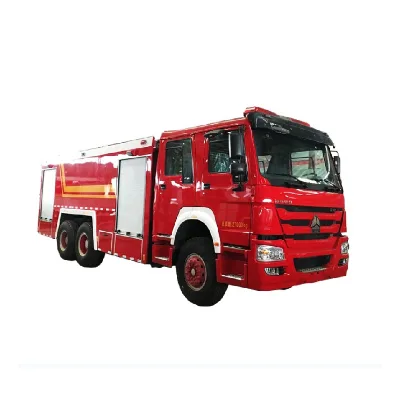
China 8cbm Fire Truck 8tons City Fire Engine 10tons Fire Fighting Truck
$45700.00 - $47950.00
MOQ: 1 Pieces


Comprehensive Sourcing Guide
Strategic Sourcing Guide for 20-Ton European Standard Fire Trucks
Understanding the Technical Architecture of 20-Ton Rescue Vehicles
The procurement of a 20-ton fire truck requires a precise understanding of the vehicle's structural and mechanical architecture, as these units are engineered for high-stakes emergency response rather than general logistics. Based on available market data, the core specification for this category centers on a payload capacity of exactly 20 tons, which dictates the chassis strength and suspension requirements. The vehicle class is predominantly categorized under "Rescue" and "Aerial" types, indicating a dual capability for direct firefighting and elevated rescue operations.
The powertrain configuration is a critical differentiator in this segment. The observed data indicates a horsepower range spanning from 150 to 350 hp, with specific models offering configurations between 150-250 hp and others reaching 251-350 hp. This variance allows buyers to select units based on the specific terrain and response time requirements of their jurisdiction. Fuel consumption is managed through diesel engines, with displacement figures such as 6871ml observed in specific models, suggesting robust engine blocks designed for sustained high-load operations. Transmission options vary significantly between manual and automatic gearboxes, providing flexibility for operators accustomed to different driving dynamics.
Chassis selection is another pivotal technical decision. The market offers a wide array of optional chassis brands, including Dongfeng, FAW, and HOWO, allowing procurement teams to align with existing fleet maintenance standards. The driving type configurations are equally diverse, ranging from 4×2 and 6×2 setups to more robust 6×4, 8×4, 8×6, 4×4, and 6×6 configurations. This variety ensures that the vehicle can be matched to specific road conditions, whether operating on standard paved roads or navigating rougher emergency access routes. The exterior dimensions are standardized in some contexts, with specific models adhering to dimensions of 8985×2510×3600 mm, while others may offer customized packing or dimensions to fit specific garage constraints.
Compliance Verification and Certification Standards
Navigating the regulatory landscape for fire trucks involves rigorous verification of certifications and emission standards. The primary compliance benchmark for this category is the European Standard, which governs the design and safety features of the vehicle. Buyers must verify that the specific unit adheres to Euro emission standards, with diesel fuel being the primary energy source for the majority of these heavy-duty units. Some variations in the market may list gasoline as a fuel type, necessitating a clear distinction based on the specific operational environment and local environmental regulations.
Certification documentation is a non-negotiable aspect of the procurement process. The observed data highlights a cluster of certifications including ISOCCC, TSEPA, EEC, RoHS, CCC, and CE. These marks indicate compliance with international quality management systems, environmental protection regulations, and electrical safety standards. For instance, the presence of RoHS certification suggests the vehicle components are free from specific hazardous materials, while EEC and CE marks are essential for European market entry and safety compliance. The CCC certification is particularly relevant for vehicles manufactured in or destined for markets requiring Chinese Compulsory Certification.
Buyers must exercise caution when interpreting certification lists. While the aggregate data shows these certifications are available in the market, they are not guaranteed to be present on every single unit listed. It is imperative to request specific test reports and certification copies for the exact model number being purchased. The product standard is often listed as "Customized," which implies that while the base vehicle meets general standards, specific modifications may alter the compliance profile. Therefore, the verification process must include a direct review of the Certificate of Conformity (COC) for the specific chassis and body configuration to ensure no regulatory gaps exist before delivery.
Cost Drivers and Financial Parameters in Heavy Vehicle Procurement
The financial landscape for acquiring a 20-ton fire truck is influenced by several distinct cost drivers, primarily revolving around customization, chassis selection, and volume capacity. The observed price range for these units is substantial, spanning from approximately $10,327.90 to $196,000. This wide disparity is not indicative of quality differences alone but rather reflects the vast range of configurations available. A base model with a 4×2 drive and lower horsepower will naturally sit at the lower end of this spectrum, while a fully customized 8×6 aerial platform with a 350 hp engine and specialized rescue equipment will command the higher price points.
Volume capacity is a significant determinant of cost. The data indicates two primary volume tiers: 3001-5000 liters and 7001-10000 liters. The larger water or foam tanks required for the 7001-10000L range necessitate heavier structural reinforcement and larger pump systems, directly impacting the manufacturing cost. Additionally, the "Customization" attribute is listed as available, which often incurs additional engineering and labor costs. Buyers seeking specific exterior colors, custom bodywork, or specialized equipment integration should anticipate a premium over standard configurations.
The Minimum Order Quantity (MOQ) for these vehicles is consistently observed as 1 unit, suggesting that procurement can be conducted on a per-unit basis without the need for bulk ordering. However, the lead time and production schedule may vary based on the level of customization. The product origin is identified as China, which influences logistics costs and import duties. Buyers must factor in the cost of container or bulk cargo shipping, as well as potential insurance premiums for high-value industrial equipment. The "Service Life" attribute in some listings mentions a range of ≤1 Year, which may refer to specific warranty periods or component lifecycles rather than the total vehicle lifespan, requiring careful clarification during the negotiation phase to avoid misunderstandings regarding long-term value.
Operational Applications and Deployment Scenarios
The deployment of a 20-ton fire truck is dictated by its classification as a "Rescue" and "Aerial" vehicle, making it suitable for complex emergency scenarios. The primary usage is defined as "Emergency Rescue Fire Truck," indicating a dual role in fire suppression and technical rescue operations. The "Aerial" classification suggests the inclusion of ladders or platforms capable of reaching elevated structures, which is critical for high-rise building fires or industrial accidents. The "Rescue" designation implies the vehicle is equipped with specialized tools for extrication, medical support, or hazardous material containment.
The payload capacity of 20 tons allows for the carriage of significant amounts of water, foam, and rescue equipment. The volume capacities observed, ranging from 3000 to 10,000 liters, enable the vehicle to sustain prolonged firefighting operations without immediate need for water supply replenishment. This is particularly advantageous in rural areas or locations where hydrant infrastructure is limited. The driving type options, including 4×4 and 6×6 configurations, make these vehicles suitable for off-road or rough terrain applications, expanding their utility beyond standard urban environments.
The cab configuration, with a passenger allowance of 2+4, ensures that a full crew of firefighters can be transported safely and efficiently. The "Road Conditions" attribute specifies "Road," indicating that while the vehicles are robust, they are primarily designed for paved surfaces, though the 4×4 and 6×6 variants offer enhanced off-road capability. The "Maximum Speed" of 90 km/h ensures rapid response times to emergency scenes, balancing speed with the heavy weight of the vehicle. The "Service Life" and "Mileage" attributes, such as ≤10,000 km for certain models, suggest that these vehicles may be marketed as new or with very low mileage, ensuring reliability for critical emergency services.
Supplier Evaluation and OEM Capabilities
When evaluating potential suppliers for 20-ton fire trucks, the presence of OEM (Original Equipment Manufacturer) capabilities is a key indicator of reliability and customization potential. The data confirms that OEM services are available, meaning suppliers can produce vehicles based on specific client requirements rather than offering only off-the-shelf models. This is crucial for municipal fire departments or private industrial facilities that have unique operational needs. The "Chassis Optional" attribute further supports this, allowing buyers to select from established chassis brands like Dongfeng, FAW, or HOWO, ensuring compatibility with local maintenance networks and spare parts availability.
Supplier evaluation should also focus on the breadth of their product portfolio. The observed data lists multiple model numbers, such as CLW5270GXFGP110/HW, CL5043XJHY, and JDF5130TXFJY90/Z6, indicating a diverse range of configurations. A supplier capable of producing such a variety demonstrates technical versatility and manufacturing scale. The "After-Sales Service" attribute highlights the availability of video technical support, which is a valuable resource for troubleshooting and operational training. Buyers should verify the scope of this support, including whether it extends to on-site assistance, spare parts supply, and long-term maintenance contracts.
The "Product Name" and "Brand Name" attributes, such as "Forland," provide insight into the manufacturer's identity. However, buyers should be cautious not to assume that all listed products carry the same brand, as the market often features white-labeling or rebranding. The "Customized" status of the exterior color and product standard suggests that suppliers are willing to adapt the vehicle's appearance and specifications to match the buyer's branding and operational requirements. This flexibility is a strong indicator of a supplier's commitment to customer satisfaction and long-term partnership.
Quality Control and Long-Term Procurement Considerations
Ensuring the quality of a 20-ton fire truck requires a rigorous quality control (QC) process that extends beyond the final inspection. The "Condition" of the vehicles is listed as "New," which is a critical baseline for procurement. However, buyers must verify the manufacturing process to ensure that the "New" condition is genuine and not the result of reconditioned units. The "Braking System" is specified as "Mechanical," a traditional and reliable choice for heavy vehicles, but buyers should confirm the specific design and maintenance requirements of this system.
Long-term procurement considerations include the availability of spare parts and the durability of the vehicle. The "Service Life" attribute, while sometimes listed as ≤1 Year, likely refers to specific warranty terms or component lifecycles. Buyers should seek clarification on the expected operational lifespan of the vehicle, which should typically be measured in years of continuous service rather than just mileage. The "Mileage" attribute of ≤10,000 km for certain models suggests that these units are either brand new or have been used minimally, which is a positive indicator for longevity.
The "Packing" method, whether "Container," "Bulk Cargo," or "Nude," impacts the shipping and handling process. Proper packing is essential to prevent damage during transit, especially for vehicles with delicate equipment and custom bodywork. The "Wheelbase" dimensions, such as 2035/1844 mm, influence the vehicle's maneuverability and stability, which are critical for long-term operational safety. Buyers should also consider the "Charging Device" attribute, which is listed as "Configurable," indicating that the vehicle's electrical system can be tailored to specific power requirements, ensuring compatibility with onboard equipment and emergency lighting systems.
Comparative Analysis of Key Specifications
To facilitate informed decision-making, the following table summarizes the key technical and compliance specifications observed in the market for 20-ton European standard fire trucks. This comparison highlights the variability in configurations and helps buyers identify the features most relevant to their specific needs.
| Specification Category | Observed Range/Options | Key Considerations for Buyers |
|---|---|---|
| Payload Capacity | 20T | Fixed standard for this category; ensures heavy-duty capability. |
| Horsepower | 150-250 hp; 251-350 hp | Select based on terrain and response time requirements. |
| Drive Wheel | 4×2, 6×2, 6×4, 8×4, 8×6, 4×4, 6×6 | Choose based on road conditions and stability needs. |
| Fuel Type | Diesel (Primary), Gasoline (Some models) | Verify emission standards and local fuel availability. |
| Volume Capacity | 3001-5000L; 7001-10000L | Larger volume requires more robust chassis and pump systems. |
| Emission Standard | Euro (Diesel/Gasoline) | Must comply with local environmental regulations. |
| Certifications | ISOCCC, TSEPA, EEC, RoHS, CCC, CE | Request specific COC for the exact model; verify validity. |
| Transmission | Manual, Automatic | Select based on operator preference and terrain. |
| Chassis Options | Dongfeng, FAW, HOWO | Align with existing fleet maintenance and parts availability. |
| Price Range | $10,327.90 - $196,000 | Price varies significantly with customization and volume. |
| MOQ | 1 Unit | Procurement can be done on a per-unit basis. |
| Product Origin | China | Factor in logistics, import duties, and lead times. |
This comparative analysis underscores the importance of detailed specification matching. Buyers should not rely on general market averages but must verify the exact configuration of the unit they intend to purchase. The variability in horsepower, drive configuration, and volume capacity means that a "one-size-fits-all" approach is ineffective. Instead, a tailored procurement strategy that aligns with the specific operational requirements of the fire department or industrial facility is essential for success. By carefully evaluating these factors, buyers can ensure they acquire a 20-ton fire truck that meets both immediate operational needs and long-term strategic goals.
FAQs
What certifications do 20t european standard fire trucks have?
These trucks typically carry ISOCCC, TSEPA, EEC, RoHS, CCC, and CE certifications. Buyers must verify specific certificates for the exact model as availability varies by unit and customization level.
Which horsepower ranges are available for these rescue vehicles?
Available configurations range from 150 to 250 hp and 251 to 350 hp depending on the specific model. This variance allows selection based on terrain requirements and response time needs.
Can I customize the exterior color and specifications of the truck?
Yes, customization is available for exterior colors and product standards to meet specific operational needs. Buyers should expect additional engineering costs for non-standard configurations and custom bodywork.
What is the minimum order quantity for purchasing a single unit?
The minimum order quantity is one unit, allowing procurement on a per-unit basis without bulk requirements. This flexibility supports single-department purchases or fleet expansion projects.
Which chassis brands are optional for these fire fighting trucks?
Optional chassis brands include Dongfeng, FAW, and HOWO to align with existing fleet maintenance standards. This selection ensures compatibility with local spare parts and service networks.
How does water volume capacity affect the truck pricing?
Pricing varies significantly based on volume tiers of 3001-5000L or 7001-10000L. Larger tanks require heavier structural reinforcement and pump systems, directly increasing the manufacturing cost.
What after-sales support is provided for these emergency rescue vehicles?
Video technical support is provided to assist with troubleshooting and operational training. Buyers should verify if this extends to on-site assistance or long-term maintenance contracts.