Source 20V Cordless Snow Blower for Driveways, Walkways, and Paths
Explore 30 listings of the 20V Cordless Snow Blower designed for efficient snow removal on driveways, walkways, and paths. Buyers can compare specifications like cleaning width, battery voltage, and warranty terms from verified suppliers in China.
Key considerations
Products List


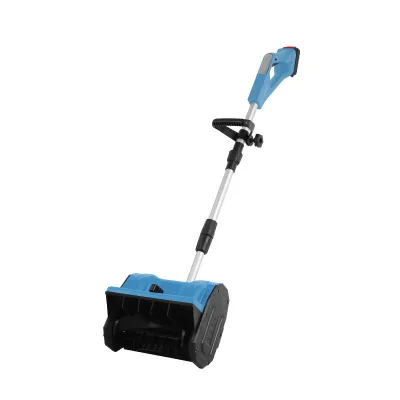


DC18V Cordless Snow Blower with 6m Throw Distance for Outdoor Garden (CDST005)
$28.00 - $32.00
MOQ: 500 Pieces




Comprehensive Sourcing Guide
Strategic Sourcing Guide for 20V Cordless Snow Blowers
The global market for cordless snow removal equipment has expanded significantly as buyers seek alternatives to gas-powered units that require fuel storage, regular engine maintenance, and emit exhaust fumes. Within this sector, the 20V Cordless Snow Blower category has emerged as a critical segment for residential and light commercial applications. Sourcing these units requires a disciplined approach to verifying technical specifications, ensuring regulatory compliance, and understanding the nuances of supplier capabilities. This guide provides a structured framework for procurement professionals to evaluate potential suppliers and products based on verified data and industry standards.
Technical Specifications and Performance Verification
When evaluating a 20V Cordless Snow Blower, the primary focus must be on the consistency of power delivery and the physical capabilities of the machine. The voltage rating is a fundamental specification, yet observed market data indicates variations in how this is reported. While the core keyword specifies 20V, actual product listings frequently cite 21V or 220V for different models or power sources. Buyers must verify that the nominal voltage aligns with the battery system's actual output to ensure compatibility with existing charging infrastructure.
The cleaning width and depth are critical metrics for determining the efficiency of the unit. Data from available product profiles shows a cleaning width ranging from 25.4cm to 30cm, with a maximum cleaning depth of 18cm. These dimensions define the machine's suitability for specific environments; a 30cm width is generally optimal for standard residential driveways, while narrower units may be intended for tighter spaces or decorative landscaping. Furthermore, the no-load speed is a key indicator of the auger's power. Observed speeds vary significantly, with some models reporting 3,300 rpm and others reaching 25,000 rpm. This discrepancy suggests that the 25,000 rpm figure may refer to a specific high-speed motor configuration or a different component entirely, necessitating a direct request for clarification on which component the speed rating applies to.
The physical dimensions and weight also impact portability and storage. Product specifications indicate a weight range between 4.3kg and 6.0kg, with single package sizes varying from 96x31.5x25cm to 125x32x21cm. A unit weighing 4.5kg offers a balance between durability and ease of handling, whereas heavier models may include more robust housing or larger battery packs. Buyers should cross-reference the stated weight with the gross weight to understand the total shipping mass, which directly influences logistics costs.
Compliance and Certification Requirements
Regulatory compliance is non-negotiable when importing snow removal equipment, particularly for markets in North America and the European Union. The safety and environmental standards for electric power tools are stringent. Verified product data lists certifications such as CE/EU, GS, EPA, and EMC. These certifications indicate that the product meets specific safety, electromagnetic compatibility, and environmental emission standards.
The EPA certification is particularly relevant for the North American market, ensuring that the electric motor meets noise and emission regulations, even though the unit is battery-operated. The CE mark confirms conformity with health, safety, and environmental protection standards for products sold within the European Economic Area. The GS mark (Geprüfte Sicherheit) is a German safety certification that is often recognized globally as a high standard of product safety. EMC (Electromagnetic Compatibility) ensures that the device does not generate excessive electromagnetic interference that could disrupt other electronic devices.
Buyers must request valid certification documents from suppliers rather than relying on marketing claims. It is essential to verify that the certification covers the specific model number being sourced. For instance, a model with the designation HHCXJ or CX-SXJ-05 must have its own specific test reports. Additionally, the product standard listed as 663432cm or 125cm32cm21cm refers to packaging dimensions rather than safety standards; buyers should not confuse packaging standards with international safety norms like ISO or IEC.
Cost Drivers and Pricing Dynamics
The pricing of 20V cordless snow blowers is influenced by several factors, including battery capacity, motor efficiency, build quality, and the level of customization offered. The observed price range in the market spans from $0.78 to $1,899, a vast disparity that reflects the difference between basic components and fully assembled, high-end units. The lower end of this spectrum likely represents individual parts or very basic models, while the higher end includes complete systems with advanced features.
Minimum Order Quantity (MOQ) is another significant cost driver. Data indicates an MOQ of 100 sets for many industrial-grade models, though some suppliers may offer lower quantities. The standard MOQ of 100 sets suggests that these products are primarily targeted at B2B buyers rather than individual consumers. Buyers should be aware that ordering below the standard MOQ may result in higher per-unit costs or require a special arrangement.
Customization options also impact the final price. Suppliers offering OEM (Original Equipment Manufacturer) and ODM (Original Design Manufacturer) support typically charge a premium for branding, packaging, and specific feature modifications. The availability of customization allows buyers to tailor the product to their brand identity, but this must be factored into the total cost of ownership. Additionally, the warranty period, which ranges from 1 year to 3 years in observed data, can influence the initial purchase price. A longer warranty often indicates higher confidence in product quality but may come with a higher upfront cost.
Typical Applications and Usage Scenarios
Understanding the intended application of the snow blower is crucial for selecting the right model. The product data identifies the usage as "Snow Plow" and "Outdoor snow removal," with applications ranging from DIY projects to industrial use. The maximum snowfall height capability varies, with some models rated for 8cm and others for 16cm. This distinction is vital; a unit with an 8cm clearing height is suitable for light snowfall on paved surfaces, while a 16cm capacity is necessary for heavier accumulation or unplowed areas.
The battery power source is a defining characteristic of these units. With a power rating of 1200W and a lithium battery configuration, these machines offer the convenience of cordless operation without the noise and emissions of gas engines. The 1200W power output suggests a robust motor capable of handling moderate snow densities. However, the "Frequency: Other" designation in some listings requires clarification, as it may refer to the motor's operating frequency or a specific power delivery characteristic that differs from standard AC frequencies.
The application as a "Multi Function Tool" implies that the unit may have attachments or modular capabilities, allowing it to perform tasks beyond snow removal. This versatility can be a significant advantage for buyers looking to maximize the utility of their equipment investment. However, buyers should verify the specific functions and compatibility of any attachments before committing to a purchase.
Supplier Evaluation and Quality Control
Evaluating suppliers requires a rigorous assessment of their manufacturing capabilities and quality control processes. The origin of the products is predominantly China, with specific mentions of Shandong as a place of origin. This region is known for its manufacturing base, but buyers should still conduct due diligence on individual factories. The grade of the product is listed as "Industrial" or "Diy, Industrial," indicating that the equipment is built for durability and frequent use.
Quality control should be a central part of the procurement strategy. Buyers must verify that the supplier has a documented quality assurance process that includes testing for voltage stability, battery life, and mechanical durability. The observed weight variations (4.3kg to 6.0kg) highlight the importance of inspecting the final product to ensure it meets the specified weight and material standards. Inconsistent weights can indicate variations in material quality or assembly processes.
The warranty terms, ranging from 1 to 3 years, serve as an indicator of the supplier's confidence in their product. A 3-year warranty is a strong signal of quality, but it must be backed by a clear service agreement. Buyers should also check the supplier's response time and support infrastructure to ensure that any issues can be resolved promptly. The absence of remote control or timer reservation functions in some models suggests that these units are designed for manual operation, which may be preferable for users who value simplicity and reliability over advanced automation.
Long-Term Procurement Considerations
Sourcing 20V cordless snow blowers is not just a one-time transaction but a long-term partnership that requires careful planning. The availability of spare parts, such as batteries and motors, is critical for maintaining the fleet of equipment over time. Buyers should inquire about the supply chain for replacement parts and the lead times associated with them. The product packing, typically a color box, should be durable enough to protect the unit during shipping and storage.
The lead time for production and delivery is another factor to consider. While specific lead times are not provided in the data, the standard MOQ of 100 sets implies a production cycle that may take several weeks. Buyers should plan their inventory accordingly to avoid stockouts during peak snow seasons. Additionally, the customization support offered by suppliers, including OEM and ODM services, can be leveraged to create a unique product offering that differentiates the buyer in the market.
Finally, the environmental impact of the product should be considered. The use of lithium batteries and electric motors aligns with sustainability goals, but the disposal and recycling of these batteries must be managed responsibly. Buyers should ensure that their suppliers adhere to environmental regulations regarding battery disposal and that the packaging materials are recyclable. By focusing on these long-term considerations, buyers can build a resilient and sustainable supply chain for 20V cordless snow blowers.
Comparative Analysis of Key Product Attributes
To facilitate decision-making, the following table summarizes the key attributes observed in the market data for 20V cordless snow blowers. This comparison highlights the variability in specifications and helps buyers identify the features that align with their specific needs.
| Attribute | Observed Range / Value | Relevance for Procurement |
|---|---|---|
| Voltage | 21V, 220V, 21V | Verify compatibility with battery systems; 21V is standard for cordless. |
| Cleaning Width | 25.4cm - 30cm | Determines efficiency; wider is better for large areas. |
| Max Cleaning Depth | 18cm | Critical for heavy snowfall; ensure it meets local snow depth needs. |
| No-Load Speed | 3,300 rpm, 25,000 rpm | High speed may indicate high-torque motor; verify component context. |
| Weight | 4.3kg - 6.0kg | Affects portability; lighter units are easier to handle. |
| Power | 1200W | Indicates motor strength; 1200W is a robust standard for this class. |
| Battery Type | Lithium Battery | Standard for cordless; verify capacity and cycle life. |
| Warranty | 1 Year - 3 Years | Longer warranty suggests higher quality; check service terms. |
| Certifications | CE/EU, GS, EPA, EMC | Essential for market entry; verify validity for target regions. |
| MOQ | 100 Sets | Standard for B2B; affects initial investment and inventory. |
| Origin | China (Shandong) | Common manufacturing hub; verify factory audits. |
This table serves as a reference point for buyers to compare potential suppliers and ensure that the selected product meets all technical and regulatory requirements. By systematically evaluating these attributes, buyers can make informed decisions that balance cost, performance, and compliance.
FAQs
What is the maximum cleaning width for these units?
The maximum cleaning width ranges from 25.4cm to 30cm depending on the specific model. This dimension determines the efficiency of snow removal for driveways and walkways.
Can buyers request OEM or ODM customization support?
Yes, suppliers offer both OEM and ODM customized support for branding and feature modifications. This allows buyers to tailor the product to their specific brand identity and market needs.
Which certifications are verified for these snow blowers?
Verified certifications include CE/EU, GS, EPA, and EMC for safety and environmental compliance. These marks confirm the product meets international standards for electromagnetic compatibility and safety.
How does the no-load speed vary across models?
No-load speeds vary significantly, with observed values of 3300rpm and 25000rpm for different configurations. Buyers should clarify which component the speed rating applies to before purchasing.
What is the typical warranty period for these products?
The warranty period ranges from 1 year to 3 years depending on the supplier and model. A longer warranty often indicates higher confidence in product quality and durability.
Which battery type powers these cordless snow blowers?
These units are powered by lithium batteries with a nominal voltage of 21V. This power source provides cordless operation without the emissions associated with gas engines.