Source 3000m Borehole Logging Probe for Water Wells, Exploration, Surveying
Compare 28 listings for the 3000m Borehole Logging Probe designed for hydrogeological research and engineering well logging. Buyers can evaluate combined probes measuring resistivity, gamma, and caliper data for depths up to 3000 meters.
Key considerations
Products List


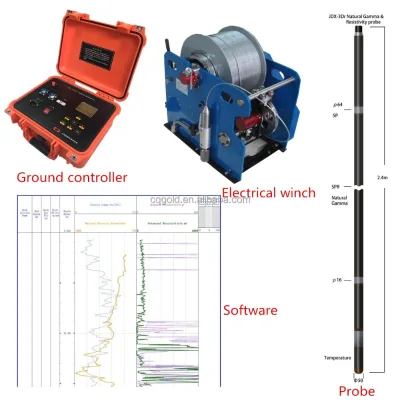
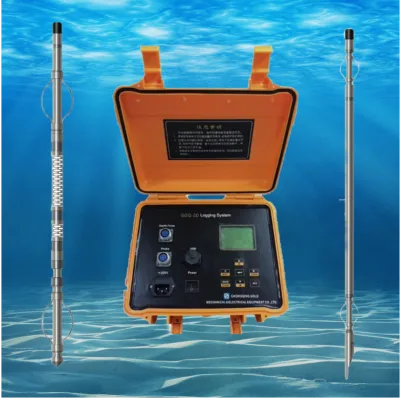


300m 500m 1000m Water Well Logging Equipment Borehole Geophysical Logger
$10.00 - $100.00
MOQ: 1 Pieces


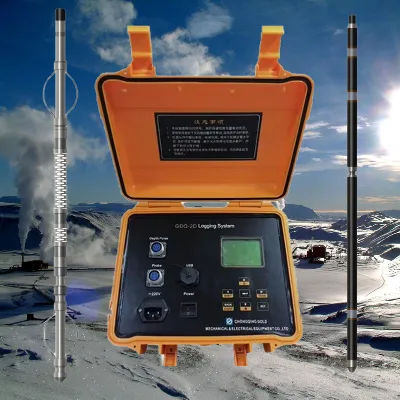
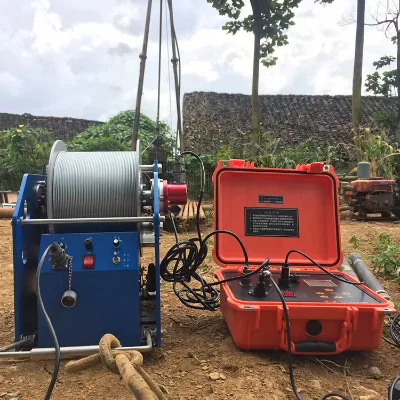
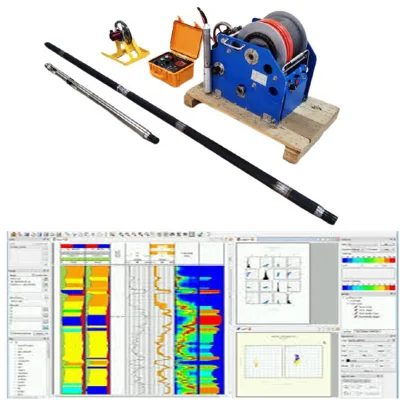

Comprehensive Sourcing Guide
Strategic Sourcing Guide for 3000m Borehole Logging Probes
Procuring a 3000m Borehole Logging Probe represents a significant capital investment for hydrogeological research, engineering well logging, and borehole surveying operations. The complexity of acquiring equipment capable of operating at depths ranging from 0m to 3000m requires a rigorous evaluation of technical capabilities, system integration, and supplier reliability. Unlike surface equipment, downhole probes must withstand extreme pressure, temperature, and mechanical stress while maintaining high-fidelity data transmission. This guide outlines the essential criteria for sourcing these specialized geophysical instruments, focusing on the specific attributes observed in the current market, such as the JGS-1B, GDQ-2D, and gdp-3d models, while ensuring compliance with international standards and operational requirements.
Technical Architecture and Measurement Capabilities
The core functionality of a 3000m logging system relies on the synergy between the probe, the acquisition data system, and the winch mechanism. Buyers must verify that the selected probe supports the necessary logging parameters for their specific geological context. The observed market data indicates that high-performance systems typically measure a combination of Resistivity, Self Potential (Sp), Natural Gamma, and Caliper data. For instance, specific models are designed to handle Electrical Resistivity, Gamma, Caliper, and Sonic measurements simultaneously.
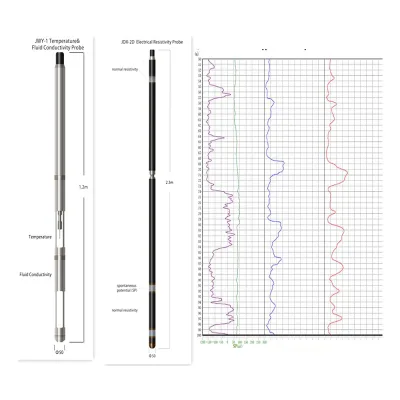
When evaluating the probe's technical architecture, the acquisition data capabilities are paramount. A robust system must support Gamma, Resistivity, and Sp data acquisition to ensure comprehensive formation evaluation. The depth capability is a critical differentiator; while some optical televiewers are limited to 1000m, the target 3000m probe must demonstrate a verified logging depth of 0-3000m. The probe's physical design often includes combined configurations, such as a 16/64 Short Normal Resistivity probe integrated with Sp, Natural Gamma, and Temperature sensors. Advanced configurations may also include Laterolog-3 Resistivity probes for deeper formation analysis.
The cable system is equally critical for 3000m operations. The observed specifications highlight the use of Single-Core and 4-Core cables, with specific diameters such as 3/16 Inch. The material composition, often described as armored cable in certain contexts, is essential for withstanding the tensile loads and abrasion encountered during deep borehole deployment. The winch system must complement the cable and probe, featuring auto-winding electrical winches capable of lift speeds ranging from 0-1800m/H. This speed range ensures efficient data acquisition without compromising the stability of the probe in the borehole.
System Integration and Operational Parameters
A 3000m logging operation is not merely about the probe; it is a complete system comprising the main machine, winch, cables, and the probe itself. Buyers should assess the integration of these components to ensure seamless operation. The system's primary application is geophysical water well logging and exploration, requiring a high degree of reliability. The optical pulse generator, such as the Sg9208 model observed in certain listings, plays a vital role in signal transmission, particularly for optical borehole imaging systems.
The operational range of the equipment must align with the geological requirements. For optical borehole televiewers, the range might be specified as 280mm to 7200mm, suitable for various borehole diameters. However, for standard electrical logging probes, the focus remains on the depth and the specific parameters measured. The measuring purpose is explicitly defined as geophysical logging for water wells and exploration, which necessitates high accuracy. Some systems boast an accuracy of 1mm for specific measurements, which is crucial for detailed hydrogeological research.
The horizontal and vertical line capabilities of the system also influence data quality. Specifications indicating vertical lines of 1 suggest specific imaging or logging modes that must be understood in the context of the intended survey. The system's ability to handle combined probes, such as those measuring 16/64 Resistivity, Sp, Natural Gamma, Temperature, and Spr, allows for multi-parameter logging in a single run, significantly reducing operational time and cost.
Compliance, Certification, and Standards Verification
In the B2B procurement of industrial geophysical equipment, verifying compliance with international standards is non-negotiable. The supply chain for these instruments often originates from China, with specific manufacturing hubs like Chongqing noted in the market data. Buyers must ensure that the products adhere to recognized quality management standards. The observed data references ISO9001 certification, which is a baseline requirement for manufacturing consistency and quality assurance.
Beyond general quality management, the equipment itself must meet specific industry standards for geophysical logging. The product standards observed include Natural Gamma, Resistivity, Caliper, and Sonic Logging standards. These are not merely marketing terms but technical specifications that define the performance envelope of the probe. Buyers should request documentation proving that the probe's calibration and testing procedures align with these standards.
It is crucial to distinguish between the manufacturer's internal standards and internationally recognized certifications. While the supply chain may originate from specific regions, the equipment must be validated against global benchmarks. The warranty period, typically observed as 1 Year, serves as a baseline indicator of the manufacturer's confidence in their product. However, buyers should not rely solely on the warranty duration; they must verify the scope of coverage and the availability of after-sales service, which is explicitly listed as a provided feature in the market data.
Cost Drivers and Procurement Economics
The pricing for 3000m borehole logging probes varies significantly based on the complexity of the system, the number of parameters measured, and the depth capabilities. The observed listed price range in the market spans from 1 to 20,000 USD, reflecting the diversity of products from basic components to fully integrated systems. This wide range necessitates a clear definition of requirements before engaging with suppliers. A basic probe for shallow logging will cost significantly less than a multi-parameter system designed for 3000m depth with advanced optical imaging capabilities.
The Minimum Order Quantity (MOQ) is another critical economic factor. The observed MOQ range is 1-50, indicating that some suppliers offer single-unit purchases, which is ideal for research institutions or small-scale surveying firms, while others may require bulk orders for industrial clients. Buyers should negotiate based on their specific volume needs and the customization options available. The market data confirms that customization is available, allowing buyers to tailor the probe's configuration to their specific geological needs, which can impact the final cost.
Packaging and logistics also contribute to the total cost of ownership. The observed packing methods include Wooden Cases and Export Cases, which are essential for protecting the sensitive equipment during international shipping. Buyers should factor in the cost of specialized packaging and the logistics of transporting heavy winch systems and long cables. The origin of the product, specifically China and Chongqing, influences shipping times and costs, which must be integrated into the procurement budget.
Supplier Evaluation and Quality Assurance
Evaluating a supplier for 3000m logging probes requires a multi-faceted approach that goes beyond price comparison. The supplier's ability to provide after-sales service is a key differentiator. The market data explicitly mentions the provision of after-sales service, which is critical for maintaining the complex winch and cable systems used in deep logging. Buyers should inquire about the availability of technical support, spare parts, and repair services in their region.
Quality control processes must be rigorous. The supplier should demonstrate a commitment to quality through their adherence to ISO9001 standards and their internal testing protocols. Buyers should request test results and performance data for the specific models they are considering, such as the JGS-1B or GDQ-2D. The accuracy of the measurements, such as the 1mm accuracy noted for certain parameters, should be verified through independent testing or third-party certification.
The supplier's experience in the geophysical sector is also a vital indicator of reliability. Suppliers with a history of providing equipment for hydrogeological research and borehole surveying are more likely to understand the nuances of deep logging operations. Buyers should assess the supplier's track record in delivering systems that meet the demanding requirements of 3000m depth operations. The availability of a warranty, typically 1 Year, is a standard expectation, but the terms and conditions of this warranty should be carefully reviewed to ensure adequate protection for the investment.
Long-Term Procurement and Operational Sustainability
Sourcing a 3000m Borehole Logging Probe is a long-term commitment that requires careful consideration of the product's lifecycle. The equipment must be durable enough to withstand repeated deployments in challenging environments. The use of armored cable and robust winch systems is essential for longevity. Buyers should evaluate the maintenance requirements of the system, including the frequency of cable inspections, winch servicing, and probe calibration.
The customization options available in the market allow for future-proofing the investment. As geological exploration techniques evolve, the ability to upgrade the probe's sensors or software is crucial. Buyers should ensure that the supplier offers firmware updates and the flexibility to add new measurement parameters as needed. The system's compatibility with existing data acquisition software is also a key consideration for long-term operational efficiency.
Finally, the environmental and safety aspects of the equipment should not be overlooked. The materials used in the construction of the probe and cable must be safe for use in various geological conditions. The supplier should provide clear guidelines on the safe operation of the equipment, including depth limits and pressure ratings. By focusing on these long-term considerations, buyers can ensure that their investment in a 3000m Borehole Logging Probe delivers value and reliability for years to come.
Comparative Analysis of Key System Attributes
To facilitate a clearer understanding of the available options, the following table summarizes the key attributes observed in the market for 3000m borehole logging systems. This comparison highlights the variations in models, depth capabilities, and measurement parameters.
| Attribute | Model JGS-1B | Model GDQ-2D | Model gdp-3d | Model GD-C1201 |
|---|---|---|---|---|
| Logging Depth | 0-3000m | 0-3000m | 0-3000m | 0-3000m |
| Primary Parameters | Resistivity, Sp, Gamma | Resistivity, Sp, Gamma, Sonic | Resistivity, Sp, Gamma, Caliper | Resistivity, Sp, Gamma, Temp, Spr |
| Probe Type | Electrical Resistivity, Gamma | Electrical Resistivity, Gamma | Electrical Resistivity, Gamma | Combined Probe |
| Cable Type | Single-Core, 4-Core | Single-Core, 4-Core | Single-Core, 4-Core | Single-Core, 4-Core |
| Winch Speed | 0-1800m/H | 0-1800m/H | 0-1800m/H | 0-1800m/H |
| Origin | China | Chongqing, China | China | China |
| Standard | ISO9001 | ISO9001 | ISO9001 | ISO9001 |
| Warranty | 1 Year | 1 Year | 1 Year | 1 Year |
This table illustrates that while the core depth and standard specifications remain consistent across models, the specific combination of measuring parameters and probe configurations varies. Buyers must select the model that best aligns with their specific hydrogeological research goals and the geological formations they intend to survey. The consistency in origin and warranty suggests a standardized manufacturing approach, but the customization options allow for tailored solutions to meet unique project requirements.
FAQs
What parameters does a 3000m Borehole Logging Probe measure?
It measures Resistivity, Self Potential, Natural Gamma, Caliper, and Sonic data. Specific models like the JGS-1B support combined probes for Electrical Resistivity, Gamma, and Caliper simultaneously to ensure comprehensive formation evaluation.
Which certification standards do these probes typically meet?
Products often adhere to ISO9001 quality management standards. The equipment also complies with specific industry standards for Natural Gamma, Resistivity, Caliper, and Sonic Logging to ensure measurement reliability and consistency.
Can I customize the probe configuration for specific needs?
Yes, customization is available for these geophysical systems. Buyers can tailor the probe to include specific combinations like 16/64 Resistivity, Sp, Natural Gamma, and Temperature sensors for their unique hydrogeological research requirements.
What is the typical warranty period for this equipment?
The standard warranty period is 1 Year. This coverage applies to the main machine, winch, cables, and probe, ensuring protection against manufacturing defects during the initial operational phase.
How deep can these logging systems operate effectively?
High-performance systems are designed for a logging depth of 0 to 3000 meters. While some optical televiewers are limited to 1000m, the target 3000m probe must demonstrate verified depth capabilities for deep borehole surveying.
What materials are used for the logging cable?
The cable is typically an armored cable with a diameter of 3/16 Inch. It comes in Single-Core or 4-Core configurations to withstand tensile loads and abrasion during deep borehole deployment.
Where are these 3000m logging probes manufactured?
These products originate from China, with specific manufacturing hubs noted in Chongqing. The equipment is packed in wooden or export cases for safe international shipping from these locations.