Source Carton Stacking Tester for School Hospital Lab
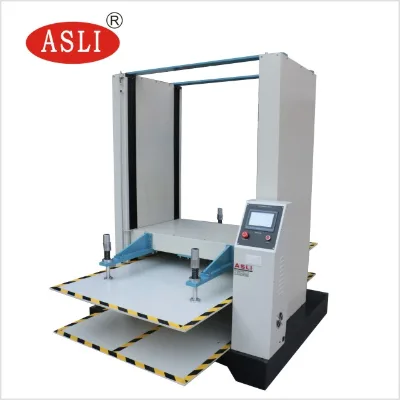
Find 30 verified carton stacking testers with digital control and customizable drop heights. Buyers can compare specifications like load capacity and speed to select the right equipment for school, hospital, and lab applications; compare the available evidence and request quotations based on your requirements.
Key considerations
Products List


$1960.00 - $2786.00
MOQ: 1 Pieces




High Precision Thermal Conductive Tester, Automatic Test and Print Storage
$299.00 - $2999.00
MOQ: 1 Pieces


Comprehensive Sourcing Guide
Carton Stacking Tester Sourcing Guide
Selecting the right Carton Stacking Tester requires a clear understanding of the specific mechanical and digital capabilities available in the current market. Buyers must distinguish between basic manual units and advanced digital control systems that offer precise load application and data recording. The decision often hinges on whether the testing environment demands high-frequency automated cycles or occasional manual verification, as this directly impacts the required motor power and control interface.
Procurement teams should also evaluate the physical footprint and specimen capacity to ensure compatibility with existing laboratory or factory floor space. With observed external sizes reaching up to 1700×1400×2015 mm and specimen limits varying by model, space planning is critical. Understanding these dimensional constraints early prevents costly installation delays and ensures the equipment integrates smoothly into the quality assurance workflow without disrupting other operational processes.
Product Scope and Observed Listing Signals
The current market for carton stacking testers reveals a diverse range of models, with observed prices spanning from $5 to $35,000 USD. This wide variance reflects differences in automation levels, load capacities, and software integration features. Buyers should note that minimum order quantities typically range from 1 to 500 units, indicating that while single-unit purchases are common for labs, bulk orders are available for large-scale manufacturing facilities requiring multiple testing stations.
Listing signals also highlight significant customization options, with many suppliers offering OEM and ODM services for non-standard requirements. Attributes such as digital control, touch-screen interfaces, and computer-controlled operations are prevalent, suggesting a shift toward data-driven quality control. Buyers should verify if the listed specifications, such as a resolving power of 1n or a result error of 0.1%, align with their specific precision needs, as these metrics directly influence the reliability of the test data generated.
Technical Specifications to Verify
When evaluating technical specifications, buyers must prioritize the load capacity and lifting speed to match their packaging requirements. Observed data indicates a maximum capacity of less than 1000KN, with lifting speeds ranging from 10-300mm/Min. It is essential to confirm that the clamping plate height adjustment, which can range from 0-1000m in some listings, accommodates the tallest shipping packages you intend to test. Misalignment in these parameters can lead to inaccurate stress distribution during the stacking simulation.
Power source and control mechanisms are equally critical for operational efficiency. Most units operate on AC220V or AC 100-240V, 50Hz/60Hz, but buyers in regions with different voltage standards must verify compatibility. Additionally, the choice between electronic load systems and manual controls affects long-term maintenance costs. Ensure that the digital display and measurement accuracy, often cited at 1%, meet your internal quality standards, and check if the preheating temperature of 200 Degree is relevant to your specific material testing protocols.
Compliance and Safety Documentation
Compliance with international standards is non-negotiable for carton stacking testers used in regulated industries. Buyers should verify that the equipment meets relevant safety and performance standards, such as ISO 2234-1985, ISO 2233-1986, and ISO 2206. These standards ensure that the testing methodology is consistent and reproducible, which is vital for validating packaging integrity across different supply chain partners. Lack of adherence to these norms can result in rejected shipments or failed audits.
Certification documentation, including CE, RoHS, FCC, and ISO certificates, provides evidence of regulatory compliance and environmental safety. Buyers must request copies of these certificates to confirm that the manufacturer has undergone proper auditing processes. Additionally, checking for SGS certification can offer an independent verification of product quality. Ensuring that all electrical components comply with local safety regulations prevents liability issues and protects operators from potential electrical hazards during high-load testing scenarios.
Cost Drivers and Commercial Terms
Several factors influence the total cost of ownership for carton stacking testers, including customization, packaging, and origin. Units originating from Guangdong, China, or Hong Kong often benefit from established manufacturing ecosystems, but buyers should account for shipping costs associated with heavy machinery. The use of wooden cases for export or fumigation-free standard export wooden boxes adds to the initial price but is necessary for safe international transit.
Commercial terms such as lead times and after-sales service agreements significantly impact procurement planning. Buyers should negotiate clear terms for OEM/ODM services if custom specifications are required, as these can extend lead times. Additionally, consider the cost of spare parts and technical support. A lower upfront price may be offset by higher maintenance costs if the supplier does not provide comprehensive service packages or readily available replacement components for the electronic and mechanical parts.
Supplier Qualification and Quality Control
Supplier qualification begins with verifying their manufacturing capabilities and quality control processes. Buyers should assess whether the supplier offers customization services and has a track record of producing units that meet specific industry standards. Requesting factory audits or third-party inspection reports can provide insight into their production consistency and adherence to quality management systems. A supplier with robust QC processes is less likely to deliver units with significant deviations in measurement accuracy or structural integrity.
Quality control should also extend to the pre-shipment inspection phase. Buyers must ensure that each unit undergoes rigorous testing, including checks on lifting speed, load way, and digital display functionality. Verifying the specimen shape compatibility, such as parallelepiped shipping packages, is crucial to ensure the tester can handle your specific product types. Establishing a clear acceptance criteria protocol before shipment helps mitigate the risk of receiving non-conforming equipment that could disrupt your testing operations.
Long-Term Procurement Checks
Long-term procurement success depends on the supplier’s ability to provide ongoing support and updates. Buyers should inquire about software updates for computer-controlled units and the availability of technical training for operators. As testing standards evolve, having a supplier who can assist with recalibration or software upgrades ensures that the equipment remains compliant and accurate over time. This support is particularly important for units with complex digital controls and high-precision sensors.
Finally, consider the lifecycle management of the equipment, including warranty terms and repair services. A comprehensive warranty covering both mechanical and electronic components reduces long-term risk. Buyers should also evaluate the supplier’s reputation for responsiveness and problem resolution. Establishing a strong relationship with a reliable supplier ensures that any future issues, such as part failures or performance drift, are addressed promptly, minimizing downtime and maintaining the integrity of your quality assurance processes.
FAQs
What customization options are available for carton stacking testers?
Customization is available for these testers, including non-standard configurations and specific model adjustments. Buyers can request tailored specifications such as specimen size, clamping plate height, and external dimensions to match unique laboratory or factory requirements without compromising structural integrity.
Which certifications do these carton stacking testers typically hold?
These units commonly hold CE, RoHS, FCC, ISO, and SGS certificates to ensure compliance with international safety and quality standards. The specific certification list may vary by model, but most products are designed to meet rigorous regulatory requirements for use in schools, hospitals, and industrial labs.
How is the speed controlled during the stacking test process?
The device features electronic control with a returning speed ranging from 1 to 60 mm per minute and a lifting speed of 10 to 300 mm per minute. Some models also offer a specific speed of 12.7 mm per minute, allowing precise adjustment for different material testing needs.
Can the machine handle specimens up to 1000 kg capacity?
Yes, the equipment supports a maximum capacity of less than 1000 kN, which accommodates heavy loads effectively. The specimen weight limit is typically between 0 and 100 kg, and the clamping plate height can be adjusted from 0 to 1000 mm to fit various parallelepiped shapes.
What is the standard packaging method for export shipping?
Products are packed in wooden cases or fumigation-free standard export wooden boxes to ensure safe transit. Some smaller units may use paper or wood boxes, while larger models are secured in sturdy wooden cases designed specifically for international export requirements and long-distance protection.
Where are these carton stacking testers manufactured and shipped from?
Manufacturing originates from Guangdong, China, with some units also sourced from China or Hong Kong. The products are shipped globally using standard export packaging, ensuring that buyers receive their equipment from established production centers known for industrial testing machinery.
What display and control types are used in these testers?
The machines utilize digital control systems with touch-screen interfaces or computer control for precise operation. The display is digital, providing clear readouts of test results, and the structure is often desktop-based, making it suitable for laboratory environments requiring accurate data monitoring.