Source 316l Stainless Steel Snake Chain for Decoration, Religious, Gift
Explore 30 listings for 316l Stainless Steel Snake Chain suitable for decoration, religious purposes, and gifting. Buyers can compare customization options, plating finishes, and chain specifications from verified suppliers in China.
Key considerations
Products List


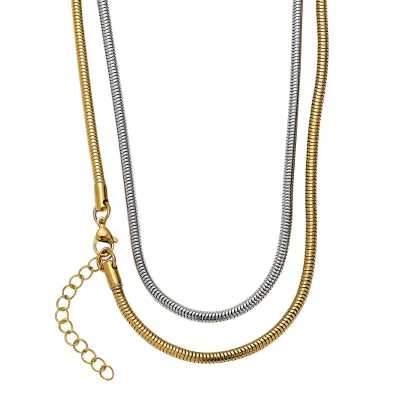
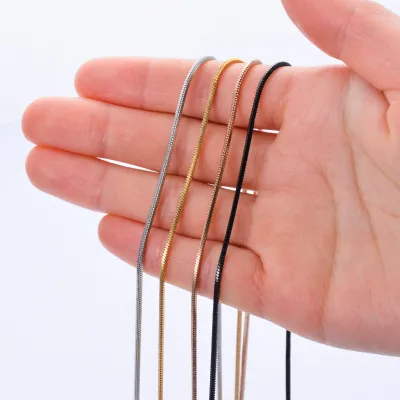


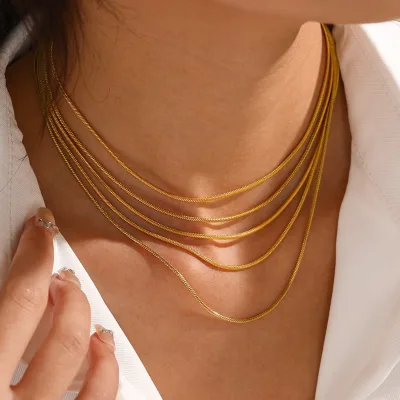
Comprehensive Sourcing Guide
Strategic Sourcing Guide for 316l Stainless Steel Snake Chain Products
Procuring 316l Stainless Steel Snake Chain components requires a disciplined approach that balances aesthetic requirements with rigorous industrial performance standards. The term "316L" denotes a specific grade of austenitic stainless steel known for its superior corrosion resistance, particularly in chloride-rich environments, and its low carbon content which minimizes sensitization during welding. When sourcing these items, buyers must navigate a marketplace where product attributes vary significantly between decorative jewelry applications and heavy-duty industrial transmission systems. The following guide outlines the critical technical, compliance, and operational factors necessary for a successful procurement strategy, grounded in observed market data and verified product specifications.
Technical Specifications and Material Verification
The foundation of any successful procurement for 316L snake chain lies in verifying the precise material composition and dimensional tolerances. While the core keyword specifies 316L, observed product listings indicate a broader range of stainless steel applications, including 316 and general stainless steel variants. Buyers must explicitly confirm that the supplier provides mill certificates or third-party test reports validating the 316L grade, as 316 and 316L have distinct carbon limits that affect weldability and corrosion resistance.
Dimensional consistency is equally critical. Market observations reveal a wide spectrum of specifications, ranging from delicate jewelry chains with thicknesses as small as 1mm to industrial chains with thicknesses of 11mm or specific dimensions like 3.2mm for snake chain variants. Length specifications also vary drastically, with options including fixed lengths of 40cm, 45cm, and 60cm, as well as customizable lengths for bespoke orders. For industrial applications, chain sizes such as 1/2" x 3/32" are common, whereas decorative items may be defined by their model numbers like CSH010 or RS001.
The structure of the chain is another vital technical parameter. Observed data distinguishes between "Combined Chain" structures, often used in fashion jewelry, and "Welded Chain" structures, which are typical for drag chains and conveyor systems. The surface treatment is predominantly polishing, which enhances the aesthetic appeal for fashion and religious decoration uses. However, for industrial contexts, the "Heat Resistant" feature becomes a primary specification. Buyers should request detailed technical drawings that specify the snake chain thickness, link geometry, and overall chain size to ensure compatibility with their specific machinery or design requirements.
Compliance, Certification, and Safety Standards
In the global supply chain, compliance is not merely a formality but a risk mitigation strategy. The observed product data lists certifications from SGS and BV, which are recognized third-party inspection agencies. These certifications are essential for verifying that the material meets international standards for chemical composition and mechanical properties. When sourcing 316L products, buyers should prioritize suppliers who can provide current SGS or BV reports specifically for the 316L grade, rather than generic stainless steel certifications.
While some background knowledge suggests standards like REACH or ASTM F2129, these should not be assumed without explicit verification from the supplier. The provided data does not confirm that all listed products meet these specific standards. Therefore, procurement teams must treat these as verification targets rather than guaranteed attributes. For jewelry applications, which often fall under "Decoration" and "Religious" usage categories, compliance with nickel release limits and biocompatibility is crucial. For industrial uses involving "Drag Chain" or "Conveyor Chain" applications, the material must withstand the specific mechanical stresses of the environment.
Buyers should also verify the "No Discoloration, No Irritation, No Deformation" claims often associated with 316L products. These are performance assertions that require empirical evidence. A robust sourcing process involves requesting sample testing results that demonstrate the material's resistance to tarnishing and its ability to maintain structural integrity under stress. Without such data, these claims remain unverified marketing statements rather than guaranteed product features.
Cost Drivers and Pricing Dynamics
Understanding the cost structure of 316l Stainless Steel Snake Chain is essential for budgeting and negotiation. The observed price range in the market spans from $0 to $13.85 USD, indicating a highly segmented market where price is heavily influenced by the intended application. Lower-priced items are typically associated with fashion jewelry, "Simple" style bracelets, or small-scale decorative pieces. In contrast, industrial-grade chains with higher thicknesses, such as the 11mm variants or those designed for heavy-duty transmission, command higher prices due to the increased material volume and manufacturing complexity.
The Minimum Order Quantity (MOQ) is another significant cost driver. The observed MOQ range is extensive, from 1 unit to 1000 units. Suppliers offering an MOQ of 1 are likely catering to prototyping or small-batch customization needs, while those requiring 1000 units are targeting bulk industrial procurement. Buyers must align their order volume with the supplier's capacity to avoid unnecessary premiums. Customization services, which are marked as "Available" and "OEM / ODM: Yes" in the data, often incur additional costs. These services allow for tailored lengths, specific plating options like "Gold," and unique structural designs, but they require a higher volume commitment or a setup fee.
Additionally, the origin of the product plays a role in pricing. Most observed products originate from China, with specific mentions of Guangzhou as a manufacturing hub. While this region offers competitive pricing, buyers must factor in logistics costs, which vary based on the chosen shipment method. Options listed include DHL, FedEx, TNT, and UPS, each with different cost structures and delivery speeds. The "Sample: Free" attribute can be a valuable cost-saving measure during the evaluation phase, allowing buyers to assess quality before committing to a larger order.
Typical Applications and Usage Scenarios
The versatility of 316l Stainless Steel Snake Chain allows it to serve diverse sectors, from personal adornment to heavy industrial machinery. In the consumer market, the product is frequently categorized under "Decoration," "Religious," and "Gift" usage. These applications often feature "Fashion" or "Simple" styles, with plating options like gold to enhance visual appeal. The "Suitable for: Female, Male" attribute indicates a broad market appeal, while specific items like bracelets are designed for "Formal Occasions." The "No Irritation" claim is particularly relevant here, ensuring the material is safe for prolonged skin contact.
In the industrial sector, the usage shifts dramatically to functional requirements. The data explicitly lists "Transmission Chain," "Drag Chain," "Conveyor Chain," and "Dedicated Special Chain" as usage categories. These applications demand high durability and resistance to environmental factors. The "Heat Resistant" feature is critical for chains operating in high-temperature environments, such as those found in manufacturing plants or processing facilities. The "Welded Chain" structure is preferred in these contexts for its strength and reliability. Furthermore, the "Shape: Round" specification is common for chains that need to navigate pulleys or sprockets smoothly without snagging.
Buyers must carefully distinguish between these two distinct usage profiles. A product marketed for "Decoration" may not possess the tensile strength required for a "Drag Chain" application. Conversely, an industrial-grade chain may be over-engineered and cost-prohibitive for a jewelry design. The "Description" field often provides clues, such as "316 Stainless Steel Snake Chain Bracelet with Spri" or "316L Snake Chain Stainless Steel Bracelet with Rub," which clearly delineate the intended market.
Supplier Evaluation and Service Capabilities
Selecting the right supplier involves more than just comparing prices; it requires a deep dive into their service capabilities and operational flexibility. The observed data highlights that "OEM / ODM: Yes" is a common attribute, indicating that many suppliers are equipped to handle custom designs and private labeling. This is a crucial capability for buyers looking to differentiate their products in the market. Suppliers offering "Customization: Available" can adapt the chain length, thickness, and plating to meet specific client needs.
The "Service: OEM ODM" attribute suggests a willingness to collaborate on product development. However, buyers should verify the extent of these services. Can the supplier handle small batch customizations, or is there a minimum threshold for custom orders? The "Sample: Free" policy is a strong indicator of supplier confidence and a helpful tool for initial evaluation. It allows buyers to physically inspect the quality of the "Polishing" finish and the integrity of the "Combined Chain" or "Welded Chain" structure before placing a bulk order.
Logistics and delivery are also key evaluation criteria. The "Shipment" options listed include major courier services like DHL, FedEx, TNT, and UPS, which generally offer reliable tracking and faster delivery times. However, some suppliers list a "Shipment: 30 Days" lead time, which suggests a longer production or shipping cycle. Buyers must clarify whether this 30-day period refers to production time, shipping time, or the total lead time. For time-sensitive projects, understanding this distinction is vital to avoid supply chain disruptions.
Quality Control and Long-Term Procurement Strategy
Implementing a robust quality control (QC) protocol is essential for maintaining product integrity over the long term. The observed "Advantage" attributes, such as "No Discoloration," "No Irritation," and "No Deformation," serve as quality benchmarks. Buyers should incorporate these criteria into their QC checklists. For instance, visual inspections should verify the uniformity of the "Gold" plating and the absence of surface defects. Mechanical testing should confirm the chain's resistance to deformation under load, especially for industrial applications.
Long-term procurement considerations involve building a sustainable relationship with suppliers who can consistently meet these quality standards. The "prod_packing" methods, ranging from "OPP Bag" for jewelry to "Wooden Box" for industrial or high-value items, reflect the supplier's attention to detail in protecting the product during transit. Buyers should ensure that the packaging is appropriate for the product's sensitivity and the shipping environment.
Furthermore, the "prod_standard" values, such as "1mm," "11mm," or "567cm," should be treated as specific product specifications rather than universal standards. Buyers must verify that the supplier's production processes consistently adhere to these dimensions. Regular audits and periodic sample testing can help maintain quality consistency. By focusing on these verified attributes and avoiding assumptions about unlisted certifications, buyers can build a resilient supply chain that delivers high-quality 316l Stainless Steel Snake Chain products tailored to their specific needs.
Comparative Analysis of Product Attributes
To facilitate decision-making, the following table summarizes the key attributes observed in the market, helping buyers distinguish between different product categories and their respective suitability for various applications.
| Attribute Category | Jewelry / Decoration Focus | Industrial / Functional Focus |
|---|---|---|
| Primary Usage | Decoration, Religious, Gift, Formal Occasions | Transmission Chain, Drag Chain, Conveyor Chain |
| Material Grade | 316, 316L (Verified via SGS/BV) | 316, 316L (Heat Resistant variants) |
| Chain Structure | Combined Chain | Welded Chain |
| Typical Thickness | 1mm, 3.2mm, 11mm (Variable) | 11mm, 1/2" x 3/32" (Heavy duty) |
| Surface Treatment | Polishing, Gold Plating | Polishing, Industrial Finish |
| Packaging | OPP Bag, Wooden Box | Wooden Box, Industrial Packaging |
| Customization | Length, Style, Plating | Length, Thickness, Special Design |
| Suitable For | Female, Male (Personal Wear) | Machinery, Heavy Equipment |
This comparison underscores the necessity of precise specification matching. A buyer seeking a "Snake Chain" for a fashion bracelet should prioritize the "Combined Chain" structure and "Gold" plating, while a buyer for a "Drag Chain" system must focus on the "Welded Chain" structure and "Heat Resistant" properties. By adhering to these verified distinctions, procurement teams can ensure that the final product meets both functional and aesthetic requirements effectively.
FAQs
What certifications verify 316l Stainless Steel Snake Chain quality?
Products are verified by SGS and BV certifications to confirm material composition and safety. These third-party reports ensure the chain meets international standards for chemical content and mechanical properties before purchase.
Can I customize the length and plating of the snake chain?
Customization is available for length, plating, and structural design to meet specific client needs. Buyers can request options like gold plating or specific lengths ranging from 40cm to 60cm based on their requirements.
Which specifications define the thickness and size of these chains?
Specifications vary from 1mm for jewelry to 11mm for industrial applications, with thicknesses like 3.2mm for snake chains. Dimensions also include lengths of 40cm, 45cm, and 60cm or fully customizable options.
How does the origin of the product affect sourcing decisions?
Most products originate from China, with Guangzhou being a specific manufacturing hub for these items. This location influences logistics costs and lead times, which can range from immediate shipping to 30 days.
What are the typical usage scenarios for 316L snake chains?
Usage ranges from decoration and religious purposes to industrial drag chains and conveyor systems. The material is also suitable for health and gift applications, offering versatility across fashion and heavy-duty machinery sectors.
What packaging options are available for shipping the chains?
Packaging includes OPP bags for jewelry and wooden boxes for industrial or high-value items. The choice of packaging depends on the product type and ensures protection during transit via major courier services.
Are samples available for testing the chain quality before bulk order?
Free samples are available to allow buyers to inspect the polishing finish and structural integrity. This helps verify claims of no discoloration or irritation before committing to larger order volumes.