Source 4 Ways Nestable Plastic Pallet for Transport, Storage, and Logistics
Explore 22 options for 4 ways nestable plastic pallet designed for efficient transport, warehouse storage, and logistics operations. Compare specifications including load capacity, material, and customization features to find the right solution for your supply chain needs; compare the available evidence and request quotations based on your requirements.
Key considerations
Products List


Comprehensive Sourcing Guide
4 Ways Nestable Plastic Pallet Sourcing Guide
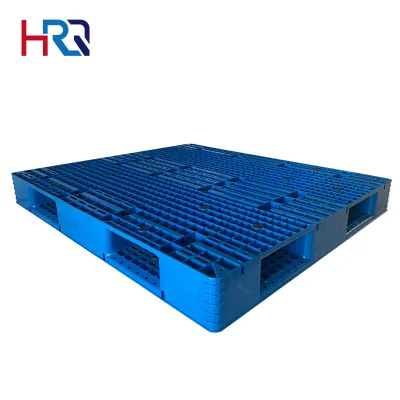
Sourcing 4-way nestable plastic pallets requires identifying units designed for forklift entry from all four sides while maintaining a compact footprint when stacked empty. The observed market data indicates that these units are primarily manufactured in Jiangsu and Qingdao, China, with specific models like the TB149 and TB144 representing common injection molding series configurations. Buyers must distinguish between single-face and double-faced styles, as the entry type and structural design directly impact load distribution and storage efficiency in warehouse environments.
Procurement decisions should focus on verifying the specific entry type and nesting capability against operational needs, as the observed listings show variations in color, such as yellow or blue, which can be customized. The product range includes both box pallets and flat pallets, with some units featuring anti-static insulation or standard insulation properties depending on the intended cargo. Understanding these distinctions is critical before engaging suppliers, as the physical dimensions and load capacities vary significantly across the different model numbers available in the current market.
Product Scope and Observed Listing Signals
The available product scope encompasses a wide range of plastic pallets, including specific models like XY-1111WJ-B and HDDFGNS1311C, which offer distinct dimensional profiles such as 11001100140mm or 13001100150mm. Buyers should note that while some listings specify a standard size of 1200800150mm, others provide fully customized standards to meet unique logistical requirements. The observed price range of 0.7 to 40 USD suggests significant variation based on material thickness, reinforcement options, and whether the unit includes features like nine-foot back designs or reinforced tubes.
Listing signals indicate that customization is a primary feature, with options for logos, colors, and specific load capacities ranging from 1 ton to 6 tons static load. The packaging methods vary from shipping containers and shrink film to cartons or bulk packing, which influences the final landed cost and handling procedures. When evaluating listings, buyers must verify if the "4-way" entry type is explicitly confirmed for the specific model, as some units may be designed for two-way entry despite general category assumptions, ensuring the selected pallet matches the specific forklift equipment available in the facility.
Technical Specifications to Verify
Technical verification must begin with the load capacity ratings, as observed data lists dynamic loads of 1.5 tons and static loads up to 6 tons for specific models. Buyers should confirm whether the pallet is rackable and suitable for the intended storage system, as the usage category explicitly mentions forklift use and warehouse storage. The material composition is consistently plastic, but the specific injection molding series and whether the unit includes reinforcement tubes are critical factors that determine long-term durability and resistance to deformation under heavy loads.
Dimensional accuracy is another vital specification, with observed standards ranging from compact 492mm417mm125mm units to larger 13001100150mm configurations. The nesting capability, often implied by the "4-way" design, must be validated to ensure efficient space utilization during return logistics or empty storage. Additionally, the option for anti-static insulation or standard insulation should be matched to the cargo type, particularly for sensitive electronics or food-grade products, ensuring the physical properties align with the specific operational environment of the buyer.
Compliance and Safety Documentation
Compliance verification requires checking for recognized certifications such as ISO 9001 and ISO 14001, which are listed for certain suppliers in the Jiangsu region. While some listings mention En840 and CE certifications, buyers must request current, valid documentation for the specific batch of pallets being ordered, as these standards relate to safety and environmental management systems rather than the physical pallet performance itself. The presence of these certificates indicates a supplier's commitment to quality management, but they do not automatically guarantee that every unit meets specific load or safety thresholds without further testing.
Safety documentation should also include detailed load testing reports that verify the dynamic and static load capacities claimed in the product listings. Buyers should ensure that the supplier provides evidence of the pallet's ability to withstand the specified 1.5-ton dynamic load without failure, as this is a critical safety parameter for warehouse operations. Furthermore, any claims regarding anti-static properties or insulation must be backed by test results, ensuring that the pallets will not generate static electricity or fail to protect sensitive goods during transport and storage.
Cost Drivers and Commercial Terms
Cost drivers for 4-way nestable plastic pallets include the complexity of the injection molding process, the inclusion of reinforcement tubes, and the customization of colors or logos. The observed MOQ range of 1 to 1000 units allows for flexibility, but larger orders typically yield better unit economics. Buyers should also account for packaging costs, which vary between shipping containers, shrink film, and cartons, as these affect the total shipping volume and freight charges. The lead time of approximately 35 days is a standard factor that must be integrated into the procurement schedule to avoid supply chain disruptions.
Commercial terms should clearly define the delivery location and the responsibility for freight costs, as the products originate from China. Buyers must negotiate payment terms that align with the production cycle, considering the 35-day delivery window. It is essential to clarify whether the quoted price includes the cost of customization, such as specific logos or colors, as these add-ons can significantly impact the final cost. Additionally, the terms should specify the handling of defective units and the process for returns, ensuring that the buyer is protected against quality issues that may arise during transit or initial use.
Supplier Qualification and Quality Control
Supplier qualification should prioritize manufacturers located in Jiangsu and Qingdao, China, where the majority of the observed listings originate. Buyers must verify the supplier's production capacity and their ability to maintain consistent quality across large batches, especially when ordering customized models. The presence of ISO certifications is a positive indicator, but on-site audits or third-party quality inspections are recommended to ensure that the production processes adhere to the claimed standards. This step is crucial for mitigating the risk of receiving substandard pallets that could fail under load.
Quality control protocols must include rigorous testing of the finished products to verify load capacities and structural integrity. Buyers should request sample units for testing before committing to a large order, ensuring that the dynamic and static load ratings match the specifications provided. The inspection process should also cover the nesting mechanism to confirm that the pallets stack securely without damaging each other. Establishing a clear quality agreement with the supplier, including acceptance criteria and rejection protocols, is essential for maintaining high standards in the supply chain.
Long-Term Procurement Checks
Long-term procurement checks involve monitoring the performance of the pallets over time to ensure they meet the expected lifespan and durability requirements. Buyers should track the condition of the pallets after repeated use cycles, looking for signs of wear, cracking, or deformation that could compromise safety. Regular audits of the supplier's quality control processes are necessary to ensure that the production standards remain consistent, especially when reordering customized models or expanding the fleet size. This proactive approach helps in identifying potential issues before they lead to operational failures.
Sustainability and end-of-life management are also critical considerations for long-term procurement strategies. Buyers should inquire about the recyclability of the plastic material and the supplier's policies on waste management. Ensuring that the pallets can be easily recycled or repurposed at the end of their useful life aligns with broader environmental goals and reduces the overall cost of ownership. Additionally, maintaining a relationship with the supplier for potential upgrades or modifications to the pallet design can help adapt to changing logistical needs and industry standards over time.
FAQs
Can 4 ways nestable plastic pallets be customized for specific branding needs?
Yes, customization is available for these plastic pallets to meet specific branding requirements. Buyers can request customized colors, such as yellow or blue, and the supplier accepts logo printing on the product surface. This allows companies to maintain brand visibility during transport and warehouse storage while utilizing the functional benefits of the injection molding series design.
What are the load capacity specifications for these plastic pallet boxes?
The load capacity varies by model, with specific units supporting a dynamic load of 1.5 tons and a static load of 6 tons. Other models may have a load capacity of 1 ton. These specifications ensure safe handling during forklift use and rackable applications, providing reliable performance for heavy-duty transport and warehouse storage operations across various industrial environments.
Which certifications are held by the manufacturers of these plastic pallets?
Manufacturers hold ISO9001 and ISO14001 certifications, ensuring quality management and environmental standards are met. Some specific models also carry En840 and CE certifications. These credentials verify that the plastic pallets meet international safety and quality benchmarks, making them suitable for global supply chains and regulated industries that require documented compliance for their logistics and packaging materials.
What is the typical lead time for ordering these plastic pallets?
The typical delivery lead time is 35 days for standard orders. This timeframe allows for production scheduling and quality checks before shipping. Buyers should account for this duration when planning inventory replenishment. The lead time applies to the manufacturing process, ensuring that each plastic pallet meets the required specifications for insulation, anti-static properties, and structural integrity before dispatch.
How are these plastic pallets packaged for shipping and protection?
Packaging methods include shipping containers, shrink film, pallets, cartons, and bulk packing depending on the order requirements. Some items are packed in cartons, while others use shrink film for added protection. This flexible packaging approach ensures the plastic pallets arrive in optimal condition, preventing damage during transit and facilitating efficient unloading and storage at the destination warehouse or distribution center.
What are the standard dimensions available for these 4-way plastic pallets?
Standard dimensions include 1200*800*150mm, 1100*1100*140mm, and 1300*1100*150mm, among others. Specific models like TB149 and XY-1111WJ-B offer tailored sizes to fit various racking systems. These standardized dimensions ensure compatibility with global logistics equipment, allowing for efficient stacking, nesting, and transport while maximizing space utilization in warehouses and shipping containers for various industrial applications.