Find 4 Wheel Drive Farm Tractor for Farm, Orchard, and Garden
Source 30 units of 4 Wheel Drive Farm Tractor featuring diesel engines, 4WD capabilities, and various transmission options. Buyers can compare models like M704-2H and EX804 with emission standards ranging from Euro II to Tier 4 for agricultural and garden applications.
Key considerations
Products List


Farming Tractor Farm Tractor Agriculture Tractor for Agricultural Machine Use
$14000.00 - $16000.00
MOQ: 1 Pieces


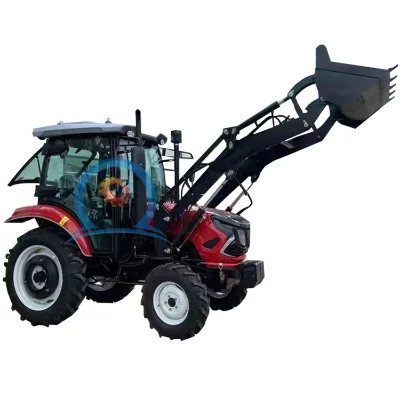
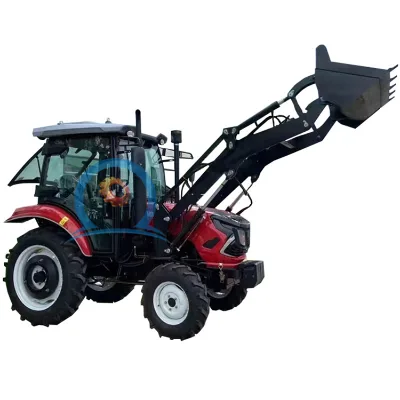
Hot Sale Four Wheel Drive Farm Wheel Tractor with Cabin for Agriculture
$6600.00 - $7000.00
MOQ: 1 sets


Comprehensive Sourcing Guide
Strategic Sourcing Guide for 4 Wheel Drive Farm Tractors
Procuring a 4 Wheel Drive Farm Tractor represents a significant capital investment for agricultural operations, demanding a rigorous evaluation of technical specifications, compliance standards, and long-term operational viability. The market for these heavy-duty machines is characterized by a wide variance in configurations, ranging from compact units suitable for orchards to robust models designed for large-scale tillage. Buyers must navigate a complex landscape where attributes such as engine type, transmission systems, and emission standards vary significantly between listings. This guide provides a structured approach to sourcing 4WD tractors, grounded in observed market data and essential verification protocols to ensure procurement decisions are based on factual evidence rather than unverified claims.
Technical Architecture and Powertrain Specifications
The core of any 4WD farm tractor lies in its powertrain and transmission architecture. Based on observed market data, the most common power source for these units is the diesel engine, specifically turbocharged common rail diesel engines which offer improved fuel efficiency and torque delivery. When evaluating potential units, buyers should verify the engine configuration, noting that 4-cylinder, in-line, water-cooled, direct-injection engines are a prevalent standard for models in the 50-100 horsepower range. The air intake system is equally critical; high-performance units often feature a turbocharged design with a dry air filter or a turbocharged and intercooled setup to maximize combustion efficiency under varying load conditions.
Transmission systems in 4WD tractors are designed to handle the high torque requirements of agricultural tasks. The market exhibits two primary shift methodologies: synchronized shuttle shift systems offering 8 forward and 8 reverse gears, and manual synchro-shift configurations that may offer different gear ratios, such as 12 forward and 4 reverse. The presence of a synchronized shuttle shift is particularly valuable for operators requiring frequent direction changes, such as those using front loaders. Buyers must carefully cross-reference the listed gear shift specifications against their operational needs, as a mismatch can lead to reduced productivity. Additionally, the drive configuration must be confirmed as 4WD or 4X4, distinct from 2WD models, to ensure adequate traction in muddy or uneven terrain.
Compliance, Emission Standards, and Certifications
Regulatory compliance is a non-negotiable aspect of sourcing agricultural machinery, particularly as environmental regulations tighten globally. Observed listings indicate a divergence in emission standards, with some units adhering to China Stage IV (Tier 3 Equivalent) or National IV / Tier 4 standards, while others may be listed with Euro II compliance. This variation suggests that buyers must explicitly verify the emission standard applicable to their region of operation. Importing a tractor with a lower emission rating than required by local law can result in significant fines or operational bans.
Beyond emissions, certification status serves as a proxy for manufacturing quality and safety. Trusted market data highlights that compliant units often carry certifications such as ISO/TSISO, CCC (China Compulsory Certification), EPA (Environmental Protection Agency), and CE (Conformité Européenne). The presence of these certifications indicates that the manufacturer has undergone third-party testing for safety and environmental performance. However, buyers should treat these certifications as observations of specific listings rather than universal guarantees for all products in a category. It is essential to request valid, current certification documents for the specific model being purchased to ensure that the unit meets the legal requirements of the destination country.
Operational Dimensions and Physical Attributes
The physical dimensions of a 4WD farm tractor dictate its suitability for specific farming environments. Observed data reveals significant variations in body height and overall footprint. For instance, some models are listed with a body height of 2320 mm and a standard size of 3750mm × 1400mm × 2320mm, while others may reach a height of 2765 mm with a footprint of 4350mm × 2300mm × 2765 mm. These dimensional differences are critical for buyers concerned with storage space, transport logistics, and maneuverability in tight spaces like orchards or greenhouses.
Color and body style also play a role in identification and resale value, with blue and gray, red, and green being common factory finishes. The condition of the tractor is another vital attribute; the market includes both new units and slightly used equipment. For buyers seeking cost savings, slightly used tractors can be a viable option, provided they undergo a thorough inspection. The packaging method, whether CBU (Complete Built Unit) or containerized, impacts shipping costs and the risk of damage during transit. Buyers should verify the packing specifications to ensure the tractor is protected adequately for long-distance shipping.
Cost Drivers and Pricing Variables
The pricing of 4WD farm tractors is influenced by a complex array of factors, including horsepower, transmission complexity, emission compliance, and condition. The observed price range in the market spans from 1 USD to 50,000 USD, reflecting the diversity of the product line from mini tractors to heavy-duty agricultural units. This wide range indicates that price alone is not a reliable indicator of quality; a lower price may correspond to a smaller size, lower horsepower, or an older model.
Key cost drivers include the engine technology, such as the inclusion of a common rail system versus a standard injection system, and the complexity of the transmission, such as a synchronized shuttle shift versus a manual system. Emission standards also impact cost, as meeting Tier 4 or National IV standards often requires more advanced engine management systems and after-treatment technologies. Buyers should be wary of prices that seem abnormally low, as they may indicate missing certifications or non-compliant engines. Furthermore, the condition of the tractor—whether new or slightly used—will significantly affect the final price and the expected remaining service life.
Typical Applications and Usage Scenarios
4WD farm tractors are versatile machines designed for a wide spectrum of agricultural applications. The market data identifies several specific use cases, including farm tractor duties, agricultural tasks, orchard maintenance, garden work, and lawn care. The specific model selection should align with the primary intended use. For example, a compact or mini tractor might be ideal for orchard work where maneuverability is paramount, while a larger compact or small tractor is better suited for general farm duties involving heavy tillage.
The inclusion of attachments, such as a front loader, expands the utility of the tractor, allowing it to perform tasks like material handling, snow removal, and grading. Buyers should verify if the tractor is listed as a "Tractor with Front Loader" or if the attachment is sold separately. The drive system, whether 4WD or 4X4, is particularly beneficial for applications requiring high traction, such as plowing in wet conditions or working on slopes. Understanding the specific usage requirements is essential to selecting a model with the appropriate size, power, and attachment compatibility.
Supplier Evaluation and Quality Assurance
Evaluating suppliers requires a focus on transparency and the ability to provide verifiable documentation. Since specific supplier names are not disclosed in the market data, buyers must rely on the quality of the product information provided. A reputable supplier will clearly list the product model, such as the M704-2H(G4)PLUS or EX804, and provide detailed specifications regarding the engine, transmission, and dimensions. Buyers should also verify the customization options available, as many manufacturers offer tailored solutions to meet specific operational needs.
Quality control is paramount when sourcing heavy machinery. Buyers should insist on a detailed inspection report for slightly used units, focusing on engine performance, hydraulic system integrity, and chassis condition. For new units, verification of the manufacturing standards and the presence of valid certifications is essential. The origin of the product, often listed as China, should be confirmed, and buyers should be aware of any trade regulations or tariffs associated with importing from that region. Establishing a clear communication channel with the supplier to discuss technical details and after-sales support is crucial for a successful procurement process.
Long-Term Procurement and Maintenance Considerations
The long-term success of a 4WD farm tractor investment depends on factors beyond the initial purchase price. Buyers should consider the availability of spare parts, the ease of maintenance, and the expected service life of the machine. Models with standardized components, such as common rail diesel engines and widely available transmission parts, are generally easier to maintain. The condition of the tractor, whether new or slightly used, will also influence maintenance costs; slightly used units may require immediate attention to worn components.
Customization availability is another long-term consideration. As farming needs evolve, the ability to upgrade or modify the tractor with different attachments or engine configurations can extend its useful life. Buyers should also factor in the shipping and logistics costs, as the packing method (CBU or container) and the physical dimensions of the tractor will impact freight charges. Finally, understanding the warranty terms and the supplier's commitment to after-sales support is vital for mitigating the risks associated with long-term ownership. By carefully evaluating these factors, buyers can ensure their 4WD farm tractor remains a productive asset for years to come.
FAQs
What engine types are available for 4 wheel drive farm tractors?
Available engines include turbocharged common rail diesel and 4-cylinder in-line water-cooled direct-injection units. These configurations support the 50-100 horsepower range and are designed for efficient torque delivery in agricultural tasks.
Which emission standards do these tractors meet?
Units may comply with China Stage IV, National IV, Tier 4, or Euro II standards depending on the specific model. Buyers must verify the exact rating to ensure regional regulatory compliance before purchase.
Can I find 4 wheel drive farm tractors with front loaders?
Yes, listings include models specified as tractors with front loaders. This configuration expands utility for material handling and grading tasks alongside standard agricultural operations.
What gear shift options are offered for these tractors?
Options include synchronized shuttle shift systems with 8 forward and 8 reverse gears or manual synchro-shift configurations with 12 forward and 4 reverse gears. The choice depends on the need for frequent direction changes.
Are customized 4 wheel drive farm tractors available?
Customization is available for many models to meet specific operational needs. Buyers should confirm the extent of customization options with the supplier to ensure the final unit matches their farm requirements.
What certifications should I look for in a 4 Wheel Drive Farm Tractor?
Trusted units often carry ISO/TSISO, CCC, EPA, and CE certifications. These indicate third-party testing for safety and environmental performance, though buyers must verify documents for the specific model.
How do the physical dimensions vary among these tractors?
Dimensions vary significantly, with body heights ranging from 2320 mm to 2765 mm and lengths up to 4350 mm. These differences impact storage logistics and maneuverability in tight spaces like orchards.
What is the price range for 4 wheel drive farm tractors?
The observed price range spans from 1 USD to 50,000 USD based on size, horsepower, and condition. Prices reflect the diversity from mini tractors to heavy-duty agricultural units.