Source 4-way stretch spandex jersey fabric for swimwear, sportswear, and apparel
Compare 30 listings of 4-way stretch spandex jersey fabric from verified suppliers. Buyers can evaluate compositions, GSM weights, and certifications like OEKO-TEX for uses in swimwear, sportswear, and apparel.
Key considerations
Products List







Comprehensive Sourcing Guide
Strategic Sourcing Guide for 4-Way Stretch Spandex Jersey Fabric
Procuring 4-way stretch spandex jersey fabric requires a disciplined approach that balances technical performance with supply chain reliability. This material is defined by its ability to stretch and recover in both the warp and weft directions, making it indispensable for modern apparel that demands freedom of movement. Buyers must navigate a complex landscape of fiber compositions, finishing treatments, and manufacturing standards to ensure the selected fabric meets specific garment requirements. The following guide outlines the critical factors for evaluating this category, grounded in observed market data and technical specifications.
Technical Specifications and Fiber Composition
The foundation of any 4-way stretch spandex jersey fabric lies in its composition and construction. Market observations indicate that while the core requirement is spandex for elasticity, the base fiber often varies, with polyester being the most common pairing. A typical high-performance blend observed in the sector consists of approximately 95% polyester and 5% spandex, though other formulations such as 77% polyester and 23% spandex are also prevalent depending on the desired hand feel and durability. The yarn count is another critical specification; a standard configuration often utilizes 40D+40D yarns, which provide a balance between softness and structural integrity.
The weight of the fabric, measured in grams per square meter (GSM), significantly influences its end-use application. Data suggests a common weight range of 230-240 GSM for medium-weight applications, suitable for structured garments like blazers or heavy activewear. However, lighter variants exist for lingerie and sleepwear. The fabric width is typically standardized at 58 to 60 inches, which impacts pattern cutting efficiency and waste calculation. Buyers should verify the specific GSM and width for each order, as these parameters directly affect the cost per yard and the drape of the final product.
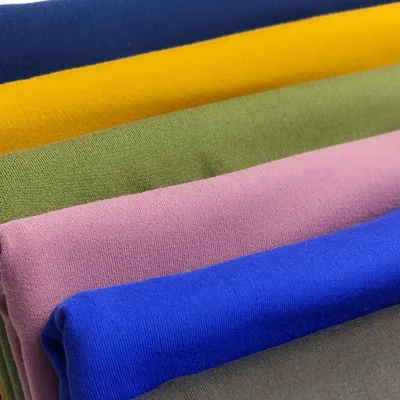
The construction method is almost exclusively knitted, specifically utilizing techniques that create a jersey structure. This knitted nature allows for the inherent 4-way stretch capability. Some products are marketed as "brushed" or "DTY brushed," indicating a surface finish that enhances softness and warmth. This brushing process can also contribute to anti-pilling properties, a feature often highlighted in product descriptions to ensure longevity. The fabric may be plain dyed or feature custom designs, with options for double-faced constructions that offer a uniform appearance on both sides.
Compliance, Certification, and Safety Standards
In the global textile market, compliance is not merely a formality but a prerequisite for market access, particularly in North America and Europe. Buyers must verify that suppliers hold recognized certifications that validate the safety and quality of the fabric. The OEKO-TEX STANDARD 100 is a widely accepted benchmark, ensuring that the textile is free from harmful substances and safe for human skin contact. Additionally, ISO 9001:2015 certification indicates that the manufacturer adheres to international quality management standards, which is crucial for maintaining consistency in large-scale production runs.
Color fastness is another critical compliance metric. For fabrics intended for swimwear, activewear, or frequent washing, a color fastness rating of 3-4 Grade is often observed as a baseline requirement. This rating ensures that the dye does not bleed or fade significantly under standard testing conditions involving light, washing, or rubbing. Buyers should explicitly request test reports for color fastness, especially when ordering custom colors or deep shades like burgundy, which can be more prone to fading.
Beyond material safety, functional certifications may be necessary depending on the application. While standard spandex jersey provides basic stretch, specialized applications such as swimwear or outdoor gear may require fabrics with added properties like anti-chlorine, water repellency, or anti-bacterial treatments. These functional enhancements are often customizable, but the supplier must be able to provide evidence that these treatments meet industry durability standards.
Cost Drivers and Pricing Variables
The pricing of 4-way stretch spandex jersey fabric is influenced by a complex interplay of factors, including raw material costs, production complexity, and order volume. The observed market price range for this category spans from approximately $0.55 to $16.30 per unit, a wide variance that reflects differences in composition, finishing, and order size. The primary cost driver is the percentage of spandex in the blend; higher spandex content generally increases the price due to the cost of the elastomeric fiber.
Order volume plays a decisive role in unit pricing. Minimum Order Quantities (MOQ) can range from as low as 2 yards for sample or custom design requests to 3,000 units for bulk production. Buyers should anticipate that smaller orders will carry a significantly higher per-unit cost compared to bulk purchases. The "Make to Order" supply type often cited in the industry implies that production is initiated only after the order is placed, which can affect pricing structures compared to stock fabric.
Additional cost factors include the complexity of the design and finishing. Custom colors, printed patterns, or specialized finishes like brushing or double-faced construction add to the production time and material costs. Packaging requirements, such as roll packing in plastic bags with specific weight standards (e.g., 25kg/roll), also contribute to the final price. Buyers must consider the total landed cost, including shipping terms like FOB Ningbo, which places the responsibility for freight and insurance on the buyer once the goods leave the port.
Typical Applications and Functional Requirements
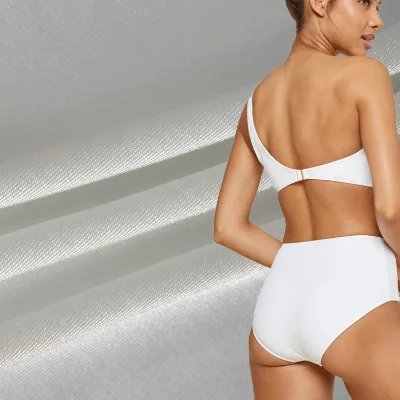
The versatility of 4-way stretch spandex jersey fabric makes it suitable for a vast array of applications. Its primary use cases include swimwear, underwear, sportswear, and lingerie, where high elasticity and recovery are paramount. The fabric's ability to stretch in four directions ensures that garments fit snugly without restricting movement, a critical feature for activewear and dancewear. Furthermore, the material is widely used in general apparel, including shirts, blouses, skirts, and loungewear, where comfort and drape are essential.
Specific functional requirements often dictate the choice of fabric within this category. For swimwear, the fabric must withstand exposure to chlorine and saltwater, necessitating anti-chlorine treatments. For outdoor gear or activewear, properties like moisture-wicking, quick-dry capabilities, and breathability are highly valued. The "brushed" variant is particularly popular for sleepwear and cold-weather activewear due to its soft hand feel and thermal retention.
The fabric is also applicable to accessories such as bags, purses, and totes, where durability and shape retention are important. In the fashion sector, it is used for blazers, vests, and costumes, where the fabric must hold a specific shape while allowing for movement. The "plain dyed" and "printed" options allow designers to choose between solid colors and intricate patterns, catering to diverse aesthetic needs.
Supplier Evaluation and Production Capabilities
When evaluating potential suppliers, buyers should look for a combination of technical capability and logistical reliability. The production lead time is a critical metric; a standard timeframe of 30 days is common for custom orders, but this can vary based on the complexity of the design and the supplier's current workload. Buyers should verify the supplier's ability to handle "Make to Order" requests, which often require more flexible production lines than stock fabric manufacturers.
Geographic location is another factor to consider. Suppliers are often located in textile hubs such as Zhejiang and Guangdong in China, regions known for their advanced knitting and dyeing infrastructure. The proximity to major ports like Ningbo facilitates efficient shipping, particularly under FOB terms. However, buyers should also assess the supplier's capacity for customization, including the ability to accept custom color shades and designs. The availability of samples, such as A4 size samples or free samples for evaluation, is a strong indicator of a supplier's confidence in their product quality.
Payment terms are a standard part of the supplier evaluation process. A common structure involves a 30% deposit via T/T (Telegraphic Transfer) with the remaining 70% paid against the Bill of Lading. This arrangement balances the financial risk for both parties. Buyers should also inquire about the supplier's quality control processes, including in-line inspections and final random inspections, to ensure that the delivered fabric matches the agreed-upon specifications.
Quality Control and Long-Term Procurement Strategy
Implementing a robust quality control strategy is essential for mitigating risks associated with fabric procurement. Buyers should establish clear acceptance criteria for key attributes such as GSM, width, color fastness, and stretch recovery. Regular sampling and testing, particularly for color consistency and dimensional stability, should be conducted before full production begins. The "Hand Feeling" of the fabric, often described as "softly touch," is a subjective quality that should be validated against physical samples to ensure it meets the design team's expectations.
For long-term procurement, building a relationship with a reliable supplier is more beneficial than constantly seeking the lowest price. Consistency in quality and delivery timelines is crucial for maintaining brand reputation. Buyers should consider the supplier's ability to scale production as their business grows, ensuring that the MOQ and lead times remain manageable. The availability of certifications like OEKO-TEX and ISO 9001 provides a baseline for trust, but ongoing communication and regular audits are necessary to maintain high standards.
In conclusion, sourcing 4-way stretch spandex jersey fabric requires a comprehensive understanding of technical specifications, compliance requirements, and market dynamics. By carefully evaluating fiber composition, functional properties, and supplier capabilities, buyers can secure high-quality materials that meet the demands of modern apparel manufacturing. The wide range of applications and customizable features makes this fabric a versatile choice, but success depends on rigorous due diligence and strategic partnership with capable suppliers.
FAQs
What is the typical composition of 4-way stretch spandex jersey fabric?
The fabric typically consists of 95% polyester and 5% spandex, though blends like 77% polyester and 23% spandex are also available. This composition ensures high elasticity and durability suitable for various apparel applications.
Can I customize the color and design of this spandex fabric?
Yes, you can send specific color shades for customization, and custom designs are accepted. The fabric is available in plain dyed or printed styles to meet specific aesthetic requirements for your garments.
What certifications ensure the safety and quality of this fabric?
The fabric holds OEKO-TEX STANDARD 100 and ISO9001-2015 certifications. These standards verify that the material is free from harmful substances and that the manufacturer adheres to international quality management protocols.
What is the minimum order quantity for this stretch fabric?
The minimum order quantity can be as low as 2 yards for samples or custom requests. Bulk orders may require higher quantities, with observed ranges extending up to 3000 units depending on the supplier.
How long does production take for custom orders of this fabric?
The standard production lead time is 30 days for make-to-order requests. This duration allows for the knitting, dyeing, and finishing processes required to meet specific customization needs.
What functional properties can be added to this spandex jersey?
You can add anti-bacterial, anti-chlorine, water repellent, or dry fit functions to the fabric. These enhancements make the material suitable for specialized uses like swimwear, outdoor gear, and activewear.
What is the weight and width specification for this knitted fabric?
The fabric typically weighs between 230 and 240 grams per square meter with a width of 58 to 60 inches. This medium weight and standard width are ideal for structured garments and efficient pattern cutting.