Source 40cm Artificial Allium for Decor, Events, and Landscaping
Find 30 listings for 40cm Artificial Allium to compare options for indoor decoration, event styling, and landscaping projects. Evaluate features like odorless scents, silk materials, and customized packaging to select the right supplier for your sourcing needs.
Key considerations
Products List
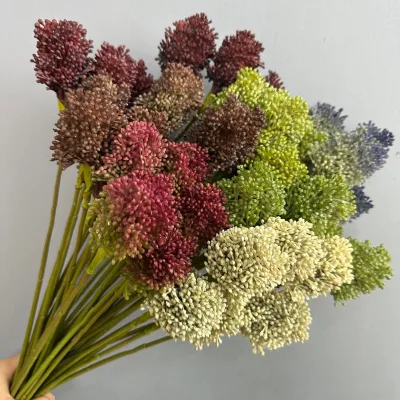
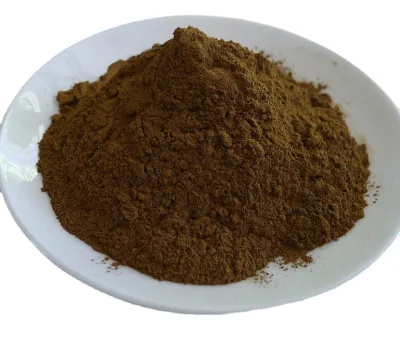


Salable High Quality Fresh Cut Flower Limonium for Wholesale and Decoration
$3.60 - $3.80
MOQ: 50 Bunches


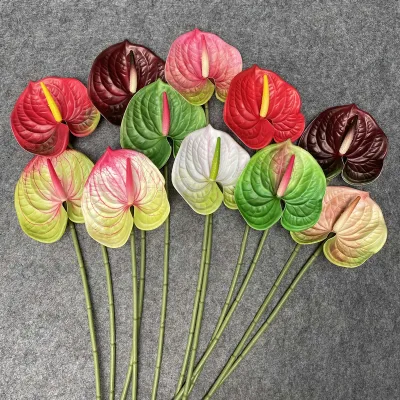
Hot Sale Artificial Plants Shingle Colorful Anthurium for Home Table Decoration
$0.58 - $0.64
MOQ: 150 pieces


Decorative Wholesale Artificial Plants Wedding Decoration Artificial Flowers Ball
$10.00 - $12.00
MOQ: 492 Pieces
Comprehensive Sourcing Guide
40cm Artificial Allium Sourcing Guide
Procuring artificial allium plants requires a nuanced understanding of the intersection between botanical accuracy and synthetic material performance. Buyers must distinguish between genuine botanical extracts and decorative replicas, as the market often conflates these categories. The core keyword "40cm Artificial Allium" suggests a specific dimensional requirement for decorative foliage, yet observed listing data reveals a complex mix of product types, including herbal powders and silk-based floral arrangements. This guide focuses on the procurement of artificial floral elements, specifically those mimicking allium or similar botanical structures, while acknowledging the presence of unrelated herbal extract listings in the same search ecosystem.
The primary challenge for buyers is verifying the physical attributes of the product against the marketing claims. While the search term implies a 40cm height, observed specifications list overall lengths of 64cm and model sizes described as "Middle." This discrepancy highlights the necessity of rigorous specification verification before placing orders. Furthermore, the material composition varies significantly across suppliers, with some listing silk as the primary material and others describing artificial properties without specifying the polymer base. Understanding these variations is critical for ensuring the product meets aesthetic and durability expectations for indoor or outdoor decoration.
Product Scope and Observed Listing Signals
The observed market signals indicate a broad and somewhat fragmented product scope. Listings associated with this keyword range from herbal extracts, such as Allium ursinum extract powder, to silk-based artificial flowers and potted plants. For the specific intent of sourcing artificial allium, buyers should focus on listings that explicitly mention "Artificial," "Silk," or "Potted Flowers" as the product type. The presence of "Allium ursinum Extarct Powder" in the data suggests that search algorithms may group botanical names with their synthetic counterparts, requiring buyers to filter out non-applicable herbal ingredients and focus on decorative plant listings.
Key attributes observed in relevant listings include a variety of color options such as Green, Light green, and Hot pink, which allows for customization in interior design schemes. The material is frequently identified as Silk, which is a traditional choice for high-quality artificial flowers due to its texture and light reflection properties. Additionally, the growth environment is often described as "Tropical," and the scent is noted as either "Odorous" or "Odorless." Buyers must clarify whether the artificial plant is intended to be scentless for neutral environments or if it includes a fragrance component, as this significantly impacts the user experience in residential or commercial spaces.
Technical Specifications to Verify
Dimensional accuracy is the most critical technical specification for artificial plants. Buyers must verify the actual height, as observed data lists an overall length of 64cm, which deviates from the 40cm target. It is essential to confirm whether the 64cm measurement includes the pot or refers solely to the foliage height. The model size is also described as "Middle," which is a relative term that requires clarification against a standard sizing chart. Without precise measurements, there is a risk of receiving products that are too large or too small for the intended display space, leading to aesthetic mismatches in interior design projects.
Material composition and construction details must be scrutinized to ensure longevity and safety. The primary material is listed as Silk, but buyers should inquire about the stem material, which is often wire or plastic, and the base material, which may be ceramic, plastic, or fabric. The packaging is described as "OPP Bag+Carton" or "Cartons," indicating bulk shipping methods that protect the delicate silk petals. Buyers should verify the weight of the product and the sturdiness of the pot to ensure it can withstand handling during installation. Additionally, the "Watch Parts" attribute listing "Flower, Leaf, Succulent Plants" suggests a modular design, which may allow for replacement parts but requires verification of compatibility.
Compliance and Safety Documentation
Safety compliance is paramount for artificial plants, especially those intended for indoor use or environments with children and pets. Buyers must request documentation confirming that the materials used, such as silk and plastics, are free from harmful chemicals like lead, phthalates, or formaldehyde. While the data mentions "USP STANDARD" for GMO-free herbal extracts, this certification is irrelevant to artificial plants. Instead, buyers should seek compliance with international safety standards for decorative items, such as EN71 for toys or general consumer product safety regulations, depending on the target market.
Flammability is another critical safety aspect that requires verification. Artificial plants made from synthetic materials can be highly flammable, posing a risk in commercial settings or near heat sources. Buyers should ask for flammability test reports to ensure the product meets local fire safety codes. Additionally, if the product is marketed as "Odorless," buyers should verify that no volatile organic compounds (VOCs) are emitted from the materials or adhesives used in construction. This is particularly important for sensitive environments like hospitals, schools, or high-end residential spaces where air quality is a priority.
Cost Drivers and Commercial Terms
The cost of artificial allium plants is driven by several factors, including material quality, complexity of design, and packaging. Silk flowers are generally more expensive than polyester or plastic alternatives due to the higher cost of raw materials and the labor-intensive process of crafting realistic petals. The observed price range of $0.3 to $1000 USD reflects this variability, with lower prices likely corresponding to simpler, mass-produced items and higher prices to detailed, handcrafted pieces. Buyers should align their budget with the desired level of realism and durability, understanding that higher initial costs often correlate with longer product lifespans.
Minimum Order Quantities (MOQ) and customization options also impact the total cost of procurement. The observed MOQ range of 1 to 1000 units suggests flexibility for both small-scale buyers and large distributors. Customization options, such as logo printing or specific color combinations, may incur additional setup fees or higher per-unit costs. The data indicates that "Logo Printing" is listed as "Without Logo Printing" for some items, while "Customized" is marked as "Available" for others. Buyers should clarify these terms early in the negotiation process to avoid unexpected charges and ensure that the supplier can meet their branding or design requirements.
Supplier Qualification and Quality Control
Supplier qualification is essential to ensure consistent product quality and reliable delivery. Buyers should verify the supplier's manufacturing capabilities, including their experience with silk flower production and their quality control processes. The observed "Place of Origin" is Shaanxi, China, a region known for various manufacturing industries. Buyers should request evidence of the supplier's production capacity, such as factory audits or video tours, to assess their ability to meet order volumes and maintain quality standards. Additionally, checking the supplier's history and customer reviews can provide insights into their reliability and customer service quality.
Quality control measures should be clearly defined and agreed upon before production begins. Buyers should specify acceptable tolerances for color variation, petal shape, and stem strength. The observed "Grade" of "Top" suggests a high-quality tier, but buyers should define what this entails in terms of defect rates and material consistency. Implementing a pre-shipment inspection protocol is recommended to catch any defects before the goods are dispatched. This may include random sampling of finished products to check for loose petals, discoloration, or structural weaknesses, ensuring that the delivered goods meet the agreed-upon specifications.
Long-Term Procurement Checks
Long-term procurement success depends on establishing a sustainable relationship with suppliers and continuously monitoring product performance. Buyers should conduct periodic reviews of supplier performance, focusing on metrics such as on-time delivery, product quality consistency, and responsiveness to issues. The observed "ODM/OEM: Accept" status indicates that suppliers are open to custom designs, which can be leveraged for future product development and differentiation. Maintaining open communication with suppliers can facilitate improvements in product design and manufacturing processes over time.
Sustainability and ethical sourcing are increasingly important considerations for modern buyers. While the data mentions "artificial planting" for herbal extracts, this concept can be extended to the sourcing of materials for artificial plants. Buyers should inquire about the environmental impact of the materials used, such as the recyclability of plastics or the sustainability of silk production. Additionally, verifying that the supplier adheres to ethical labor practices is crucial for maintaining brand integrity. By prioritizing sustainable and ethical sourcing, buyers can align their procurement strategies with broader corporate social responsibility goals and meet the expectations of environmentally conscious consumers.
FAQs
What is the overall length of the artificial allium product?
The overall length of the artificial allium product is 64cm. This specification is observed in the product details provided. Buyers should note that while the core keyword mentions 40cm, the actual listed item measures 64cm in length.
Which colors are available for the artificial allium flowers?
Available colors include Coffee, Light green, Green, Hot pink, Black red, White, and Blue. These options are listed as attributes for the product. Buyers can select from this range when placing an order for the artificial flowers.
Can the artificial allium be customized with a logo?
No, the product does not support logo printing. The attribute explicitly states Without Logo Printing. However, the product is listed as Customized in other aspects, allowing for potential modifications to the item itself without branding.
How is the artificial allium packaged for shipping?
The product is packaged in OPP Bag plus Carton, with 72 pieces per 3-Layer Brown Box. Alternatively, 864 pieces fit into a single carton. This packaging ensures safe transport and storage for the artificial flowers.
What is the cultivation method for the artificial allium?
The cultivation method is artificial planting. This indicates the product is manufactured rather than grown naturally. The material is described as Silk, confirming its synthetic nature suitable for long-term storage and reuse.
Where is the place of origin for this artificial allium?
The place of origin is Shaanxi, China. This location is confirmed in the product facts. Buyers sourcing from this region should expect the product to originate from this specific Chinese province.
What are the main features of the artificial allium?
Key features include being Reusable, Not Allergic, and High Quality. The product also requires no water and is easy to clean. These attributes make it suitable for both indoor and outdoor decoration applications.