Source 4WD Mini Crawler Tractor for Farming, Landscaping, and Construction
Explore 30 listings for the 4WD Mini Crawler Tractor, featuring options with Chinese engines, 45-75HP power, and customizable attachments. Compare specifications like Euro II emission standards and 4WD drive types to find the right machine for your agricultural or industrial needs.
Key considerations
Products List


Tractor Crawler 25 -50HP Crawler Tractor for Farm Garden Crawler Tractor
$2400.00 - $2900.00
MOQ: 1 Pieces

Durable Agricultural Crawler Tractor with Advanced Technology Features
$2400.00 - $2900.00
MOQ: 1 Pieces


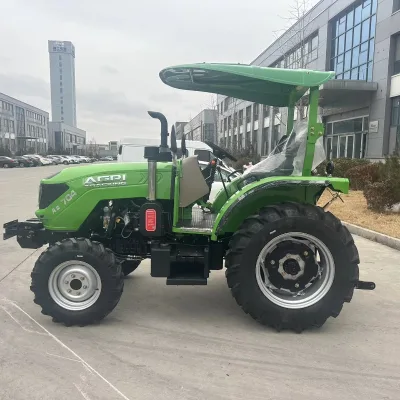


Small Tractor with Auxiliary Equipment Mini Crawler Tractor for Sale
$1500.00 - $3500.00
MOQ: 1 Pieces


Comprehensive Sourcing Guide
4WD Mini Crawler Tractor Sourcing Guide
Sourcing a 4WD Mini Crawler Tractor requires a nuanced understanding of the distinct mechanical advantages these machines offer over traditional wheeled counterparts. Unlike standard agricultural tractors, crawler models utilize continuous tracks that distribute weight more evenly across the ground, significantly reducing soil compaction and enhancing traction on uneven, muddy, or steep terrain. This makes them particularly suitable for specialized applications such as vineyards, orchards, and small-scale farming operations where ground preservation is critical. Buyers must recognize that while the "mini" designation often implies compact dimensions, the operational footprint and maneuverability can vary widely depending on the specific chassis design and track width selected.
The decision to source a crawler tractor also involves evaluating the trade-offs between speed and power delivery. Crawler drives generally operate at lower maximum speeds compared to wheeled tractors but provide superior torque and stability under heavy load. For buyers in regions with challenging topography, the ability to navigate slopes without tipping is a primary safety and operational benefit. However, this comes with increased maintenance complexity regarding track tension and roller wear. Procurement teams should therefore align their machine selection not just with horsepower requirements, but with the specific terrain conditions and the frequency of heavy-duty tasks that will define the machine’s service life.
Product Scope and Observed Listing Signals
Market listings for 4WD mini crawler tractors reveal a diverse range of configurations, primarily categorized by engine type, drive system, and physical size. Observed data indicates that products are frequently described as "New" with customization options available for attachments and colors, suggesting a flexible manufacturing base often centered in China. The observed price range spans from approximately $610 to $12,000 USD, reflecting a broad spectrum from basic utility units to more robust, feature-rich models. This wide variance necessitates careful scrutiny of the included features, as lower price points may exclude essential components like enclosed cabins, advanced hydraulic systems, or certified emission-compliant engines.
Key attributes observed in current listings include the availability of both wheel and crawler types, with specific models identified by codes such as TLG, TFY-25, TFY-35, and 504. Many units are powered by Chinese engines and offer 4WD capabilities, with some explicitly marketed as 4X4 tractors. The observed service life is estimated between 6-10 years, indicating a moderate durability profile suitable for small to medium-scale agricultural or landscaping use. Buyers should note that while "Universal 60HP" or "50 HP" labels are common, actual power outputs can vary, with some specifications citing 36.7kw (approximately 50 HP) as a baseline. It is crucial to verify whether the listed horsepower corresponds to the engine’s gross or net output to ensure accurate performance expectations.
Technical Specifications to Verify
When evaluating technical specifications, the engine configuration and transmission type are primary determinants of operational efficiency. Listings frequently mention 4-cylinder engines with power outputs ranging from 45-75 HP, though specific models may have lower outputs like 36.7kw. Buyers must verify the engine brand and origin, as "Chinese Engine" is a broad descriptor that can encompass various manufacturers with differing reliability profiles. Additionally, the transmission system, often described as having 12 forward and 12 reverse gears, should be confirmed for smoothness and durability. The hydraulic output, noted as having 2 groups in some specifications, is critical for operating attachments such as loaders, backhoes, or plows, so the flow rate and pressure ratings must match the intended implements.
Physical dimensions and weight distribution are equally important for compatibility with existing farm infrastructure and transport logistics. Observed standard dimensions include lengths around 4190mm and widths near 1790mm, with some compact models measuring 3300x1600x1640mm. The minimum weight of certain models is listed at 2690kg, which influences traction and stability. Buyers should check the rim color and type, as silver rims are common, but the material quality affects corrosion resistance. Furthermore, the availability of optional features such as cabins, sunshades, or roll bars significantly impacts operator comfort and safety. It is essential to confirm whether these options are included in the base price or quoted separately, as they can substantially alter the total cost of ownership.
Compliance and Safety Documentation
Compliance with regional safety and emission standards is a non-negotiable aspect of international tractor procurement. Observed certifications for these machines often include ISO, CE, CCC, and EPA marks, indicating adherence to specific quality and environmental regulations. However, the presence of these certifications on a listing does not guarantee that every unit shipped will meet the exact requirements of the buyer’s destination country. For instance, while Euro II emission standards are mentioned, buyers targeting markets with stricter regulations, such as Stage V in Europe or Tier 4 in the US, must verify that the specific engine model complies with those local laws. Failure to do so can result in customs delays, fines, or the inability to register and operate the machine legally.
Safety documentation must also be thoroughly reviewed to ensure operator protection. The distinction between a cabin and a Roll Over Protective Structure (ROPS) or sunshade is critical for liability and safety. In many jurisdictions, ROPS certification is mandatory for agricultural machinery. Buyers should request detailed safety manuals and certification documents for the ROPS or cabin structure before placing an order. Additionally, the hydraulic system’s safety valves and emergency stop mechanisms should be verified against international safety standards. Ensuring that the supplier provides comprehensive English-language manuals and wiring diagrams is also vital for local maintenance and troubleshooting, reducing downtime and dependency on specialized technical support.
Cost Drivers and Commercial Terms
The total cost of acquiring a 4WD Mini Crawler Tractor is influenced by several commercial factors beyond the base unit price. Observed minimum order quantities (MOQ) are often listed as 1, facilitating single-unit purchases for small farms or individual contractors. However, shipping costs can be a significant variable, especially for larger units that may require containerized transport. The observed delivery lead time of 7-15 days suggests relatively quick production, but this can be extended by customization requests or supply chain disruptions. Buyers should clarify whether the quoted price includes packaging, such as nude packing or containerized shipping, as improper packaging can lead to damage during transit.
Payment terms and warranty coverage are critical components of the commercial agreement. While specific payment structures are not detailed in the observed data, standard practices often involve a deposit followed by balance against shipping documents. Buyers should negotiate clear warranty terms that cover major components like the engine, transmission, and hydraulic pumps. It is also important to inquire about the availability of spare parts and the expected lead time for their delivery. Given the 6-10 year service life, having a reliable supply chain for wear items like tracks, rollers, and filters is essential for long-term operational continuity. Buyers should also consider the cost of optional accessories, such as additional hydraulic groups or specialized attachments, which can quickly escalate the total investment.
Supplier Qualification and Quality Control
Selecting a reliable supplier is paramount to ensuring the quality and longevity of the purchased tractor. Buyers should prioritize suppliers who provide transparent information about their manufacturing processes and quality control measures. The observation that products originate from China indicates a large pool of potential suppliers, but not all maintain consistent quality standards. Verification of the supplier’s business license, export history, and customer references can provide insight into their reliability. Additionally, suppliers who offer customization options for attachments and colors often have more flexible production lines, which can be advantageous for specific operational needs.
Quality control should extend beyond the final inspection to include pre-shipment verification. Buyers should request detailed photos or videos of the specific unit before shipment, focusing on critical areas such as weld quality, paint finish, and engine installation. If possible, engaging a third-party inspection service to verify the machine’s specifications and functionality before payment can mitigate risks. It is also advisable to confirm the supplier’s after-sales support capabilities, including their responsiveness to technical queries and their ability to provide troubleshooting guidance. A supplier’s willingness to provide comprehensive documentation and support is often a strong indicator of their commitment to customer satisfaction and long-term partnership.
Long-Term Procurement Checks
Long-term procurement success depends on establishing a sustainable relationship with the supplier and ensuring ongoing support for the machinery. Buyers should monitor the supplier’s ability to provide consistent quality across multiple orders, especially if scaling up operations. Regular communication regarding updates in technology, such as newer engine models or improved hydraulic systems, can help keep the fleet modern and efficient. Additionally, staying informed about changes in international trade regulations and emission standards is crucial for future purchases, ensuring that new acquisitions remain compliant and viable in the target market.
Maintenance and operational training are also key to maximizing the lifespan of the tractor. Buyers should invest in training their operators on proper usage and maintenance procedures to prevent premature wear and tear. Establishing a routine maintenance schedule based on the manufacturer’s recommendations, particularly for track tension and hydraulic fluid changes, can significantly extend the service life. Furthermore, keeping a record of all maintenance activities and repairs can help identify recurring issues and inform future procurement decisions. By focusing on these long-term factors, buyers can ensure that their investment in 4WD mini crawler tractors delivers consistent value and operational reliability over the years.
FAQs
What certifications do these 4wd mini crawler tractors have?
These tractors hold ISO, CE, CCC, and EPA certifications. Some models also meet ISO/TSISO standards. Buyers should verify specific certification documents for their target market before ordering.
Can I customize the attachments for this tractor?
Yes, attachments can be customized to suit specific farming needs. The product listing confirms customization is available for various implements. This allows farmers to adapt the machine for different tasks.
How long is the delivery time for these units?
The standard delivery time ranges from 7 to 15 days. This lead time applies to the production and shipping process. Buyers should confirm exact dates based on their specific order volume.
What is the service life of the 4WD Mini Crawler Tractor?
The expected service life is between 6 and 10 years. This duration depends on usage intensity and maintenance practices. Regular servicing helps ensure the machine reaches its full operational lifespan.
Which engine types are used in these tractors?
These tractors are equipped with Chinese engines. The power output varies, with some models offering 50 HP or 36.7 kW. Buyers should check specific model details for exact engine specifications.
What is the minimum order quantity for these tractors?
The minimum order quantity is 1 unit. This low MOQ allows buyers to test the product without large initial commitments. It is suitable for small farms or individual contractors.
Can the tractor color be customized?
Yes, the color can be customized beyond the standard red option. Buyers can request specific colors to match their branding or preference. This customization is available upon request during the ordering process.