Source 5MP Flat Industrial Lens for Medical, Optical, and Lighting
Find and compare 30 available 5MP Flat Industrial Lens options from verified suppliers. Buyers can evaluate specifications like focal length, aperture, and distortion to select the right lens for medical, optical, or lighting applications.
Key considerations
Products List






Comprehensive Sourcing Guide
Strategic Sourcing Guide for 5MP Flat Industrial Lenses
Procuring a 5MP Flat Industrial Lens requires a rigorous approach that balances optical performance with mechanical compatibility and supply chain reliability. The market for industrial imaging components is characterized by high specificity, where minor deviations in focal length, aperture, or distortion can render a lens unsuitable for a specific machine vision application. This guide synthesizes observed product attributes and industry standards to provide a framework for evaluating potential suppliers and defining technical requirements. Buyers must navigate a landscape where "flat lens" describes a specific optical geometry, while "5MP" dictates the resolution requirements that the lens must support without introducing significant aberrations.
Technical Specifications and Optical Performance
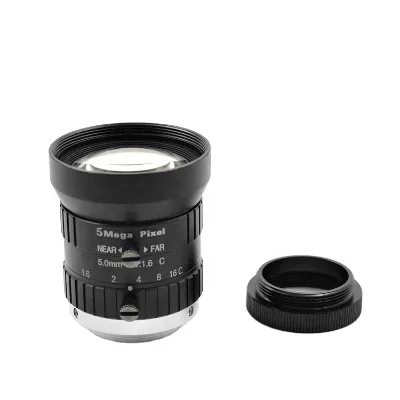
The foundation of any successful procurement for a 5MP Flat Industrial Lens lies in the precise definition of optical parameters. Based on available product data, the focal length is a primary differentiator, with observed models ranging from 8mm to 50mm. For instance, specific industrial lenses are documented with focal lengths of 12mm, 25mm, 16mm, and 35mm, each corresponding to distinct fields of view and working distances. A 12mm lens, such as the model FA1201C, typically serves wide-angle applications, whereas a 50mm lens, like the FA5001C, is suited for telephoto or distant inspection tasks.
Aperture control is equally critical for image quality and light gathering. The data indicates a range of maximum apertures, specifically F2.0 and F1.4, with some models offering variable ranges up to F16. The F-number directly influences the depth of field and the amount of light reaching the sensor. For a 5MP sensor, which has smaller pixels than lower-resolution sensors, maintaining a high light transmission efficiency is vital. Observed transmittance rates for high-quality glass components fall between 90% and 95%, a metric that buyers should verify through independent testing or supplier data sheets to ensure minimal light loss.
Distortion is another key specification that varies by model. High-precision industrial lenses often boast TV distortion levels below 0.3%, with premium models achieving distortion rates under 0.05%. For machine vision applications requiring precise measurement, such as dimensional inspection, a distortion rate of less than 0.1% is often the target. The absence of image stabilization in many industrial fixed-focus lenses is a standard design choice, as these systems typically rely on rigid mounting rather than handheld operation. Buyers must confirm that the lens is a fixed-focus type, as variable focus mechanisms introduce complexity and potential failure points in automated environments.
Mechanical Compatibility and Mounting Standards
Mechanical integration is often the most overlooked aspect of lens procurement, yet it is the primary cause of integration failures. The C-Mount interface is the industry standard for industrial cameras, and the provided data confirms its prevalence in the 5MP lens category. However, physical dimensions vary significantly. Lens barrels are observed with diameters ranging from 26.8mm to 30.6mm, and lengths varying from 19.9mm to 44.9mm depending on the focal length.
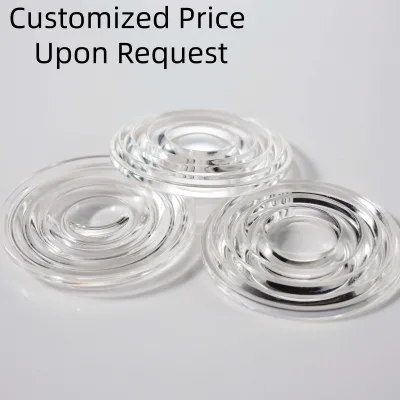
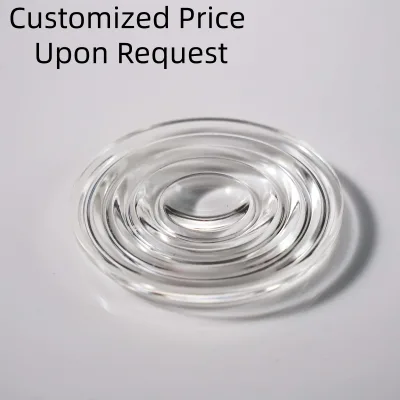
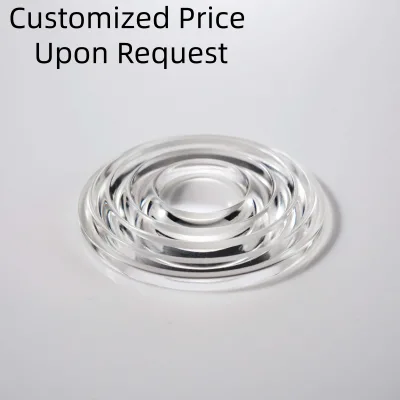
Compatibility with the camera sensor is a non-negotiable constraint. The lens must be matched to the sensor size of the industrial camera. Data points indicate compatibility with 1/1.8" sensors for 2MP, 3MP, and 5MP cameras, as well as 2/3" sensors for similar resolutions. Using a lens designed for a smaller sensor on a larger 5MP sensor will result in severe vignetting, while a lens designed for a larger sensor on a smaller sensor may suffer from unnecessary cost and bulk. The "flat lens" designation implies a specific optical design intended to minimize field curvature, ensuring that the entire image plane remains in focus across the 5MP sensor area.
Dimensional tolerances are critical for automated assembly lines. Observed tolerances for lens thickness and housing are specified as ±0.1mm or ±0.05mm, with options for customization. Buyers should verify that the supplier can maintain these tight tolerances consistently, as deviations can affect the back focal distance, leading to focus issues that cannot be corrected by software. The edge finish, described as beveled, fine ground, or polished, impacts the mechanical handling and the potential for light scattering at the lens periphery.
Cost Drivers and Pricing Variables
Understanding the cost structure of industrial lenses is essential for budgeting and supplier negotiation. The observed price range for these components is extensive, spanning from $0.80 to $1,859 USD. This wide variance is not indicative of a single product type but rather reflects differences in optical complexity, material quality, and production volume. A lens priced at the lower end of the spectrum likely utilizes standard glass elements and mass-production techniques, while high-end models approaching the upper limit may feature multi-coated optics, specialized glass types, or custom engineering.
Material composition is a significant cost driver. The data identifies metal and glass as the primary materials used in construction. The quality of the glass, particularly the grade used for the lens elements, directly impacts optical clarity and durability. "Professional Camera" grade glass is a specific attribute observed in high-performance models, suggesting a higher cost base compared to standard optical glass. Customization is another major factor; the availability of customized focal lengths, apertures, and dimensions typically incurs a premium and may affect the Minimum Order Quantity (MOQ).
The MOQ range observed in the market spans from 1 unit to 1,000 units. This flexibility allows buyers to test prototypes with low-volume orders while securing supply for mass production. However, the unit price often decreases as the order volume increases. Buyers should be aware that "Customized" products may have higher MOQs or longer lead times compared to off-the-shelf models. The origin of the product, with Shenzhen and China cited as common origins, suggests a supply chain that leverages established manufacturing hubs, but buyers must verify the specific factory capabilities rather than relying solely on the country of origin.
Compliance, Certification, and Quality Assurance
While specific certification names are not universally listed in the provided data, the emphasis on "High Quality" and "Professional Camera" grades implies adherence to rigorous internal quality standards. Buyers must treat product attributes as observations and verify that the supplier can provide evidence of compliance with relevant industry standards. The production standard for lens dimensions is often defined by specific geometric profiles, such as φ26.8×19.9 or φ30.6×44.9, which serve as benchmarks for dimensional accuracy.
Quality control processes should include verification of the edge finish and surface quality. The data mentions "Beveled, Fine Ground, Polished" as standard edge finishes, which are essential for preventing chipping and ensuring a secure fit within the camera housing. Buyers should request test results for transmittance, distortion, and resolution to confirm that the lens meets the 5MP requirement. The absence of a drive motor in these lenses simplifies the quality assurance process, as there are fewer moving parts to fail, but it necessitates a thorough check of the focus mechanism to ensure it remains stable under vibration and temperature fluctuations.
Packaging is a critical component of quality assurance during transit. Observed packaging includes "Fob Shenzhen" and "Carton" options. For sensitive optical components, the packaging must provide adequate protection against shock, dust, and moisture. Buyers should verify that the packaging standards align with the fragility of the glass elements and the precision of the mechanical tolerances. Customized packaging may be required for high-value orders to ensure that the lenses arrive in perfect condition.
Supplier Evaluation and Procurement Strategy
Evaluating suppliers for industrial lenses requires a focus on technical capability and supply chain stability. The availability of customization is a key differentiator, with some suppliers offering tailored solutions for specific focal lengths and apertures. Buyers should prioritize suppliers who demonstrate a clear understanding of the relationship between sensor size, focal length, and distortion. The ability to provide detailed technical drawings and specifications is a strong indicator of a reliable supplier.
The production origin, specifically Shenzhen, indicates a concentration of manufacturing expertise in the region. However, buyers should not assume that all products from this location meet the same quality standards. It is essential to audit the supplier's manufacturing process, particularly regarding the grinding and polishing of glass elements. The dimensional tolerance of ±0.1mm or ±0.05mm must be consistently maintained across all units in a batch.
Lead times and delivery terms are also critical factors. The "Fob Shenzhen" term suggests that the buyer is responsible for freight and insurance from the port of departure. Buyers should clarify the lead time for both standard and customized orders, as customization can significantly extend the production timeline. The MOQ of 1 to 1,000 units offers flexibility, but buyers should negotiate terms that allow for small initial orders to validate the product before committing to larger volumes.
Long-Term Procurement and Application Suitability
The long-term viability of a 5MP Flat Industrial Lens depends on its suitability for the intended application. The data lists usage in photography, optical systems, medical devices, and lighting. Each of these applications imposes different stressors on the lens. Medical and industrial applications often require lenses that can withstand harsh environments, including exposure to chemicals, extreme temperatures, or continuous operation. The "High Quality" designation suggests that these lenses are built for durability, but buyers should verify the specific environmental ratings.
For long-term procurement, consistency in supply is paramount. Switching suppliers can introduce variability in optical performance, which can disrupt automated processes. Buyers should establish a relationship with a supplier who can guarantee consistent quality over time. The ability to customize the lens for future needs, such as changing sensor resolutions or focal lengths, adds value to the procurement strategy.
In conclusion, sourcing a 5MP Flat Industrial Lens requires a meticulous approach that addresses optical performance, mechanical compatibility, and supply chain reliability. By focusing on the specific technical parameters observed in the market, such as focal length, aperture, and distortion, buyers can make informed decisions that align with their application requirements. The wide range of prices and MOQs offers flexibility, but the complexity of the product demands a thorough evaluation of supplier capabilities and quality control processes.
FAQs
What focal lengths are available for 5mp flat industrial lenses?
Available focal lengths include 8mm, 12mm, 16mm, 25mm, 35mm, and 50mm. These options allow buyers to select the appropriate field of view for specific machine vision applications without compromising resolution.
Which mount type is standard for these industrial lenses?
The C-Mount interface is the standard mounting type for these lenses. This ensures compatibility with most 1/1.8-inch and 2/3-inch industrial cameras used in automated inspection systems.
How is optical distortion specified for high-precision models?
Distortion is typically specified as less than 0.3%, with premium models achieving under 0.05%. This low distortion level is critical for applications requiring precise dimensional measurements and image accuracy.
Can buyers request customized dimensions for these lenses?
Yes, customization is available for dimensions, thickness, and focal lengths. Buyers can specify tolerances as tight as ±0.05mm to ensure seamless integration into automated assembly lines.
What is the typical transmittance rate for these glass lenses?
The transmittance rate for high-quality glass components falls between 90% and 95%. This ensures minimal light loss and optimal image brightness for 5MP sensors in low-light environments.
Do these lenses include image stabilization features?
No, these lenses typically do not include image stabilization functions. They are designed as fixed-focus units intended for rigid mounting in stable industrial environments rather than handheld operation.
What is the observed price range for 5mp flat industrial lenses?
The observed price range spans from 0.8 to 1859 USD depending on specifications. Lower prices often reflect standard glass elements, while higher costs indicate specialized coatings or custom engineering.