Source 5mm Radial SFH485P Emitter for Sensors, Controls, and Safety Systems
Explore 30 listings for the 5mm Radial SFH485P Emitter to compare specifications like input voltage, output signals, and working temperatures. Buyers can evaluate options from various suppliers to find components suitable for corrosive media and industrial applications.
Key considerations
Products List
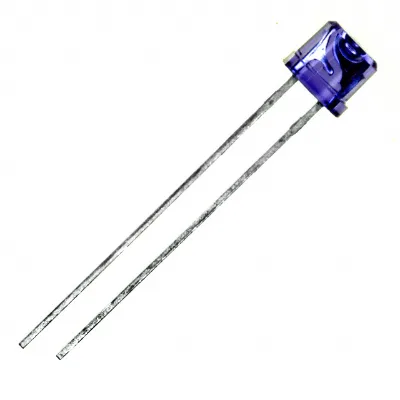
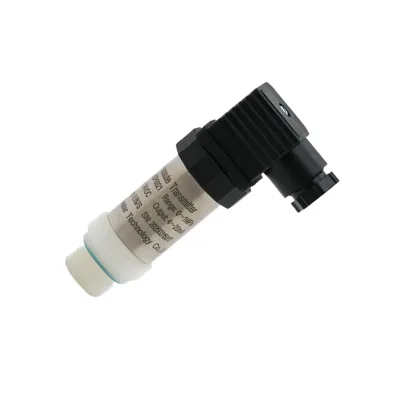
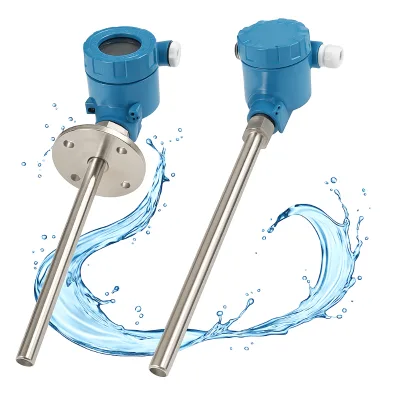


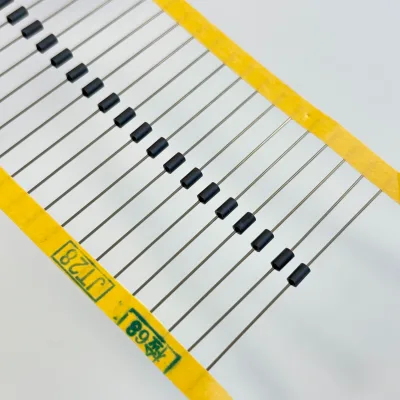

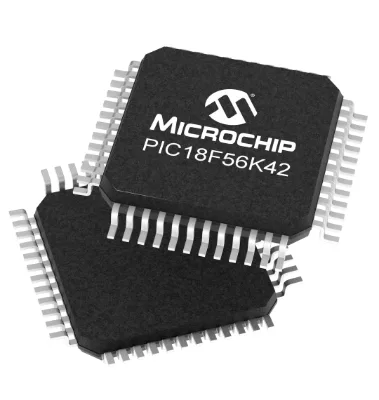
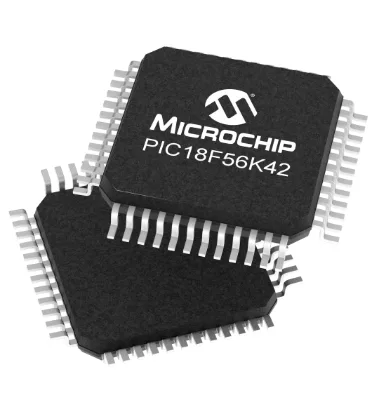


$1.00 - $2.00
MOQ: 1000 Pieces


2t/H UF with Precision Filtration
$485.00 - $585.00
MOQ: 1 Pieces
Shandong Feilong Environmental Protection Technology Co., Ltd.


0-10m Range RS485 Output Non Contact Ultrasonic Level Transmitter DC12V 24V
$149.00 - $185.00
MOQ: 1 Pieces


Comprehensive Sourcing Guide
Strategic Sourcing Guide for 5mm Radial SFH485P Emitter Components
Understanding the Component Profile and Core Specifications
When sourcing a 5mm Radial SFH485P Emitter, buyers must first distinguish between the specific optical component and the broader industrial instrumentation data often found in general electronic listings. The core keyword identifies a specific infrared emitter, typically characterized by its radial lead configuration and 5mm package size. In the context of available product data, the item name "SFH485P" is explicitly listed as an IC Component Electronics Part. While the SFH485P is historically known as an infrared LED emitter used in optocouplers and sensing applications, the provided product attributes also contain data regarding pressure transmitters and industrial sensors with model numbers like BP09X and BL08X.
Buyers must exercise extreme caution when matching the "SFH485P" keyword to the "Component & Part" completion type. The supplied facts indicate that the product condition is "Original" and the place of origin is listed as "Original" in one instance and "Shaanxi, China" in another. This discrepancy highlights the necessity of verifying the specific datasheet for the SFH485P emitter against the physical product received. The SFH485P is generally an integrated circuit or discrete component, whereas the detailed specifications regarding 316L membrane materials, 4...20mA output signals, and IP67/IP68 ingress protection levels in the source text refer to industrial pressure sensors, not the emitter itself. A procurement strategy must isolate the optical characteristics of the emitter from the mechanical and electrical specifications of the sensor systems that might utilize it.
Technical Verification and Electrical Interface Standards
The technical verification of the SFH485P requires a focus on its electrical interface and operating parameters. The supplied data mentions an electrical interface of "DIN43650A or custom," which is a standard often associated with industrial connectors rather than the internal leads of a 5mm radial LED. However, for the SFH485P specifically, buyers should verify the forward voltage and current ratings against the manufacturer's datasheet. The provided text lists input voltage ranges of "8...30V DC," "5VDC," and "3.3VDC" for other components in the catalog. These ranges are critical for system integration but may not apply directly to the low-voltage operation of a single infrared emitter.
Furthermore, the working temperature is a critical specification. The source text indicates a working temperature range of "-20~+85℃" and another range of "-40℃~125℃." For a 5mm radial emitter, the operating temperature range determines the reliability of the component in various environmental conditions. Buyers must confirm whether the specific batch of SFH485P components meets the -40℃ to +125℃ range or the -20℃ to +85℃ range, as this dictates the suitability for automotive, industrial, or consumer applications. The "Ultra Low Resistance" feature mentioned in the text is relevant to power switching applications, which may be a secondary characteristic if the SFH485P is part of a larger optocoupler assembly, but it is not a primary specification for a standalone emitter.
Compliance, Certification, and Material Integrity
Compliance is a non-negotiable aspect of B2B procurement, particularly for electronic components that may be used in regulated industries. The supplied facts explicitly state that the "Lead Free Status" is "RoHS Compliant." This is a vital data point for buyers targeting markets in the European Union and other regions with strict environmental regulations. RoHS compliance ensures that the component does not contain restricted hazardous substances such as lead, mercury, or cadmium. However, buyers must verify that this compliance applies specifically to the SFH485P emitter and not just to the broader category of sensors or transmitters listed in the catalog.
The material composition is another area requiring rigorous verification. The text lists various shell materials including "304SS," "316L," "TC4," "PTFE," and "PVDF." These materials are characteristic of industrial pressure transmitters designed to handle corrosive media. For a 5mm radial emitter, the primary material of concern is the epoxy resin of the package and the purity of the semiconductor die. The "316L" material is noted for its compatibility with corrosive media, but this is irrelevant to the internal structure of the emitter. Buyers should request material safety data sheets (MSDS) and certificates of conformity (CoC) to ensure that the packaging materials do not contain halogens or other substances that could interfere with the optical performance or long-term stability of the component.
Cost Drivers and Pricing Dynamics
The observed price range in the supplied data spans from $0.01 to $10,000 USD. This vast range indicates a mix of low-cost discrete components and high-value industrial systems. For a 5mm Radial SFH485P Emitter, the cost is likely to be on the lower end of this spectrum, consistent with standard discrete semiconductor pricing. However, the final cost is influenced by several factors. The "Selling Units" are listed as "Single item," which suggests that the supplier is willing to sell in small quantities, potentially increasing the unit cost compared to bulk orders.
The "MOQ" (Minimum Order Quantity) range of 1 to 1000 units also plays a significant role in pricing. Buyers seeking small batches may face higher per-unit costs, while those ordering near the 1000-unit threshold may negotiate better rates. The "Brand Name" is listed as "Anterwell" in one instance and "BST" in another. Brand reputation and the authenticity of the "Original" condition claim are significant cost drivers. Premium pricing is often associated with guaranteed original components from authorized distributors, whereas lower prices may indicate aftermarket or surplus stock. Buyers should evaluate the trade-off between cost and the risk of counterfeit parts, especially given the "100% NEW" attribute which must be verified through physical inspection and testing.
Supplier Evaluation and Operational Reliability
Evaluating a supplier for the SFH485P emitter requires a multi-dimensional approach. The supplied facts mention "Fast Shipment" as a delivery time attribute, which is a positive indicator for supply chain responsiveness. However, the "Place of Origin" is listed variably as "Original" and "Shaanxi, China." Buyers should clarify the specific manufacturing location to ensure it aligns with their quality expectations and logistics requirements. The "Shipping ways" are listed as "Express," which implies a reliance on courier services for delivery. This can be advantageous for urgent needs but may increase shipping costs.
Payment terms are another critical factor in supplier evaluation. The available payment methods include "Paypal," "TT" (Telegraphic Transfer), and "Trade Assurance." Trade Assurance offers a layer of protection for buyers, ensuring that funds are only released upon satisfactory delivery. The "customized support" for "OEM, ODM, OBM" suggests that the supplier is capable of handling custom orders, which may be relevant if the SFH485P needs to be integrated into a specific product design. However, buyers should verify the supplier's capacity to handle the specific volume requirements without compromising on the "Original" condition of the parts.
Quality Control and Long-Term Stability
Quality control is paramount when sourcing electronic components. The source text highlights a "Long term stability" of "Less than 0.2±%FS/year" and "less than 0.5±%FS/year." While these figures are likely associated with the pressure sensors (BP09X/BL08X) rather than the emitter itself, they set a benchmark for the quality standards expected from the supplier. For the SFH485P, buyers should look for similar stability metrics regarding the optical output over time. The "Warranty" period is listed as "18 Months," which provides a safety net for buyers against premature failures.
The "Accuracy class" of "0.5%FS" is another metric found in the text, again likely referring to the sensor systems. For the emitter, accuracy translates to the consistency of the infrared output and the forward voltage. Buyers should implement a rigorous incoming quality control (IQC) process that includes visual inspection for packaging integrity and electrical testing to verify the forward voltage and current characteristics. The "Ingress Protection" levels of "IP67, IP68, IP65, IP66" are relevant for the final assembly but not the bare component. However, the supplier's ability to provide components that can withstand these environmental conditions when assembled is a key quality indicator.
Typical Applications and System Integration
The "Applications" for the SFH485P are described as "usual," which is a generic term. Based on the component type, typical applications include optical isolation, remote control receivers, and proximity sensing. The "Description" of "Power Switching Application" and "Fet Technology: Metal-Oxide Semiconductor" in the source text suggests that the supplier also deals with power electronics, which may be relevant if the SFH485P is used in a larger optocoupler assembly for power switching. The "Ds Breakdown Voltage-Min: 75 V" is a specification for a different component, likely a MOSFET, but it underscores the importance of understanding the full system context.
When integrating the SFH485P, buyers must consider the "Output signal" capabilities of the receiving end. The text lists signals such as "4...20mA," "0.5...4.5VDC," and "RS485." While these are for the sensor systems, the emitter must be compatible with the driver circuitry that generates the necessary light pulses. The "Color" is listed as "Silver," which may refer to the casing of the sensor or the reflector in the emitter assembly. Buyers should ensure that the optical characteristics of the SFH485P match the requirements of the specific application, whether it is for short-range communication or long-distance sensing.
Procurement Strategy and Risk Mitigation
To mitigate risks in the procurement of the SFH485P, buyers should adopt a strategy that emphasizes verification and diversification. The "100% NEW" attribute is a strong selling point, but it must be validated through third-party testing. The "Standard" of "RoHS Compliant" is a baseline requirement that should be confirmed with documentation. Buyers should also consider the "Lead Free Status" to ensure compliance with global environmental standards.
The "Selling Units" being "Single item" allows for flexibility in testing and prototyping, but it may not be cost-effective for mass production. Buyers should negotiate volume discounts for orders exceeding the MOQ of 1000 units. The "Fast Shipment" and "Express" shipping options are beneficial for reducing lead times, but buyers should plan for potential delays in the supply chain. Finally, the "18 Months" warranty provides a buffer against quality issues, but buyers should maintain a relationship with the supplier to ensure timely support and replacement if necessary. By combining these strategies, buyers can secure a reliable supply of SFH485P emitters that meet their technical and operational requirements.
FAQs
What is the condition of the 5mm Radial SFH485P Emitter?
The product condition is listed as Original and 100% NEW. Buyers should verify the authenticity through physical inspection since the catalog also lists industrial sensors with different specifications.
Which certifications apply to the 5mm Radial SFH485P Emitter?
The listed lead-free status is RoHS Compliant. This ensures the component meets environmental standards for restricted hazardous substances, though specific certification documents should be requested from the supplier.
How long is the warranty period for the 5mm Radial SFH485P Emitter?
The warranty period is 18 months for the listed items. This coverage applies to the product condition and quality, providing a safety net against premature failures during the specified timeframe.
Can the 5mm Radial SFH485P Emitter operate in extreme temperatures?
The working temperature range is specified as -20 to +85 degrees Celsius. Some related industrial components in the catalog support -40 to +125 degrees Celsius, but the emitter range must be confirmed.
What payment methods are accepted for the 5mm Radial SFH485P Emitter?
Accepted payment methods include Paypal, TT, and Trade Assurance. These options provide flexibility and security, with Trade Assurance offering protection until satisfactory delivery is confirmed by the buyer.
Which shipping methods are available for the 5mm Radial SFH485P Emitter?
Express shipping is the listed delivery method for fast shipment. This ensures rapid delivery but may incur higher costs compared to standard freight options for urgent procurement needs.
What is the minimum order quantity for the 5mm Radial SFH485P Emitter?
The minimum order quantity ranges from 1 to 1000 units depending on the specific listing. Single item selling units are available, allowing for small batch testing or prototyping without bulk commitments.