Source High Precision Side Focus Lens for Optical, Lighting, and Medical Uses
Find and compare 30 High Precision Side Focus Lens options from verified Chinese manufacturers. Evaluate specifications such as UV coating, anti-reflective treatments, and cylindrical shapes for optical, lighting, and medical applications; compare the available evidence and request quotations based on your requirements.
Key considerations
Products List






Comprehensive Sourcing Guide
High Precision Side Focus Lens Sourcing Guide
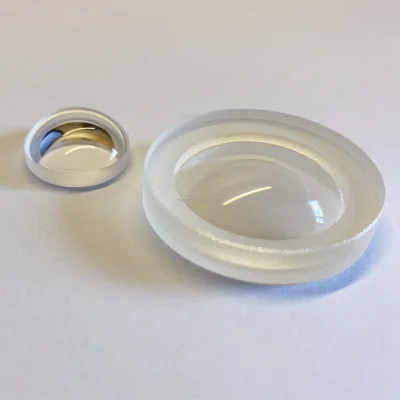
Procuring high precision side focus lenses requires a rigorous understanding of optical geometry and coating specifications. Buyers must distinguish between standard convex lenses and specialized cylindrical or flat variants, as the application dictates the necessary curvature and focal length. The observed market includes products with diameters ranging from 1mm to 500mm, indicating that scale is a primary variable in sourcing. Sourcing teams should prioritize suppliers who offer customized manufacturing capabilities, as off-the-shelf options rarely meet the exacting tolerances required for side-focus applications in industrial or medical contexts.
Verification of surface quality and transmittance is critical for maintaining optical integrity. Listings often cite surface qualities such as 40/20 or 20-10, which define the scratch-dig limits for optical clarity. High transmittance rates, typically exceeding 95%, are essential for minimizing light loss in precision systems. Buyers should request detailed optical drawings and coating certificates to ensure that anti-reflective or dielectric coatings are applied correctly across the specified wavelength ranges, ensuring optimal performance in the final assembly.
Product Scope and Observed Listing Signals
The current market landscape for high precision side focus lenses reveals a diverse range of product attributes and specifications. Observed listings indicate a price range from $0.2 to $50,000, reflecting the vast difference between simple plano-convex elements and complex, multi-coated assemblies. Minimum order quantities vary significantly, from single units to thousands, suggesting that both prototyping and mass production are supported by various suppliers. This variability allows buyers to scale their procurement strategies based on project phase, from initial R&D to full-scale manufacturing deployment.
Material composition and substrate options are key differentiators in product listings. Common substrates include optical glass and borofloat 33, chosen for their thermal stability and clarity. Many suppliers offer customized solutions, allowing for specific diameter and focal length requirements. The presence of models like RAY-LH048# and RAY-LH010# suggests standardized series that may be adapted for specific side-focus needs. Buyers should carefully review these model numbers to understand the baseline specifications before requesting custom modifications, ensuring that the core optical properties align with their system requirements.
Technical Specifications to Verify
Dimensional accuracy and tolerance are paramount for side focus lenses, where even minor deviations can impact beam alignment. Buyers must verify dimension tolerances, which often range around ±0.03mm, to ensure precise fitment in optical assemblies. The clear aperture, typically specified as greater than 90% of the diameter, ensures that the usable optical area is maximized. Additionally, surface flatness specifications, such as lambda/10 or 1/4 lambda, must be confirmed to prevent wavefront distortion. These parameters directly influence the lens's ability to focus light accurately without introducing aberrations.
Coating specifications and wavelength compatibility are equally critical technical considerations. Anti-reflective coatings are frequently applied to enhance transmittance, with specific ranges like 488-694nm or 700-950nm being common. Buyers should verify that the coating type, whether dielectric or AR, matches the operational wavelength of their light source. Furthermore, the focal length range, which can extend from 1mm to 10,000mm, must be selected based on the desired magnification and working distance. Confirming these technical details prevents performance mismatches in the final optical system.
Compliance and Safety Documentation
Regulatory compliance is a foundational requirement for sourcing optical components, particularly for applications in medical or automotive industries. Buyers should verify that suppliers hold relevant certifications, such as CE, ISO, and RoHS, which indicate adherence to international safety and environmental standards. These certifications ensure that the manufacturing processes and materials used do not pose risks to end-users or the environment. Documentation should be readily available and up-to-date, providing assurance that the lenses meet the necessary legal and industry-specific requirements for global distribution.
Quality management systems and standard adherence further reinforce supplier reliability. Many suppliers operate under customized standards, but alignment with recognized frameworks like ISO 9001 is a strong indicator of consistent quality. Buyers should request evidence of these standards, including audit reports or certification copies, to validate the supplier's commitment to quality control. Additionally, understanding the supplier's origin, such as manufacturing in China, can provide context for logistical and regulatory considerations. Ensuring compliance documentation is complete mitigates legal risks and facilitates smoother customs clearance for international shipments.
Cost Drivers and Commercial Terms
Pricing for high precision side focus lenses is influenced by several key factors, including material quality, coating complexity, and order volume. The observed price range of $0.2 to $50,000 highlights the impact of customization and precision levels on cost. Simple lenses with standard specifications are significantly less expensive than those with custom coatings, tight tolerances, or specialized substrates. Buyers should analyze the cost breakdown to understand where value is added, ensuring that they are not overpaying for unnecessary features while maintaining the required performance standards for their application.
Commercial terms, including minimum order quantities and payment conditions, vary widely among suppliers. MOQs ranging from 1 to 1000 units allow for flexibility in procurement planning. Buyers should negotiate terms that align with their production schedule and cash flow requirements. Additionally, warranty periods, such as the observed three-year warranty, provide protection against defects and performance issues. Understanding these commercial aspects helps in building a sustainable supply chain relationship, balancing cost efficiency with risk management and long-term supplier support.
Supplier Qualification and Quality Control
Evaluating supplier qualifications is essential for ensuring the reliability of high precision side focus lenses. Buyers should assess the supplier's manufacturing capabilities, including their ability to perform custom manufacturing and offer OEM, ODM, or OBM services. The presence of advanced equipment for surface quality control, such as achieving 20-10 to 60-40 scratch-dig standards, indicates a high level of technical proficiency. Suppliers with a proven track record in producing lenses for optical, lighting, and medical applications are preferable, as they have demonstrated expertise in meeting diverse industry requirements.
Quality control processes must be robust and transparent. Buyers should inquire about the supplier's inspection protocols, including how surface flatness and transmittance are measured and verified. Requesting sample lenses for testing before placing large orders is a prudent step to validate quality claims. Additionally, understanding the packaging methods, such as the use of electrolytic capacitor paper, foam, and cartons, ensures that lenses arrive undamaged. A supplier's commitment to quality control, backed by verifiable data and processes, is a critical factor in maintaining the integrity of the optical system.
Long-Term Procurement Checks
Establishing long-term procurement relationships requires ongoing monitoring of supplier performance and product consistency. Buyers should implement regular audits and quality checks to ensure that the lenses continue to meet specified tolerances and coating standards over time. Tracking key performance indicators, such as defect rates and delivery times, helps in identifying potential issues early. Maintaining open communication with suppliers regarding any changes in materials or processes ensures that any deviations are addressed promptly, preserving the reliability of the supply chain.
Adaptability to evolving market needs is also crucial for long-term success. As optical technologies advance, suppliers may introduce new coatings or materials that offer improved performance. Buyers should stay informed about these developments and evaluate whether they can enhance their products. Additionally, reviewing warranty claims and customer feedback provides valuable insights into the long-term durability of the lenses. By continuously assessing supplier capabilities and product quality, buyers can ensure that their high precision side focus lenses remain a competitive advantage in their respective industries.
FAQs
What materials are used for high precision side focus lenses?
These lenses are primarily made from optical glass or borofloat 33 glass. The substrate ensures high clarity and durability for demanding optical applications. Manufacturers offer customized options to meet specific project requirements while maintaining strict quality standards.
Which surface quality standards apply to these optical lenses?
Surface quality typically ranges from 40/20 to 20-10 scratch-dig specifications. Some products achieve Lambda/10 flatness at 632.8nm with power removed. Custom manufacturing allows for tailored surface finishes to suit precise optical system needs.
Can I get anti-reflective coatings on these cylindrical lenses?
Yes, anti-reflective coatings are available for these optical components. Dielectric coatings can be applied to enhance light transmission beyond 95%. Custom coating types are offered to optimize performance for specific wavelength ranges between 488 and 950 nanometers.
What is the minimum order quantity for custom optical lenses?
The minimum order quantity starts at one unit for many suppliers. Some vendors require up to 1000 units depending on the specific customization level. Buyers should verify exact MOQs with manufacturers to ensure alignment with their procurement volume.
How are these lenses packaged for safe international shipping?
Lenses are packed using electrolytic capacitor paper, foam, and cartons. Larger orders may utilize wood cases for enhanced protection during transit. This packaging ensures the optical glass remains free from damage while meeting standard shipping requirements.
Which certifications do these optical lens manufacturers hold?
Manufacturers often hold CE, ISO, and RoHS certifications for their products. Customized standards are also available to meet specific regional or industry compliance needs. Buyers can verify these credentials to ensure the supplier meets global quality and safety benchmarks.
What is the lead time for custom optical lens production?
Lead times vary based on the complexity of the custom order and current factory capacity. Standard items may ship quickly, while bespoke specifications require additional manufacturing time. Buyers should confirm specific timelines with the supplier before placing an order.