Source 60 Degree HSS Countersink for Metal Drilling, Machining, and Assembly
Compare 30 listings for 60 Degree HSS Countersink tools with options in HSS and carbide materials. Buyers can evaluate suppliers offering straight or tapered shanks with DIN standards and various flute counts for industrial applications.
Key considerations
Products List
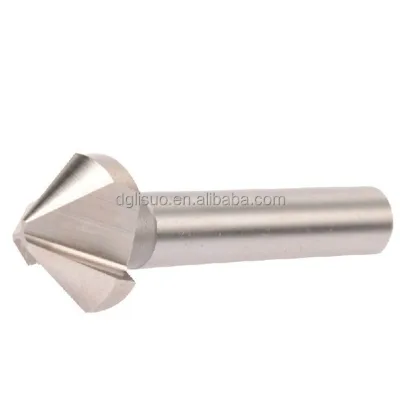


High-Quality Carbon Steel Countersinks for Wood and Plastic Applications
$0.50 - $5.00
MOQ: 100 Pieces

Precision Industrial Carbon Steel Countersinks for Metalworking Projects
$1.00 - $3.00
MOQ: 300 Pieces
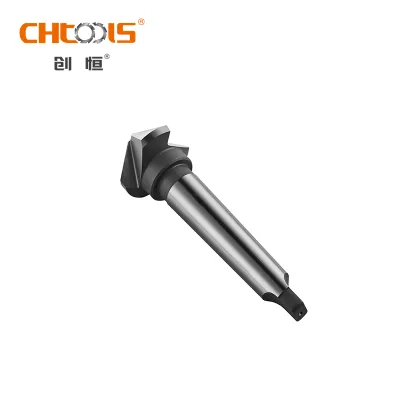


$0.30 - $6.00
MOQ: 1000 Pieces


Comprehensive Sourcing Guide
Strategic Sourcing Guide for 60 Degree HSS Countersink Tools
Understanding Technical Specifications and Material Composition
When sourcing a 60-degree HSS countersink, the primary objective is to align the tool's physical properties with the specific requirements of the drilling operation. The core material for these tools is High Speed Steel (HSS), a classification that ensures the tool can withstand the high temperatures generated during metal drilling without losing its temper. The supplied data indicates a hardness range of HRC 60-65, which is a critical benchmark for durability and cutting efficiency. Buyers must verify that the specific units they procure fall within this hardness spectrum, as deviations can lead to premature dulling or catastrophic failure during use.
The geometry of the 60-degree countersink is designed for creating conical recesses that match standard screw head angles. While the 60-degree angle is the standard for many applications, the market also offers 90-degree and 120-degree variants. The selection of the correct angle is dictated by the fastener being used; a mismatch will result in improper seating of the screw head. The flutes, which are the spiral grooves that evacuate chips, are available in various configurations. Common offerings include 1-flute, 3-flute, 4-flute, and 6-flute designs, with some suppliers listing options ranging from single to seven flutes. The number of flutes influences the chip removal rate and the surface finish of the countersunk hole. A higher flute count generally provides a smoother finish but may reduce chip clearance in deep holes, whereas fewer flutes offer better chip evacuation but potentially a rougher surface.
Shank design is another vital specification. The tool may feature a straight shank, a tapered shank, a hex shank, or a triangular shank. The choice depends on the chuck type of the drilling machine or the specific application requirements. For instance, a straight shank is standard for general-purpose drilling machines, while a tapered shank might be required for specific industrial spindle interfaces. The overall length and diameter are equally critical. Sourcing data suggests a diameter range from 4.3 mm to 40 mm, with some extended ranges up to 100 mm or 3 inches. The length can be categorized as jobber-length or taper-length, influencing the depth of the cut and the rigidity of the tool. Buyers should ensure the selected size matches the hole diameter and the material thickness of the workpiece to avoid tool breakage or incomplete countersinking.
Compliance, Standards, and Certification Verification
In the industrial procurement of cutting tools, adherence to international standards is non-negotiable for ensuring interchangeability and safety. The supplied product information references several key standards, including DIN, API, AISI, and JIS. Specifically, the DIN standard is frequently cited in the context of countersink specifications, such as DIN 335. When evaluating potential suppliers, buyers must request documentation that explicitly confirms compliance with the relevant DIN or ISO standards for the specific tool geometry and dimensions. This verification is essential because "Standard" is a generic term that does not guarantee dimensional accuracy or material integrity without a specific reference number.
The origin of the product also plays a significant role in compliance. The data indicates that these tools are manufactured in China, with specific mentions of Guangdong, Danyang City in Jiangsu Province, and Zhenjiang in Jiangsu. While these regions are known for manufacturing hubs, the location alone does not certify quality. Buyers should verify that the supplier can provide traceability for the steel used, ensuring it meets the specified HSS grades such as 4241, 4341, M35, M2, or M42. These material codes represent different alloy compositions that affect the tool's performance in various metals. For example, M42 contains cobalt and is better suited for high-temperature applications than standard M2 HSS.
Regarding surface finishing and coatings, the data lists options such as white finish, black oxide, tin-coated, bright, titanium, and aluminum coatings. Some listings also mention an "uncoated" option. The choice of coating affects the tool's lifespan and its ability to handle specific materials. Titanium coatings, for instance, are often used to reduce friction and increase heat resistance. However, buyers must be cautious not to assume that every listed product includes a specific coating unless explicitly stated in the purchase order. The standard surface color variations should be treated as options rather than defaults. Furthermore, while the data mentions a hardness of 64 HRC in one context, the primary range is HRC 60-65. Buyers should treat any specific hardness claim as a variable that requires verification against the mill certificate or a third-party test report, rather than a guaranteed attribute of all stock.
Cost Drivers and Pricing Dynamics
The pricing of 60-degree HSS countersinks is influenced by a complex interplay of factors, including material costs, manufacturing complexity, and order volume. The observed price range in the market spans from $0.10 to $100.00 USD. This wide variance is not arbitrary; it reflects differences in tool size, material grade, coating type, and packaging. A small, uncoated, straight-shank countersink with a basic plastic box packaging will sit at the lower end of this spectrum. Conversely, a large-diameter tool made from M42 cobalt steel, featuring a titanium coating, a specialized tapered or hex shank, and custom packaging, will command a price closer to the upper limit.
Order volume is a significant determinant of unit cost. The Minimum Order Quantity (MOQ) ranges from 1 piece to 3,000 pieces. Suppliers often offer tiered pricing structures where the unit cost decreases as the order quantity increases. For buyers with high-volume needs, negotiating an MOQ of 1,000 to 3,000 pieces can yield substantial savings. However, for prototyping or low-volume maintenance needs, the ability to purchase single items or small batches is crucial, even if the per-unit cost is higher. The supply ability of manufacturers, noted as 100,000 pieces per month, suggests that large suppliers can accommodate bulk orders without significant delays, but this capacity must be balanced against the specific customization requirements of the buyer.
Packaging details also contribute to the final cost. The standard packaging described involves placing one piece in a plastic box, then in a paper box, and finally in a carton. Alternative packaging options include plastic tubes, wood cases, or custom-branded boxes. These variations add to the material and labor costs. Buyers should carefully evaluate whether premium packaging is necessary for their logistics chain or if standard bulk packaging suffices. Additionally, the customization of the tool, such as specific lengths or non-standard angles, introduces additional machining time and setup costs, which will be reflected in the price. It is essential to request a detailed breakdown of costs to understand how much of the price is attributed to the raw material versus the finishing processes.
Typical Applications and Operational Context
The 60-degree HSS countersink is a specialized tool designed primarily for metal drilling applications. Its primary function is to create a conical recess that allows the head of a screw or bolt to sit flush with or below the surface of the workpiece. This is critical in industries where aerodynamics, aesthetics, or structural integrity are paramount, such as automotive manufacturing, aerospace assembly, and general machinery construction. The tool is compatible with drilling machines, as indicated by the application data, and is used to prepare holes for fasteners that require a countersunk head.
The versatility of the tool extends to various metal types, facilitated by the high-speed steel composition. The hardness of HRC 60-65 allows the tool to cut through hardened steels, stainless steels, and other alloys that would quickly dull a standard carbon steel tool. The availability of different flute counts allows the tool to be optimized for specific materials. For example, a 3-flute or 4-flute design might be preferred for softer metals to ensure efficient chip removal, while a 6-flute design might be better for harder materials to provide a smoother finish. The manufacturing process, whether fully ground or milled, also impacts the application. Fully ground tools typically offer higher precision and a better surface finish, making them suitable for high-tolerance applications, whereas milled tools may be more cost-effective for general-purpose use.
The specific degree of the countersink, 60 degrees, is particularly relevant for applications involving standard screw heads. However, the market also offers 90-degree and 120-degree options, which are used for different fastener types. Buyers must ensure that the 60-degree specification matches the fastener they intend to use. Using a 90-degree countersink for a 60-degree screw head will result in a loose fit, while using a 60-degree tool for a 90-degree screw will leave the screw head protruding. The size range of 4.3 mm to 40 mm (or up to 100 mm in some cases) covers a broad spectrum of applications, from small electronic enclosures to large structural steel components. The ability to customize the size and length allows manufacturers to tailor the tool to specific production lines, ensuring optimal performance and minimizing tool changes.
Supplier Evaluation and Manufacturing Capabilities
Selecting the right supplier for 60-degree HSS countersinks requires a thorough evaluation of their manufacturing capabilities, quality control processes, and logistical reliability. The data indicates that suppliers are located in various regions of China, including Guangdong, Danyang City, and Zhenjiang. While these regions are established manufacturing hubs, buyers should not rely solely on location as a proxy for quality. Instead, they should assess the supplier's ability to produce tools that meet the specific technical requirements, such as the HRC 60-65 hardness and the precise 60-degree angle.
Manufacturing processes vary, with options including fully ground and milled techniques. Fully ground tools are generally associated with higher precision and better surface quality, which is essential for high-performance applications. Buyers should inquire about the specific manufacturing methods used by the supplier and request evidence of their quality control measures. This might include in-process inspections, final dimensional checks, and hardness testing. The availability of customization is another key factor. Suppliers that offer customization can adapt to specific buyer requirements, such as unique shank designs, specific lengths, or custom packaging. This flexibility is often a sign of a more capable and responsive manufacturing partner.
Logistical capabilities are equally important. The supply ability of 100,000 pieces per month suggests that some suppliers have the capacity to handle large orders. However, buyers must also consider the lead time, which is listed as 15-35 days depending on the quantity. This range indicates that production schedules can vary based on demand and order complexity. Buyers should verify the supplier's ability to meet their specific delivery deadlines, especially for time-sensitive projects. The port of dispatch, often Shenzhen, is a major shipping hub, which can facilitate efficient logistics. However, buyers should confirm the specific shipping terms and ensure that the supplier has a reliable track record of on-time delivery.
Quality Control and Long-Term Procurement Considerations
Maintaining consistent quality in the procurement of 60-degree HSS countersinks is essential for ensuring the reliability of the final product. Quality control should begin at the supplier level, with a focus on verifying material composition, dimensional accuracy, and surface finish. Buyers should request mill certificates for the HSS material to confirm the alloy composition, such as M2 or M42. Dimensional checks should be performed to ensure that the diameter, length, and angle of the countersink meet the specified tolerances. Surface finish inspections should verify that the coating, if applied, is uniform and free from defects.
Long-term procurement considerations involve building a sustainable relationship with suppliers who can consistently deliver high-quality tools. This includes establishing clear communication channels for addressing any quality issues that may arise. Buyers should implement a system for tracking tool performance in the field, noting any instances of premature wear or failure. This data can be used to provide feedback to suppliers and drive continuous improvement. Additionally, buyers should consider the total cost of ownership, which includes not only the purchase price but also the cost of tool changes, downtime, and potential scrap due to tool failure. Investing in high-quality tools from reputable suppliers can reduce these hidden costs over time.
Standardization is another key aspect of long-term procurement. By standardizing the specifications of the countersinks used across different production lines, buyers can simplify their inventory management and reduce the risk of errors. This includes standardizing the size, shank type, and coating. It also involves ensuring that all suppliers adhere to the same standards, such as DIN or ISO, to guarantee interchangeability. Finally, buyers should stay informed about industry trends and technological advancements in cutting tool manufacturing. This knowledge can help them make informed decisions about when to upgrade their tooling or adopt new materials and coatings that offer improved performance. By focusing on these quality control and long-term strategies, buyers can ensure a reliable supply of 60-degree HSS countersinks that meet their operational needs.
FAQs
What material grades are used for 60 Degree HSS Countersink tools?
These tools are made from High Speed Steel grades including M2, M35, M42, 4241, and 4341. The specific grade determines heat resistance and cutting performance for different metal types.
Which hardness range ensures durability for metal drilling applications?
The standard hardness range for these countersinks is HRC 60 to 65. This level of hardness prevents premature dulling during high-temperature metal drilling operations.
Can I order 60 Degree HSS Countersink tools with custom dimensions?
Yes, customization is available for sizes ranging from 4.3 mm to 100 mm and various lengths. Buyers can specify unique diameters and overall lengths to match their specific drilling requirements.
How many flutes are commonly available for these countersink bits?
Common configurations include 1, 3, 4, and 6 flutes, with options up to seven flutes available. The flute count affects chip evacuation rates and the final surface finish of the hole.
What surface finishing options exist for these HSS countersink tools?
Available finishes include white, black oxide, tin-coated, bright, titanium, and aluminum coatings. Some units may also be supplied uncoated depending on the specific order requirements.
Which standards do these 60 Degree HSS Countersink tools comply with?
These tools comply with international standards such as DIN, API, AISI, and JIS. Specific models may reference DIN 335 for dimensional accuracy and interchangeability.