Source CE Certified Hand Gripper for Gym, Home, and Park
Compare 30 CE Certified Hand Gripper options from verified Chinese suppliers. Buyers can evaluate strength levels, materials like aluminum and carbon steel, and customization features for strength training applications.
Key considerations
Products List


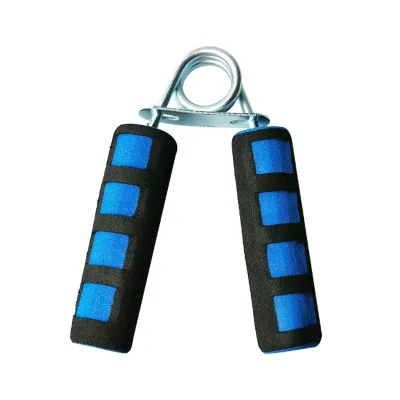
Hot Selling Trainer Finger Strength Aluminum Hand Gripper Metal Grips Strengtn
$1.76 - $1.99
MOQ: 100 Pieces




Comprehensive Sourcing Guide
Strategic Sourcing Guide for CE Certified Hand Grippers
The global market for hand grip training equipment has expanded significantly, driven by a growing emphasis on functional fitness, rehabilitation, and occupational health. For procurement professionals seeking CE certified hand grippers, the primary objective is to secure products that meet rigorous European safety and performance standards while aligning with specific operational requirements. This guide provides a structured approach to sourcing these items, focusing on the interpretation of available product data, verification of compliance, and the evaluation of supplier capabilities without relying on unverified claims.
Understanding Product Specifications and Variations
When sourcing hand grippers, buyers must navigate a diverse landscape of models, each designed for distinct applications ranging from general strength training to specialized rehabilitation. The available data indicates a wide variance in technical specifications, which directly influences the suitability of a product for a specific use case. For instance, the market offers models with specific dimensional standards, such as the DY-HG-052 with a standard size of 15112.2cm, and the SP-HG10 measuring 14.5 x 10 cm. These dimensions are critical for ensuring the equipment fits user hand sizes and fits within designated storage or shipping containers.
Resistance levels are another pivotal specification. Some units are categorized by weight ranges, such as the SP-HG4 which offers a strength level of 10~80lbs, while others, like the SP-HG7, list standards in lbs without a specific range in the provided data. More advanced models, such as the SP-SH12, may feature specific weight configurations like 50-250lbs or 5pcs 360g sets. It is essential for buyers to verify the exact resistance mechanism, whether it is a spring-based system or an adjustable hydraulic unit, as the data shows materials ranging from Aluminum to Carbon Steel. The material choice impacts durability and the feel of the grip, with Carbon Steel often preferred for heavy-duty applications and Aluminum for lightweight portability.
Furthermore, the physical form factor varies. Some products are described as Folded, indicating portability, while others are designed for stationary use in Home, Gymnasium, Park, or Community settings. The Hand Grip5 model, for example, has a standard dimension of 1279325mm, suggesting a specific ergonomic design. Buyers should not assume that all listed products share the same resistance curve or material composition; each model, identified by codes like DY-HG21 or IR97030, represents a unique configuration that must be evaluated against the end-user's physical needs.
Compliance Verification and Certification Standards
The core keyword for this sourcing exercise is CE Certified Hand Gripper. In the context of European procurement, the CE mark signifies that a product conforms to health, safety, and environmental protection standards for products sold within the European Economic Area. The provided data explicitly lists CE as a certification attribute for several models, often appearing in conjunction with ISO or RoHS standards. For example, one entry lists CE, ISO, while another specifies CE, ISORoHS, and a third confirms CE, RoHS, ISO.
However, buyers must exercise caution and treat these certifications as observations of specific listings rather than universal guarantees for every product in the category. The presence of CE in the product data suggests that the manufacturer has undergone a conformity assessment process. Yet, the specific standard referenced in the low-confidence background data, such as EN 388 (protective gloves) or EN 407 (protective gloves against heat), may not directly apply to hand grippers unless the product is marketed as protective equipment rather than exercise equipment. The HS Code 9506911900 is a reliable identifier for sports equipment, including hand grips, which helps in customs classification but does not replace the need for specific safety certification verification.
Procurement teams should request the specific Declaration of Conformity (DoC) from the supplier. This document should detail the exact directives under which the product was assessed. While the data mentions EN 420 as a background standard, its applicability to hand grippers must be confirmed. The buyer's responsibility is to ensure that the CE mark is not merely a label but is backed by valid testing reports from accredited laboratories. If a supplier claims CE certification, the buyer must verify that the product model number matches the certification documentation exactly, as certifications are often model-specific.
Cost Drivers and Pricing Dynamics
The pricing for hand grippers exhibits a broad spectrum, with observed listed prices ranging from 0.25 USD to 8980 USD. This massive variance is not indicative of a single product type but rather reflects the diversity of the market, from simple, single-piece units to complex, multi-component systems. The lower end of the price range likely corresponds to basic Aluminum or Carbon Steel grippers with minimal packaging, such as a Single Polybag or 1 Piece/OPP Bag. These items often have a Sample Time of about 7-15 days and a low MOQ of 1 unit.
Conversely, the higher price points are associated with specialized equipment, custom branding, or bulk orders with specific packaging requirements like Wooden Cae or Color Box + Pump. The MOQ range of 1-1000 further illustrates the flexibility of suppliers, though higher volumes often correlate with more complex logistics and potentially higher unit costs if custom tooling is involved. The Weight of the product, such as 64~67g, also influences shipping costs, which is a significant factor in the total landed cost for international buyers.
Buyers should analyze the cost drivers beyond the unit price. Customization features, such as Accept Customized Logo or Customized branding, add value but increase the unit cost and may extend the lead time. The prod_packing method, whether Export Cartons or Carton, affects the efficiency of shipping and storage. A buyer seeking a low-cost solution should focus on standard, non-customized models with simple packaging, while those requiring premium branding or specialized features should budget for the higher price tiers. It is crucial to understand that the 0.25 USD figure likely represents a bare-bones unit, whereas the 8980 USD figure may represent a complete system or a large bulk order, making direct price comparisons without context misleading.
Typical Applications and Usage Scenarios
Hand grippers are versatile tools with applications spanning multiple sectors. The primary usage identified in the data is Strength Training, making them essential for athletes, fitness enthusiasts, and rehabilitation centers. The Age Group is listed as Adult, and the Gender is Unisex, indicating a broad target market. The Power Source is Manual, meaning these devices rely on user effort, which is a key safety and operational characteristic.
Beyond general fitness, the data suggests applications in Home, Gymnasium, Park, and Community settings. This implies that the products must be durable enough to withstand high-frequency use in public spaces. The Feature of being Durable is explicitly mentioned, which is a critical requirement for equipment used in community parks or commercial gyms. The Function is described as a Hand Strengthener, highlighting the specific physiological benefit of improving grip strength, which is vital for sports like rock climbing, martial arts, and weightlifting, as well as for occupational health in jobs requiring manual dexterity.
The Folded attribute suggests portability, making these devices suitable for travelers or individuals who need to train on the go. However, for stationary applications in a Gymnasium, the Wooden Cae or Color Box + Pump packaging might indicate a more robust, premium product line. Buyers should match the application environment with the product's durability features. For instance, a Community Park installation would require a model with high resistance levels, such as 5-60 Kg or 10-40 Kg, to accommodate users of varying strength levels.
Supplier Evaluation and Quality Control
Evaluating suppliers for CE certified hand grippers requires a rigorous assessment of their manufacturing capabilities and quality assurance processes. The data indicates that the prod_origin is primarily China, with specific mentions of Anhui China and China, Zhejiang. These regions are known for their manufacturing clusters, but buyers must verify the specific factory's capability to produce Carbon Steel or Aluminum products to the required standards.
Quality control should focus on the consistency of the Strength Level and the integrity of the Material. For example, a supplier claiming a Strength Level of 10~80lbs must provide evidence that the resistance is consistent across the batch. The Sample Time of 7-15 days is a standard metric for evaluating supplier responsiveness. A supplier who can deliver a sample within this timeframe demonstrates an efficient production line, which is a positive indicator for larger orders.
Buyers should also scrutinize the prod_packing methods. The transition from Single Polybag to Color Box + Pump or Wooden Cae suggests different levels of product protection and presentation. For high-value or fragile items, Wooden Cae is often necessary to prevent damage during transit. The HS Code 9506911900 should be used to verify that the supplier is correctly classifying the goods, which is essential for customs clearance and duty calculation. Additionally, the availability of Customized Logo services indicates a supplier's willingness to engage in branding, which can be a sign of a more mature and flexible manufacturing partner.
Long-Term Procurement Considerations
Sourcing CE certified hand grippers is not a one-time transaction but a long-term strategic partnership. Buyers must consider the scalability of the supply chain, the consistency of product quality, and the adaptability to market changes. The MOQ range of 1-1000 offers flexibility, but buyers should negotiate terms that allow for scaling up without significant price increases or lead time extensions.
Sustainability is another long-term consideration. The use of Aluminum and Carbon Steel suggests a focus on durability and recyclability, which aligns with modern sustainability goals. Buyers should inquire about the environmental impact of the manufacturing process, especially if the supplier claims RoHS compliance, which restricts the use of hazardous substances. The CE certification itself is a dynamic standard that may be updated, requiring suppliers to stay current with regulatory changes.
Finally, the Customized attribute indicates that buyers can tailor products to their specific needs, such as unique resistance levels or branding. However, customization introduces complexity into the supply chain. Buyers must ensure that the supplier has the technical expertise to handle custom orders without compromising the CE certification status. The Sample Time of 7-15 days should be factored into the timeline for custom product development. By maintaining a clear understanding of the product specifications, compliance requirements, and supplier capabilities, buyers can build a resilient and efficient procurement strategy for hand grippers that meets both current and future demands.
FAQs
What certifications do these hand grippers hold?
Many listed models hold CE and ISO certifications, with some also including RoHS compliance. Buyers must verify that the specific model number matches the supplier's Declaration of Conformity to ensure valid European safety compliance for the intended market.
How long does it take to receive a sample?
The typical sample time for these products is about 7 to 15 days. This duration allows manufacturers to prepare the specific unit, whether it is a standard Aluminum or Carbon Steel model, before shipping to the buyer for evaluation.
Which materials are used for the hand grippers?
The available products are primarily constructed from Aluminum or Carbon Steel. Aluminum offers lightweight portability, while Carbon Steel is often selected for heavy-duty applications requiring higher durability and resistance levels in strength training environments.
Can I customize the logo on the product?
Yes, suppliers accept customized logos on the hand grippers. This customization option is available alongside other features, though it may influence the unit price and requires coordination with the manufacturer to ensure the branding is applied correctly.
What is the minimum order quantity for these items?
The minimum order quantity ranges from 1 to 1000 units depending on the supplier and product model. Buyers can often start with a single unit for sampling, but bulk orders may require higher volumes to meet specific packaging or pricing tiers.
Where are these hand grippers manufactured?
The products originate from China, with specific manufacturing hubs noted in Anhui and Zhejiang provinces. This geographic concentration indicates established supply chains for sports equipment, though buyers should confirm the exact factory location for logistics planning.
How is the product packaged for shipping?
Packaging varies from single polybags and OPP bags to export cartons and wooden cases. The choice of packaging depends on the product value and durability requirements, with some premium models including color boxes or specialized protective containers.