Source 80GHz FMCW Radar Level Transmitter for tanks, silos, and ships
Compare 30 models of 80GHz FMCW Radar Level Transmitter featuring stainless steel construction, IP68 protection, and analog output. These sensors offer ranges up to 70 meters with high accuracy for liquid level monitoring in industrial tanks, silos, and marine vessels.
Key considerations
Products List


High Precision 80GHz Radar Level Transmitter Low Cost Radar Level Sensor
$324.00 - $374.00
MOQ: 1 Pieces


Atech High Precision Radar Level Transmitter 80GHz Frequency ± 0.1mm Accuracy
$233.00 - $273.00
MOQ: 1 Pieces

Radar Level Sensor/Radar Level Transmitter for Measuring Solid Material and Grain Warehouse
$109.00 - $112.00
MOQ: 1 Pieces


Frm5000 80GHz Fmcw Radar Level Meter Industrial High-Precision Level Transmitter
$95.16 - $142.74
MOQ: 1 Pieces


High Precision 80GHz Fmcw Radar Level Transmitter for Accurate Measurements
$450.00 - $1500.00
MOQ: 1 Pieces


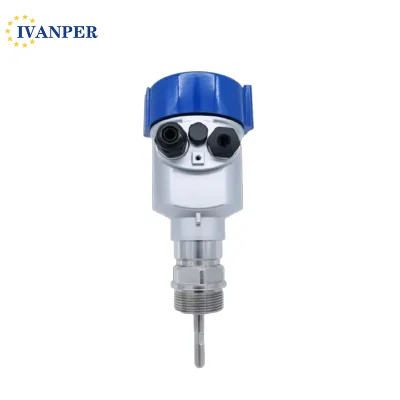
Industrial 80GHz Solid Level Sensor Radar Level Meter with Factory Price
$381.69 - $391.87
MOQ: 1 units


Comprehensive Sourcing Guide
Strategic Sourcing Guide for 80GHz FMCW Radar Level Transmitters
The procurement of 80GHz Frequency Modulated Continuous Wave (FMCW) radar level transmitters represents a critical decision for industrial buyers seeking high-precision measurement in complex environments. Unlike traditional pulse radar systems, 80GHz FMCW technology offers superior resolution and the ability to detect small targets, making it ideal for applications involving low dielectric constant liquids or challenging process conditions. This guide synthesizes available product attributes and industry standards to provide a structured approach for evaluating suppliers, verifying technical claims, and managing the total cost of ownership. Buyers must navigate a landscape where specific model numbers, such as YW04, PL808-1, and RD806, represent distinct configurations of this technology, each with unique operational parameters.
Technical Architecture and Performance Specifications
Understanding the core technical specifications is the first step in defining a procurement requirement. The 80GHz FMCW band, specifically operating within the 76GHz to 81GHz range, provides a narrow beam angle that minimizes interference from tank structures and internal obstructions. In the observed product data, the beam angle is noted as -6°C, which requires careful interpretation regarding the specific antenna geometry and its impact on measurement accuracy. The frequency range of 76GHz to 81GHz is a defining characteristic, often paired with a 5GHz FMCW bandwidth to enhance signal processing capabilities.
Accuracy is a primary differentiator in this category. While some general liquid level transmitters claim an accuracy of ±5mm or 0.1%, the advanced 80GHz FMCW models observed in the data demonstrate a higher precision of ±1mm. This level of accuracy is essential for inventory management and process control where volume calculations must be exact. The measurement range is another critical variable; while standard units may cover 0 to 30 meters, the specific 80GHz models listed support a range up to 70 meters, with some configurations capable of exceeding 200 meters. Buyers must verify the specific range capability against their tank dimensions, as the 0.1% to 0.1% Fs accuracy claims are often tied to specific distance brackets.
The signal output is equally vital for integration with existing control systems. The data indicates support for 4-20mA analog output, which is the industry standard for process automation. Furthermore, advanced models support the Hart Protocol, allowing for digital communication over the same two-wire loop. This "Second Line" capability enables remote configuration and diagnostics without requiring additional cabling. The power supply requirements typically center on a DC24V input, though some configurations support a broader range of DC12-24V, offering flexibility in power distribution design.
Environmental Durability and Operational Limits
Industrial environments often present extreme thermal and physical challenges that can compromise sensor performance. The 80GHz FMCW radar level transmitters must be evaluated against specific process temperature ranges. Observed data shows a split in operational limits: some units are rated for -20℃ to 80℃, while others, particularly those designed for more aggressive chemical processes, extend from -40℃ to 110℃, and even up to 300℃ for specialized high-temperature applications. Procurement teams must align the selected model's temperature rating with the maximum and minimum process temperatures of the application to prevent signal degradation or hardware failure.
Physical protection is governed by the Ingress Protection (IP) rating. The data highlights an IP68 rating, indicating that the device is dust-tight and capable of continuous immersion in water under specified conditions. This is crucial for outdoor installations or areas with high-pressure washdowns. The housing material is frequently specified as Stainless Steel, which provides inherent corrosion resistance. This attribute is reinforced by the "Corrosion Resistant" feature listed in the product attributes, ensuring longevity when exposed to harsh chemicals or saline environments.
The working life of these transmitters is a significant factor in long-term budgeting. The observed data suggests a working life of 10 years, which is a standard expectation for high-quality industrial instrumentation. However, this figure is contingent on the operating environment remaining within the specified temperature and pressure limits. The warranty periods vary, with some models offering 12 months and others extending to 2 years. Buyers should treat the warranty period as a baseline indicator of manufacturer confidence rather than a guaranteed operational lifespan, as actual service life depends heavily on maintenance and environmental stress.
Compliance, Certification, and Regulatory Standards
Navigating the regulatory landscape is essential for international procurement. The supplied product facts confirm the presence of CE certification and RoHS compliance for several models. CE marking indicates conformity with health, safety, and environmental protection standards for products sold within the European Economic Area. RoHS compliance ensures that the device does not contain restricted hazardous substances, which is a mandatory requirement for many global markets.
However, buyers must exercise caution regarding the "standard" attribute listed as 0.25kg or 80G. These entries likely refer to specific product weights or internal model designations rather than international safety standards like ISO or IEC. When sourcing, procurement teams should explicitly request documentation verifying compliance with local regulations, such as ATEX or IECEx for hazardous areas, if the application involves flammable gases or dusts. The absence of specific hazardous area certifications in the provided data means that buyers cannot assume compliance for explosive environments without direct verification from the supplier.
Cost Drivers and Procurement Economics
The price range for 80GHz FMCW radar level transmitters observed in the market spans from $95.16 to $1,500. This wide variance is driven by several factors, including the measurement range, accuracy class, and the complexity of the signal output. A unit with a 200-meter range and Hart protocol support will naturally command a higher price than a basic 30-meter unit with a simple 4-20mA output. The "Customized" attribute indicates that many suppliers offer tailored solutions, which can significantly impact the final cost. Customization may involve specific antenna sizes, such as the 76mm lens antenna mentioned, or unique mounting configurations.
The Minimum Order Quantity (MOQ) for these products is observed to be 1, suggesting that buyers can procure single units for pilot projects or replacements without needing to commit to large batch orders. This flexibility is beneficial for testing and validation phases. The production process, described as "Normal Wirewound" or "Integration," suggests that the manufacturing complexity varies by model. Integrated production processes often yield more compact and reliable units but may come at a premium. Buyers should also consider the packaging, which ranges from standard paper cartons to Atech Standard Carton Boxes, as this can affect shipping costs and protection during transit.
Supplier Evaluation and Quality Assurance
Evaluating suppliers requires a focus on their ability to provide consistent quality and technical support. The "Production Process" of Integration suggests a higher level of manufacturing sophistication compared to wirewound processes, which may result in better consistency. When assessing potential vendors, buyers should verify the origin of the products, which is listed as China for the observed models. While this is a major manufacturing hub, it necessitates rigorous quality control checks to ensure that the final product meets the specified technical parameters.
Quality control should extend beyond the initial inspection to include verification of the "Working Life" claims. Buyers should request test reports or historical performance data that validate the 10-year working life assertion. The "Purging Hole" feature, which supports cleaning dust, is a critical design element for maintaining accuracy in dusty environments. Suppliers should be able to demonstrate how this feature is integrated into the antenna design to prevent signal blockage. Additionally, the "Signal Output" capabilities, including the Second Line / 4...20mA / Hart Protocol, should be tested to ensure compatibility with the buyer's specific control system architecture.
Application Scenarios and Long-Term Considerations
The 80GHz FMCW Radar Level Transmitter is particularly suited for applications requiring high precision in challenging conditions. The "Kind" of product is identified as a Liquid Level Transmitter, making it ideal for storing liquids in tanks where space is limited or where foam and vapor might interfere with other sensor types. The "SemiConductor" feature indicates the use of advanced electronic components that contribute to the high frequency and accuracy.
Long-term procurement considerations include the availability of spare parts and the ease of maintenance. The "Product Name" and "Model" variations, such as 80G and RD806, suggest a diverse portfolio. Buyers should ensure that the supplier maintains a consistent supply chain for these specific models to avoid obsolescence issues. The "Standard" attribute of "According to size" implies that customization is a key part of the offering, which requires clear communication of requirements to avoid mismatches.
In conclusion, sourcing 80GHz FMCW radar level transmitters requires a balanced approach that weighs technical performance against cost and compliance. By focusing on the specific attributes of frequency range, accuracy, environmental ratings, and output protocols, buyers can select the optimal solution for their needs. The observed data provides a solid foundation for defining requirements, but continuous verification of certifications and performance claims remains essential for successful procurement.
| Feature Category | Observed Specification | Procurement Verification Point |
|---|---|---|
| Frequency | 76GHz ~ 81GHz | Confirm FMCW bandwidth (5GHz) and spectral purity. |
| Accuracy | ±1mm, 0.1%, 0.1% Fs | Verify accuracy claims against specific range brackets. |
| Range | 0.1~70m, >200m | Match range to tank height; check for dead zones. |
| Output | 4-20mA, Hart Protocol | Test signal compatibility with existing PLC/DCS. |
| Temperature | -40 | Ensure rating exceeds max/min process temps. |
| Protection | IP68, Stainless Steel | Verify material grade for chemical resistance. |
| Certification | CE, RoHS | Request valid certificates for target markets. |
| Warranty | 12 Months, 2 Years | Clarify terms for extended coverage options. |
The integration of these factors ensures that the selected 80GHz FMCW Radar Level Transmitter delivers reliable performance, minimizing downtime and maximizing the efficiency of liquid level management operations.
FAQs
What is the measurement accuracy of 80ghz fmcw radar level transmitters?
Advanced models offer an accuracy of ±1mm, while general units may provide ±5mm or 0.1%. This precision depends on the specific range and configuration selected for your application.
How far can these radar sensors measure liquid levels?
The measurement range varies from 0.1 to 70 meters for standard models, with some configurations capable of exceeding 200 meters. Buyers must verify the specific range against their tank dimensions.
Which signal output protocols are supported by these transmitters?
Devices typically support 4-20mA analog output, with advanced models adding Hart Protocol for digital communication. Some units also feature second-line capabilities for remote configuration over the same loop.
Can these sensors operate in extreme temperature environments?
Yes, operational limits range from -40 to 110 degrees Celsius for general use, with specialized units rated up to 300 degrees Celsius. Select the model based on your specific process temperature requirements.
What certifications do these products typically hold?
Observed models include CE certification and RoHS compliance for restricted hazardous substances. Buyers should request specific documentation for hazardous area certifications if operating in explosive environments.
How long is the expected working life of these transmitters?
The observed working life is typically 10 years, provided the device operates within specified temperature and pressure limits. Warranty periods vary between 12 months and 2 years depending on the manufacturer.