Source 80t LPG Tanker Trailer for Gas Storage, Transport, and Distribution
Find 30 verified listings for the 80t LPG Tanker Trailer designed for liquefied gas storage and transport. Buyers can compare tank volumes ranging from 40,000 to 60,000 liters, suspension systems, and payload capacities to select the right semi-trailer for industrial needs.
Key considerations
Products List


$500.00 - $6000.00
MOQ: 1 Pieces
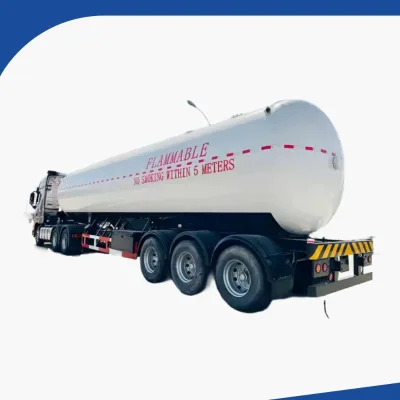
Customized LP Tanker Trailer ISO 60m3 lpg Gas Trailer AUTO lpg Trailer
$3000.00 - $3800.00
MOQ: 1 units
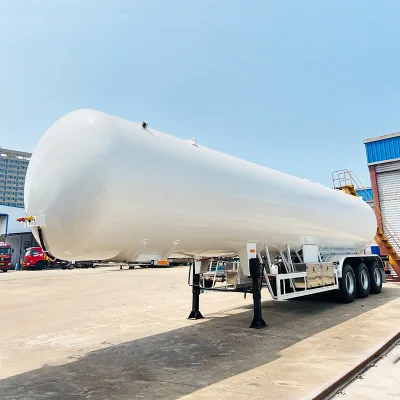

2axle LPG Tanker Trailer 20mt LPG Road Tanker 40000liters LPG Tank Trailer for Sale
$20000.00 - $37500.00
MOQ: 1 Pieces

20cbm to 60cbm LPG Tanker Trailer with Flow Meter and Pump for Discharging
$29500.00 - $35000.00
MOQ: 1 Pieces


China New 60cu. M 56cu. M 45cu. M LPG Trailer Tank Bob Tail LPG Tanker Trailer
$25000.00 - $35000.00
MOQ: 1 Pieces


Good Sales 40cubic 45cubic 56cubic 60cubic Meter LPG Tank LPG Road Tanker Trailer
$25000.00 - $38000.00
MOQ: 1 Pieces

Good Quality 25ton 28ton 30ton Bob Tail LPG Tanker Trailer LPG Semi Trailer
$25000.00 - $35000.00
MOQ: 1 Pieces

40000L Fuel Storage Tank Semi Trailer LPG Tank Truck Gas Tanker Trailer
$15000.00 - $29999.00
MOQ: 1 Pieces

Customized Liquid Propane Gas Tanker Trailer 40 M3 50 M3 60 LPG Tank Truck Trailer
$30000.00 - $80000.00
MOQ: 1 Pieces


3 Axis LPG Tanker Semi Trailer 40 Cbm 50 Cbm 60 Cbm Liquid Propane Gas Tank Truck Trailer
$30000.00 - $80000.00
MOQ: 1 Pieces


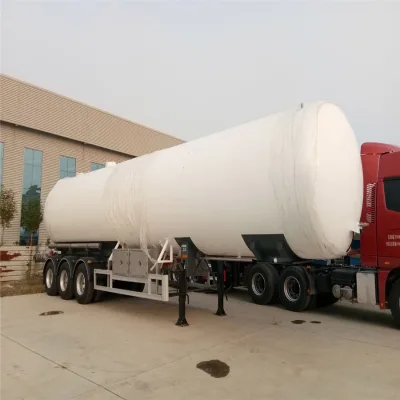


Comprehensive Sourcing Guide
Strategic Sourcing Guide for 80t LPG Tanker Trailers
The procurement of heavy-duty liquefied petroleum gas (LPG) transport equipment requires a rigorous approach that balances technical precision with supply chain reliability. While the core keyword "80t LPG Tanker Trailer" suggests a specific payload capacity, the actual market data for this category reveals a nuanced landscape of configurations. Buyers must navigate a product range where observed capacities span from 20 tons to 30 tons, with tank volumes typically ranging between 40,000 and 60,000 liters. The term "80t" in search queries often refers to the total gross vehicle weight or a specific market classification rather than a direct payload figure found in standard listings. Consequently, the initial phase of sourcing involves clarifying whether the requirement is for a specific payload capacity or a total weight class, as the observed loading capacities in the current market data include 20 tons, 25 tons, 26 tons, 28 tons, and 30 tons. Understanding this distinction is critical before engaging with suppliers to ensure the selected unit meets regulatory and operational needs.
Technical Architecture and Dimensional Specifications
The physical architecture of an LPG tanker trailer is defined by a combination of chassis specifications, tank geometry, and suspension systems. Based on available product data, the standard configuration for these units often aligns with a semi-trailer type, featuring a single package size of approximately 12,700 mm in length, 2,500 mm in width, and 3,975 mm in height. These dimensions are consistent with international road transport regulations, though buyers should verify local axle load limits. The tank itself serves as a pressure vessel, designed to function as a storage pressure vessel, reaction pressure vessel, or separation pressure vessel depending on the specific application requirements.
The material composition is a primary determinant of the trailer's durability and safety profile. The observed market data indicates the use of carbon steel, specifically grades such as Q345r, Q370r, or ASME material SA516. These materials are selected for their ability to withstand the internal pressures associated with liquefied gas transport. The shell thickness is typically observed at 10mm, while the head thickness is often reinforced to 12mm to handle stress concentrations. Additionally, a corrosion allowance of 1mm is frequently specified to extend the service life of the vessel in harsh environments. The pressure level for these units is generally categorized as medium pressure, falling within the range of 1.6 MPa to less than 10.0 MPa, although some configurations may be rated for low pressure (0.1 MPa to less than 1.6 MPa). Buyers must explicitly confirm the pressure rating required for their specific cargo density, which can vary between 420 kg/m³ and 500 kg/m³.
Compliance, Certification, and Design Codes
Navigating the regulatory landscape for LPG transport trailers is paramount for ensuring legal compliance and operational safety. The design and construction of these vessels are governed by strict international and national standards. The observed product data references design codes such as ASME (American Society of Mechanical Engineers) and GB150 (Chinese National Standard for Steel Pressure Vessels). These codes dictate the engineering calculations, material selection, and fabrication processes required to certify the vessel as safe for transporting flammable and toxic storage media.
When evaluating potential suppliers, buyers should request documentation proving adherence to these specific design codes. The standard for the product is often listed as "Liquid propane gas tank" or "LPG tanker trailer," but the underlying certification is what validates the unit's safety. It is essential to verify that the manufacturer holds valid certifications for the specific design codes mentioned. Furthermore, the suspension system, which can be either mechanical or air suspension, must be compatible with the axle brands typically used, such as BPW or Fuwa. These components are critical for stability and must meet the same rigorous safety standards as the tank itself. Buyers should also inquire about the specific testing procedures used to validate the pressure vessel integrity, ensuring that the unit has undergone hydrostatic testing and non-destructive examination in accordance with the cited design codes.
Cost Drivers and Pricing Dynamics
The pricing structure for LPG tanker trailers is influenced by a complex interplay of factors, including material costs, customization levels, and logistical requirements. The observed listed price range for these units spans from 500 to 80,000 USD, a wide variance that reflects differences in capacity, material grade, and optional features. The base cost is heavily driven by the volume of steel required, with tank capacities ranging from 40,000 liters up to 62,000 liters. Larger tanks naturally incur higher material costs, but the price per liter may decrease with scale.
Customization is a significant cost driver, as the market data confirms that customization is available. Buyers often require specific modifications, such as color selection, unique valve configurations, or specialized piping layouts, which can increase the final price. The choice of suspension system also impacts cost; air suspension systems generally command a premium over mechanical suspensions due to their enhanced ride quality and load protection. Additionally, the king pin specification, which can be either 2 inches (50mm) or 3.5 inches (90mm), may influence the chassis cost. Packaging and shipping methods, such as bulk or RoRo (Roll-on/Roll-off) ship transport, add further layers to the total cost of ownership. Buyers should be aware that while the minimum order quantity (MOQ) is often listed as a single item, the unit price is subject to negotiation based on the total volume of the order and the complexity of the customization requested.
Operational Applications and Payload Considerations
The primary application for these trailers is the transportation of liquefied gas, specifically LPG, which is classified as a flammable and toxic storage medium. The versatility of the design allows for use as a semi-trailer in various logistics scenarios, from regional distribution to long-haul transport. The observed loading capacities, ranging from 20 tons to 30 tons, indicate that these units are optimized for high-density cargo transport. However, the discrepancy between the search term "80t" and the observed payload data suggests that buyers must carefully calculate the total weight allowance.
The density of the stored liquid, observed between 420 kg/m³ and 500 kg/m³, directly impacts the maximum payload. For a tank with a capacity of 50,000 liters, the weight of the liquid alone would be approximately 21 to 25 tons, leaving a margin for the trailer's tare weight and safety regulations. Buyers should verify the specific capacity of the unit they are purchasing, as options include 28 metric tons, 25 metric tons, 50,000 liters, and 56,000 liters. The "Bob Tail" configuration is also noted in the market, offering a specific type of trailer design that may be suitable for certain operational constraints. Understanding the interplay between tank volume, liquid density, and legal weight limits is essential for maximizing the efficiency of each trip.
Supplier Evaluation and Quality Assurance
Selecting a reliable supplier is the most critical step in the procurement process. The market data indicates that the place of origin for these units is predominantly Shandong, China, a region known for its heavy machinery manufacturing capabilities. When evaluating suppliers, buyers should prioritize those who can demonstrate a clear track record in producing pressure vessels and tanker trailers. The brand name "Jinma" is observed in the listings, but buyers should not limit their search to a single brand. Instead, they should assess the supplier's ability to provide the full range of specifications, including the choice of axle brands like BPW or Fuwa.
Quality control measures must be rigorous. Buyers should request detailed inspection reports that cover the welding quality, material certification, and pressure testing results. The condition of the product is listed as "New," but this should be verified through a pre-shipment inspection. The warranty period is typically one year, which serves as a baseline for after-sales support. However, buyers should negotiate terms that extend beyond this minimum to cover critical components like the tank and suspension system. The delivery time is observed to be within one month, which is a competitive lead time, but this should be confirmed in the contract to avoid delays.
Long-Term Procurement and Maintenance Strategy
Long-term ownership of an LPG tanker trailer involves more than just the initial purchase price; it requires a strategic approach to maintenance and lifecycle management. The warranty period of one year provides an initial safety net, but buyers should plan for ongoing maintenance costs. The corrosion allowance of 1mm is a design feature intended to mitigate degradation over time, but regular inspections are necessary to ensure the tank's integrity. The choice of color, which is customer-optional, can also affect maintenance, as certain coatings may offer better resistance to environmental factors.
Buyers should establish a relationship with the supplier that includes access to spare parts and technical support. The availability of customization suggests that the supplier can adapt to future regulatory changes or operational needs. Furthermore, the single gross weight of 650,000 kg (650 tons) listed in the data appears to be an error or a specific aggregate figure, as it exceeds the capacity of a single unit. Buyers should clarify the actual gross weight of the specific unit to ensure compliance with road regulations. By focusing on a supplier with a robust quality control system and a commitment to long-term support, buyers can ensure the safety and efficiency of their LPG transport operations for years to come.
Comparative Analysis of Key Specifications
To facilitate decision-making, the following table summarizes the key technical and operational specifications observed in the market for LPG tanker trailers. This comparison highlights the variability in options available to buyers and underscores the importance of precise specification matching.
| Specification Category | Observed Range / Options | Critical Verification Point |
|---|---|---|
| Tank Volume | 40,000L, 45,000L, 50,000L, 60,000L | Verify actual capacity vs. design code limits. |
| Loading Capacity | 20 tons, 25T, 26 tons, 28 tons, 30 tons | Confirm payload vs. total gross weight limits. |
| Material Grade | Q345r, Q370r, SA516 Carbon Steel | Ensure material certificates match design code. |
| Pressure Level | Low (0.1-1.6 MPa) or Medium (1.6-10.0 MPa) | Match pressure rating to cargo density and safety. |
| Suspension | Mechanical or Air Suspension | Select based on road conditions and cargo sensitivity. |
| Axle Brand | BPW or Fuwa | Verify brand authenticity and warranty terms. |
| Design Code | ASME, GB150 | Confirm certification documents for the specific code. |
| Dimensions | 12700 x 2500 x 3975 mm | Check against local road width and height restrictions. |
| Delivery Time | Within One Month | Confirm lead time in the purchase agreement. |
| Warranty | 1 Year | Clarify coverage scope for tank and chassis components. |
This structured approach to sourcing ensures that buyers can navigate the complexities of the LPG tanker trailer market with confidence. By focusing on verified specifications, compliance with design codes, and the long-term reliability of the supplier, procurement teams can secure assets that meet the demanding requirements of the liquefied gas transport industry.
FAQs
What is the typical tank volume for these trailers?
Tank volumes typically range from 40,000 to 60,000 liters. Specific configurations include 45,000 liters, 50,000 liters, and 60,000 liters depending on the model selected by the buyer.
Which materials are used for the tank construction?
The tanks are constructed from carbon steel grades such as Q345r, Q370r, or ASME material SA516. These materials ensure durability and compliance with pressure vessel standards.
Can the suspension system be customized for specific needs?
Yes, the suspension system is available in mechanical or air suspension configurations. Buyers can select the option that best fits their road conditions and load stability requirements.
What is the delivery time for a new unit?
Delivery time is typically within one month from the order date. This lead time applies to new units produced in Shandong, China, subject to customization requirements.
Which design codes govern the pressure vessel construction?
Construction follows design codes such as ASME and GB150. These standards ensure the vessel meets safety requirements for storing and transporting liquefied petroleum gas.
What is the maximum payload capacity for these trailers?
Loading capacities range from 20 tons to 30 tons. Specific options include 20 tons, 25 tons, 26 tons, 28 tons, and 30 tons based on the chassis and tank configuration.
How long is the warranty period for the trailer?
The standard warranty period is one year from the date of delivery. This coverage applies to the new condition of the semi-trailer and its primary components.